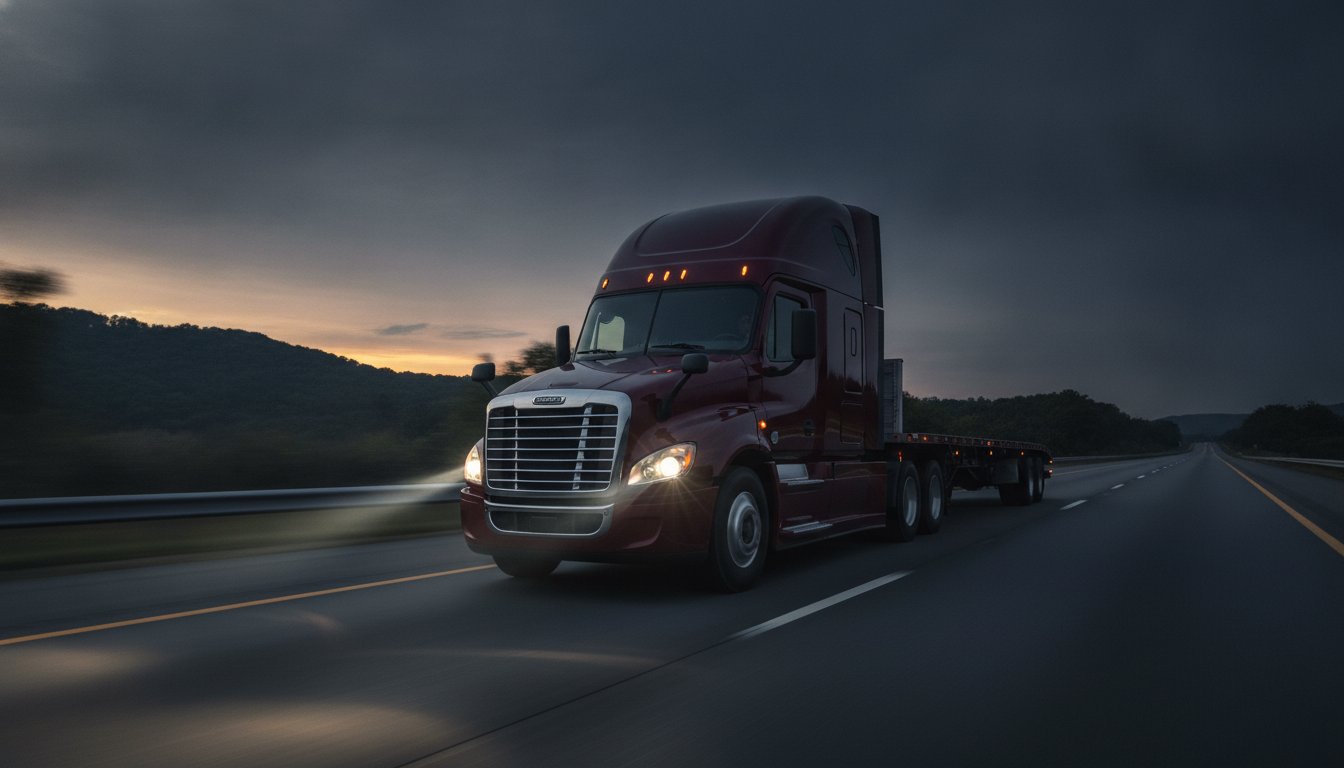
A single late flatbed carrying raw materials can silence an entire production line in minutes, turning a profitable shift into a costly recovery operation. You’ve likely felt that specific frustration when a broker stops answering their phone while your assembly team stands idle. Finding a reliable freight broker for manufacturers is a challenge shared by plant managers nationwide who struggle to secure specialized equipment like hot-shots or flatbeds on short notice. You understand that in 2026, logistics is about more than moving cargo; it’s about protecting your operational heartbeat.
This guide explains how a specialized partner secures your supply chain through expert equipment matching and a vetted national carrier network. We’ll explore the impact of the 2026 transparency regulations, the industry shift toward USDOT identifiers, and how real-time portal visibility ensures you never have to guess your shipment’s status. By the end, you’ll know how to choose a veteran partner that prioritizes zero production delays and provides the stability your facility requires to thrive.
Key Takeaways
- Learn why a specialized freight broker for manufacturers is essential for preventing production line stoppages caused by late raw material arrivals.
- Discover how to match specific industrial cargo with the right equipment, including flatbeds for heavy machinery and hot-shots for urgent, time-sensitive loads.
- Understand the 2026 regulatory environment, including new financial responsibility rules and the shift to USDOT identifiers for carrier vetting.
- See how advanced shipper portals provide real-time visibility, allowing you to move from reactive troubleshooting to proactive facility management.
- Find out how a partnership with a veteran logistics provider reduces operational stress and ensures your finished goods reach their destination via a vetted national network.
Why Manufacturers Require a Specialized Freight Broker
Manufacturing isn’t just about shipping boxes; it’s about maintaining a constant operational pulse. A freight broker acts as the essential intermediary between your facility and the carriers moving your goods. While a basic definition of What is a Freight Broker? centers on simple logistical coordination, the reality for a plant manager is much more complex. A generic broker might handle a retail load with ease, but they often falter when faced with the rigid schedules and specialized equipment needs of industrial production.
Choosing a dedicated freight broker for manufacturers means working with a partner who understands “Just-in-Time” (JIT) cycles. In these environments, inventory levels are kept lean to reduce overhead and maximize floor space. However, this efficiency leaves zero room for error. If a shipment of raw steel or specialized components arrives even a few hours late, the financial consequences ripple through the entire organization. You aren’t just paying for a truck. You’re paying for the certainty that your facility stays operational and your commitments to customers remain intact.
Protecting the Production Line from Disruptions
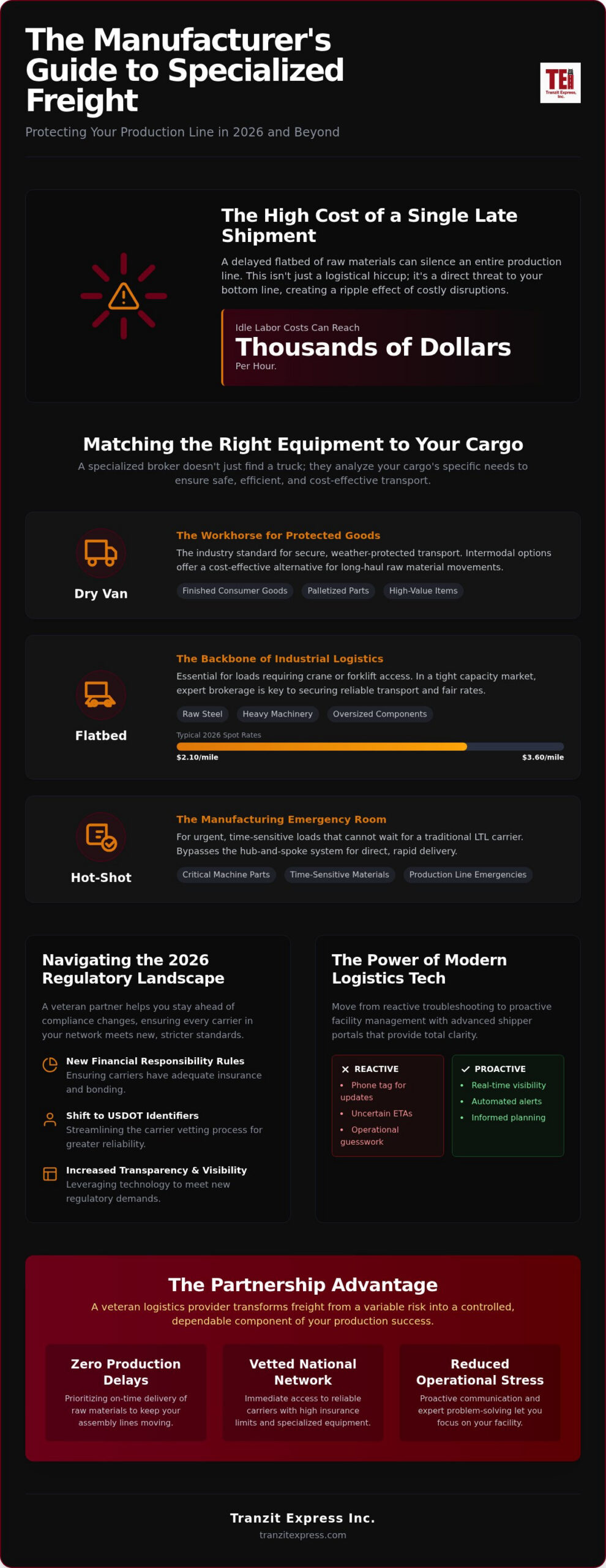
A single late delivery doesn’t just delay a shipment. It creates idle labor costs that can reach thousands of dollars per hour as assembly teams wait for materials. Experienced brokers look beyond the current load to anticipate market capacity shifts. In 2026, where flatbed capacity remains tight due to driver shortages and high demand, a veteran partner identifies these bottlenecks before they occur. They use proactive communication to keep you informed, ensuring that “no news” never means “bad news” while your cargo is in transit.
Bridging the Gap Between Shippers and National Carriers
Managing individual contracts with dozens of separate carriers is an administrative burden most manufacturers can’t afford. A specialized broker provides immediate access to a vetted national network. This vetting process is rigorous, focusing on manufacturing-specific requirements like high cargo insurance limits and the consistent availability of specialized equipment. The broker-manufacturer partnership is a strategic operational asset that transforms logistics from a variable risk into a controlled, dependable component of your production success.
Matching Equipment to Manufacturing Needs: Van, Flatbed, and Hot-Shot
Choosing the right equipment is a technical decision that directly impacts your bottom line. A seasoned freight broker for manufacturers doesn’t just find an available truck; they match the specific trailer type to your facility’s loading capabilities and the physical requirements of your cargo. Whether you’re moving finished goods or raw materials, the choice of equipment dictates the safety of the load and the efficiency of the delivery.
Dry van services remain the workhorse for finished consumer goods and palletized parts. They offer a secure, weather-protected environment for high-value items. In 2026, the rise of Logistics Technology has improved the way brokers plan these routes, but the physical reliability of the van is still the industry standard. For longer hauls, intermodal transportation has become increasingly attractive. With rail traffic up 1.7% in early 2026, intermodal offers a cost-effective alternative for moving large volumes of raw materials without the volatility of the spot market.
When to Deploy Flatbed Freight Services
Flatbed shipping is the backbone of industrial logistics. It’s essential for raw steel, heavy machinery, and oversized components that cannot fit inside a standard trailer. Because these loads often require crane or forklift access from the side or top, open-deck transport is the only viable option. In 2026, flatbed capacity has tightened, with spot rates ranging from $2.10 to $3.60 per mile. This environment requires a broker who understands the nuances of proper securement and specialized routing. For a deeper look at managing these complex moves, consult our guide on flatbed freight services USA.
The Strategic Use of Hot-Shot Trucking
Think of hot-shot trucking as the manufacturing industry’s emergency room. When a critical machine part fails and every hour of downtime costs thousands, you can’t wait for a traditional LTL carrier to move your freight through a hub-and-spoke system. Hot-shot loads utilize smaller, faster equipment to deliver critical components directly to your door. This mode bypasses the typical delays of larger networks, providing a dedicated solution for time-sensitive parts. Our specialized insights on hot shot trucking explain how this service can be a lifesaver during unexpected facility crises.
If you’re navigating a complex shipment, you can reach out to our team for a steady hand in matching your cargo to the right equipment.
Evaluating Carrier Compliance and Capacity for 2026
Vetting a carrier is no longer a simple check of an MC number. In 2026, the logistics landscape requires a deeper level of scrutiny to protect your industrial assets. A dedicated freight broker for manufacturers acts as your compliance shield, ensuring every truck that enters your facility meets rigorous safety and financial standards. With the Federal Motor Carrier Safety Administration (FMCSA) enforcing new financial responsibility rules as of January 16, 2026, the stakes for broker and carrier stability have never been higher. You need a partner who understands these regulatory shifts and applies them to every load.
Professional oversight doesn’t end once the truck is loaded. Consistent communication is the hallmark of a reliable partnership. In a manufacturing context, where every hour counts, having a freight broker for manufacturers who provides 24/7 visibility into shipment status is non-negotiable. This level of transparency allows you to manage your facility with confidence, knowing that your logistics provider is monitoring every mile of the journey. The industry’s shift toward using USDOT numbers as the primary identifier in 2026 has streamlined this verification process, helping to reduce fraud and improve carrier monitoring across the national network.
The Compliance Checklist for Industrial Shippers
Industrial cargo often carries high value and specific handling requirements. You can’t leave this to chance. A veteran broker manages the administrative weight of monitoring active insurance policies and valid operating authority. They look beyond the surface, analyzing historical on-time performance and safety scores. This oversight ensures that the carrier assigned to your load isn’t just available, but specifically qualified for the high stakes of manufacturing logistics. By handling the documentation and verification in-house, the broker removes a significant layer of risk from your daily operations.
Leveraging National Networks for Consistent Capacity
Relying on a single carrier creates a dangerous bottleneck when seasonal peaks or economic shifts occur. While total business sales rose 8.7% year-over-year as of April 2026, manufacturers need elastic capacity that scales with demand. Brokers aggregate thousands of vetted carriers into a single national network, giving you access to equipment when your primary contacts are full. This network often includes intermodal transportation, which saw a 1.7% increase in rail traffic in early 2026. Using rail for long-haul raw materials provides a stable, cost-effective alternative that protects your budget from the volatility of the spot market while ensuring your production lines never go dark.
Logistics Technology: Streamlining the Manufacturer’s Workflow
Technology in 2026 isn’t just about flashy interfaces; it’s about reducing the friction in your daily operations. For a plant manager, the right digital tools transform logistics from a black box into a transparent, predictable part of the production line. A professional freight broker for manufacturers uses these systems to provide order and clarity, ensuring that data serves the user rather than overwhelming them. This shift moves your team away from reactive troubleshooting and toward proactive facility management.
The most significant advancement in recent years is the evolution of real-time tracking. We’ve moved past the era of asking “where is my load?” Today’s systems provide precise arrival windows by analyzing traffic patterns, weather data, and driver hours in real time. This allows your receiving department to schedule labor more effectively, reducing the time trucks spend idling at your docks. Centralized digital platforms also simplify the administrative side of shipping by housing all documentation and billing in one secure location, which eliminates the need for manual filing and reduces accounting errors.
Maximizing Efficiency with a Dedicated Shipper Portal
A dedicated portal acts as your primary window into the national freight market. Through this interface, you can request rapid quotes and tender loads with a few clicks, bypassing the delays of traditional phone-tag. Beyond daily execution, these portals serve as a powerful analytical tool. By accessing historical shipping data, you can identify trends in your supply chain, allowing for more accurate budgeting and forecasting for the coming quarters. For a deeper look at how these tools integrate into your broader strategy, explore our resource on logistics management for shippers.
The Human Element: Why Communication Still Rules
While automation handles the routine, it often fails during the exceptional. Algorithms can’t talk to a driver about a specific gate code or understand the nuance of a production line that’s running ahead of schedule. This is where the human element remains irreplaceable. Manufacturers value a single point of contact who understands their specific facility needs and can intervene when weather or traffic delays occur. Tranzit Express balances high-tech portals with high-touch service by providing every client with a dedicated expert who oversees the technology, ensuring that data always leads to dependable action. You don’t have to choose between modern efficiency and veteran experience.
If you’re ready to see how a professional platform can simplify your daily routine, you can access our Shipper Portal today to start streamlining your workflow.
Tranzit Express: 25 Years of Dependable Manufacturing Logistics
Experience in the freight industry isn’t just a metric; it’s the ability to navigate the unexpected with composure. For over a quarter-century, Tranzit Express has served as a dedicated freight broker for manufacturers who recognize that a single missed delivery can disrupt an entire quarter’s projections. While newer market entrants often prioritize high-energy marketing, we focus on the quiet confidence that comes from twenty-five years of successful deliveries. We’ve seen market cycles shift and regulations evolve, yet our commitment to providing a steady hand at the wheel remains unchanged.
Our approach to logistics is rooted in the understanding that your facility is a complex ecosystem. We don’t just move cargo; we integrate into your supply chain to provide tailored solutions for Van, Flatbed, and Intermodal needs. Whether you’re coordinating the arrival of raw materials or the distribution of finished industrial goods, our team ensures that every load is matched with a carrier capable of meeting your specific standards. This veteran oversight is what transforms a simple transaction into a high-level B2B partnership.
A Steady Hand for Your National Supply Chain
The Tranzit Express philosophy is built on three pillars: stability, trust, and results. We understand that your reputation is tied to the reliability of your logistics partner. Our national carrier network is specifically curated for industrial reliability, prioritizing drivers and companies that have a proven track record with manufacturing-specific cargo. We vet our partners not just for their equipment, but for their commitment to the same high standards we hold ourselves to. To see how this fits into our broader service scope, you can explore our guide on what does a freight broker do in the 2026 landscape.
Request Your Manufacturing Logistics Quote
Onboarding with a new freight broker for manufacturers should be a seamless process that reduces your workload rather than adding to it. We’ve streamlined our quoting process to be as efficient and methodical as your own production lines. To provide you with an accurate and competitive quote, we only require basic details such as your shipment dimensions, weight, and specialized equipment needs. This direct approach ensures that the pricing we provide is grounded in reality and ready for execution.
Securing your capacity in a tightening market requires a partner with deep institutional knowledge and a national reach. Contact Tranzit Express today to discuss your facility’s unique requirements and discover the peace of mind that comes with a dependable logistics partnership. We’re ready to help you maintain order in an increasingly complex industry.
Secure Your Production Timeline with Expert Logistics
Managing a facility in 2026 requires a logistics strategy that prioritizes precision and stability. You’ve seen how specialized equipment matching and rigorous carrier compliance form the foundation of a resilient supply chain. By leveraging modern shipper portals alongside veteran oversight, you can move away from the stress of production delays and toward a more predictable operational flow. A dedicated freight broker for manufacturers serves as a strategic extension of your team, protecting your production heartbeat with every load.
Tranzit Express brings over 25 years of logistics experience and a vetted national carrier network to every partnership. Whether you require specialized equipment experts for a hot-shot load or consistent flatbed capacity, we provide the steady hand at the wheel your business deserves. We invite you to Request a Reliable Freight Quote for Your Manufacturing Needs today and experience the difference that professional order brings to a complex industry. We look forward to helping your facility thrive with dependable, high-standard logistics solutions.
Frequently Asked Questions
What is the primary benefit of a freight broker for a manufacturing company?
A freight broker for manufacturers provides a single point of contact for a massive national carrier network. This eliminates the burden of managing individual contracts and vetting hundreds of drivers. By acting as a strategic partner, the broker absorbs the administrative weight of logistics. This allows your facility staff to focus entirely on production and quality control rather than chasing down truck locations or verifying insurance documents.
Can a freight broker handle specialized equipment like flatbeds and hot-shots?
Specialized brokers maintain deep relationships with carriers who operate flatbeds, hot-shots, and step-decks. These trailer types are essential for moving heavy machinery, raw materials, and urgent replacement parts that don’t fit in a standard van. Tranzit Express specifically curates its network to include these equipment types. This ensures you have immediate access to the right trailer for your industrial cargo, regardless of how specialized the loading requirements are.
How does a freight broker ensure my production line stays on schedule?
Reliability is maintained through proactive monitoring and a deep understanding of manufacturing timelines. A dedicated broker anticipates potential delays by tracking weather patterns and market capacity shifts in real time. If a primary carrier faces an issue, the broker uses their aggregated network to find a replacement immediately. This redundancy is the key to achieving zero production delays, ensuring that your raw materials arrive exactly when your team needs them.
Is it more expensive to use a freight broker than going direct to a carrier?
While a broker earns a margin for their services, they often save manufacturers money by leveraging high-volume shipping rates that individual plants can’t access alone. You also reduce internal overhead by outsourcing the complex tasks of carrier vetting, compliance monitoring, and claims management. In the 2026 market, the cost of a single production line stoppage far outweighs the service fee of a professional who ensures your freight arrives on time.
How do you vet carriers for safety and insurance compliance?
A freight broker for manufacturers uses a rigorous vetting process that starts with verifying active FMCSA authority and the new 2026 financial responsibility requirements. Our team monitors safety scores and insurance limits to ensure every carrier meets manufacturing-specific standards. By using USDOT numbers as the primary identifier, we maintain a clear history of on-time performance and reliability. This high level of scrutiny protects your cargo and reduces your liability risks.
What happens if a load is delayed due to weather or mechanical issues?
When unexpected delays occur, the focus shifts to immediate communication and recovery. A professional broker identifies the issue through real-time tracking and notifies your facility manager before it becomes a crisis. We then work to secure a recovery vehicle or adjust delivery windows to prevent a total line stoppage. Having a veteran partner means you have a steady hand at the wheel to manage these exceptions with composure and practical solutions.
Do manufacturers get real-time tracking through a freight broker?
Modern logistics technology provides full visibility into every shipment through dedicated shipper portals. You don’t have to wait for a return phone call to know where your cargo is located. These platforms offer real-time updates and precise arrival estimates, allowing your receiving department to plan their labor shifts with accuracy. This transparency moves the relationship from a series of manual check-calls to a streamlined, automated flow of reliable information.
Can a freight broker help with intermodal rail logistics for raw materials?
Intermodal transportation is a highly effective solution for long-haul raw material shipments. A freight broker coordinates the entire process, including the initial drayage, the rail leg, and the final delivery to your facility. With rail traffic showing steady growth in 2026, this mode offers a stable and cost-effective alternative to long-distance trucking. It’s an excellent way for manufacturers to manage their logistics budget while maintaining a consistent supply of essential materials.