
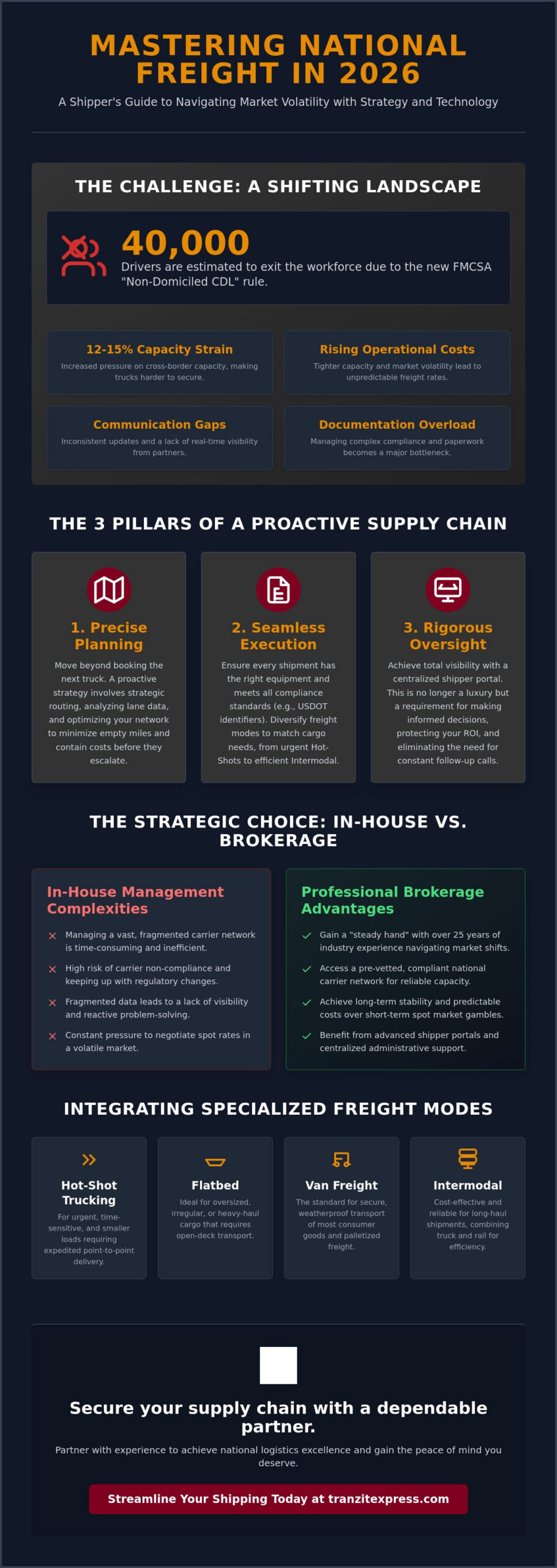
With the FMCSA “Non-Domiciled CDL” rule removing an estimated 40,000 drivers from the workforce this year, the margin for error in your supply chain has effectively vanished. You’re likely feeling the pressure of rising freight costs and the frustration of inconsistent communication from partners who don’t prioritize your peace of mind. It’s exhausting to manage complex documentation while wondering if your cargo is actually where the tracking says it is. Effective logistics management for shippers shouldn’t feel like a constant uphill battle against market volatility and fragmented data.
We understand that you need more than just a service provider; you need a steady hand at the wheel to manage complex routing and provide reliable national coverage. This comprehensive guide promises to help you master the complexities of national freight by streamlining your supply chain through professional brokerage and advanced shipper portals. We will walk through the essential strategies for centralizing your shipping data and securing the dependable results you’ve been searching for in a demanding 2026 market.
Key Takeaways
- Identify the three core pillars of modern logistics management for shippers to transform your supply chain from a reactive process into a proactive competitive advantage.
- Explore specialized transportation strategies, including Flatbed and Hot-Shot loads, to ensure your freight moves efficiently regardless of its size or urgency.
- Learn how centralized shipper portals provide real-time visibility and eliminate the need for manual tracking updates and constant phone calls.
- Evaluate the financial and operational benefits of partnering with a professional brokerage versus the hidden complexities of managing a carrier network in-house.
- Discover how over 25 years of industry experience can provide the steady, dependable hand needed to navigate today’s volatile shipping landscape.
What is Logistics Management for Shippers in 2026?
Understanding what is logistics management in the context of your supply chain is the first step toward long-term stability. In 2026, logistics management for shippers has transformed from a back-office function into a primary driver of business success. It’s no longer just about moving a crate from point A to point B. It is a comprehensive framework built on three core pillars: precise planning, seamless execution, and rigorous oversight. The modern market demands a shift from reactive shipping, where you’re constantly putting out fires, to proactive supply chain management that anticipates disruptions before they occur. This means looking at your entire network to find efficiencies rather than just booking the next available truck.
For US-based shippers, a national perspective is now essential. With regulatory shifts like the FMCSA “Non-Domiciled CDL” rule tightening cross-border capacity by an estimated 12-15%, you can’t afford to look at lanes in isolation. A seasoned freight broker acts as a vital intermediary, providing the institutional knowledge and carrier relationships needed to maintain a steady flow of goods. They provide the “steady hand” required to bridge the gap between your shipping needs and a complex network of available equipment, ensuring that your Van Freight or Flatbed loads don’t sit idle while costs rise.
The Evolution of Shipping Logistics
Digital transformation has fundamentally altered what you should expect from a logistics partner. We’ve moved far beyond simple “load matching” that only looks at the lowest price of the day. Today’s logistics management for shippers focuses on comprehensive routing and long-term stability. In a volatile freight market where spot rates can shift overnight, having a partner who values consistency over marketing hype is the best way to reduce operational stress. This evolution is about moving from a transactional model to a collaborative partnership where your success is the primary metric for every load moved.
This move away from transactional interactions toward collaborative partnerships mirrors a larger shift in modern corporate leadership; for those interested in applying these sustainable principles to their broader operations, you can visit Jannine Barron for regenerative business strategy and mentorship.
Key Objectives for Modern Shippers
Your goals are straightforward but difficult to execute without the right support. You need to contain costs without sacrificing the delivery speed your customers expect. This requires maintaining strict carrier compliance across every national route to avoid legal risks. In 2026, this includes verifying that carriers are using the USDOT number as their primary identifier, as the old MC numbering system is being phased out. Finally, you need total visibility. Achieving a clear view from the initial pickup to the final delivery through a dedicated shipper portal is no longer a luxury; it’s a requirement for professional order. By centralizing this data, you can make informed decisions that protect your ROI and keep your promises to your clients.
Core Components of an Efficient Shipping Strategy
A resilient shipping strategy in 2026 requires a departure from rigid, one-size-fits-all models. To maintain professional order, you must build a framework that prioritizes flexibility and precision. Effective logistics management for shippers is built on the ability to pivot between transportation modes based on transit requirements and market capacity. This diversification isn’t just about finding a truck; it’s about matching the specific equipment to the cargo’s unique needs while minimizing unnecessary expenditures like fuel surcharges and empty miles. When you view your supply chain as a series of strategic choices rather than a set of fixed routes, you gain the stability needed to navigate a volatile industry.
Strategic routing plays a critical role in this process. By analyzing lane data and carrier availability, you can reduce the distance traveled without cargo, which directly impacts your bottom line. This level of oversight requires a deep understanding of Evaluating Freight Brokerage vs. In-House Management to determine which path provides the most reliable ROI for your specific volume. For many, the “steady hand” of a professional brokerage offers the best balance of national reach and administrative ease.
Integrating Specialized Freight Modes
Modern logistics management for shippers involves more than standard dry vans. You should utilize hot shot trucking for time-sensitive, smaller loads that require expedited delivery without the cost of a full trailer. For long-haul efficiency, intermodal transportation offers a dependable way to move freight while insulating your budget from fluctuating diesel prices. Balancing these specialized options with your core van freight services and flatbed freight services USA requirements ensures that every shipment has a dedicated solution that fits its dimensions and deadline.
Carrier Compliance and Risk Mitigation
Risk management is the foundation of a dependable partnership. You need a rigorous vetting process that standardizes safety protocols across all contracted motor carriers. This includes continuous insurance verification and monitoring of safety ratings to ensure every driver on your route meets high professional standards. Experienced brokers manage this complex documentation on your behalf, reducing your liability exposure and providing a sense of security. If you’re looking to simplify your operations, you might consider how our national freight solutions can provide the oversight your business deserves.
By focusing on these core components, you move away from the stress of reactive planning. Instead, you establish a methodical system where carrier compliance, specialized equipment, and strategic routing work together. This organized approach is what separates a struggling supply chain from one that consistently delivers on its promises.
Maximizing Visibility through Shipper Portal Logistics
True visibility is the cornerstone of professional logistics management for shippers. While some industry voices suggest that simple GPS tracking is sufficient, a resilient supply chain relies on a centralized digital interface that integrates every facet of the shipping process. A dedicated shipper portal moves beyond basic location data; it acts as a secure repository for all freight information, from initial quotes to final proof of delivery. By consolidating this data, you eliminate the fragmented communication that often leads to errors and delays. This organized approach provides a sense of order that is essential for managing high-stakes national freight.
When establishing the Core Components of an Efficient Shipping Strategy, digital transparency must be prioritized to ensure that all stakeholders remain aligned. One of the most immediate benefits is the end of the manual “where is my truck” phone call. Real-time tracking through a portal provides a single version of the truth, accessible at any time. This steady flow of information allows your team to focus on core operations rather than chasing down status updates. Additionally, the ability to automate quoting requests through the portal streamlines the procurement process, ensuring you receive competitive rates without the administrative burden of multiple emails or phone calls.
The Benefits of a Dedicated Shipper Portal
A dedicated portal provides 24/7 access to load status and essential documentation, such as bills of lading and delivery receipts. This digital record-keeping significantly reduces administrative overhead and ensures that you’re always prepared for audits or inquiries. It simplifies the relationship between shippers, brokers, and carriers by providing a clear, shared platform for communication. This organized environment fosters a sense of security, as every detail is documented and easily retrievable when needed.
Data-Driven Decision Making
Access to historical shipping data allows for more accurate budget forecasting and identifies potential bottlenecks in your routing. By evaluating carrier performance through transparent metrics, you can make informed choices about which partners best support your long-term goals. Shipper portal logistics provides national distributors with the real-time oversight and documented accountability required to maintain seamless operations across diverse geographic regions. This data-driven approach ensures that your logistics management for shippers remains practical, grounded, and focused on fulfilling your promises to your own customers.
Evaluating Freight Brokerage vs. In-House Management
Deciding whether to build an internal logistics department or partner with an external expert is a pivotal choice for any growing enterprise. While some believe that in-house management offers more direct control, the reality often involves substantial hidden costs. Professional logistics management for shippers requires more than just a few employees. It demands a robust infrastructure, including carrier recruitment, compliance monitoring, and expensive software licensing. Supporting this level of technical complexity often requires a dedicated IT partner, and HJS Technology Ltd is a prime example of a provider that offers the managed services needed to maintain such systems. For many organizations, the overhead of salaries and benefits can quickly erode the ROI of their supply chain operations, especially when compared to the efficient, variable cost model of a brokerage partnership.
Scalability remains a primary concern in the 2026 market. With 70% of North American shippers anticipating growth through 2028, your team must be able to handle seasonal surges and sudden volume spikes. An in-house team is often fixed in size, which can lead to bottlenecks and missed deadlines during peak shipping months. A brokerage partner provides immediate access to a vast national network, allowing you to scale your capacity up or down without the need for constant hiring or restructuring. This flexibility ensures that your freight continues to move with the same “steady hand” regardless of market fluctuations.
When to Outsource Your Logistics
You should analyze the complexity of your current routing to see if your internal staff is struggling with carrier gaps or the burden of compliance documentation. If your team spends more time chasing status updates than optimizing lanes, it’s time to consider an external partner. The value of freight broker communication becomes clear in high-stakes shipping scenarios where a single missed detail can derail a national distribution schedule. A professional broker manages these tactical details, providing a sense of security and allowing you to focus on your core business goals. Understanding what does a freight broker do as a strategic risk-mitigation partner can help you determine whether outsourcing is the right move for your operation.
The Hybrid Approach: Human Expertise + Digital Tools
A “set it and forget it” approach to automation often fails because it lacks the nuance of human judgment. While digital tools are essential for speed, they’re most effective when guided by a professional who understands the industry’s subtle shifts. This hybrid model provides the reassurance of a veteran guide for complex loads while maintaining the efficiency of modern portals. You keep control over the high-level decisions while delegating the tactical execution to a dependable partner. Implementing freight broker communication best practices within this hybrid framework ensures that instructions are never lost and proactive exception management replaces frantic last-minute phone calls. If you’re ready to reduce your administrative stress and improve your shipping outcomes, you can contact our team to discuss a tailored logistics partnership today.
Partnering with Tranzit Express for National Logistics Excellence
Choosing a logistics partner is a decision that defines the reliability of your entire supply chain. At Tranzit Express, we’ve spent over 25 years perfecting logistics management for shippers by prioritizing stability and clear communication. Our expertise spans a comprehensive range of solutions, including Van Freight Services, Flatbed Freight Services USA, Intermodal Transportation, and specialized Hot-Shot Loads. We bridge the gap between human expertise and digital efficiency through our dedicated Shipper Portal Access, providing you with a single, secure interface to manage your national freight. This commitment to professional order ensures that every shipment is handled with the quiet confidence of a seasoned industry veteran.
Our goal is to reduce the stress inherent in a complex industry by providing a “steady hand at the wheel.” We don’t just move cargo; we build long-term partnerships based on proven results and consistent excellence. Whether you’re dealing with the early peak season of 2026 or managing the tightening capacity caused by new federal regulations, you can depend on our team to provide the oversight and national coverage your business requires. We focus on the fulfillment of our promises, ensuring that your freight arrives on time and within the parameters we’ve established together.
Our Proven Process for Shippers
Our approach to logistics management for shippers is grounded in a methodical, logical process that mirrors the streamlined flow of a successful shipment. It begins with a thorough understanding of your specific routing needs and ends with a final delivery confirmation that you can access instantly. We vet our national network of motor carriers with extreme care, verifying insurance, safety ratings, and compliance with the latest USDOT identifier standards. This rigorous vetting process is the foundation of the Tranzit Express standard, ensuring reliability through every mile of the journey. You’ll never have to wonder about the status of your load, as our communication rhythm is designed to keep you informed without overwhelming you with unnecessary data.
Get Started with Your Professional Logistics Partner
Taking the first step toward a more organized supply chain is simple and efficient. You can request a customized freight quote through our website to see how our rates and services align with your budget. Once you’re ready to move forward, setting up your shipper portal provides immediate visibility into your shipping data and historical records. For those with more complex or high-stakes requirements, our team is available for a consultation to discuss tailored solutions that address your specific challenges. We’re here to provide the security and sense of order you need to thrive in today’s demanding market.
- Request a professional freight quote online for Van, Flatbed, or Intermodal loads.
- Access your dedicated shipper portal for 24/7 real-time tracking.
- Consult with our experts to streamline your national distribution strategy.
Securing Your Supply Chain for the Years Ahead
Navigating the volatile freight market of 2026 requires more than just reactive booking. It demands a methodical approach that combines specialized transportation modes with the high-level transparency of a digital interface. By centralizing your data and vetting your carrier network with professional rigor, you move away from operational stress and toward a system defined by order and predictability. Effective logistics management for shippers is ultimately about building a partnership that values consistency as much as it values on-time delivery.
With over 25 years of industry experience and a national carrier network covering all 48 states, Tranzit Express Inc. offers the steady hand you need to manage your most complex routes. Our dedicated shipper and carrier portals ensure you always have total visibility into your cargo’s journey from pickup to final delivery. Don’t leave your ROI to chance in a shifting regulatory landscape. You can Request a Reliable Freight Quote from Tranzit Express Inc. today to start streamlining your operations. We’re ready to help you move your business forward with confidence and clarity.
Frequently Asked Questions
What is the primary benefit of using a shipper portal for logistics management?
The primary benefit is the consolidation of all freight data into a single, secure digital interface. This centralization allows you to access real-time tracking, historical shipping records, and essential documentation without making multiple phone calls. It provides a single version of truth that reduces administrative errors and ensures your team stays focused on core operations rather than chasing status updates throughout the day.
How does a freight broker ensure carrier compliance for my national shipments?
A professional broker manages a rigorous vetting process that standardizes safety protocols across all contracted motor carriers. This includes continuous insurance verification and monitoring of safety ratings to ensure every driver on your route meets high professional standards. In 2026, this also involves verifying that carriers are using the USDOT number as their primary identifier, protecting your business from risks associated with non-compliant equipment.
Can I manage specialized freight like hot-shot or intermodal through a single portal?
Yes, a comprehensive shipper portal allows you to manage diverse transportation modes, including Hot-Shot loads and Intermodal transportation, from one location. This centralized approach simplifies logistics management for shippers by providing consistent oversight regardless of the equipment type used. Whether you’re moving time-sensitive smaller loads or planning long-haul rail efficiency, every shipment is tracked and documented within the same professional framework.
What should I look for when vetting a new logistics management partner?
Look for a partner with deep institutional knowledge and a proven track record of stability, such as 25 years of industry experience. A reliable partner should offer a national carrier network covering all 48 states and provide advanced digital tools like dedicated shipper portals. Prioritize partners who value clear, professional communication and demonstrate a commitment to fulfilling promises rather than relying on marketing hype or aggressive sales tactics.
Is a shipper portal difficult to integrate into my existing business workflow?
Shipper portals are designed for intuitive use and typically require minimal integration effort to begin providing value. Most users find that the portal naturally replaces manual processes like fragmented email chains and spreadsheet tracking, leading to a more streamlined workflow immediately. The goal of these digital tools is to reduce stress and provide a sense of order, making the transition from reactive shipping to proactive management feel seamless.
How does professional logistics management help in reducing overall shipping costs?
Professional management reduces costs by optimizing transit times and minimizing expensive inefficiencies like empty miles and fuel surcharges. By leveraging a broker’s national network and historical data, you can identify the most cost-effective transportation modes for each specific lane. Effective logistics management for shippers also lowers administrative overhead by automating documentation and quoting processes, ensuring your budget is spent on moving freight rather than managing paperwork.
What happens if there is a delay in my shipment while using a broker?
If a delay occurs, a professional broker provides immediate, transparent communication and works proactively to mitigate the impact on your supply chain. Unlike automated systems that might leave you in the dark, a human expert acts as a steady hand to find alternative routing or coordinate with the carrier for a prompt resolution. This level of dedicated support ensures that you’re never left guessing about the status of your cargo during unforeseen disruptions. Following established freight broker communication best practices means your team receives proactive exception alerts before a delay ever becomes a missed deadline.
How often is tracking information updated in the Tranzit Express shipper portal?
Tracking information in the Tranzit Express shipper portal is updated in real-time to provide the most accurate visibility possible. Our system integrates directly with carrier data to ensure that location status and documentation are current, allowing you to monitor your freight 24/7. This consistency provides the reassurance needed to manage high-stakes national logistics with total confidence and a sense of professional order.