
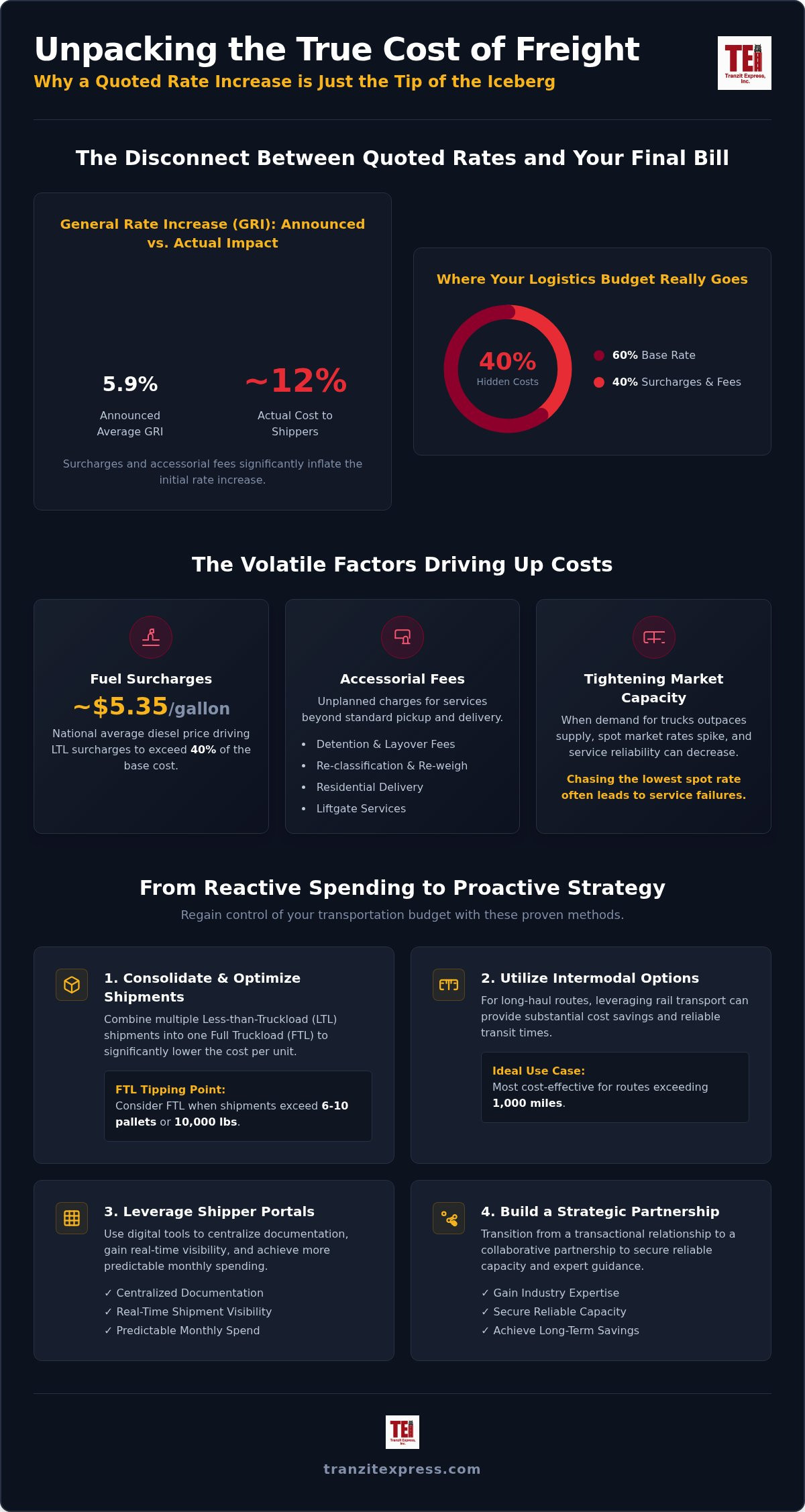
While major carriers announced an average rate increase of 5.9% for 2026, the actual impact on your bottom line often climbs toward 12% once surcharges and unpredictable accessorial fees are factored in. It’s a frustrating reality for many logistics managers who watch their monthly spend fluctuate despite careful planning. You likely feel the constant pressure of diesel prices hovering near $5.35 per gallon and the strain of tightening market capacity.
We understand that your primary goal is to bring order to this complexity without compromising the service quality your customers expect. This guide shares proven strategies to reduce freight shipping costs while maintaining the steady, dependable service your supply chain requires. By shifting the focus from chasing the lowest spot rate to long-term operational transparency, you can regain control over your transportation budget. We’ll explore how to optimize shipping modes, leverage real-time data through shipper portals, and build the kind of collaborative partnerships that turn logistical chaos into a predictable, streamlined process.
Key Takeaways
- Learn to optimize your transportation budget by consolidating smaller shipments into full truckloads or utilizing intermodal options for long-haul routes.
- Identify and eliminate hidden expenses such as detention fees and residential delivery surcharges to effectively reduce freight shipping costs.
- Utilize digital shipper portals to centralize your documentation and gain the real-time visibility needed for more predictable monthly spending.
- Transition from transactional shipping to a strategic partnership that leverages decades of industry expertise to secure reliable capacity during market shifts.
Understanding the Variables in Modern Freight Pricing
Managing a logistics budget requires looking far beyond the initial quote. A truly effective strategy to reduce freight shipping costs begins with a clear understanding of the total cost of ownership for every load. While the base rate is the most visible figure, it’s often the secondary variables like fuel surcharges, accessorial fees, and insurance premiums that cause the most significant budget variances. Modern freight transport is a complex ecosystem where these hidden layers can account for nearly 40% of your total spend if left unmonitored.
The 2026 market landscape presents a unique set of challenges. Major carriers implemented a 5.9% average General Rate Increase (GRI) early this year, but the actual cost impact for many shippers is closer to 12% because of rising surcharges. Capacity is tightening across the national network, meaning the demand for trucks is high relative to the supply. In this environment, chasing the absolute lowest price on the spot market often leads to service failures and missed deadlines. We’ve found that a “steady hand” approach, focusing on consistent lane pricing and reliable carrier relationships, provides the stability needed to protect your margins.
Identifying “leaks” in your logistics spend is a critical first step. This involves a comprehensive audit of past invoices to find recurring errors or unnecessary charges. Common leaks include incorrect freight classifications, detention fees that could have been avoided with better scheduling, and missed opportunities for shipment consolidation. By treating your logistics provider as a B2B partner rather than a vendor, you gain the institutional knowledge required to spot these inefficiencies before they impact your bottom line.
The Impact of Weight and Freight Class
Density-based pricing is a standard in the industry, yet it remains a frequent source of billing disputes. Freight class is a standardized numerical system used to categorize Less-than-Truckload (LTL) shipments based on density, handling, stowability, and liability. If your measurements are off by even a few inches, you risk a re-class fee that can erase any initial savings. We recommend a rigorous process of weighing and measuring every pallet to ensure your documentation matches the physical reality of the load.
Fuel Surcharges and Market Volatility
Fuel remains one of the most volatile components of your shipping budget. With national diesel prices averaging approximately $5.348 per gallon in August 2026, fuel surcharges have become a massive expense, with some LTL surcharges exceeding 40%. You can mitigate these spikes by using smarter scheduling to avoid peak-demand days or by working with an experienced broker who can negotiate more transparent surcharge structures. A dependable partnership ensures you aren’t overpaying during periods of extreme market fluctuation.
Consolidation and Mode Optimization Strategies
Achieving long-term efficiency in your supply chain requires a move away from reactive shipping. One of the most impactful ways to reduce freight shipping costs is through strategic load consolidation. Instead of moving multiple small shipments independently, we look for opportunities to combine Less-than-Truckload (LTL) orders into a single Full Truckload (FTL). This reduces the touchpoints where damage or delays occur and significantly lowers the cost per unit shipped. It’s a methodical approach that prioritizes order over urgency.
Choosing the right mode of transport is equally vital. Whether you require standard equipment or specialized flatbed shipping, matching the vehicle to the volume is essential. For smaller, time-sensitive loads, Hot-Shot services offer a cost-effective alternative to paying for an entire van when you only need a fraction of the space. This flexibility ensures your budget isn’t wasted on empty trailer capacity.
Transitioning from LTL to FTL
The “tipping point” between LTL and FTL usually occurs when a shipment exceeds six to ten pallets or weighs more than 10,000 pounds. At this stage, the linear foot rules of LTL carriers often make a dedicated truck more economical. Utilizing van freight services allows for maximum flexibility in consolidation, especially when using pool distribution. This strategy involves shipping a full load to a regional hub before breaking it down for local delivery, effectively bypassing the expensive long-haul LTL networks.
The Intermodal Advantage for National Logistics
For long-haul routes exceeding 1,000 miles, rail-based logistics offer a compelling financial case. Implementing intermodal transportation solutions can often reduce long-haul costs by 15% to 20% compared to traditional over-the-road trucking. While rail involves slightly longer lead times, the predictability and fuel efficiency of the national rail network provide a stable alternative to the volatile trucking market. Many organizations also find that the carbon-credit benefits of rail align with their corporate sustainability goals, creating both environmental and financial synergy. If your timeline allows for an extra day or two in transit, the savings are substantial and consistent.
Eliminating Accessorial Fees and Hidden Logistics Costs
Many shippers focus solely on the linehaul rate, but accessorial fees are often where logistics budgets spiral out of control. These charges cover services beyond standard dock-to-dock transport, such as liftgate requirements, residential deliveries, or “limited access” fees at locations like construction sites or schools. To effectively reduce freight shipping costs, you must proactively identify these requirements before the truck arrives. Surprise fees usually stem from a lack of site vetting, which leads to administrative friction and unexpected invoices weeks after the load has delivered. By establishing a clear profile for every frequent delivery point, you remove the guesswork that leads to these extra charges.
Clear communication is the most dependable tool for preventing re-delivery and storage fees. If a carrier attempts a delivery and the facility is closed or lacks the proper equipment, you’ll likely face a “failed delivery” charge followed by daily storage fees. Providing accurate receiving hours and contact names ensures the driver can complete the task on the first attempt. This methodical approach creates a sense of order in your supply chain and protects your bottom line from avoidable penalties.
Detention and Layover Mitigation
Time is the most valuable commodity in the shipping industry. Most carriers provide a standard two-hour free window for loading and unloading. When this window is exceeded, detention charges begin to accrue at a significant hourly rate. You can minimize these costs by standardizing your warehouse processes and ensuring your team is prepared for the driver’s arrival. A reliable freight broker acts as a steady hand here, negotiating favorable detention terms and providing the oversight needed to keep schedules on track. Utilizing carrier portals to monitor arrival and departure times accurately provides the data necessary to dispute unfair charges and improve dock efficiency.
Accurate Documentation and BOL Management
The Bill of Lading (BOL) is the legal contract for your shipment, and errors in this document frequently lead to costly administrative fees. Establishing a “clean BOL” process is a simple yet powerful way to reduce freight shipping costs across your entire network. Every outgoing shipment should follow a strict checklist:
- Verified contact names and phone numbers for the receiver.
- Accurate piece counts and confirmed pallet weights.
- Clear notation of required services like liftgates or inside delivery.
- Correct NMFC codes that match the physical freight.
Precise freight descriptions are the first line of defense against carrier audits and expensive re-classification fees. When your documentation is beyond reproach, you eliminate the opportunity for carriers to add “correction” fees to your final invoice.
Leveraging Technology for Operational Efficiency
Technology in the 2026 freight market acts as a stabilizing force that removes the guesswork leading to budget overruns. Real-time visibility is particularly effective at preventing the “emergency spend” associated with lost or delayed shipments. When you know exactly where your freight is, you can adjust production or delivery schedules proactively; this avoids the high costs of expedited replacements. This level of oversight is a cornerstone for any business looking to reduce freight shipping costs through smarter operational habits. Data-driven decision making allows you to move away from reactive fixes toward a more methodical, predictable supply chain model.
The Power of a Centralized Shipper Portal
A centralized portal transforms the way you interact with your supply chain by streamlining the entire process from the initial quote to the final invoice. This digital environment significantly reduces the administrative overhead that often clutters logistics departments. Digital tracking replaces the traditional reliance on manual “check calls,” which frees up your team to focus on higher-value tasks. These portals also allow you to access historical data to identify high-cost lanes and seasonal trends. Reviewing this history gives you the leverage needed to negotiate more favorable rates during your next contract cycle.
Route Planning and Carrier Compliance
Efficiency on the road is about more than just speed; it’s about reducing empty miles and out-of-route mileage. Effective logistics management for shippers must prioritize moving freight along the most efficient national corridors. This requires a rigorous carrier vetting process to ensure your partners are compliant and reliable. We’ve found that using carriers with consistently high safety ratings does more than just protect your cargo. It can also help lower insurance premiums over time. A “steady hand” approach to compliance ensures that your shipments aren’t just moving, but moving within a system designed for long-term stability.
If you’re ready to modernize your approach and gain better visibility into your spend, you can access our shipper portal to start managing your loads with greater precision and confidence.
Building a Dependable Logistics Partnership for Long-Term Savings
Sustainable logistics savings aren’t the result of a single lucky quote. They’re built through a strategic B2B partnership that prioritizes stability over short-term gains. When you move from a transactional mindset to a collaborative one, you gain an advocate who understands the specific pressures of your industry. This “steady hand at the wheel” is essential for navigating market shifts without seeing your margins erode. A partner who takes the time to understand your lanes can identify customized routing solutions that a one-size-fits-all approach would miss. These tailored strategies are often the most effective way to reduce freight shipping costs while ensuring your customers receive the consistent service they expect.
Tranzit Express Inc. leverages over 25 years of industry experience to provide this level of security. This deep institutional knowledge allows us to access “hidden” capacity within our national network, often securing better rates from carriers who value our long-standing reputation for reliability. We focus on providing a sense of order in a complex industry, moving your freight through a system designed for excellence and transparency.
Vetting Your Freight Broker for Value
The right broker does more than just find a truck; they protect your bottom line by maintaining strict compliance standards. When vetting a partner, you should ask detailed questions about their carrier network and financial stability. A broker’s credit rating is particularly important. If a broker lacks financial health, the most reliable carriers will avoid their loads, leaving you with lower-tier options that increase the risk of delays. On-time delivery is the ultimate cost-avoidance strategy. Every hour of delay at a receiver can lead to thousands in lost production or late fees, making a dependable partner your best defense against administrative waste.
Tailored Solutions for Specialized Freight
Specialized cargo requires a higher level of oversight to prevent unnecessary expenses. For example, flatbed freight services USA require specific routing and equipment knowledge to avoid over-dimensional fees or permit delays. Using a single point of contact for your Van, Flatbed, and Hot-Shot needs simplifies your internal processes and ensures that every load is matched to the most efficient equipment. This holistic approach is the most reliable path to reduce freight shipping costs over the long term. If you’re ready to move toward a more predictable and professional shipping experience, Request a freight quote from Tranzit Express Inc. today and let us bring order to your supply chain.
Securing Your Supply Chain for 2026 and Beyond
Managing a logistics budget in today’s market requires more than just reactive quoting. It demands a methodical approach that prioritizes transparency and operational order. By auditing your current spend to eliminate hidden accessorial leaks and utilizing technology to gain real-time visibility, you can effectively reduce freight shipping costs without sacrificing reliability. Moving toward intermodal solutions or load consolidation further stabilizes your monthly spend against the volatility of fuel and capacity shifts.
Tranzit Express Inc. brings over 25 years of proven logistics expertise and a nationwide network of vetted carriers to every shipment. We provide the steady hand you need to simplify complex routing while offering real-time tracking through our shipper portal. Our goal is to shift the focus from simple transactions to a long-term partnership that values consistency and excellence above marketing hype.
Request a Dependable Freight Quote from Tranzit Express Inc. to begin streamlining your operations. Taking control of your transportation spend is a collaborative journey, and we’re here to ensure your supply chain remains resilient and cost-effective.
Frequently Asked Questions
How can I reduce my freight costs immediately?
You can reduce freight shipping costs immediately by auditing your current invoices for billing inaccuracies and consolidating smaller shipments into larger loads. Many businesses pay for services they don’t actually use, such as liftgates or residential delivery fees that were applied in error. Checking for these “leaks” provides instant relief to your budget while you work on longer-term strategies like mode optimization or carrier contract negotiations.
What is the most cost-effective shipping mode for long-haul freight?
Intermodal transportation is typically the most cost-effective option for shipments traveling over 1,000 miles. By utilizing the national rail network for the long-haul portion of the journey, you significantly lower fuel expenses and linehaul rates. While transit times are slightly longer than over-the-road trucking, the predictability and lower cost per mile make it an ideal choice for non-urgent inventory replenishment and high-volume national logistics.
Is intermodal shipping always cheaper than truckload?
Intermodal isn’t always the cheapest option; its cost-effectiveness depends on distance, lane density, and urgency. For shorter hauls under 500 miles, the administrative costs and drayage fees associated with rail often make standard van freight more economical. Truckload shipping remains the better choice for time-sensitive deliveries where the speed of a dedicated driver outweighs the fuel savings provided by rail transport on shorter regional routes.
How do accessorial fees impact my total shipping budget?
Accessorial fees can inflate your total transportation spend by 10% to 40% if they aren’t managed proactively. These charges cover extra services like detention time, inside delivery, or re-weighing fees. When these costs aren’t factored into your initial quotes, they create significant budget variances. Precise documentation and clear communication with your delivery sites are the best ways to keep these hidden expenses from eroding your profit margins.
Can load consolidation really save money on small shipments?
Load consolidation is a powerful tool to reduce freight shipping costs by combining multiple small orders into one full truckload. This strategy allows you to bypass the expensive and often slower LTL hub-and-spoke networks. By reducing the number of times your freight is handled, you also lower the risk of damage claims and administrative fees, resulting in a lower total cost per unit shipped to your customers.
Why should I use a freight broker instead of going direct to a carrier?
Using a freight broker provides access to a much broader network of vetted carriers than any single shipper could manage alone. An experienced partner with 25 years in the industry possesses the institutional knowledge to find “hidden” capacity and negotiate better rates based on volume. This partnership acts as a steady hand, managing carrier compliance and claims so your team can focus on core business operations without logistical stress.
What role does technology play in cutting transportation expenses?
Technology provides the visibility and data needed to identify inefficiencies in your supply chain. Shipper portals centralize your documentation and tracking, which eliminates the administrative cost of manual “check calls” and lost paperwork. By analyzing historical shipping data, you can spot high-cost trends and optimize your routes to reduce empty miles. This data-driven approach ensures that every dollar spent on transportation is used as efficiently as possible.
How does carrier compliance affect my shipping costs?
Carrier compliance directly impacts your bottom line through reliability and risk mitigation. Working with highly rated carriers reduces the likelihood of accidents, cargo damage, and service failures that lead to expensive “emergency spend.” Consistent use of compliant partners can also lead to more favorable insurance terms and lower freight premiums. A broker who prioritizes strict vetting ensures that your shipments are handled by professionals who value safety and punctuality.