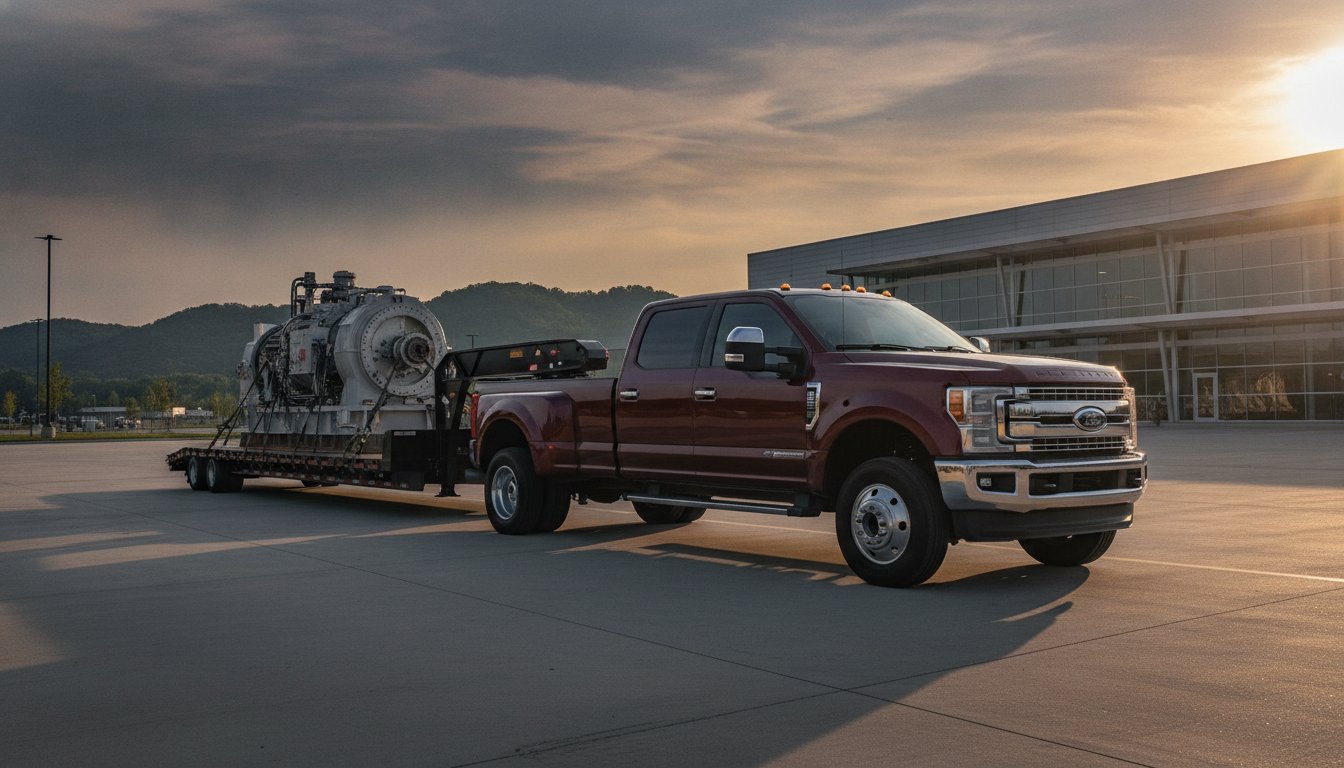
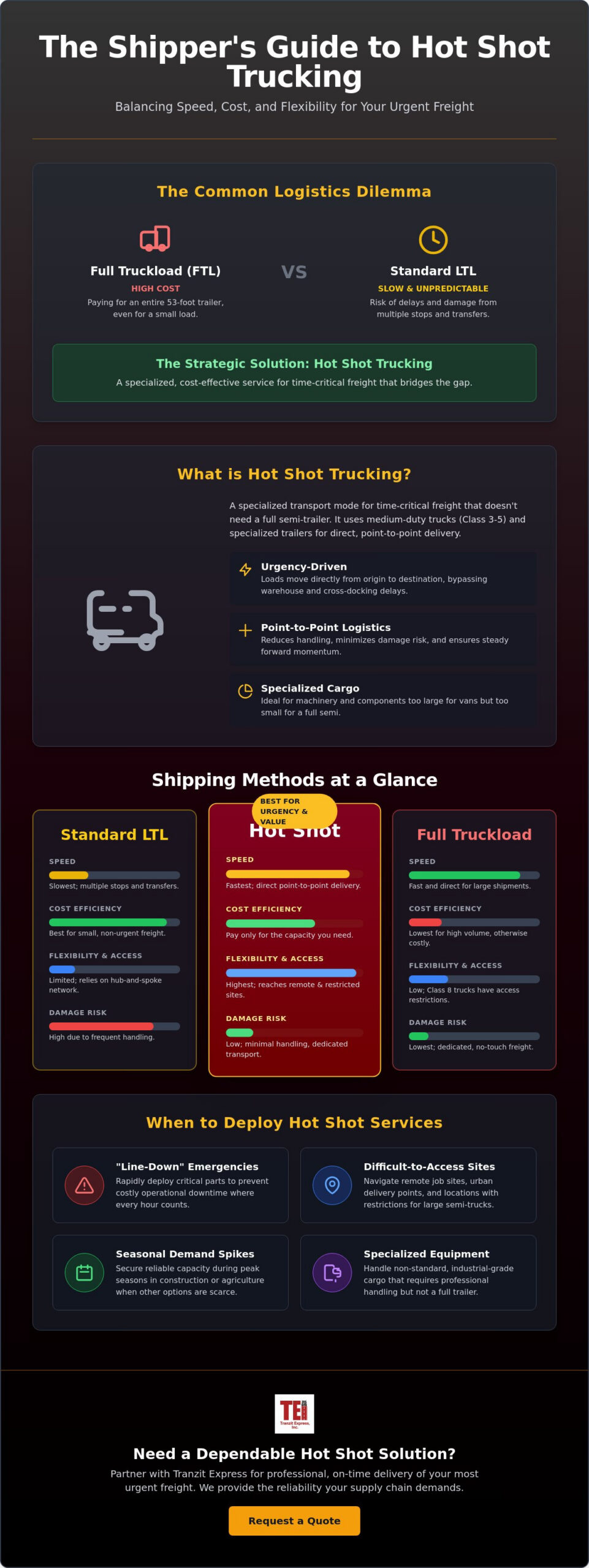
Why pay for the unused space of a fifty-three-foot trailer when your time-sensitive equipment only takes up a fraction of the deck? Many logistics professionals feel trapped between the steep premiums of expedited freight and the slow, unpredictable timelines of standard LTL shipping. It’s a common challenge to find a reliable partner who can handle non-standard cargo with the urgency it requires. This is exactly where hot shot trucking becomes a vital tool for your supply chain.
We understand that you need a solution that balances speed with fiscal responsibility. This guide explores how specialized transport provides a flexible, cost-effective way to move urgent loads across the United States. You’ll learn how to secure faster delivery times and professional handling without the expense of a dedicated full truckload. We provide a clear overview of the 2026 market landscape, including current regulatory standards and the strategic benefits of partnering with a seasoned carrier. Our goal is to provide a roadmap for reducing shipping stress and maintaining a steady, dependable flow of operations.
Key Takeaways
- Learn to recognize high-stakes “line-down” situations where rapid deployment is the most cost-effective choice for your supply chain.
- Understand the technical capabilities of Class 3 through 5 vehicles and gooseneck trailers to better match your specialized cargo with the right equipment.
- Identify the essential compliance standards and vetting criteria that separate dependable industry veterans from high-risk, unverified carriers.
- Discover how hot shot trucking offers a strategic middle ground between the high costs of dedicated full truckloads and the slower pace of standard shipping.
- Gain insights into building a long-term logistics partnership that prioritizes clear communication and consistent results for your most urgent freight.
What is Hot Shot Trucking? Defining the Role of Expedited Hauling
Hot shot trucking is a specialized mode of transport designed for time-critical freight that doesn’t require a full semi-trailer. It typically utilizes medium-duty trucks, specifically Class 3, 4, or 5 models, paired with specialized trailers to move cargo with precision. This niche originally emerged from the urgent demands of the Texas oilfields. In that environment, a single equipment failure could halt production and cost thousands of dollars every hour. Drivers began using heavy-duty pickup trucks to deliver parts immediately, creating a new standard for speed. Today, that local solution has matured into a sophisticated national logistics category that prioritizes reliability and rapid response.
It’s important to distinguish this service from standard courier work or residential last-mile delivery. Hot shot operations focus on industrial-grade cargo, including construction machinery, agricultural equipment, or critical manufacturing components. It serves as a vital bridge in the modern supply chain, offering a more agile and dependable alternative to traditional Less-than-truckload (LTL) shipping when deadlines are non-negotiable. By bypassing the traditional hub-and-spoke system, these loads maintain a steady forward momentum that larger shipments often lack.
The Core Characteristics of Hot Shot Loads
Urgency is the primary driver for these shipments. While standard freight might sit in a warehouse waiting for a consolidation window, hot shot loads move directly from the origin to the destination. This point-to-point logistics model is essential for reducing the risk of damage and eliminating the delays common in cross-docking facilities. The cargo usually falls into a specific weight and size category, being too substantial for a van but small enough to avoid the need for a full semi-truck. It’s an efficient way to handle specialized freight without sacrificing the professional standards your business requires.
Hot Shot vs. Traditional Truckload
The main difference between these two methods is the equipment and the resulting agility. A standard Class 8 semi-truck is an impressive machine, but it isn’t always the right tool for every job. Hot shot setups provide better accessibility, allowing drivers to reach remote job sites, narrow alleys, or crowded urban docks where a fifty-three-foot trailer simply won’t fit. Beyond physical access, there’s a clear financial benefit. Shippers don’t have to pay for the massive fuel consumption and overhead of a semi-truck when their cargo only takes up a fraction of the deck space. This flexibility makes hot shot trucking a strategic choice for maintaining a lean and responsive operation.
When to Deploy Hot Shot Services: Strategic Use Cases for Shippers
Deciding when to utilize specialized transport is a matter of strategic balance. Shippers must weigh the higher per-mile rate of expedited hauling against the potentially catastrophic costs of operational downtime. In high-stakes industrial environments, a “line-down” situation can result in losses of thousands of dollars per hour. In these instances, hot shot trucking is not just a shipping choice but a form of insurance for your production schedule. It provides a direct link between the supplier and the site, removing the variables that often lead to delays in traditional freight networks. Effective logistics management for shippers requires understanding exactly when to deploy specialized transport to protect your bottom line.
Beyond emergency response, this mode is highly effective for navigating geographical constraints. Urban delivery points and remote job sites often have physical or legal restrictions that prevent Class 8 semis from entering. Medium-duty rigs offer the necessary agility to reach these locations without the risk of fines or property damage. According to the North American HotShot Trucking Association, the industry’s ability to provide tailored solutions for these difficult-to-reach areas is a primary reason for its continued growth. It ensures that your cargo reaches the exact point of need without unnecessary transloading.
Seasonal fluctuations also play a major role in shipping strategy. During peak periods in the construction or agricultural sectors, standard capacity can become scarce. Having a dependable partner for hot-shot loads allows you to manage these spikes with confidence. This ensures your cargo moves on your timeline rather than being subject to the availability of a larger, less flexible fleet. It creates a sense of order in an industry that can often feel unpredictable during high-demand months.
Urgent and Time-Critical Freight
Emergency machinery parts and high-value electronics require more than just speed. They need a dedicated environment where the risk of damage from multiple loading cycles is eliminated. Medical equipment, which often requires precise handling and strict arrival windows, is another area where the point-to-point nature of hot shot hauling excels. Just-in-time delivery in hot shot hauling refers to the precise arrival of critical components at the exact moment they are needed for production or assembly, eliminating the need for costly on-site storage.
Specialized and Non-Standard Cargo
Many industrial materials require the accessibility of a flatbed but are too small to fill a standard fifty-three-foot trailer. Smaller construction machinery, such as skid steers and mini-excavators, often fits perfectly into this logistical “sweet spot.” This specialized approach ensures that you aren’t paying for unused deck space while still receiving the professional handling your equipment requires. For projects that also involve specialized lifting on restricted sites, you can visit Bewlake Lift & Haul Ltd to learn more about their tracked crane solutions. The result is a high-level B2B service that feels like a white-glove solution, providing security for your most valuable assets.
The Mechanics of Hot Shot Hauling: Equipment and Capacity Standards
Reliable hot shot trucking relies on a specific mechanical foundation that balances power with agility. Most professional operations utilize Class 3, 4, and 5 medium-duty trucks, which provide the necessary torque to pull heavy loads without the excessive weight of a Class 8 semi. The gooseneck trailer is the preferred choice for national logistics because it attaches to a hitch in the truck bed. This configuration distributes weight over the rear axle, offering superior stability and a tighter turning radius. It’s a setup that ensures your cargo remains secure, even when navigating difficult terrain or tight job sites.
Maintenance standards are a non-negotiable aspect of a dependable partnership. A seasoned broker prioritizes carriers who follow rigorous inspection schedules to prevent mechanical failures. This commitment to equipment health reduces the risk of transit delays and protects the integrity of your specialized freight. When every hour matters, the mechanical readiness of the vehicle is just as important as the skill of the driver. It’s this focus on technical excellence that provides a sense of order and security in high-stakes logistics.
Common Trailer Types and Their Applications
Matching the right trailer to your specific cargo is essential for a seamless loading process. Lowboy trailers sit closer to the ground, which is ideal for taller equipment that might otherwise exceed height restrictions. Dovetail trailers feature a sloped rear section and integrated ramps, facilitating the easy loading of wheeled or tracked machinery. For shippers moving palletized goods or over-dimensional loads, deck-over trailers maximize the available width by placing the platform above the wheels. This variety ensures that each shipment is matched with equipment that prioritizes safety and efficiency.
Weight and Dimension Constraints
Compliance with Department of Transportation regulations is a hallmark of a professional carrier. Most hot shot operations fall within a Gross Vehicle Weight Rating (GVWR) of 10,001 to 26,001 pounds. It’s vital to understand the licensing requirements involved in these shipments. Federally, a Class A CDL is required for any combination vehicle with a GVWR of 26,001 pounds or more. Staying within these defined limits is necessary for maintaining legal compliance and avoiding the delays associated with roadside inspections. Proper routing and permit management for specialized loads ensure that your freight moves without unnecessary interruptions.
Vetting a Hot Shot Partner: Reliability, Compliance, and Communication
The hot shot trucking industry has seen an influx of new operators, but not all possess the necessary credentials for high-stakes B2B freight. “Fly-by-night” carriers often lack the rigorous safety protocols required to protect your investment. Choosing a partner with over 25 years of institutional knowledge ensures that every driver is thoroughly vetted before they ever touch your cargo. This deep industry experience acts as a safety net, filtering out high-risk operators and prioritizing those with a proven track record of reliability and excellence. Working with a qualified hot shot freight broker provides an additional layer of protection, ensuring that carrier vetting, insurance verification, and compliance standards are managed by an experienced intermediary on your behalf.
A common concern among shippers is whether a smaller trailer can provide the same level of security as a standard Class 8 rig. In reality, specialized equipment often offers superior securement for non-standard loads. Because the trailer deck is often lower and the driver is specialized in flatbed logistics, your freight receives a level of attention that is sometimes lost in larger, high-volume operations. It’s a high-precision approach where the focus remains on the specific needs of the cargo. This specialized care provides a sense of security that is essential for urgent, high-value shipments.
The Broker’s Verification Checklist
Vetting a partner for hot shot trucking requires a methodical approach to compliance. A professional broker maintains a strict checklist to ensure every carrier is fit for service. This process includes:
- DOT Authority: Confirming the carrier has active operating authority and a valid USDOT number.
- FMCSA Safety Ratings: Monitoring safety scores to ensure the carrier maintains high standards of road safety.
- Equipment Inspections: Verifying that trailers and trucks meet federal maintenance requirements.
Insurance verification is the most critical step in hot shot vetting because it serves as the final safeguard for your capital in the event of an unavoidable transit incident. Before committing to a carrier, it’s equally important to understand how to properly evaluate and compare hot shot trucking quotes so that a low price doesn’t mask hidden surcharges or compliance gaps that put your freight at risk.
The Importance of Steady Communication
Urgent shipping requires more than just speed; it requires transparency. Real-time tracking has moved from a luxury to a standard requirement in professional logistics. Instead of asking “where is it?”, you should receive proactive status updates that keep you informed at every milestone. A dedicated shipper portal plays a vital role here, centralizing your documentation and tracking data in one accessible location. Professional B2B communication reduces the stress of urgent shipping by providing a clear, predictable flow of information. When you are ready to experience the difference that professional vetting makes, you can request a quote for hot shot trucking through our secure portal.
Partnering with Tranzit Express for Dependable Hot Shot Solutions
Selecting a logistics partner is a decision that impacts the very foundation of your supply chain. It requires more than just finding a truck; it involves finding a team that prioritizes the security of your cargo and the reliability of your deadlines. Tranzit Express Inc. has provided this steady hand at the wheel since 1999. We understand that in high-stakes industries, trust isn’t given; it’s earned through decades of consistent performance and professional accountability. Our approach shifts the focus from a simple transaction to a collaborative partnership where your operational success is our primary goal.
Managing hot shot trucking requires a deep understanding of both equipment and compliance. We leverage a vast, national network of vetted carriers to ensure that your specialized freight is always in capable hands. This institutional knowledge allows us to anticipate challenges before they disrupt your schedule. By maintaining high standards for every carrier in our network, we provide a level of order and predictability that is often missing in the expedited freight market. You can rely on our experience to navigate the complexities of modern logistics with quiet confidence.
Comprehensive National Reach
Our capabilities extend across the entire United States, providing you with seamless coordination regardless of the destination. Whether you are moving emergency parts to a remote facility or specialized machinery to an urban job site, we have the resources to facilitate the move. This national reach ensures that you have access to specialized equipment whenever and wherever your business needs it most. If you are ready to see how our network can support your operations, you can Request a freight quote online for your next hot shot load.
Expert Logistics Management
We believe that technology should simplify your day-to-day operations. Our advanced portals, including Shipper Portal Access and Carrier Portal Access, are designed to provide transparency without the noise. These tools allow you to manage your loads with ease, providing real-time updates and centralized documentation. This digital infrastructure, combined with our professional oversight, handles the administrative burden of carrier compliance and insurance verification so you don’t have to. It’s about providing the peace of mind that comes from a partnership-focused provider. If you’re looking for a dependable logistics solution, Contact Tranzit Express Inc. today to secure your capacity and experience a more organized way to ship.
Securing Your Supply Chain with Specialized Precision
Hot shot trucking serves as a high-precision tool for businesses that cannot afford the delays of traditional freight models. By matching urgent, non-standard loads with medium-duty agility, you ensure that your critical equipment reaches its destination without the overhead of a full trailer. Success in this niche depends on technical standards and a commitment to carrier compliance. It’s about more than just speed; it’s about the security that comes from professional oversight and meticulous vetting.
Tranzit Express provides the stability you need to navigate these high-stakes logistics challenges. With over 25 years of industry experience and a national network of vetted carriers, we offer a level of dependability that protects your operations. Our secure Shipper and Carrier Portals maintain transparency throughout the process, ensuring you always have a clear view of your freight’s progress. We invite you to experience a partnership built on trust and proven results. Request a Hot Shot Freight Quote from Tranzit Express today and let us provide the steady hand at the wheel your business deserves. We look forward to supporting your long-term success.
Frequently Asked Questions
What is the difference between hot shot trucking and expedited shipping?
Hot shot trucking specifically refers to using medium-duty trucks and trailers to move smaller, time-sensitive loads. Expedited shipping is a broader term that covers any freight moving with urgency, regardless of the vehicle type. While expedited loads might use a cargo van or a full-sized semi, hot shot operations focus on the unique agility of Class 3 through 5 vehicles to bridge the gap between small parcels and full truckloads.
How much weight can a hot shot truck typically haul?
Payload capacity for these vehicles typically ranges between 7,000 and 15,000 pounds depending on the specific truck and trailer setup. Most professional operations focus on the 10,001 to 26,001 pound Gross Vehicle Weight Rating (GVWR) window. It’s essential to match your cargo weight with a carrier that has the appropriate equipment to stay within legal DOT limits and ensure safe handling during transit.
Does a hot shot driver need a CDL for every load?
A Commercial Driver’s License (CDL) isn’t required for every load, but it’s necessary if the GVWR of the truck and trailer combination exceeds 26,001 pounds. Many professional logistics partners prioritize CDL-certified drivers because they possess advanced training in cargo securement and road safety. This certification allows for greater flexibility in hauling heavier specialized equipment while maintaining a high standard of professional compliance.
Can hot shot trucks haul heavy construction equipment?
These trucks are highly effective for transporting compact construction machinery such as skid steers, mini-excavators, and trenchers. They provide the necessary flatbed space and ramp accessibility for wheeled or tracked vehicles without the excessive cost of a full-sized tractor-trailer. This makes them a strategic choice for construction firms that need to move equipment between job sites quickly and efficiently, which often involves coordinating with junk removal Long Island to ensure that project areas remain clear of debris and fully accessible.
How quickly can a hot shot load be dispatched?
Dispatch times for these loads are designed for maximum speed, often allowing for pickup within a few hours of the initial request. Because these drivers operate on an on-demand basis rather than following a rigid hub-and-spoke schedule, they can respond immediately to urgent shipping needs. This rapid deployment is a primary reason why businesses choose this mode for critical “line-down” situations where every hour counts.
Is hot shot trucking more expensive than standard LTL?
The per-mile rate for hot shot trucking is generally higher than standard LTL because the shipment doesn’t sit in warehouses or wait for consolidation. It’s a dedicated service that moves your freight directly to the destination. While the upfront cost is higher, it’s often more affordable than paying for a dedicated full truckload and prevents the costly downtime associated with slower, traditional shipping methods.
What insurance requirements should I look for in a hot shot carrier?
You should prioritize carriers that maintain a minimum of $1,000,000 in liability insurance and at least $100,000 in cargo insurance. It’s also vital to ensure their policy specifically covers the type of specialized freight you are moving. A professional broker handles this verification process for you, confirming that the carrier’s authority is active and their safety ratings meet federal requirements for high-stakes logistics.
How do I track my hot shot shipment in real-time?
Tracking is typically managed through a specialized Shipper Portal that provides GPS-based updates and milestone notifications. This technology removes the guesswork from the process, allowing you to monitor the location of your freight from pickup to final delivery. This level of transparency ensures that your team is ready to receive the shipment exactly when it arrives, maintaining order at the destination site.