
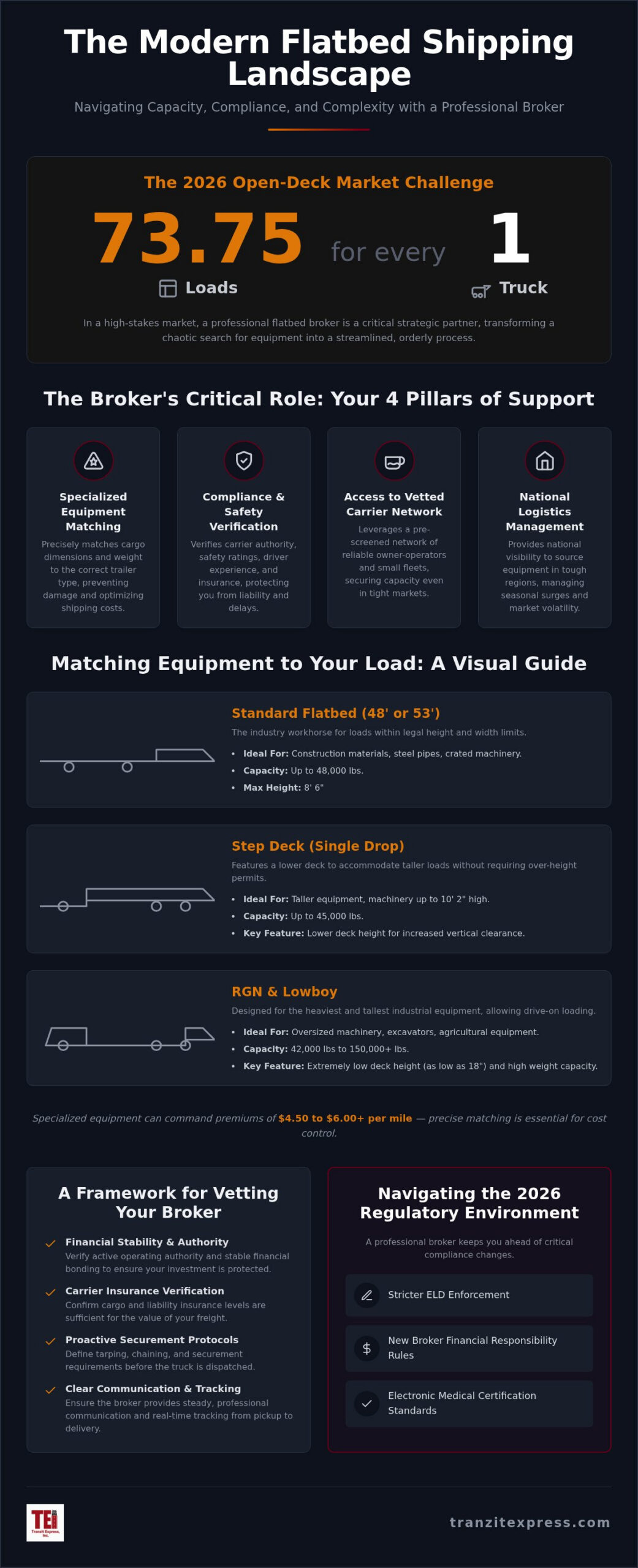
With 73.75 loads competing for every single available truck in 2026, the open-deck market has become a high-stakes environment where a single missed connection can stall a major project. In this climate, a professional flatbed shipping broker is no longer just a convenience; they’re a critical strategic partner. You’ve likely felt the frustration of searching for specialized RGNs or step decks only to find capacity is tighter than ever. Perhaps you’ve also dealt with the anxiety of a carrier who goes silent the moment your oversized load leaves the yard, leaving you to wonder if the tarping and securement are being handled with the care they require.
We understand that shipping open-deck freight is about protecting your reputation and your bottom line. You deserve the peace of mind that comes from knowing your equipment is vetted and your driver is fully compliant with the latest 2026 ELD and financial responsibility standards. This article explains how a dedicated flatbed shipping broker secures specialized assets, manages complex logistics, and ensures your freight arrives safely and on time. We’ll examine the value of a vetted carrier network and how steady, professional communication can transform your logistics from a source of stress into a predictable, orderly process.
Key Takeaways
- Learn how to match specialized trailer types like RGNs and step decks to your specific cargo to prevent damage and optimize shipping costs.
- Understand the essential framework for vetting a flatbed shipping broker, focusing on financial authority, bond stability, and carrier insurance verification.
- Navigate the 2026 regulatory environment with a clear understanding of new broker financial responsibility rules and electronic compliance standards.
- Establish a proactive process for defining securement and tarping requirements before your freight ever leaves the loading dock.
- Discover how a seasoned logistics partnership provides the stability and clear communication needed to manage complex national open-deck shipments.
Understanding the Critical Role of a Flatbed Shipping Broker
A freight broker acts as a vital bridge between businesses with cargo and the carriers who transport it. In the open-deck sector, this role is even more specialized. A flatbed shipping broker doesn’t just find a truck; they identify a specific piece of equipment that matches the exact dimensions and weight of your freight. This process involves a deep understanding of deck heights, weight distributions, and the unique securement needs of industrial cargo. Because flatbed loads are often oversized or oddly shaped, the broker must possess the technical knowledge to ensure the trailer provided can legally and safely handle the weight.
Professional brokers take on the heavy lifting of compliance and safety verification. They don’t just check if a carrier has an active authority; they dig into safety ratings and driver experience levels. For specialized loads, they verify that the driver has successfully handled similar freight in the past. This level of scrutiny is essential in 2026, especially with stricter ELD enforcement and the transition to electronic medical certifications. By managing these administrative details, a broker provides a layer of security that protects the shipper from liability and operational delays.
The flatbed market remains notoriously fragmented, consisting largely of small fleets and owner-operators. Accessing this capacity is a significant challenge for individual shippers, particularly when the load-to-truck ratio reached 73.75 to 1 in early 2026. A broker mitigates this risk by maintaining a vetted network of professionals who are pre-screened for reliability. They navigate the complexities of regional rate variations and capacity crunches, ensuring your freight moves even when the market is tight. This expertise transforms a chaotic search for equipment into a streamlined, orderly process.
Flatbed vs. Dry Van: Why Specialization Matters
Open-deck transport is inherently more complex than moving goods in a sealed trailer. While you can find foundational information in our complete guide to van freight services, flatbed logistics requires constant attention to weather exposure and physical securement. If a driver doesn’t understand how to properly apply edge protectors or winch straps, the cargo can be damaged before it even leaves the yard. Brokers verify that carriers possess the right tools, such as specific tarp sizes or chains, to protect the integrity of the shipment throughout the journey.
The Value of a National Logistics Network
Accessing reliable capacity across the United States requires a broad reach and deep industry connections. A broker provides this national visibility, allowing you to source equipment in regions where capacity is tightest, such as the Midwest or the Gulf Coast. They act as a steady hand at the wheel during seasonal surges or unexpected market shifts that might otherwise leave your freight stranded. A professional broker serves as a strategic buffer between volatile market fluctuations and your specific shipping requirements.
Matching Equipment to Load: Standard Flatbeds to RGNs
Selecting the right equipment is a technical decision that directly impacts your bottom line. An experienced flatbed shipping broker understands that using a Removable Gooseneck (RGN) for a load that fits on a standard flatbed is a waste of capital, while forcing an oversized machine onto a standard deck risks safety violations. In 2026, where specialized equipment often commands premiums ranging from $4.50 to $6.00 per mile, precision in trailer selection is essential for cost-effective routing. This technical matching process prevents cargo damage and ensures your freight moves without unnecessary delays or permit issues.
Standard 48 foot and 53 foot flatbeds remain the workhorses of the industry. They are the ideal choice for construction materials, steel pipes, and crated machinery that stay within legal height and width limits. However, when your freight reaches toward the 9 foot mark, a step deck (or single drop) trailer becomes necessary. These trailers feature a lower deck height to accommodate taller loads without triggering the need for over-height permits. For the heaviest industrial equipment, RGN and Lowboy trailers provide the low center of gravity and weight-bearing capacity required for safe transit. These trailers allow heavy machinery to be driven directly onto the deck, simplifying the loading process for construction and agricultural equipment.
Specialized Open-Deck Options: Conestogas and Extendables
Certain cargo requires the accessibility of a flatbed but the environmental protection of a dry van. Conestoga trailers feature a retractable curtain system that shields freight from road debris and weather without the height restrictions of a standard trailer. For loads with extreme length, such as bridge beams or industrial pilings, extendable trailers provide the necessary deck space to support the cargo safely. A professional broker identifies these “non-standard” requirements early to prevent equipment mismatches at the loading dock. They also ensure every carrier follows the federal cargo securement rules to maintain safety regardless of the equipment type used.
The Role of Hot Shot Trucking in Flatbed Logistics
Not every open-deck load requires a Class 8 tractor. Hot shot trucking utilizes Class 3 through 5 trucks to move smaller, time-sensitive freight with the same open-deck flexibility as larger trailers. This is often a more cost-effective solution for partial loads or urgent equipment replacements that don’t justify the expense of a full-sized flatbed. For a deeper look at how this fits into your logistics plan, read our strategic guide to hot shot trucking. By partnering with a broker who understands these nuances, you gain access to a tailored fleet that matches your specific cargo needs. If you’re looking for a steady hand to manage these equipment choices, you can explore our professional flatbed shipping solutions to find the right fit for your next load.
How to Vet a Flatbed Shipping Broker: A Professional Framework
Vetting a flatbed shipping broker is a critical step in securing your supply chain. In 2026, new financial responsibility rules require brokers to maintain a minimum of $75,000 in readily available trust funds. A dependable broker will proactively provide proof of their operating authority and bond status. This financial stability ensures that carriers are paid on time, which in turn protects you from potential double-payment risks or legal complications. Beyond the paperwork, look for a flatbed shipping broker who understands the high stakes of open-deck logistics, where cargo is exposed and securement is non-negotiable.
Liability in flatbed shipping is significantly higher than in dry van freight. You must ensure your broker verifies that every carrier carries adequate cargo insurance specifically tailored for flatbed risks. This includes coverage for damage during loading, unloading, and transit. A professional broker doesn’t just collect a certificate; they verify the policy’s status and ensure there are no exclusions for your specific type of machinery or materials. This level of diligence provides the security needed when moving high-value industrial assets across the country.
Carrier Compliance and Safety Standards
A broker’s primary duty is to act as a gatekeeper for safety. They must rigorously check DOT safety ratings and ensure carriers are compliant with the 2026 electronic logging device (ELD) mandates, including the stricter enforcement rules that took effect on February 7, 2026. Opting for the lowest possible rate often means working with brokers who cut corners on this vetting process, potentially placing your freight on an unsafe or uninsured truck. Carrier compliance is the foundation of a dependable shipping partnership.
Questions to Ask Your Flatbed Broker
When interviewing a potential partner, ask about their specific experience with your industry, whether it’s aerospace, steel, or heavy machinery. Inquire about their real-time tracking capabilities and if they offer dedicated shipper portals for transparency. Understanding what a freight broker does in full will help you identify if they are providing a comprehensive service or just acting as a simple middleman. A steady hand at the wheel means having a broker who can explain their contingency plans for equipment breakdowns or weather delays before they happen, ensuring your project stays on schedule.
Managing the Flatbed Shipment: Securement, Tarping, and Tracking
The successful delivery of open-deck freight depends on a methodical management process that begins long before the wheels turn. A professional flatbed shipping broker oversees four critical steps to ensure your cargo remains stable and protected. First, we define specific securement requirements. This isn’t a one-size-fits-all approach; heavy machinery might require grade 70 transport chains, while delicate materials need nylon straps with edge protectors to prevent crushing. By establishing these needs early, the broker ensures the driver arrives with the correct equipment on hand.
Second, we determine tarping needs based on the sensitivity of your cargo. While some industrial parts only require smoke tarps to protect the front from exhaust soot, others need full lumber tarps for total weather protection. In 2026, industry standard tarping fees typically range from $50 to $150, and a dedicated broker ensures these costs are transparently integrated into your planning. Third, we coordinate the specialized loading logistics. Whether your site requires a heavy-duty crane or a specific side-loading forklift, the broker synchronizes the carrier’s arrival with your facility’s capabilities to prevent costly detention fees.
Finally, we provide visibility through real-time tracking. In a high-stakes environment where a single delay can ripple through a construction schedule, “checking in” via phone is no longer sufficient. Modern logistics requires digital transparency that allows you to see the exact location of your freight at any given moment. If you’re ready to streamline your next move, you can access our shipper portal for complete oversight of your active loads.
The Logistics of Oversized and Overweight Loads
Oversized freight introduces a layer of complexity that requires expert navigation of state-specific regulations. Moving a load that exceeds standard dimensions involves securing permits across multiple jurisdictions and often coordinating pilot cars for safety. Professional logistics management for shippers ensures that these permits are in place before the truck leaves the yard. With oversized rates often reaching $4.50 to $6.00 per mile in 2026, precise routing is essential to avoid low bridges or weight-restricted roads that can cause expensive detours.
Transparency Through Technology: Shipper Portals
The shift toward digital visibility has eliminated the need for constant phone tag between shippers and carriers. A centralized shipper portal acts as a single source of truth, housing your load history, insurance documents, and real-time GPS data. This organized approach allows you to manage multiple shipments with the quiet confidence of a seasoned professional. By using these tools, a flatbed shipping broker provides a sense of order and security, turning a complex logistical puzzle into a predictable and manageable process.
Tranzit Express: 25 Years of Dependable Flatbed Solutions
Tranzit Express Inc. stands as a veteran-led firm with over a quarter-century of logistics stability. In an industry where new brokers often emerge during market peaks, our 25 year history provides a level of institutional knowledge that newcomers simply cannot match. We’ve navigated decades of market shifts, regulatory changes, and economic cycles, maintaining our position as a reliable flatbed shipping broker for businesses across the United States. Our commitment to “steady hand” management means that we prioritize order and predictability, even when dealing with the most complex specialized loads.
Shipping managers often face immense pressure to keep projects on schedule while managing costs. We address this by acting as a dependable extension of your team. Our national reach allows us to secure capacity in high-demand corridors, ensuring that your open-deck freight moves without the typical friction of a fragmented market. We focus on professional, reassuring communication, providing updates that give you the security to focus on your core business operations rather than chasing down truck locations. This stability is especially valuable in 2026, as infrastructure projects and data center construction continue to tighten the available supply of specialized trailers.
A Partnership Approach to Flatbed Logistics
We believe that successful logistics is built on long-term supply chain collaboration rather than isolated transactions. This partnership approach allows us to deeply understand your specific equipment needs and shipping patterns, which reduces the overall stress of managing difficult freight. For a comprehensive look at our national capabilities and equipment options, you can explore our flatbed freight services USA resource. By working as a strategic partner, we help you navigate the 2026 market with a level of expertise that prioritizes your reputation and your bottom line. We don’t just move freight; we help you build a more resilient supply chain.
Request a Professional Flatbed Quote Today
Taking the next step toward a more reliable logistics experience is straightforward. You can request a customized quote for your next open-deck load and see firsthand how our experience translates into efficient routing and competitive service. Once you partner with us, you’ll gain immediate access to our shipper portal for real-time load management and document transparency. We invite you to experience the Tranzit Express difference, where reliability isn’t just a promise; it’s a standard we’ve upheld for over 25 years. Whether you’re moving standard construction materials or oversized industrial machinery, we provide the expertise and professional care your cargo deserves. Let us provide the “steady hand” your logistics plan needs to succeed in 2026.
Securing Your Supply Chain for the Road Ahead
Success in the 2026 open-deck market requires more than just finding a truck; it demands a technical understanding of equipment and a commitment to rigorous safety standards. By prioritizing precise trailer matching and proactive communication, you can eliminate the uncertainty that often accompanies complex industrial moves. A professional flatbed shipping broker acts as your steady hand at the wheel, ensuring that every load is secured correctly and tracked with digital precision. Moving beyond simple transactions toward a strategic partnership allows your business to remain resilient despite tightening capacity and evolving regulations.
At Tranzit Express, we bring 25+ years of industry experience and a national network covering all 50 states to every shipment. Our A+ rated carrier network and strict compliance standards provide the peace of mind you need to focus on your core operations. We invite you to Request a Dependable Flatbed Shipping Quote from Tranzit Express today and experience the stability that seasoned expertise brings to your logistics. We look forward to helping you navigate your next project with confidence and order.
Frequently Asked Questions
What is the difference between a flatbed broker and a carrier?
A flatbed broker acts as a professional intermediary, while a carrier is the company that actually owns the equipment and employs the driver. The broker’s role is to leverage a national network to find the most efficient and reliable carrier for your specific cargo. This provides you with a single point of contact and a layer of professional oversight that simplifies the logistics process.
How much does a flatbed shipping broker charge for their services?
Fees for a flatbed shipping broker are typically integrated into the all-in rate you receive for a shipment. This margin covers the cost of vetting carriers, managing compliance, and providing real-time tracking through dedicated portals. Rather than a separate service fee, the broker’s value is reflected in the cost-effective routing and specialized equipment they secure on your behalf.
What kind of insurance should a flatbed broker provide?
A professional broker verifies that every carrier in their network carries comprehensive cargo and liability insurance. Additionally, the broker should maintain contingent cargo insurance to provide an extra layer of financial protection for the shipper. This ensures that your high-value industrial machinery or construction materials are covered against damage or loss throughout the entire transit process.
Can a flatbed broker handle oversized or overweight loads?
Yes, a specialized flatbed shipping broker is equipped to manage the complexities of oversized and overweight freight. This includes securing the necessary state permits, coordinating pilot cars, and identifying carriers with heavy-haul equipment like RGNs or double drops. Their expertise ensures that your non-standard cargo moves legally and safely across state lines without unexpected delays.
Do I need to provide my own tarps and straps for a flatbed shipment?
You don’t need to provide your own securement or protection equipment; the broker ensures the carrier arrives with everything required. Whether your load needs grade 70 chains, nylon straps, or specific lumber tarps, these requirements are defined during the quoting process. The driver is responsible for having the correct tools to secure and protect your freight according to federal safety standards.
How do I track my freight when using a flatbed broker?
You can track your freight through a centralized shipper portal that provides real-time GPS visibility. In 2026, the transition from manual phone calls to digital transparency allows you to monitor your shipment’s progress at any time. This centralized communication system houses all your documents and load history, providing a clear and organized view of your entire logistics operation.
What information do I need to provide for a flatbed shipping quote?
To receive an accurate quote, you should provide the exact dimensions, weight, and description of your cargo. It’s also important to specify if the load requires tarping, specialized loading equipment, or if it has non-standard dimensions that might require permits. Providing clear pickup and delivery locations allows the broker to calculate the most efficient and cost-effective route for your freight.
How does a broker verify the safety of a flatbed carrier?
Brokers verify carrier safety by monitoring DOT safety ratings and ensuring full compliance with 2026 ELD and medical certification mandates. They also review the carrier’s history of handling similar specialized loads to ensure the driver has the necessary experience. This rigorous vetting process acts as a safety net, protecting your cargo from the risks associated with unvetted or non-compliant carriers.