
In a market where 46% of brokers expect tighter capacity, the difference between a successful delivery and a costly delay comes down to who manages your lane. National freight brokerage services aren’t just about finding a truck. They’ve become a vital risk-mitigation partnership for businesses facing the strictest FMCSA financial and ELD mandates seen in years. You likely feel the pressure of rising diesel prices and the constant threat of unreliable carriers who compromise your reputation. It’s frustrating when a lack of transparency turns a routine shipment into a logistical crisis.
We recognize that you’re looking for a steady hand at the wheel to provide order in a complex industry. This guide shows how professional freight brokerage services streamline national logistics, mitigate shipping risks, and optimize your supply chain through expert carrier vetting and strategic routing. We’ll examine how 25 years of industry experience helps manage the 2026 environment. We’ll cover specialized solutions like Van Freight Services, Flatbed Shipping, Intermodal Transportation, and Hot-Shot Loads. You’ll gain the insights needed to build a streamlined shipping process backed by a vetted network of qualified carriers and cost-effective routing without sacrificing reliability.
Key Takeaways
- Understand how national freight brokerage services act as a strategic intermediary to simplify complex US logistics and bridge the gap between shippers and carriers.
- Discover how to select the most efficient transportation mode for your cargo, whether you require Van Freight Services, Flatbed Shipping, or specialized Hot-Shot Loads.
- Learn the critical importance of rigorous carrier vetting and real-time monitoring of FMCSA safety ratings to protect your cargo and reduce liability.
- Explore how modern Shipper Portals provide digital transparency, giving you instant access to essential documentation and real-time shipment updates.
- Identify the long-term benefits of partnering with a seasoned industry veteran who uses 25 years of experience to maintain stability in a volatile market.
Understanding the Role of National Freight Brokerage Services
National freight brokerage services serve as the essential bridge in the complex American supply chain. They aren’t just coordinators; they’re strategic partners who manage the administrative, financial, and safety risks of shipping. In 2026, with tighter FMCSA regulations and fluctuating capacity, a veteran broker acts as a steady hand at the wheel. They provide order and security in an industry that can often feel chaotic. Instead of just “finding a truck,” a professional broker provides the oversight and compliance management necessary to protect your cargo and your company’s reputation.
A broker’s primary value lies in their ability to vet and manage a vast network of carriers. Unlike a common carrier who is limited by their own fleet’s size and location, a broker uses deep institutional knowledge to find the right equipment at the right time. By Understanding the Role of a Freight Broker, you’ll see how they function as an architect of the entire journey. They handle the complex documentation and compliance checks that would otherwise overwhelm an internal logistics team, allowing you to focus on your core business operations.
The Strategic Advantage of a National Network
Accessing a national network is about more than just geography. It’s about having the right equipment available in all 48 states. Whether your cargo requires Van Freight Services, Flatbed Shipping, or Intermodal Transportation, a national brokerage offers a level of versatility that local pools can’t match. This reach allows you to scale your operations without increasing your internal overhead. It’s a dependable way to mitigate the impact of regional carrier shortages or localized disruptions, ensuring your supply chain remains moving and consistent.
A national network also provides access to specialized solutions like Hot-Shot Loads for time-sensitive shipments. Because a broker isn’t tied to a single fleet, they can source these specialized carriers from a much wider pool. This diversity ensures that you never have to settle for a carrier that isn’t perfectly suited for your specific cargo requirements.
Broker vs. Carrier: Which Do You Need?
Hiring a carrier directly might seem simpler, but it often lacks the flexibility required for modern business. A single fleet is constrained by its drivers’ hours and current truck locations. If their trucks are full, your cargo sits. Brokers provide a scalable solution that adapts to your fluctuating shipping volumes. You’re not just buying a space on a truck; you’re investing in a partnership that ensures your goods move regardless of market volatility. To learn more about how this works in practice, explore What Does a Freight Broker Do? for a comprehensive look at the shipper-broker dynamic. This relationship offers a layer of protection and expertise that a single-fleet provider simply isn’t equipped to offer.
Strategic Logistics: Optimizing Diverse Freight Modes
Effective logistics requires more than just moving goods from point A to point B. It involves a methodical evaluation of each shipment’s unique requirements to determine the most efficient transportation mode. National freight brokerage services excel here by acting as a “steady hand at the wheel,” ensuring that cost efficiency doesn’t come at the expense of reliability. Whether you’re moving standard inventory or oversized machinery, the right mode selection protects your margins and your deadlines. Choosing the wrong equipment can lead to unnecessary expenses or, worse, safety violations that stall your supply chain.
A seasoned broker uses deep institutional knowledge to navigate these choices. They understand that a load suited for a dry van might be more cost-effectively moved via rail if the timeline allows. Conversely, they know when a specialized trailer is the only way to ensure cargo integrity. By leveraging national freight brokerage services, you gain access to a comprehensive range of solutions that a single-fleet carrier cannot provide. This flexibility is essential in 2026, where market volatility requires shippers to be more agile than ever before.
Van Freight and Flatbed Shipping
Van Freight Services remain the backbone of retail and manufacturing distribution across the United States. These enclosed trailers offer protection from the elements and security for palletized goods. However, when your cargo exceeds standard dimensions or requires side-loading, Flatbed Shipping becomes the necessary solution. Managing open-deck logistics requires a higher level of oversight. It’s not just about the truck; it’s about ensuring the carrier follows strict tarping and securement protocols. A veteran broker vets every carrier to confirm they have the specific equipment and experience needed for these complex loads, reducing the risk of damage or transit delays.
Intermodal Transportation and Hot-Shot Loads
For long-haul shipments, Intermodal Transportation Solutions offer a strategic way to balance cost and sustainability. By combining rail and truck, businesses can achieve significant savings on cross-country routes. The complexity lies in the rail-to-truck transfers, which require precise coordination to avoid storage fees or missed windows. Conversely, when a shipment is small but urgent, Hot-Shot Trucking provides the necessary speed. These smaller, specialized trailers can bypass the delays often associated with larger class-8 fleets, offering a nimble alternative for time-sensitive parts or equipment.
Modern logistics management relies heavily on data to make these modal decisions. Industry research, including Digital Freight Brokerage Insights, highlights how real-time rating and digital platforms help shippers pivot between modes as market conditions change. This level of transparency allows for more agile decision-making, especially when navigating the 2026 landscape of tighter capacity. If you’re unsure which mode fits your current project, you can access our shipper portal to explore routing options tailored to your specific needs.
The Importance of Carrier Compliance and Risk Mitigation
Carrier vetting is the most critical function of any professional freight broker. It’s the foundation of a “steady hand at the wheel” approach to logistics. In a landscape where 83% of brokers report feeling better prepared for fraud prevention, the actual work happens behind the scenes through rigorous, real-time monitoring. We don’t just look at a carrier’s basic authority. We track FMCSA safety ratings and insurance coverage daily to ensure every truck in our network meets the highest standards of reliability. This level of oversight reduces your liability and protects your cargo from the risks of an increasingly complex industry.
Our 25 years of experience allow us to identify high-quality carriers that automated systems might overlook. We’ve seen how market cycles affect carrier behavior and we know which red flags indicate a potential service failure. By leveraging national freight brokerage services, you aren’t just buying a lane; you’re investing in a compliance framework that prioritizes the security of your goods above all else. This methodical process provides the order and peace of mind necessary for high-stakes B2B partnerships.
Vetting Beyond the Paperwork
True compliance goes deeper than a simple certificate of insurance. We evaluate carrier performance history and on-time delivery records to build a profile of excellence. Our administrative oversight includes verifying cargo insurance limits and ensuring surety bonds are active and sufficient. This thoroughness means your team doesn’t have to manage the tedious documentation or the constant follow-up required to keep a carrier fleet compliant. We handle the heavy lifting of administrative vetting so you can focus on your production and sales goals.
Maintaining High Standards in 2026
The regulatory environment in 2026 has become significantly more demanding. As of January 16, 2026, the FMCSA implemented stricter financial responsibility requirements, requiring brokers to maintain at least $75,000 in financial instruments. Additionally, the ELD Compliance Mandate that took effect on February 7, 2026, means carriers using revoked devices face immediate out-of-service orders. These changes, coupled with a recent Supreme Court decision increasing scrutiny on broker liability, make expert carrier selection more important than ever.
We address the common shipper concern of cargo safety by maintaining a diverse yet strictly controlled carrier network. Whether you’re utilizing Van Freight Services or Flatbed Shipping, the standards remain the same. Every carrier must prove their commitment to safety and regulatory compliance before they ever touch your freight. This disciplined approach ensures that your supply chain remains resilient, even as federal regulations continue to evolve.
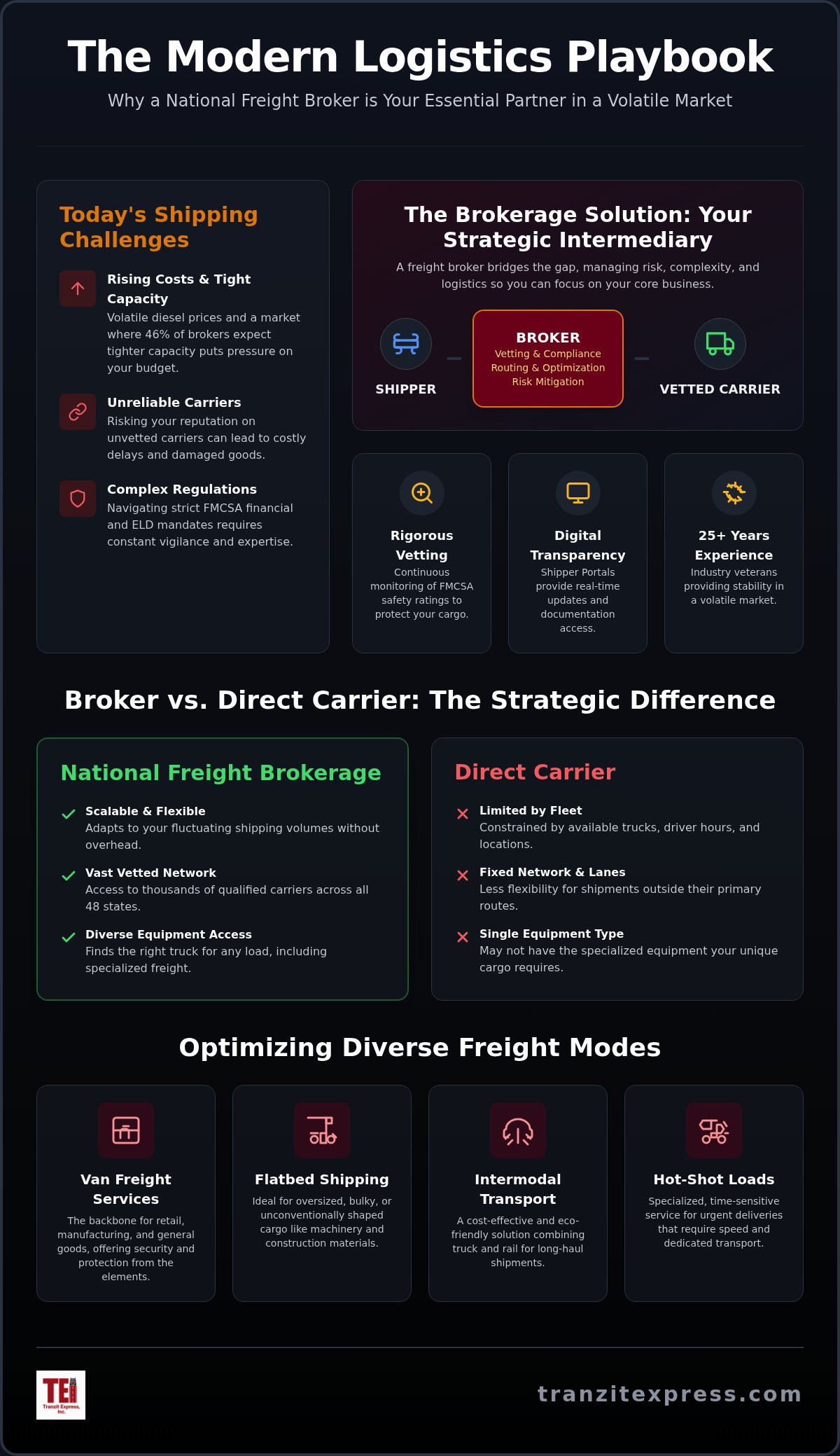
Leveraging Technology: Portals and Real-Time Communication
Modern logistics management has undergone a significant digital transformation. While 41% of freight brokerage businesses are now deploying AI tools, the real value of national freight brokerage services lies in how they integrate these tools to provide transparency. For a shipper, the days of calling multiple times to find a truck’s location are over. Digital platforms now offer a sense of order and security that was previously impossible in such a complex industry. This shift toward digital transparency ensures that every stakeholder remains informed and aligned throughout the transit process.
Streamlining the Shipping Experience
Using dedicated Shipper Portal Access allows you to manage your entire supply chain from a single interface. This centralized approach reduces administrative friction by providing instant access to quotes, bills of lading, and proof of delivery. Whether you’re tracking Van Freight Services or Intermodal Transportation, real-time status updates ensure you’re never in the dark. Similarly, Carrier Portal Access streamlines the process for our partners, ensuring efficient load matching and prompt payments. This synergy between shipper and carrier technology directly improves on-time delivery rates across all 48 states.
By integrating these technologies, we can provide several key benefits:
- Instant digital access to essential shipping documentation for audit readiness.
- Real-time tracking for national loads to ensure full visibility.
- Automated load matching that pairs your freight with the most qualified carriers.
- Centralized communication logs that reduce the need for endless email chains.
The Human Element in Logistics
Despite the rise of automation, clear and human-led communication remains the cornerstone of a dependable B2B partnership. Technology can track a truck; it can’t navigate the nuances of a complex routing issue or provide reassurance during a transit delay. A dedicated broker acts as a supportive guide, using their institutional knowledge to solve problems before they impact your bottom line. We believe in balancing high-tech portals with high-touch customer service. This approach ensures that you always have a “steady hand at the wheel” when unexpected variables arise on the road. Professional B2B communication is vital for maintaining trust, especially when managing Flatbed Shipping or urgent Hot-Shot Loads.
To see how these digital tools can simplify your logistics, log in to our Shipper Portal for real-time access to your shipping data.
Partnering for Stability: Why Experience Matters in National Logistics
In an industry where 46% of brokers expect tighter capacity in the coming months, stability is a rare commodity. National freight brokerage services are often treated as transactional, but the real value lies in the depth of the partnership. Tranzit Express Inc. has navigated the logistics landscape for over 25 years, providing a steady hand through economic shifts, regulatory changes, and global disruptions. This longevity isn’t just about survival; it’s about the institutional knowledge gained from solving thousands of complex routing challenges. It allows us to project a sense of security to our audience, ensuring that every shipment is handled with the quiet confidence of a seasoned veteran.
Choosing a partner with decades of experience means you aren’t just hiring a middleman. You’re gaining access to a professional who understands how to reduce stress and provide a sense of order in a volatile market. We prioritize the fulfillment of promises over marketing hype, focusing on consistent, high-standard results that protect your bottom line. This grounded, practical approach is what transforms a simple transaction into a collaborative, long-term relationship.
The Value of a Seasoned Industry Veteran
Experience allows a broker to anticipate problems before they manifest as delays. We’ve built deep-rooted carrier relationships across the United States, ensuring that our shippers have access to reliable equipment even during peak seasons. Whether your needs involve Van Freight Services, Flatbed Shipping, Intermodal Transportation, or urgent Hot-Shot Loads, our tenure ensures a seamless experience. For a deeper look at how we manage these variables, explore our guide on Logistics Management for Shippers. This institutional knowledge helps prevent common pitfalls, such as mismanaged rail-to-truck transfers or inadequate securement for open-deck loads, which are often the result of inexperience.
Next Steps: Requesting a Quote
Transitioning to a high-level B2B partnership starts with clear communication. To receive a precise freight quote, provide accurate details regarding your cargo weight, dimensions, and any specialized equipment needs. When you initiate your first shipment with Tranzit Express, you can expect a methodical onboarding process. We guide you through our Shipper Portal Access and introduce you to our communication protocols, ensuring you feel secure from the first mile to the last. This disciplined approach ensures that your supply chain remains resilient, even as market conditions continue to evolve.
Building a resilient supply chain requires a partner who values long-term stability over one-off transactions. Contact our team today to experience the order and dependability that comes with professional national freight brokerage services. We’re ready to act as your steady hand at the wheel, providing the consistency your business deserves.
Securing Your Supply Chain for the Road Ahead
Navigating the complexities of 2026 logistics requires more than just a list of carriers; it demands a partner who understands the nuances of the industry. From selecting the right transportation mode to maintaining rigorous compliance standards, every decision impacts your bottom line. We’ve explored how professional national freight brokerage services provide the stability needed to mitigate risks and streamline operations. By leveraging specialized portals and institutional knowledge, you can transform your shipping process into a predictable, high-level B2B partnership.
With over 25 years of national logistics experience, Tranzit Express Inc. remains a steady hand at the wheel for your most critical loads. Our commitment to strict carrier vetting and seamless digital communication ensures your cargo is handled with excellence and care. If you’re ready to reduce stress and gain order in your logistics, Request a Reliable Freight Quote from Tranzit Express Inc. today. We look forward to building a long-term relationship based on consistency and proven results.
Frequently Asked Questions
What is the difference between a freight broker and a freight forwarder?
A freight broker acts as a non-asset-based intermediary that connects shippers with motor carriers to move goods. In contrast, a freight forwarder often takes physical possession of the cargo, assembles smaller shipments into larger ones, and may issue their own bills of lading. While both facilitate logistics, a broker focuses on the strategic matching of equipment and lanes. This distinction is vital for businesses seeking a flexible partner that doesn’t own a limited, fixed fleet.
How do national freight brokerage services vet their carriers?
Professional national freight brokerage services use a methodical vetting process that goes far beyond checking basic paperwork. We monitor FMCSA safety ratings, out-of-service rates, and insurance status in real-time. By leveraging 25 years of institutional knowledge, we identify high-quality carriers that maintain the strictest standards. This rigorous oversight ensures that every truck in our network is compliant with the latest 2026 federal mandates, providing you with a much-needed sense of security and order.
Can a freight broker handle specialized loads like flatbed or intermodal?
Yes, a seasoned broker is equipped to manage diverse freight modes including Flatbed Shipping, Van Freight Services, and Intermodal Transportation. Because we aren’t restricted to a single fleet’s equipment, we can source specialized trailers for oversized machinery or coordinate complex rail-to-truck transfers. This versatility is a core benefit of working with a national provider. We also handle Hot-Shot Loads for smaller, urgent shipments that require a more nimble and targeted transportation approach.
Why should I use a broker instead of owning my own fleet?
Using a broker allows you to scale your logistics operations without the significant overhead and liability of owning a private fleet. You don’t have to worry about vehicle maintenance, driver recruitment, or fluctuating fuel costs. Instead, you gain access to a vast network of vetted carriers that can adapt to your changing shipping volumes. This flexibility ensures your supply chain remains cost-effective and resilient, even during periods of tighter capacity or market volatility.
What information do I need to provide to get a freight quote?
To provide an accurate and precise freight quote, we require specific details about your shipment. You should be prepared to provide the origin and destination zip codes, the total weight of the cargo, and its exact dimensions. Additionally, specify the required equipment type, such as a dry van or flatbed, and any specialized needs like tarping or liftgates. Providing these details upfront through our Shipper Portal Access ensures a streamlined process and prevents unexpected costs.
How does a freight broker ensure my cargo is properly insured?
A freight broker ensures your cargo is protected by verifying that every carrier maintains active and sufficient insurance coverage. We check for valid primary liability and cargo insurance certificates directly from the providers. Additionally, we ensure that our own operations comply with the FMCSA’s 2026 financial responsibility rule, which requires a minimum of $75,000 in financial instruments. This multi-layered approach to compliance acts as a steady hand, significantly reducing your potential liability during transit.
What are the benefits of using a shipper portal for logistics management?
The primary benefit of a Shipper Portal is the digital transparency it provides for your entire logistics operation. You can access real-time tracking, download essential documentation like bills of lading, and manage quotes from a single, centralized interface. This technology reduces administrative friction and eliminates the need for constant phone calls. It allows your team to focus on core tasks while maintaining full visibility into your national shipments, ensuring a more orderly and efficient supply chain.
How do brokers handle national shipments across multiple states?
Brokers manage national shipments by utilizing a robust network of carriers that operate across all 48 states. We coordinate long-haul routes and manage the complexities of inter-state regulations and varying fuel prices. Our team uses advanced routing technology to pair your freight with carriers that have established lanes in your target regions. This national reach ensures that your goods move seamlessly across state lines without the delays or complications often found with smaller, localized carrier pools.