A single oversight in carrier vetting can now lead your business directly into a state courtroom following the 2026 Supreme Court ruling on negligent selection. You understand that on a high-stakes job site, timing isn’t just a preference. It’s the thin line between a profitable project and a logistical nightmare. Finding reliable building materials transportation services requires more than just a low rate. It demands a partner who treats your delivery schedule with the same precision as your architectural plans.
We’ve built this guide to help you master the complexities of construction logistics, from selecting the right open-deck equipment to ensuring your cargo meets current securement standards. You’ll learn how to vet carriers for financial stability and use professional tools like shipper portals to maintain real-time visibility. By the end of this article, you’ll have a clear framework for achieving zero-damage deliveries and predictable shipping costs. We’ll walk through the essential modes of transport, the new legal landscape for shippers, and the specific strategies that keep your materials moving without the stress of constant follow-up calls.
Key Takeaways
- Learn how to match specific material types with the most secure trailer options to prevent cargo damage and ensure site-ready delivery.
- Discover the five essential criteria for vetting building materials transportation services to protect your supply chain from legal and financial risks.
- Master the logistics of job site coordination to avoid costly detention fees and navigate the constraints of limited-access construction zones.
- Understand the value of partnering with a veteran broker who uses 25 years of experience to maintain a steady hand at the wheel.
- Explore how digital tools like the Shipper Portal provide the real-time visibility and organized documentation needed to manage complex projects.
Navigating the Complexity of Building Materials Transportation Services
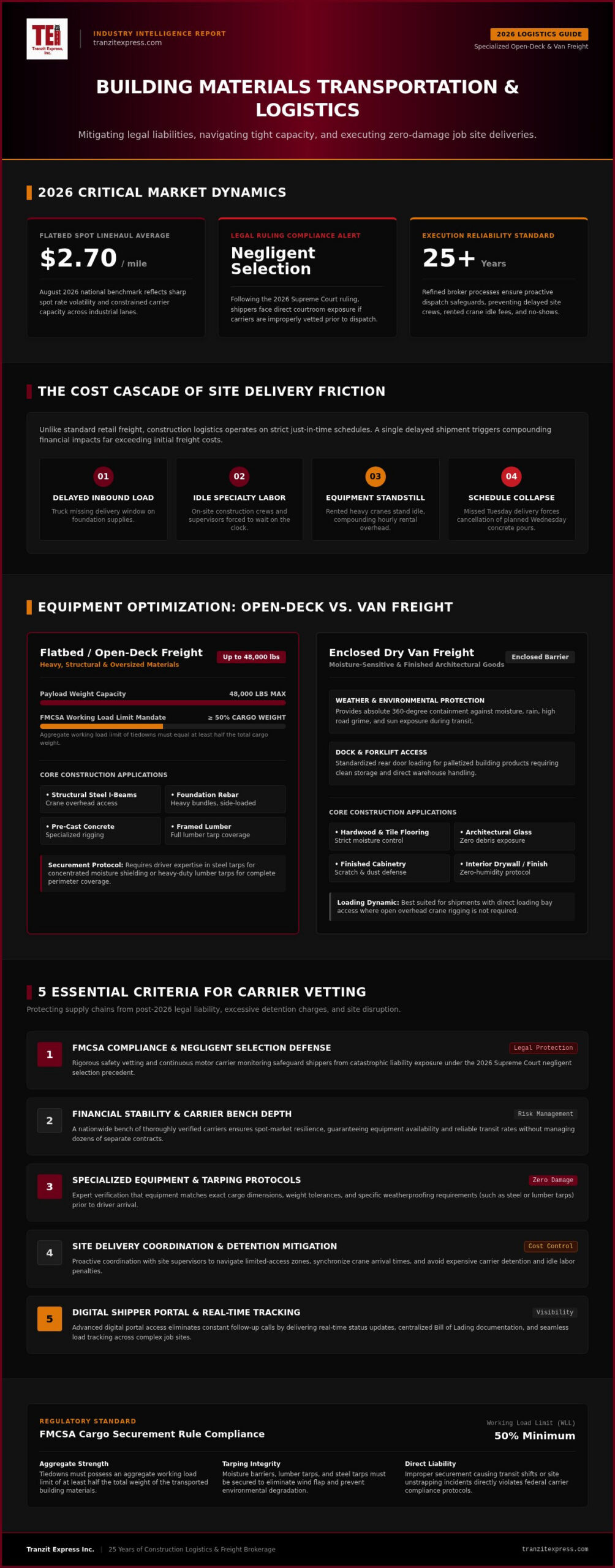
Transporting building materials is a distinct discipline within the freight industry. It requires a level of precision that standard dry van shipping rarely demands. When we talk about building materials transportation services, we are describing the coordination of heavy, often oversized, and weather-sensitive cargo that must arrive exactly when a crew is ready to install it. In 2026, the national landscape is shaped by tighter capacity and stricter carrier vetting requirements, making the steady hand of an experienced partner more valuable than ever. Shippers now face a market where flatbed spot linehaul rates have shown significant volatility, averaging $2.70 per mile in August 2026. This environment rewards those who prioritize stability over the lowest possible bid.
Direct carrier relationships can work for consistent, single-lane routes, but construction projects are rarely that simple. You might need a flatbed for lumber one day and a dry van for moisture-sensitive flooring the next. A broker provides the flexibility to scale equipment needs across the country without managing dozens of individual contracts. This efficiency is vital for maintaining a streamlined supply chain.
Why Construction Logistics Requires Specialized Oversight
Construction projects rely on a diverse mix of supplies, ranging from fragile architectural glass to massive structural steel I-beams. Managing these variables requires a deep understanding of flatbed trailer configurations and specific load-securing protocols. Unlike retail goods, building supplies often operate on a just-in-time schedule. If the foundation rebar doesn’t arrive on Tuesday morning, the scheduled concrete pour on Wednesday is effectively cancelled. This is where professional logistics management for shippers becomes a critical asset. It allows project managers to focus on the build while experts handle the complexities of national routing and carrier compliance.
The Financial Impact of Delivery Delays on Job Sites
The cost of a late delivery extends far beyond the freight bill. When a truck is delayed, you’re often paying for a specialized crew, rented cranes, and site supervisors who are forced to wait. This idle labor creates a domino effect that can push a project’s completion date back by weeks. A veteran freight broker acts as a safeguard against these failures. By maintaining proactive communication and a deep bench of vetted carriers, a broker reduces the risk of no-shows or improper equipment arrival. We’ve spent over 25 years refining these processes to ensure that your supply chain remains a source of stability. We prioritize the fulfillment of promises, ensuring that your materials arrive in a way that respects both your budget and your timeline.
Selecting the Right Equipment: Flatbed vs. Van Freight
Choosing the correct trailer for your project is a technical decision that directly impacts both safety and site efficiency. It isn’t just about finding a truck that can carry the weight. It’s about matching the physical properties of your materials to the specific capabilities of the trailer. Professional building materials transportation services use this logic to minimize the risk of damage. In a market where flatbed capacity remains constrained, making the right equipment choice early prevents the logistical friction that leads to job site delays.
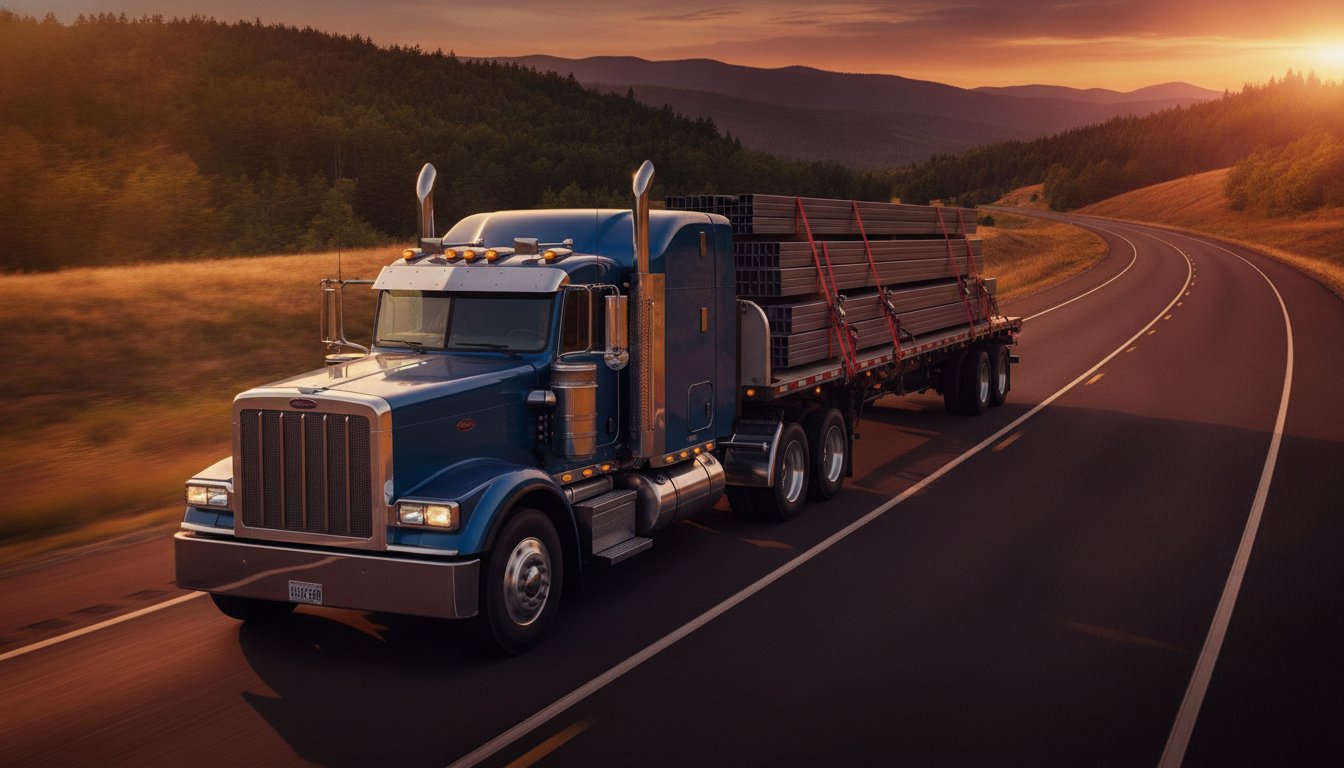
Structural components like lumber, rebar, and pre-cast concrete sections generally require flatbed freight services USA. These trailers allow for side-loading or overhead crane access, which is essential for heavy or oversized items. Safety remains the priority for any open-deck load. Every shipment must strictly comply with FMCSA cargo securement rules. These regulations dictate the strength and number of tiedowns required based on the weight of the cargo, often mandating an aggregate working load limit of at least 50% of the material’s weight. A standard flatbed can typically handle payloads up to 48,000 lbs. A veteran driver knows that proper tarping is just as vital as the straps. Whether it’s steel tarps for moisture protection or lumber tarps for full coverage, the goal is a zero-damage delivery.
Protecting Sensitive Materials with Van Freight Services
For materials that can’t handle environmental exposure, Van Freight Services provide a secure, enclosed environment. This is the standard for architectural millwork, flooring, and electrical fixtures. Dry vans protect these sensitive finishes from road grime and rain. They also allow for efficient shipping of lightweight, high-volume materials, such as fiberglass insulation, where you can maximize the internal cubic capacity of 3,800 to 4,000 cubic feet. If you’re managing a smaller replenishment order, Less-Than-Truckload (LTL) options can be cost-effective. However, LTL requires careful packaging to withstand the additional handling inherent in the hub-and-spoke model.
Selecting equipment doesn’t have to be a guessing game. A reliable partner acts as a steady hand at the wheel, helping you choose the most dependable equipment for your specific cargo. You can easily manage these equipment choices and maintain real-time visibility into your deliveries through our Shipper Portal Access.
5 Key Criteria for Vetting a Building Materials Freight Broker
The 2026 legal landscape has made carrier vetting a critical business function. Following the Supreme Court ruling in Montgomery v. Caribe Transport II, shippers now face increased exposure if they fail to exercise reasonable care during carrier selection. This reality shifts building materials transportation services from a simple procurement task to a vital risk-management strategy. You need a partner who treats compliance as a non-negotiable standard rather than an afterthought.
Start by evaluating a broker’s institutional knowledge. Twenty-five years of experience provides a perspective that newer firms simply haven’t developed. A reliable freight broker should manage national routing by strictly accounting for federal vehicle size and weight standards. This expertise ensures that your heavy steel or concrete shipments don’t run afoul of axle weight restrictions or bridge formula requirements. It’s about knowing the route as well as the cargo.
Verifying Carrier Compliance and Safety Records
A broker’s primary duty is to safeguard your cargo and your company’s liability. This requires auditing more than just insurance certificates. We monitor carrier CSA BASIC scores, inspection histories, and the updated $75,000 FMCSA financial security requirements for property brokers. Choosing a carrier based solely on a low rate often invites significant risk. We prioritize carriers with proven safety records because the cost of an accident or a claim far outweighs any initial savings on a linehaul rate. This level of oversight provides the security you need in a high-stakes industry.
The Role of Veteran Experience in Problem Solving
Construction logistics is inherently volatile. Road closures, weather delays, and specific job site permit issues can occur without warning. A steady hand at the wheel means having the institutional knowledge to solve these problems before they reach the site manager. We value clear communication and transparency above all else. This approach moves the relationship beyond a one-off transaction into a long-term partnership. By utilizing real-time tracking and automated risk scoring, we provide the visibility you need to keep your project on schedule. When complications arise, you don’t need excuses; you need a professional who has seen it all before and knows how to pivot.
Streamlining Job Site Deliveries and Logistics Management
The final stage of the supply chain is often the most complex. Building materials transportation services reach their highest level of difficulty at the active job site. Success here requires more than just a truck; it requires precise synchronization with site managers to ensure that offloading equipment, like cranes or forklifts, is staged and ready for the carrier’s arrival. This coordination is the only way to maintain a sense of order in a high-pressure environment.
Industry standards in 2026 typically allow for a two-hour “free time” window for unloading. Beyond this threshold, detention fees standard across the industry range from $75 to $150 per hour. These costs accumulate quickly, particularly on limited-access sites where a standard 53-foot trailer might struggle to maneuver. Proactive communication ensures the driver knows exactly where to park and which gate to enter, preventing site congestion and protecting your project’s budget from unnecessary penalties.
Coordinating Hot-Shot Loads for Urgent Site Needs
Even the most well-planned projects face unexpected shortages. When a specific component is missing and a crew is standing idle, “yesterday” becomes the deadline. This is where hot shot trucking becomes a strategic asset. These expedited services utilize smaller, more agile equipment to deliver critical materials directly to the site without the delays of traditional hub-and-spoke routing. It’s a focused solution for time-sensitive gaps.
We treat these urgent loads with the same professional oversight as our primary freight. Rapid material replenishment reduces the heavy financial burden of site shutdowns. It’s about providing a steady hand when the pressure is highest, ensuring that a small material gap doesn’t lead to a major project failure. We prioritize the fulfillment of these promises so your crew can get back to work without delay.
Managing Intermodal Transportation Solutions for Large-Scale Supply
For long-haul, high-volume material transport, intermodal transportation solutions offer a balanced approach to cost and efficiency. Rail transport is particularly effective for bulk building supplies that don’t require immediate site arrival. By moving materials via rail for the long-haul portion and utilizing trucks for the final mile, you can achieve significant savings on national distribution while maintaining a steady flow of inventory.
A veteran broker ensures seamless transitions between these modes of transport. We manage the documentation and tracking across every leg of the journey, providing the real-time visibility needed for long-term project planning. This methodical approach allows you to maintain a consistent supply of materials while optimizing your overall logistics spend. If you’re ready to bring this level of order to your next project, access our Shipper Portal to start coordinating your next delivery.
Partnering with Tranzit Express for Reliable Construction Logistics
Selecting a logistics partner for your construction project isn’t just about moving freight. It’s about protecting your timeline and your budget. Tranzit Express Inc. provides the institutional knowledge required to manage the high-stakes environment of construction supply chains. With over 25 years of industry experience, we offer more than just building materials transportation services. We provide a steady hand at the wheel that reduces the stress of national logistics. Our methodical approach ensures that every load, whether it’s a flatbed of structural steel or a van load of architectural fixtures, receives the same level of professional oversight.
We don’t position ourselves as a flashy innovator. Instead, we act as a dependable veteran who values clear communication above all else. This focus on reliability is essential when navigating the complexities of modern building material delivery. By prioritizing the fulfillment of our promises over marketing hype, we’ve built a reputation for consistency that construction professionals trust for their most critical projects.
Leveraging the Shipper Portal for Real-Time Visibility
Modern logistics management requires more than just phone calls and emails. It demands organized, accessible data. Our Shipper Portal Access acts as a central hub for project managers and procurement teams. You can track current shipments, review carrier details, and access full shipment histories in one place. This tool is designed to reduce the administrative friction that often bogs down complex builds. Instead of chasing down documentation, you have real-time visibility into your material location and delivery status.
This level of transparency creates a sense of order in an industry that is often chaotic. It allows you to plan your site labor and equipment rentals with confidence. When everyone has access to the same reliable information, the risk of miscommunication disappears. The portal is an extension of our commitment to a collaborative partnership, giving you the tools needed to maintain a streamlined supply chain from quote to final offload.
A Reassuring Standard for National Building Material Shipping
Construction projects across the United States require a partner with a national reach and a local-rooted sense of responsibility. We maintain a rigorous standard for carrier compliance, ensuring that every truck meeting your site is vetted for safety and financial stability. This commitment to excellence is what has allowed us to serve the industry for over two decades. We don’t view our work as a series of simple transactions. We see it as a collaborative, long-term relationship where our primary goal is your success.
Getting started with a veteran logistics team is a straightforward process. Whether you’re planning a multi-phase commercial build or need an urgent replenishment, we’re ready to provide a comprehensive analysis of your needs. You can request a freight quote through our portal or by contacting our team directly. We’ll walk you through the options for flatbed shipping, van freight, or specialized intermodal solutions tailored to your specific materials. Let us handle the complexities of the road so you can focus on the build.
Building a Foundation for Logistical Success
Masterful building materials transportation services require a blend of technical equipment knowledge and rigorous carrier vetting. You now have the framework to select between flatbed and van freight while managing the specific timing constraints of an active job site. By prioritizing clear communication and real-time visibility, you can eliminate the delays and damage that often stall major projects. It’s about bringing order to a complex process through methodical planning and professional oversight.
Tranzit Express Inc. brings 25+ years of logistics expertise to every shipment. We provide a national network of vetted carriers and dedicated shipper portals to ensure your materials arrive exactly when they’re needed. We act as a steady hand at the wheel to protect your cargo and your project schedule. Request a Reliable Freight Quote from Tranzit Express Inc. to secure your next delivery. We look forward to building a dependable partnership that keeps your supply chain moving forward with confidence.
Frequently Asked Questions
What are the most common equipment types used for building materials transportation?
Flatbed trailers and dry vans are the primary equipment types used in this sector. Flatbeds allow for efficient side-loading of heavy items like lumber and structural steel. Step-deck trailers are often used for taller loads to avoid height permits, while dry vans protect moisture-sensitive materials like drywall and flooring. Choosing the right equipment depends on the cargo’s dimensions and environmental needs. We help you match your specific material to the most secure trailer option available.
How does a freight broker ensure carrier compliance for construction loads?
A broker audits carrier insurance, safety ratings, and operating authority to protect your liability. We monitor CSA scores and inspection histories to ensure every driver meets our high standards. This is critical for building materials transportation services where safety and securement are non-negotiable. We verify that carriers maintain proper cargo and auto liability coverage. This methodical vetting process protects your business from the legal risks associated with negligent carrier selection on high-stakes job sites.
Can building materials be shipped via intermodal transportation?
Yes, intermodal transportation is an efficient solution for bulk materials moving long distances. This method combines rail and truck transport to optimize costs for high-volume supplies like bagged cement or shingles. It’s best suited for materials that don’t require immediate site arrival. We coordinate the transition between rail and road to ensure a seamless flow. This approach provides a consistent supply of materials while reducing overall logistics spend for large-scale national projects.
What information is needed to get an accurate building materials freight quote?
To provide an accurate quote, we need the exact dimensions, weight, and material type. You should also specify if the load requires specialized equipment like lumber tarps, chains, or straps. Pickup and delivery locations must be clear, along with any site-specific constraints such as narrow gates or limited offloading hours. Providing these details upfront allows us to offer a predictable rate. You can easily submit these specifications through our portal to begin your next project.
How do you handle deliveries to job sites with limited access or strict delivery windows?
Managing limited-access sites requires proactive coordination with site managers before the truck arrives. We utilize smaller equipment or hot-shot loads for locations where a traditional 53-foot trailer cannot maneuver. Strict delivery windows are managed through real-time tracking and constant communication with the driver. We ensure the site is ready for offloading to prevent congestion. This methodical approach helps you avoid the heavy detention fees that often accumulate during delivery delays.
What is the difference between FTL and LTL for building material shipments?
Full Truckload (FTL) means your materials occupy the entire trailer and travel directly to the destination. It’s the standard for large orders of lumber or steel. Less-Than-Truckload (LTL) involves sharing trailer space with other shippers, which is cost-effective for smaller replenishment orders. FTL offers faster transit times and less handling, reducing the risk of damage. LTL requires more robust packaging to withstand the hub-and-spoke model. We help you determine which mode fits your current volume.
How can hot-shot trucking help avoid construction project delays?
Hot-shot trucking provides rapid material replenishment when a project faces an unexpected shortage. These agile loads utilize smaller trucks to deliver critical supplies directly to the site without the delays of traditional routing. It’s a strategic solution for emergency gaps that could otherwise stall an entire crew. We treat these urgent shipments with the same veteran oversight as our standard freight. This ensures that a small material shortage doesn’t turn into a costly site-wide shutdown.
What role does insurance play in building materials transportation services?
Insurance is the primary safeguard for your financial interests during transit. Carriers must maintain minimum levels of cargo and auto liability insurance to cover potential damage or accidents. As your broker, we verify these policies and offer contingent coverage for added security. This protection is vital when hauling high-value or heavy construction materials across the country. It ensures that your investment is protected from the moment it leaves the supplier until it’s safely offloaded at the site.