
What if the lowest rate on your screen is actually the most expensive mistake your supply chain will make this year? In an industry where “fast and cheap” often leads to radio silence during transit and unexpected rate hikes, the search for a reliable freight broker can feel like an endless cycle of frustration. You deserve a partner who values your cargo’s safety as much as you do. We understand the stress of wondering if a carrier meets current insurance standards or if your shipment will arrive intact and on schedule.
This guide provides the clarity you need to establish predictable shipping costs and reduce administrative headaches. You’ll learn how to identify a partner that prioritizes transparent communication and national on-time delivery. We will examine the critical shifts in 2026 logistics, including the latest FMCSA financial responsibility rules and the vetting standards that separate seasoned veterans from the crowd. By the end, you’ll have a clear roadmap for building a B2B partnership that brings order to your complex shipping needs and provides a steady hand at the wheel for your national freight operations.
Key Takeaways
- Understand how a strategic logistics partnership serves as a seamless extension of your own department to manage compliance and carrier sourcing.
- Identify the three essential pillars of performance—compliance, communication, and consistency—that maintain order in a complex national market.
- Learn how to match specific cargo requirements with the correct transport modes, including van, flatbed, and intermodal services, to optimize safety and cost.
- Discover the step-by-step process for vetting a reliable freight broker by prioritizing long-term operational stability and a proven 25-year track record.
- See how utilizing dedicated shipper portals and transparent reporting can significantly reduce administrative stress and provide confidence in every shipment.
Defining the Role: What Makes a Freight Broker Truly Reliable?
A reliable freight broker operates as a strategic extension of your internal logistics department. Rather than simply moving a load from point A to point B, they provide a layer of security and expertise that manages the friction of national shipping. Their primary functions include sourcing qualified motor carriers, negotiating competitive rates, and maintaining rigorous compliance oversight. For a national shipper, this relationship shifts from a series of stressful transactions to a cohesive B2B logistics partnership. By taking on the heavy lifting of carrier vetting and route optimization, a broker significantly reduces the administrative burden on your internal team. This allows you to focus on your core business while we maintain order in a complex market. True reliability is found in the quiet confidence that every detail is handled before the truck even arrives at the dock.
The Intermediary Advantage: More Than Just a Middleman
To understand the foundational aspects of this role, one might ask: What is a Freight Broker? At its core, the advantage lies in access and professional advocacy. A professional broker maintains a pre-vetted national network of qualified carriers that a single shipper could rarely assemble alone. They leverage deep market intelligence to secure rates that reflect current capacity trends while ensuring cargo safety remains the highest priority. This expertise is especially vital when managing complex national routing where local knowledge and carrier reliability are paramount to maintaining a steady supply chain. We prioritize a methodical approach to carrier selection, ensuring every partner meets the high standards our clients expect. This level of vetting provides a sense of security that goes far beyond a simple booking service.
Freight Broker vs. Carrier: Understanding the Strategic Difference
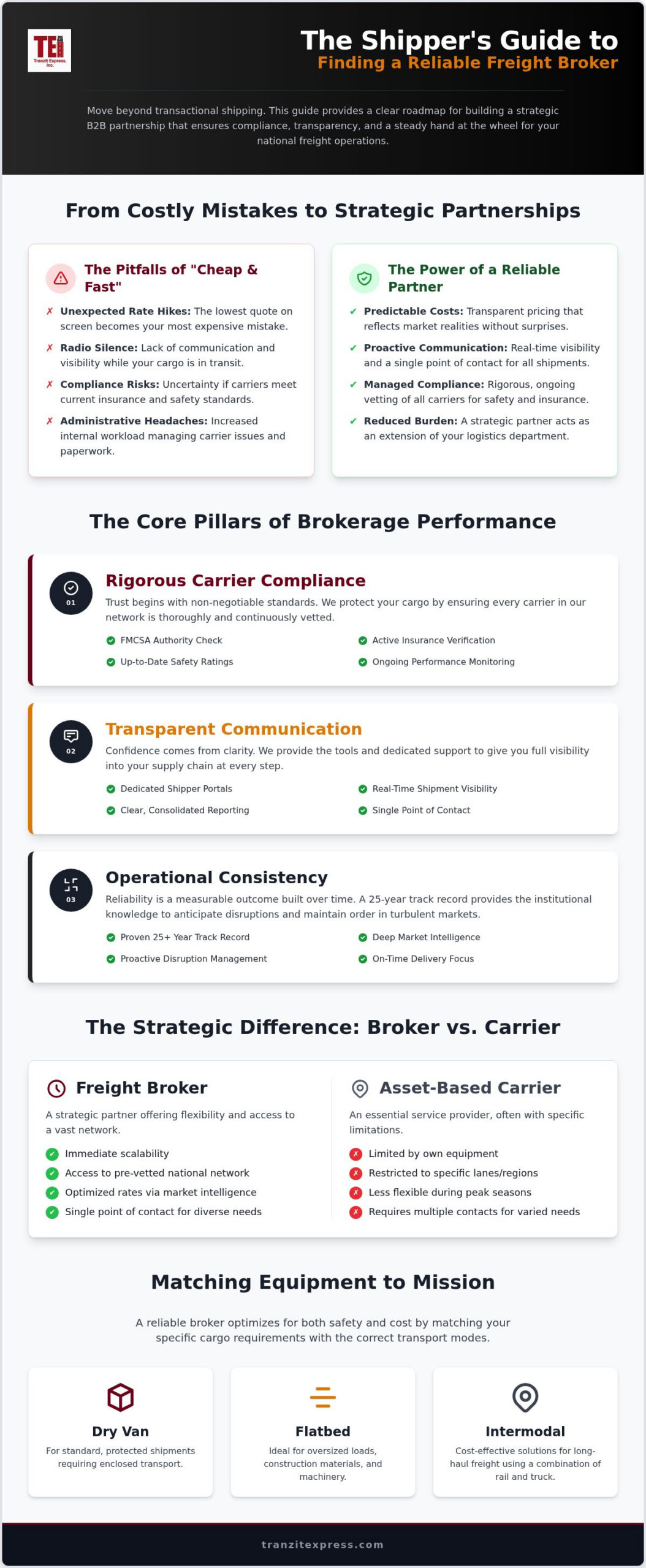
While asset-based carriers are essential to the industry, they’re often limited by their own equipment and specific lanes. A broker offers a level of flexibility that an asset-heavy carrier can’t match. Because they aren’t constrained by a fixed fleet, brokers provide immediate scalability during peak shipping seasons or sudden market shifts. You can learn more about these specific operational roles in our guide: What Does a Freight Broker Do? This strategic difference allows you to maintain a lean logistics operation while knowing your broker has the “steady hand at the wheel” to find the right equipment exactly when it’s needed. By acting as a single point of contact for a vast array of services, we provide a sense of security and order that single-asset companies simply can’t provide. This results in a more efficient, less stressful experience for your entire logistics team.
The Core Pillars of Professional Brokerage Performance
Reliability isn’t a vague promise; it’s a measurable outcome built on three foundational pillars: compliance, communication, and consistency. In the 2026 market, where capacity fluctuates and regulations tighten, a reliable freight broker acts as a stabilizing force. This “steady hand at the wheel” approach ensures that your supply chain remains orderly even when national market conditions become turbulent. Leveraging over 25 years of institutional knowledge allows us to anticipate disruptions before they impact your bottom line. Professional standards aren’t just about following rules; they’re about preventing cargo delays and insurance disputes that could derail your operations.
Rigorous Carrier Compliance and Vetting Standards
True logistics trust begins with a non-negotiable standard for carrier vetting. Every motor carrier in our national network undergoes a disciplined review of their FMCSA authority, safety ratings, and active insurance coverage. We don’t just check these boxes once. We perform ongoing monitoring to ensure service levels remain high and risks are mitigated. This methodical vetting process protects your cargo from the pitfalls of under-insured or unsafe operators. By maintaining these high standards, we provide a sense of security that allows you to focus on your business growth rather than carrier litigation. If you’re looking for a partner who prioritizes these standards, you can explore our national shipping solutions to see how we maintain this consistency.
Transparent Communication and Real-Time Visibility
Technology has transformed how we track freight, but it hasn’t replaced the need for human accountability. While we stay informed on digital freight brokerage trends to improve efficiency, we believe a single point of contact is superior to a faceless automated system. Proactive updates reduce shipper anxiety by providing clarity during every phase of transit. Our dedicated Shipper Portal Access offers real-time visibility and streamlined documentation management, yet our team is always available to provide expert guidance. This combination of modern tools and veteran expertise ensures that communication is always clear, timely, and purposeful. Consistency in communication is what builds long-term B2B partnerships and reduces the administrative stress often associated with national logistics.
Matching Equipment to Mission: Essential Freight Services
A reliable freight broker understands that logistics isn’t a one-size-fits-all industry. Every shipment has a specific “mission” that requires a precise equipment match to ensure both cost-efficiency and cargo safety. Whether you’re moving palletized retail goods or oversized industrial machinery, the ability to source diverse equipment types is a hallmark of a seasoned partner. This operational capability is backed by regulatory compliance, such as the FMCSA financial responsibility rules, which protect shippers and carriers alike. By maintaining a broad national network, we ensure your cargo is never forced into an inappropriate transport mode simply because it’s what happens to be available in the moment.
Van Freight and Flatbed Shipping Solutions
Dry van services remain the backbone of national freight, providing a secure, enclosed environment for protected cargo. However, when your shipment exceeds the dimensions of a standard trailer or requires side-loading, flatbed shipping becomes the necessary choice. These loads involve higher complexities, including specialized securement, tarping, and specific routing requirements to avoid low clearances. Choosing a broker with deep expertise in these areas is vital for preventing damage and costly transit delays. For a more detailed look at these open-deck requirements, you can review our Flatbed Freight Services USA guide. Our methodical approach to equipment matching provides a sense of order in a complex national market.
Hot-Shot Trucking and Intermodal Transportation
Sometimes, the mission requires speed or long-haul cost-containment that standard trucking cannot provide. Hot-shot loads utilize smaller, more agile equipment for time-sensitive, smaller shipments that don’t require a full 53-foot trailer. This service is a strategic tool for urgent repairs or production line-down scenarios. You can explore how this fits your supply chain in our Hot Shot Trucking Guide. Conversely, intermodal transportation leverages the efficiency of rail for long-distance hauls, offering a balance of cost and capacity that helps stabilize your logistics budget. A reliable freight broker seamlessly integrates these diverse modes into a single, cohesive strategy, providing the steady hand at the wheel your national operations require to stay on schedule and within budget.
How to Vet Your Next Logistics Partner: A Step-by-Step Guide
Vetting is the most critical step in securing your supply chain. It’s the difference between a seamless delivery and a logistical nightmare. When searching for a reliable freight broker, longevity should be your first metric. A 25-year track record indicates financial and operational stability that newer startups simply haven’t tested. You must verify their MC number and ensure they maintain the required BMC-84 bond. Beyond the paperwork, assess their technological capabilities. A dedicated shipper portal isn’t just a tech feature; it’s a window into your operations that provides real-time transparency. Request references or case studies that demonstrate consistent national performance across various lanes. This methodical approach ensures you’re choosing a partner, not just a service provider.
Essential Questions for Assessing Broker Financial Stability
Ask direct questions about their payment terms and carrier payment history. A broker with a poor reputation among carriers will struggle to find high-quality equipment for your loads. You should also understand the specifics of their contingent cargo insurance coverage to ensure your assets are protected if a carrier’s policy fails. In the 2026 market, financial vetting is more important than ever to avoid the risks of broker insolvency. Financial stability protects the shipper by ensuring that cargo isn’t delayed by payment disputes or unresolved insurance claims. This steady financial footing is a hallmark of a mature B2B partnership that prioritizes long-term security over short-term gains.
Verifying Industry Experience and Communication Protocols
You can test a broker’s reliability early by monitoring their response time during the quoting process. If they’re slow to respond when they’re trying to earn your business, they’ll likely be even slower when a shipment faces a delay. Evaluate the depth of their carrier network for your specific lanes and equipment needs. In the 2026 market, “experienced” means more than just holding a license; it means having a proven track record of solving complex routing issues. This institutional knowledge allows a broker to act as a supportive guide through market volatility. True expertise is found in the ability to maintain order when the unexpected happens. To experience this level of professional oversight firsthand, you can partner with a seasoned logistics expert today. A reliable freight broker doesn’t just book loads; they provide a sense of security that your cargo will arrive on time and intact.
Tranzit Express: 25 Years of Reassuring National Logistics
Tranzit Express Inc. represents the steady hand at the wheel that national shippers require in 2026. With over 25 years of industry experience, we’ve navigated every market shift, providing a level of security that only comes from deep institutional knowledge. We understand that a reliable freight broker is more than just a contact in a database; it’s a partner dedicated to your cargo’s safety and your company’s reputation. Our commitment to on-time delivery and professional communication isn’t just a goal. It’s the standard we maintain across every mile of the United States. We provide customized solutions for van freight services, flatbed shipping, hot-shot loads, and intermodal transportation, ensuring that your specific equipment needs are met with precision and care.
To maintain this sense of order, we utilize dedicated Shipper and Carrier Portal Access. These tools aren’t meant to replace human interaction but to enhance it by providing real-time transparency and streamlined documentation. When you work with us, you aren’t just booking a truck. You’re accessing a methodical logistical process designed to reduce your administrative stress and provide predictable results. By prioritizing the fulfillment of promises over marketing hype, we ensure that every shipment is handled with the quiet confidence of a seasoned industry veteran.
Our Partnership Approach to National Freight
We believe in moving beyond simple transactions to build collaborative logistics relationships. Our 25 years of experience translate directly into peace of mind for our clients. In an unpredictable transportation market, having a dependable broker means knowing that your compliance standards are always met and your communication lines are always open. We act as a supportive guide, using our veteran expertise to anticipate challenges before they disrupt your supply chain. This partnership approach ensures that your logistics strategy remains consistent, regardless of external market volatility. We value clear communication above all else, which is why our clients trust us to manage their most critical national freight needs.
Get Started with a Reliable Freight Quote
Starting a partnership with us is a straightforward, professional process. You can request a quote for your next load via phone or email, and our team will provide a detailed assessment based on current national capacity. During our onboarding and routing process, we take the time to understand your specific requirements and service expectations. We don’t believe in rushed decisions or aggressive sales tactics. Instead, we offer a composed and methodical approach to finding the right solution for your freight. If you’re ready to bring order and stability to your national shipping operations, partner with an experienced freight broker today. Our team is ready to provide the professional oversight and steady hand your cargo deserves.
Securing Your Supply Chain for 2026 and Beyond
Securing your supply chain requires moving beyond transactional logistics to embrace a long-term B2B partnership. You’ve seen how a reliable freight broker acts as a strategic extension of your team, managing compliance and providing real-time visibility through dedicated portals. By matching the correct equipment to your specific mission and conducting rigorous vetting, you can eliminate the administrative stress that often plagues national shipping.
Tranzit Express Inc. brings over 25 years of industry experience and a proven track record of national US coverage to every load we manage. Our specialized load expertise ensures that whether you need van, flatbed, or hot-shot services, your cargo is in capable hands. We prioritize the fulfillment of promises over marketing hype, acting as the steady hand at the wheel your business deserves in an unpredictable market.
When you’re ready to experience a methodical and organized approach to logistics, we’re here to help. Request a Reliable Freight Quote from Tranzit Express today and take the first step toward a more secure shipping future. We look forward to supporting your growth with the consistency and excellence your operations require.
Frequently Asked Questions
How do I know if a freight broker is legitimate and licensed?
You can verify a broker’s legitimacy by checking their Motor Carrier (MC) number on the FMCSA’s official SAFER website. A legitimate partner must maintain a $75,000 surety bond or trust fund, known as BMC-84 or BMC-85. Their status should clearly show as “Active” for broker authority. Working with an organization that has 25 years of industry experience provides additional peace of mind, as long-term operations suggest a history of federal compliance and financial stability.
What is the difference between a freight broker and a freight forwarder?
A freight broker acts as a non-asset intermediary that connects shippers with motor carriers without taking physical possession of the cargo. In contrast, a freight forwarder often stores, assembles, or consolidates freight under their own name. While both facilitate transportation, a reliable freight broker focuses on strategic carrier sourcing and rate negotiation across a national network to ensure your shipment moves efficiently from origin to destination without unnecessary handling delays.
Why should I use a freight broker instead of calling carriers directly?
Brokers provide scalability and access to a vast, pre-vetted network that a single carrier can’t offer. If a direct carrier’s truck breaks down or they lack capacity, your shipment stops. A broker has the resources to find a replacement immediately. This flexibility is essential for national shipping, as it reduces administrative stress and ensures you always have a steady hand managing your logistics needs regardless of individual carrier equipment failures.
What kind of cargo insurance should a reliable freight broker carry?
A professional broker should maintain contingent cargo insurance to protect your investment if a carrier’s primary policy is denied or fails to cover a claim. This coverage typically starts at $100,000 but can be scaled based on your specific load value. It’s a critical safety net that provides a sense of security. You should always ask for a certificate of insurance to verify that the broker’s coverage is active and sufficient for your cargo.
How does a broker vet the carriers they use for my shipments?
Vetting involves a methodical review of the carrier’s FMCSA safety ratings, active insurance policies, and operating authority. We monitor these details continuously rather than performing a one-time check. This disciplined process ensures every carrier in our national network meets high standards of excellence. By prioritizing safety and compliance, a reliable freight broker protects your cargo and reduces the risk of transit disruptions or legal complications that can arise from unvetted equipment.
Can a freight broker help with specialized loads like flatbed or hot-shot?
Yes, experienced brokers specialize in matching specific missions to the correct equipment. Whether you require flatbed shipping for oversized equipment or hot-shot loads for time-sensitive, smaller shipments, a broker has the connections to secure specialized trailers. This expertise extends to intermodal transportation as well. Having a partner with 25 years of experience ensures that even complex, non-standard freight is handled with professional oversight and a deep understanding of specialized routing requirements.
What information do I need to provide to get an accurate freight quote?
To receive a precise quote, you should provide the origin and destination zip codes, total weight, dimensions, and the specific commodity type. You must mention if you need specialized equipment like a flatbed or if the load is time-sensitive. Clear details allow us to provide a transparent rate without hidden fees. This organized approach to quoting helps maintain predictable shipping costs and ensures we source the right carrier for your specific national routing.
How does a shipper portal improve the logistics management process?
A dedicated shipper portal provides real-time transparency and centralizes all transit documentation in one secure location. It allows you to track shipments, view delivery receipts, and manage invoices without waiting for a phone call. This tool isn’t just about technology; it’s about reducing your administrative burden and providing order. By offering instant access to data, the portal ensures you remain informed and confident throughout the entire shipping process from pickup to final delivery.