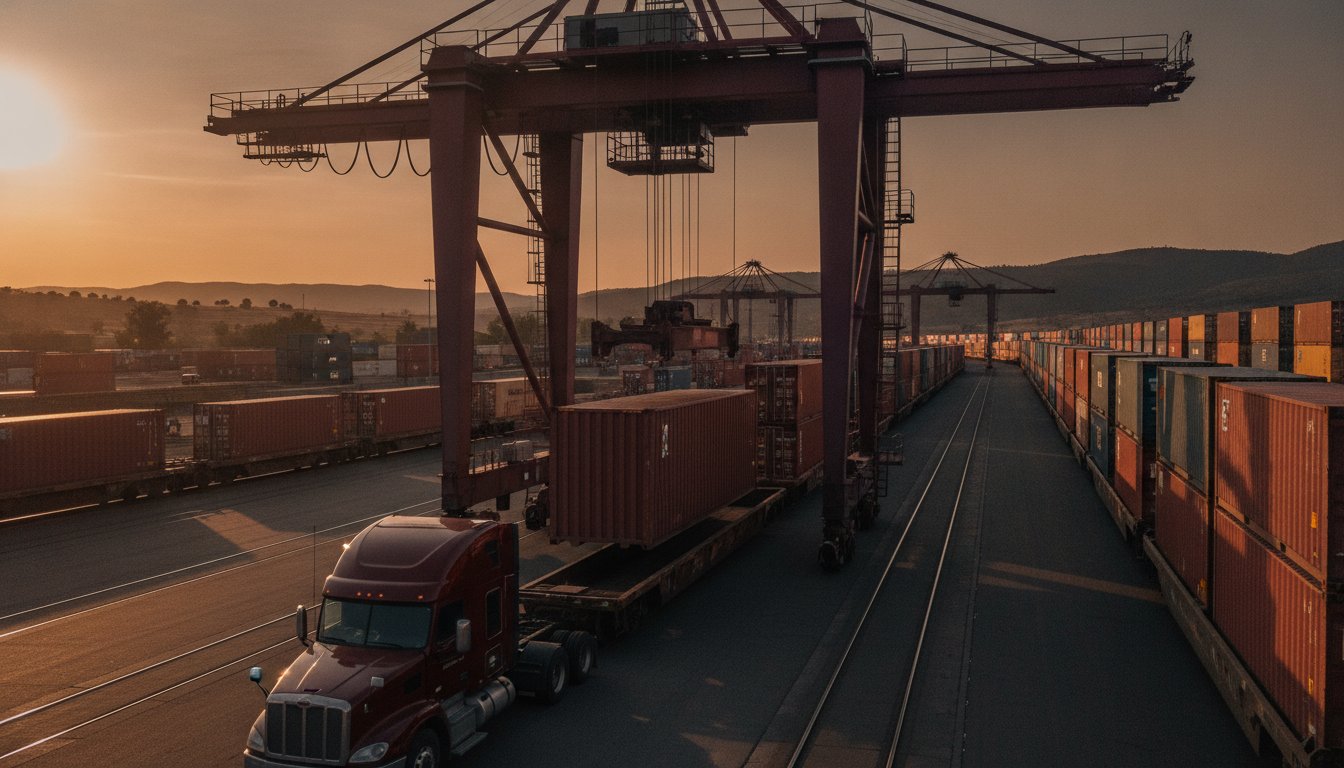
Relying solely on the highway for long-haul shipping is no longer a sustainable strategy for a volatile 2026 market. You’ve likely felt the sting of unpredictable trucking rates and the frustration of capacity vanishing just when your seasonal demand peaks. It’s a common challenge for shippers who are also under increasing pressure to meet corporate sustainability goals while managing rail and truck intermodal freight requirements. We understand that coordinating these moving parts feels like a constant balancing act where stability is often hard to find.
This strategic guide shows you how to optimize your supply chain by combining the cost-efficiency of the rails with the door-to-door flexibility of the road. By integrating these modes, you can secure consistent capacity and lower your overall transportation spend. We’ll explore the logistics of these movements and demonstrate how a veteran partnership, supported by advanced shipper portals, provides the steady hand needed to manage this complexity. From lane optimization to real-time visibility, you’ll discover a methodical approach to building a more resilient and professional shipping operation that delivers results without the typical industry stress.
Key Takeaways
- Understand how rail and truck intermodal freight uses a single container across multiple modes to maintain cargo integrity and reduce handling risks.
- Learn why converting long-haul lanes over 500 miles to rail creates a reliable capacity hedge against driver shortages and market volatility.
- Identify the specific lead time and distance requirements needed to determine if intermodal is the right strategic fit for your cargo.
- Discover how veteran broker partnerships and advanced shipper portals simplify the complexity of managing multi-carrier handoffs.
What is Rail and Truck Intermodal Freight?
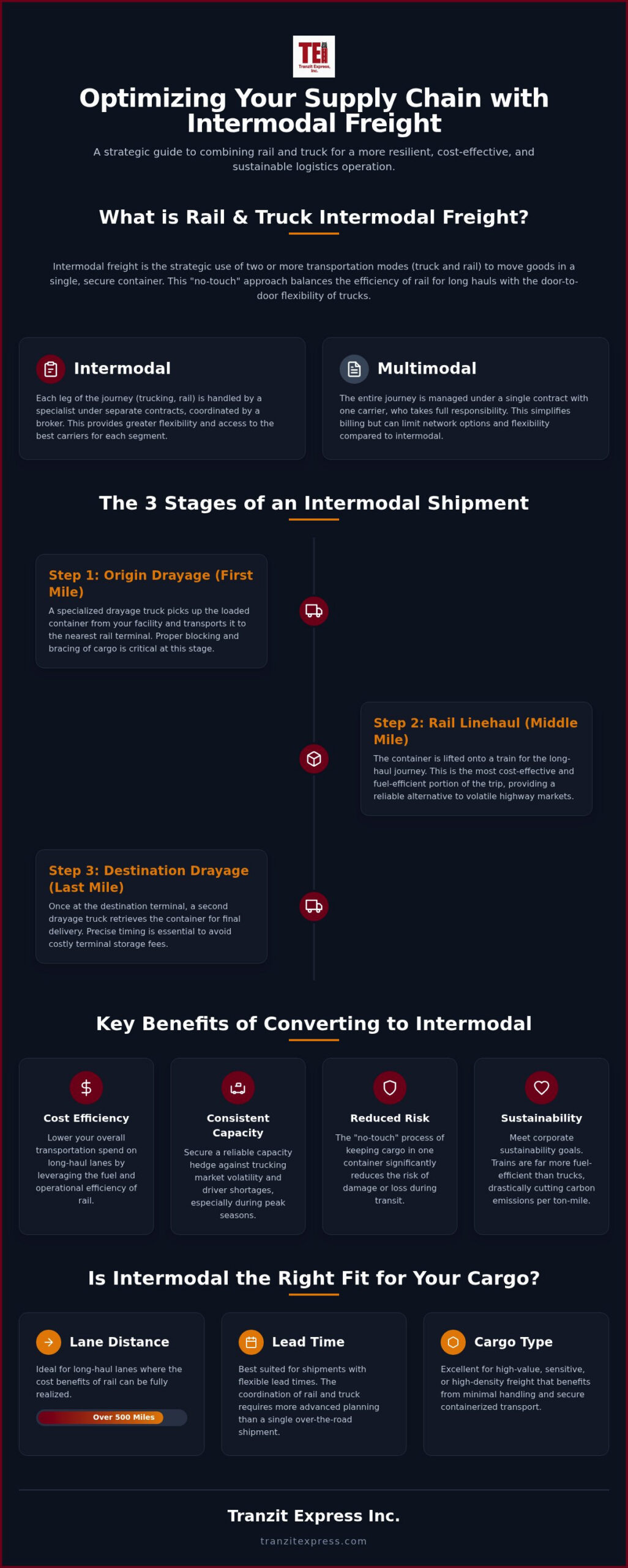
Rail and truck intermodal freight is the strategic use of two or more transportation modes to move goods from origin to destination in a single journey. This process relies heavily on containerization; cargo is loaded into a secure unit that stays closed throughout its entire trip. Over the last 25 years, this method has evolved from a niche alternative into a foundational pillar of national logistics. It’s a proven system that balances the high-speed reach of trucking with the heavy-haul efficiency of the rails.
Achieving a seamless transition between these modes requires precision. While the physical movement happens on tracks and highways, the coordination happens behind the scenes. A veteran broker acts as the steady hand at the wheel, managing the handoffs between drayage trucks and Class I railroads to ensure your cargo never sits idle. This professional management reduces the stress of multi-carrier logistics and provides a sense of order in a complex industry.
Intermodal vs. Multimodal: Understanding the Difference
Choosing the right structure for your supply chain depends on how much control and flexibility you need. In an intermodal arrangement, each leg of the journey involves separate contracts or entities, which a professional broker typically organizes into a single, cohesive plan. Multimodal shipping, by contrast, operates under one single contract with one carrier responsible for the entire trip. For national distribution, intermodal is often the preferred choice because it allows for greater flexibility. You aren’t locked into one carrier’s limited network; instead, you can leverage the best available rail lanes and local trucking experts to optimize every mile.
The Role of the Intermodal Container
The container is the heart of the operation. Most domestic shipments utilize 53-foot containers, which mirror the capacity of a standard dry van trailer. International movements typically use 20-foot or 40-foot units. These containers follow strict ISO standards, allowing them to shift from a truck chassis to a rail car without the cargo ever being handled. This “no-touch” approach significantly reduces the risk of damage or loss during transit. It’s a secure, standardized way to move freight that provides peace of mind for high-value or sensitive loads. By keeping the goods inside the same unit from door to door, the process remains streamlined and efficient.
The 3 Stages of an Intermodal Shipment
An intermodal journey is a meticulously timed relay race where the container serves as the baton. While the cargo remains undisturbed within its steel walls, the power units pulling it change across three distinct segments. This transition from road to rail and back to road requires a high level of professional coordination. Without a steady hand managing the handoffs, shipments can easily fall victim to communication gaps or costly terminal storage fees. A logistics provider acts as the central point of contact, ensuring each carrier is aligned with the schedule.
Step 1: Origin Drayage (The First Mile)
The process begins with drayage, a specialized trucking service that handles short-haul movements. A local driver picks up the loaded container from your facility and transports it to the nearest rail terminal. During this stage, it’s vital to ensure the cargo is properly blocked and braced. Rail transport involves different physical forces than over-the-road trucking, so securement is a priority for preventing transit damage. We coordinate with drayage partners who understand these requirements, ensuring the first leg of the journey is handled with care.
Step 2: The Rail Linehaul (The Middle Mile)
At the terminal, the container is lifted onto a specialized flatcar or a double-stack well car. This middle mile is the most cost-effective portion of the trip. Class I railroads move thousands of tons of freight across the country with far greater fuel efficiency than individual trucks. It’s a stable, predictable environment for long-haul lanes that provides a reliable alternative to the volatile highway market. Managing the transition of rail and truck intermodal freight effectively at this stage is what separates a standard shipment from a truly optimized supply chain.
Step 3: Destination Drayage (The Last Mile)
Once the train reaches the destination rail ramp, the final drayage leg begins. Speed and timing are critical here. A second truck carrier must be ready to retrieve the container as soon as the railroad grounds the unit. If the driver isn’t synchronized with the train’s arrival, the cargo sits, and you may incur daily storage charges. Our team provides the oversight needed to ensure these handoffs are seamless. Shippers who utilize our Shipper Portal Access can track these milestones in real-time, providing a sense of order throughout the entire transit.
Key Benefits of Converting to Rail Intermodal
Converting long-haul freight to rail isn’t just a cost-saving measure; it’s a strategic move to build a more resilient supply chain. When you move rail and truck intermodal freight on lanes exceeding 500 miles, you’re accessing a pricing model that is inherently more stable than the highway market. This distance allows the fuel efficiency of the locomotive to offset the costs of the initial and final truck drayage legs. It’s a proven way to gain a competitive edge in a market where every cent counts.
Beyond the financial gains, rail serves as a critical capacity hedge. We’ve all seen how quickly the trucking market can tighten during peak seasons or driver shortages. Rail offers a reliable alternative that keeps your goods moving when truck trailers are hard to find. Because rail schedules are fixed and less susceptible to the unpredictability of highway traffic, they provide a level of consistency that helps you plan your inventory with greater confidence. It’s about creating a sense of order in an often chaotic industry.
Cost Stability in a Volatile Market
Intermodal rates fluctuate far less than over-the-road spot market rates. This stability is a direct result of how railroads manage their fuel consumption and labor. Trains are significantly more fuel-efficient than trucks, often moving a ton of freight nearly 500 miles on just one gallon of diesel. This efficiency means that when fuel prices spike, the surcharge impact on your total bill is much lower than it would be for a pure trucking move. For a comprehensive look at how these dynamics affect your bottom line, explore The Definitive Guide to Intermodal Transportation Solutions in 2026. By locking in these more predictable rates, you can protect your margins from the sudden swings of the highway market.
Sustainability and Corporate Social Responsibility (CSR)
A single freight train can carry the load of several hundred trucks, immediately lowering the carbon footprint of every ton moved across the country. This massive reduction in emissions is a key component for shippers striving to meet 2026 carbon reduction targets. Choosing rail isn’t just a logistical decision; it’s a statement about your company’s commitment to responsible business practices. Green logistics has moved from a “nice-to-have” to a core brand value that customers and stakeholders now expect. By integrating rail into your national distribution strategy, you’re contributing to a more sustainable future while maintaining the high standards of service your receivers demand. It’s a professional approach that balances environmental goals with practical operational needs.
Is Intermodal Right for Your Cargo? A Selection Framework
Not all cargo is a candidate for the rails. Identifying the right freight requires a methodical look at your supply chain. The sweet spot for rail and truck intermodal freight typically lies in lanes between 500 and 3,000 miles. In these corridors, the efficiency of the rail linehaul overcomes the fixed costs of the truck drayage at both ends. For shorter distances, the time spent at terminals often outweighs the potential savings. It’s about finding the balance where distance creates a meaningful reduction in transportation spend.
Weight and commodity type also play a role in this selection framework. Rail is exceptionally well-suited for dense, heavy freight such as industrial materials or consumer packaged goods. While standard DOT highway limits still apply to the drayage portions of the trip, the rail itself can often accommodate heavier loads without the same axle-weight concerns found on the open road. Non-perishable goods are the primary choice here, as the slightly longer transit times are a fair trade-off for the increased capacity and reduced costs.
Lanes and Lead Times: Managing Expectations
Intermodal is a tool for consistent, planned freight rather than emergency shipments. Generally, you should plan for an intermodal shipment to take one to two days longer than a standard over-the-road (OTR) move. This “intermodal buffer” allows for the time needed to ground the container at the terminal and coordinate the final delivery. By building this small window into your inventory planning, you gain a level of cost stability that OTR simply cannot match. It’s a professional way to manage expectations while securing your bottom line.
Cargo Security and Rail-Specific Packaging
Shipping by rail introduces different physical forces, such as harmonic vibrations and slack action. Proper blocking and bracing are essential to ensure your cargo arrives in the same condition it left. However, intermodal containers offer a significant security advantage; once they’re double-stacked on a railcar, they’re nearly impossible to access, providing a high level of protection against theft. Consulting with a professional logistics provider ensures your packaging meets rail requirements and protects your investment. To see if your specific lanes are a fit for this model, you can request a strategic lane analysis from our team of industry veterans.
Partnering with a Reliable Intermodal Broker
Managing rail and truck intermodal freight involves a level of complexity that far exceeds standard over-the-road trucking. You aren’t just dealing with one driver; you’re coordinating a multi-stage relay between drayage carriers and Class I railroads. A professional broker serves as the essential link that holds these pieces together. We act as a steady hand at the wheel, providing the oversight necessary to ensure your cargo moves through rail terminals without unnecessary delays or costly storage fees.
With over 25 years of institutional logistics knowledge, we understand how to navigate the inevitable exceptions of the industry. Whether it’s sudden rail congestion or unpredictable weather patterns, a veteran partner knows how to pivot and adjust the plan. We manage the multi-carrier complexity so you don’t have to, turning a high-stakes logistical puzzle into a streamlined, orderly process. This level of dependability is what transforms a simple transaction into a long-term strategic partnership built on trust and proven results.
The Power of Professional Communication
In the world of logistics, “no news” is rarely good news. Shippers need to know exactly where their containers are, especially during the critical handoff points between truck and rail. We prioritize proactive updates through our proprietary Shipper Portal Access, ensuring you have real-time visibility into every milestone of the journey. This transparency eliminates the stress of the unknown and keeps all parties aligned throughout the transit. It’s about providing a sense of security through consistent, professional communication that leaves nothing to chance.
Vetting Your Intermodal Partner
When choosing a partner, it’s important to look beyond basic load booking. A reliable broker should offer national reach across the United States and maintain a diverse network of specialized drayage carriers who understand rail requirements. You need a partner who truly understands what a freight broker does in the context of intermodal complexity. We encourage shippers to request a quote not just to compare rates, but to test the responsiveness and depth of industry knowledge the team provides. A dependable partner should be ready to offer practical solutions that protect your supply chain when market conditions shift.
Securing Your Supply Chain for 2026 and Beyond
Adopting a multimodal strategy is no longer just an option for high-volume shippers; it’s a necessity for maintaining stability in an unpredictable market. By integrating rail and truck intermodal freight into your long-haul lanes, you secure consistent capacity and protect your margins from the volatility of the highway spot market. This transition requires a methodical approach and a partner who understands the nuances of every handoff between the road and the rails.
With over 25 years of institutional logistics knowledge and full national coverage, Tranzit Express Inc. provides the steady hand needed to manage these complex movements. Our advanced shipper portals ensure you never lose sight of your cargo, turning a complicated process into a streamlined extension of your business. It’s time to move beyond the stress of capacity shortages and take control of your transportation spend. Request a Dependable Intermodal Quote Today and discover the peace of mind that comes from a professional B2B partnership. We look forward to helping you build a more resilient and efficient future.
Frequently Asked Questions
What is the difference between intermodal and truckload shipping?
Intermodal uses two or more modes, such as rail and truck, in one journey, while truckload involves a single truck from door to door. Intermodal is typically more cost-effective for long hauls over 500 miles. Truckload offers faster transit but is subject to higher fuel costs and driver shortages. Choosing rail and truck intermodal freight provides a capacity hedge against the volatile highway market during peak shipping seasons.
How much money can I save by switching to rail intermodal?
Savings vary based on lane length and fuel prices, but shippers often see a reduction in transportation spend on lanes exceeding 500 miles. Rail is nearly four times more fuel-efficient than trucks, which significantly lowers the fuel surcharge impact. By moving rail and truck intermodal freight, you trade a slightly longer transit time for predictable, lower rates compared to the highway spot market and its frequent price swings.
Is intermodal freight slower than standard trucking?
Yes, intermodal typically adds one to two days to the total transit time compared to standard over-the-road trucking. This time accounts for terminal handling and the transition between rail and drayage carriers. For non-emergency freight, this intermodal buffer is a strategic trade-off. It allows for more consistent capacity and lower costs without sacrificing the security of the cargo or the reliability of the delivery schedule.
What types of products are best suited for intermodal transport?
Non-perishable consumer goods, industrial materials, and dense products are ideal for rail transport. Items like paper products, construction materials, and packaged retail goods benefit most from the heavy-haul efficiency of the rails. Since the cargo stays in the same container, it’s a secure choice for high-value goods that require minimal handling during their national journey across the United States. It provides a sense of order for complex inventories.
Does intermodal freight require special insurance?
Standard carrier liability for rail is often lower than the limits typically found in the trucking industry. Shippers should review their existing policies or consider supplemental cargo insurance to cover the full value of the goods. A professional broker can help you navigate these requirements and ensure your specific cargo has the appropriate level of protection before it enters the rail network, providing a necessary layer of financial security.
How do I track my intermodal container once it’s on the train?
Tracking is managed through advanced digital tools that provide visibility at every handoff. Our proprietary Shipper Portal Access allows you to see when a container is pulled from your facility, grounded at the rail ramp, or out for final delivery. This real-time data ensures you stay informed without needing to make multiple phone calls, providing a sense of order and transparency throughout the entire logistical process.
Can intermodal handle temperature-controlled or refrigerated goods?
While many intermodal networks can accommodate temperature-controlled containers, shippers should verify specific lane availability with their broker. Managing refrigerated freight on the rail requires specialized equipment and constant monitoring of cooling units. We focus on providing a steady hand for complex movements, ensuring that any specialized requirements are handled with the same level of professional care as our standard van and flatbed intermodal transportation services.
What happens if there is a delay at the rail ramp?
Delays are managed by your logistics partner who coordinates with the drayage carriers to minimize impact. If a train is delayed, the broker adjusts the pickup schedule to avoid dry run fees or unnecessary storage charges at the terminal. Having a steady hand at the wheel ensures that exceptions are handled professionally, keeping your supply chain moving despite the occasional congestion at national rail hubs across the country.