
In a high-stakes supply chain, the most valuable asset isn’t the truck or the trailer; it’s the person on the other end of the phone. You’ve likely felt the frustration of a silent dispatcher while your cargo sits in limbo, or the sting of a sudden rate change that wasn’t in the budget. It’s exhausting to manage freight when you’re constantly chasing updates or wondering if your shipment will arrive on time. High-standard customer service in logistics is the only way to move past these hurdles and regain control of your operations.
Finding a steady, veteran partner who prioritizes clear communication can change everything for your business. We’ll show you how professional service transforms your logistics from a costly headache into a reliable strategic advantage. This guide covers how to identify a dependable partner, the importance of real-time visibility through portal access, and the ways structured communication ensures on-time delivery for van, flatbed, and intermodal freight. You’ll learn how to reduce shipping-related stress and build a partnership that provides a sense of order in a complex industry.
Key Takeaways
- Learn why high-standard customer service in logistics is a strategic safeguard against hidden costs and operational volatility.
- Discover how real-time transparency through dedicated portals provides the visibility you need to manage national freight with confidence.
- Understand the difference between reactive troubleshooting and proactive support that identifies bottlenecks before they impact your delivery schedule.
- Gain a practical framework for vetting long-term partners based on their responsiveness, compliance, and industry experience.
- Recognize the value of a steady hand at the wheel to ensure consistent results across van, flatbed, and intermodal shipments.
Why Customer Service in Logistics is the Backbone of Your Supply Chain
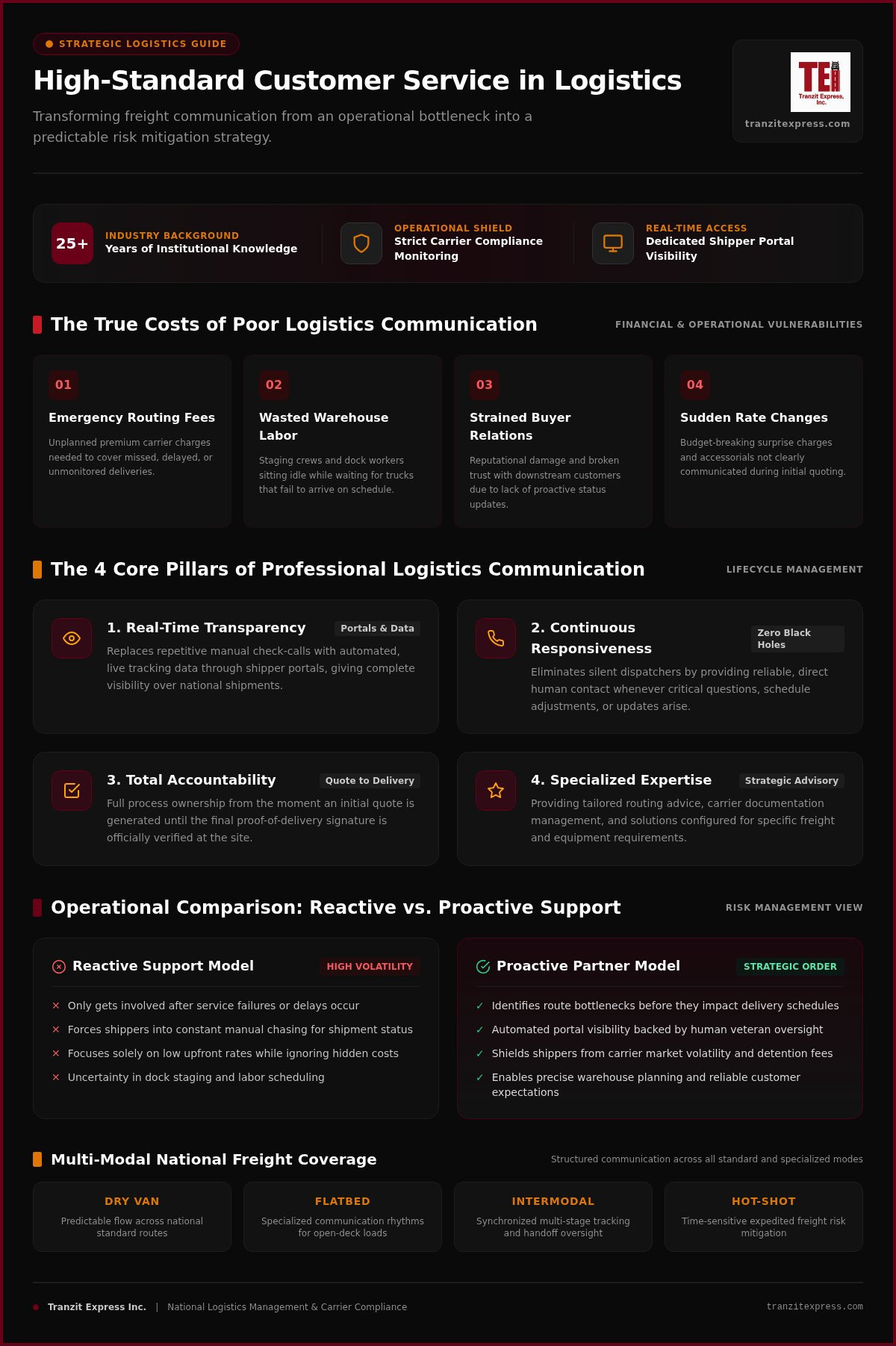
In the freight industry, many shippers view support as a reactive department that only gets involved when something breaks. However, professional customer service in logistics functions as a high-level risk management strategy. It’s the difference between hearing about a delay when it’s already too late and having a partner who manages the problem before it reaches your desk. This proactive approach reduces the hidden costs of miscommunication, such as detention fees or lost production time, and provides the order needed in a complex environment.
A dependable partner doesn’t just move freight; they manage expectations. When you trust a provider with your national distribution, you’re looking for more than a truck. You’re seeking the peace of mind that comes from knowing your cargo is in capable hands. This emotional security is built through consistent, high-quality service that links every shipment to strict carrier compliance standards.
Service as a Risk Mitigation Strategy
The primary role of a seasoned broker is to act as a shield between the shipper and the daily volatility of the carrier market. With over 25 years of institutional knowledge, a veteran team understands that constant communication prevents minor delays from turning into supply chain disasters. Whether you’re moving van freight or specialized hot-shot loads, a steady hand at the wheel ensures that carrier compliance is monitored and risks are neutralized. This level of oversight isn’t a luxury. It’s a necessity for maintaining a predictable flow of goods across national routes.
The True Cost of Poor Logistics Communication
When a shipment enters a “black hole” where no one knows its location, the financial impact extends far beyond the freight bill. Poor communication damages your reputation with your own customers and creates unnecessary internal stress. Effective logistics management balances technical efficiency with human responsiveness. While some providers focus solely on the cheapest rates, true value is found in a partnership that prioritizes transparency. High-standard customer service in logistics ensures you aren’t left guessing about the status of your flatbed or intermodal shipments.
The hidden costs of poor service often include:
- Emergency routing fees to cover missed or delayed deliveries.
- Wasted warehouse labor waiting for trucks that don’t arrive on schedule.
- Strained relationships with your buyers due to a lack of timely updates.
- Sudden rate changes that weren’t clearly communicated during the quoting process.
Choosing a partner who values clarity over marketing hype allows you to focus on your core business. It turns a potential cost center into a reliable strategic advantage.
The Core Pillars of Professional Logistics Communication
Professional communication in the freight world is defined by four distinct pillars: transparency, responsiveness, accountability, and expertise. High-standard customer service in logistics moves beyond simple status updates to provide a comprehensive view of a shipment’s entire lifecycle. It starts with owning the process from the moment a quote is issued until the final signature is secured at the delivery site. A steady hand at the wheel ensures that shippers aren’t left wondering about carrier documentation or the location of their cargo.
This commitment to clarity is backed by national freight transportation data, which illustrates the growing necessity for precision in a complex supply chain. When a provider takes full accountability, they don’t just report problems; they offer specialized routing advice and solutions. This level of expertise is especially critical when managing diverse freight types that require more than a standard van trailer. Effective customer service in logistics relies on this proactive exchange of information to keep operations moving forward without friction.
Real-Time Transparency via Shipper Portals
Modern shipper portal logistics empower decision-makers by replacing repetitive manual check-calls with automated, real-time data. This shift doesn’t remove the human element. Instead, it balances technology with veteran oversight to create a seamless experience. When you can access cargo status and documentation instantly, you’re able to plan your labor and warehouse operations with greater certainty. It’s about providing order in an industry that can often feel chaotic.
Specialized Communication for Diverse Freight
Different freight types require different communicative rhythms. For example, flatbed freight services USA often involve oversized loads that demand specific routing knowledge and constant coordination. Similarly, hot shot trucking requires a higher tier of urgency due to its time-sensitive nature. Coordinating intermodal transportation solutions across multiple transit modes also requires a high level of expertise to manage hand-offs between rail and road. Each of these services benefits from a partner who understands the unique pressures of the specific mode. If you’re ready for a more dependable experience, you can view our full range of transportation services to see how we prioritize your cargo.
Reactive vs. Proactive Support: Protecting Your Cargo from Volatility
The difference between a standard broker and a strategic partner often comes down to their approach to problem-solving. Reactive support is the industry baseline; it’s a model where the provider waits for you to call when a shipment is already late or a rate has suddenly spiked. This approach leaves you in a defensive position, constantly reacting to crises that have already impacted your schedule. True customer service in logistics should function as a proactive shield, identifying bottlenecks and communicating solutions before you even realize a hurdle exists.
The modern logistics landscape is currently split between “tech-only” startups and “veteran expert” partnerships. While algorithms can track coordinates, they often struggle to manage the human variables inherent in moving freight. According to national freight transportation data, the complexity of the U.S. supply chain requires more than just digital tracking; it demands human intervention when weather, mechanical issues, or port congestion disrupt the flow. A partner with over 25 years of experience uses institutional knowledge to predict these disruptions, offering a level of predictive service that software alone cannot replicate.
The ‘Steady Hand’ Philosophy in Freight Management
In high-stakes shipping windows, the tone of communication matters as much as the content. We prioritize a “steady hand” approach, maintaining composed and professional dialogue even during complex routing scenarios. Veteran brokers use their deep carrier networks to solve problems quietly in the background, ensuring that your van or flatbed shipments continue moving without requiring your constant oversight. This philosophy treats your cargo as a priority, providing a sense of order and security that reduces the emotional toll of national distribution.
Technology as an Enabler, Not a Replacement
Modern tools like our Shipper and Carrier Portals are designed to empower you with data, but they aren’t an excuse for a broker to stop picking up the phone. Technology should enhance human accountability rather than replace it. We use these digital tools to provide real-time visibility, while our team remains responsible for the nuances of your intermodal or hot-shot loads. Proactive service is the ability to solve problems before they impact the bottom line. By balancing veteran intuition with modern access, we ensure your supply chain remains resilient against market volatility.
How to Evaluate a Logistics Provider’s Service Standards
Selecting a partner for logistics management for shippers requires a framework that moves beyond simple price comparisons. You need to look for a provider whose internal culture prioritizes order and reliability. High-standard customer service in logistics is often visible in the details of a provider’s vetting process and their commitment to carrier compliance. A broker who cannot explain their safety protocols or documentation oversight likely lacks the institutional knowledge required to protect your cargo from market volatility.
Identifying red flags early can save your business from costly shipping delays. Be wary of generic, automated responses that fail to address the specifics of your freight. If a provider lacks specialized knowledge regarding equipment types or shows poor follow-up during the quoting stage, these behaviors will likely intensify once your cargo is in transit. Professionalism should be evident from the first point of contact.
Vetting the Broker’s Internal Standards
A reliable partner maintains a dedicated team focused on carrier compliance and safety. During your evaluation, ask how they handle administrative oversight for complex intermodal routing. You should also request specific examples of how they’ve managed time-sensitive hot-shot loads in the past. This level of transparency proves they have a “steady hand” at the wheel and are capable of managing the nuances of national distribution without constant supervision from your team.
The 5-Point Service Checklist
Use this checklist to determine if a provider meets the excellence required for a long-term B2B partnership:
- Availability: Can you reach a decision-maker quickly if an issue arises during a transit period?
- Transparency: Is there a clear, proprietary portal for tracking cargo status and accessing invoices?
- Experience: Do they have a legacy of 20 or more years navigating national logistics challenges?
- Specialization: Do they understand the specific requirements of van freight services compared to flatbed or open-deck loads?
- Accountability: Do they own the process from the initial quote to the final delivery signature?
When you find a partner that checks every box, customer service in logistics becomes a tool for growth rather than a source of stress. If you’re looking for a dependable team that values clear communication, you can request a freight quote today to see our professional standards in action.
Tranzit Express: A Steady Hand for National Logistics Management
Tranzit Express Inc. represents the gold standard of customer service in logistics by prioritizing stability over marketing hype. With a 25-year legacy of reliability, we’ve built a B2B partnership model that focuses on reducing client stress through clear, methodical communication. Our commitment to transparency is anchored by a dual-portal system. Both shippers and carriers have real-time access to the data they need, ensuring that every shipment is managed with the quiet confidence of an industry veteran.
Instead of acting as a transactional broker, we function as a collaborative partner. We understand that your supply chain needs a steady hand at the wheel, especially when navigating the complexities of national freight. By combining deep institutional knowledge with modern portal access, we provide a sense of order that few other providers can match. This approach ensures that customer service in logistics isn’t just a department, but a foundational promise of our business.
National Reach with a Personal Commitment
Our team manages a comprehensive range of transportation solutions across the entire United States. Whether you require van freight services, flatbed shipping, or specialized hot-shot loads, we have the expertise to coordinate your cargo efficiently. We also provide intermodal transportation solutions that bridge the gap between rail and road, ensuring on-time delivery regardless of the transit mode. You don’t have to worry about the national landscape’s volatility when you’re working with a seasoned professional.
We’ve spent decades refining our processes to ensure that communication remains seamless from the initial quote to the final delivery signature. This personal commitment to excellence is what defines our national reach. It keeps your operations moving forward without the friction of unresponsiveness or hidden fees.
Next Steps for Shippers and Carriers
If you’re ready to transition from a reactive shipping model to a proactive partnership, we’re here to guide you. Shippers can request a reliable freight quote online through our professional portal, where you’ll experience the ease of our streamlined process firsthand. We also invite qualified motor carriers to join our network. Joining provides access to a steady stream of freight and a professional support team that values your time and compliance standards.
The goal is simple: to provide a secure, organized environment for your logistics needs. We invite you to contact Tranzit Express today to experience a steady hand at the wheel of your logistics.
Establishing Stability in Your National Distribution
High-standard customer service in logistics is the foundation of a resilient supply chain. By moving from a reactive model to a proactive partnership, you protect your cargo from the volatility of the national market. We’ve seen how transparency through portal access and the oversight of a veteran team can transform freight management from a source of stress into a reliable strategic advantage.
With over 25 years of industry experience, Tranzit Express Inc. provides the steady hand you need for van, flatbed, and intermodal solutions. Our proprietary Shipper and Carrier Portals ensure you don’t have to guess about the status of your cargo or documentation. If you’re ready to build a long-term partnership based on trust and order, we’re here to help. Request a Professional Freight Quote from Tranzit Express Inc. to secure your logistics for the future. We look forward to providing the consistent results your business deserves.
Frequently Asked Questions
What does customer service in logistics actually include?
Customer service in logistics includes proactive risk management, real-time cargo visibility, and the administrative oversight of every shipment. It isn’t just a help desk; it’s a strategic layer that ensures documentation is accurate and communication remains constant between shippers and carriers. A professional provider manages the entire lifecycle of a load, from the initial quote to the final signature, ensuring that all parties stay informed and expectations are met consistently.
How do I know if a freight broker has good customer service before I hire them?
You can evaluate a broker’s service standards by testing their responsiveness during the quoting phase. A reliable partner should provide clear, detailed answers rather than generic templates. Ask about their specific experience with your freight type and whether they offer proprietary portal access for real-time tracking. If they lack specialized equipment knowledge or fail to follow up promptly on simple inquiries, it’s a sign that their support will likely falter during a transit crisis.
Why is proactive communication more important than a low shipping rate?
Proactive communication identifies potential bottlenecks before they become expensive supply chain disruptions. While a low shipping rate might seem attractive initially, the hidden costs of silence during a delay can far exceed any upfront savings. A partner who anticipates hurdles and communicates solutions protects your bottom line and your reputation with end-customers. Investing in high-standard customer service in logistics ensures that you aren’t left paying for emergency routing or wasted labor due to unannounced delays.
What role does technology play in modern logistics customer service?
Technology serves as a tool for transparency by providing decision-makers with instant access to cargo status and documentation. Proprietary shipper and carrier portals allow for real-time tracking, which reduces the need for manual check-calls and allows for better internal planning. However, technology should never replace human accountability. The most effective systems use digital tools to empower a veteran team, ensuring that data is always backed by a professional who can intervene when exceptions occur.
How does customer service impact carrier compliance and safety?
Service standards are directly linked to a broker’s vetting processes and carrier compliance oversight. A provider that prioritizes professional communication will have a dedicated team to monitor safety ratings, insurance, and operating authority. This level of administrative care ensures that only qualified motor carriers handle your cargo. By maintaining high standards for documentation and compliance, a broker reduces the risk of legal or operational hurdles that could jeopardize your national distribution schedule.
What should I do if my current logistics provider stops communicating during a shipment?
If a provider becomes unresponsive during a shipment, you should immediately escalate the issue to a supervisor or decision-maker. Lack of communication is a major red flag that often indicates a problem with the carrier or a failure in the broker’s internal oversight. To prevent this in the future, it’s vital to partner with a veteran firm that values a “steady hand” approach and provides multiple points of contact, including digital portals for 24/7 visibility.
Can a freight broker help with specialized loads like hot-shot or flatbed freight?
Yes, a seasoned broker provides specialized routing and equipment knowledge for complex loads like hot-shot, flatbed, or intermodal freight. These shipments require a higher tier of communicative urgency and specific documentation that standard van loads don’t. A partner with a national network can coordinate the specialized trailers and permits needed for open-deck transport. This expertise ensures that even the most challenging freight moves safely and stays on schedule across diverse transit modes.
How does 25 years of experience improve customer service outcomes?
Over 25 years of institutional knowledge allows a team to anticipate market shifts and predict potential disruptions before they impact your cargo. This level of experience translates into a more composed and professional response during high-stakes shipping windows. Veteran brokers have built deep carrier networks and understand the nuances of national logistics, which leads to more reliable on-time delivery. They prioritize long-term B2B partnerships over simple transactions, providing a sense of order in a complex industry.