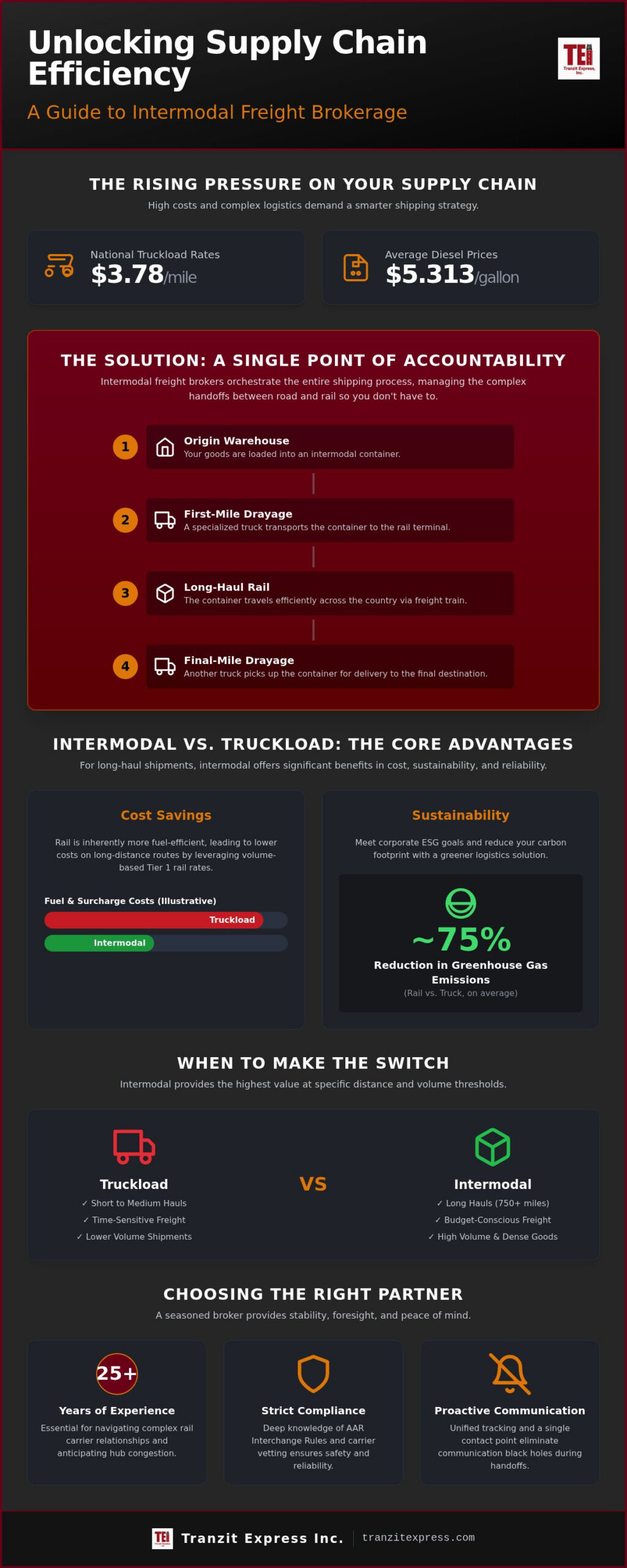
With diesel prices reaching $5.313 per gallon and national truckload rates hitting $3.78 per mile, the financial pressure on your supply chain has never been higher. It’s a challenging environment where a traditional reliance on long-haul trucking often leads to shrinking margins and missed deadlines. You need a more sustainable way to move goods without the headache of managing fragmented schedules or complex documentation across different modes of transport. This is where the expertise of intermodal freight brokers becomes a vital asset for your business.
We understand that the transition from rail to road can often feel like a communication black hole. You’ve likely experienced the frustration of unpredictable transit times and the lack of clarity during critical handoffs. This guide will show you how to simplify these transitions, providing a single point of contact to manage your multi-modal shipments with professional composure. We’ll explore how strategic intermodal planning can significantly lower your shipping costs and reduce your carbon footprint. By the end of this article, you’ll see how a steady, seasoned approach to logistics can bring stability and order back to your national shipping strategy.
Key Takeaways
- Learn how intermodal freight brokers act as a single point of accountability to manage the complex orchestration of rail and road transport.
- Understand the critical role of drayage management in ensuring seamless handoffs between warehouses and rail terminals.
- Identify the specific distance and volume thresholds where switching from truckload to intermodal yields the highest cost savings.
- Discover why 25 years of industry experience is essential for navigating rail carrier relationships and maintaining strict compliance.
- See how unified tracking portals and clear communication reduce the carbon footprint and administrative stress of multi-modal shipping.
What Are Intermodal Freight Brokers and Why Do They Matter?
Intermodal freight brokers serve as the essential architects of modern national logistics. They don’t just book a truck; they synchronize a complex dance between rail carriers and motor carriers to move goods across the country. This strategic orchestration of multiple transport modes requires a steady hand and deep institutional knowledge. While a standard broker might focus purely on over-the-road movements, a specialized intermodal expert manages the transitions where most delays occur. They act as your single point of accountability, ensuring that a container moves seamlessly from a warehouse to a rail yard and finally to its destination without you needing to manage three different companies.
In 2026, this model has become the preferred choice for many national shippers. The combination of tight trucking capacity and fluctuating fuel costs makes the stability of rail an attractive alternative. Specialized intermodal freight brokers understand the nuances of rail schedules, terminal operations, and the AAR Interchange Rules that govern the industry. This expertise provides a sense of security, allowing you to focus on your core business while a professional partner handles the logistical friction.
The Core Value Proposition: Cost and Efficiency
The primary driver for choosing intermodal transport is the significant reduction in total landed costs. Fuel surcharges often represent a massive portion of shipping budgets, especially with diesel prices averaging $5.313 per gallon in mid-2026. Rail is inherently more fuel-efficient for long-haul segments, allowing you to move high volumes of freight at a lower price point. Intermodal freight brokers provide access to Tier 1 rail rates that are typically unavailable to individual shippers. These volume-based contracts offer price stability in a volatile market. By using hybrid routing, we help you balance transit times with budget requirements, ensuring your goods arrive on time without overspending on unnecessary speed.
Sustainability in the Modern Supply Chain
Environmental responsibility is now a core requirement for any high-level B2B partnership. Moving freight by rail instead of truck reduces greenhouse gas emissions by approximately 75% on average. This shift is a practical way to meet corporate ESG goals while maintaining a reliable supply chain. The demand for greener logistics is reflected in current market trends; ACT Research forecasts that total intermodal volume will reach a record 15.6 million loads in 2026 as more organizations prioritize carbon-reduction mandates. Choosing an intermodal solution isn’t just a financial decision; it’s a commitment to a more sustainable and efficient future for national commerce.
The Intermodal Process: Managing Complexity Behind the Scenes
Moving freight through an intermodal network involves a series of precise handoffs that happen far from the shipper’s view. It begins with the “drayage”—the short-haul trucking movement from your warehouse to the rail terminal. From there, the container is loaded onto a train for the long-haul journey, eventually reaching a secondary terminal for final-mile delivery. While this looks like a straight line on a map, the reality involves managing multiple carriers, rail schedules, and terminal gate protocols. Professional intermodal freight brokers provide the coordination necessary to ensure these transitions happen without incident.
The “handoff” is where most supply chain friction occurs. If the rail billing isn’t submitted correctly or the drayage carrier misses their appointment window, your cargo sits. This leads to costly storage fees and missed delivery dates. We focus on proactive communication, verifying that every piece of documentation is in order before the truck ever leaves your dock. This meticulous attention to detail is what separates a transactional broker from a long-term logistics partner who acts as a steady hand at the wheel.
Orchestrating the Handoff
Effective drayage management requires a deep network of compliant carriers who understand the specific requirements of rail terminals. Intermodal freight brokers vet these partners for safety and reliability, ensuring they have the proper insurance and equipment to handle rail-bound containers. By monitoring rail congestion in real-time, we can often anticipate delays at major hubs and adjust routing to keep your supply chain moving. This foresight prevents the common communication gaps that often occur during the transition from truck to rail.
Visibility and Tracking Tools
Transparency shouldn’t be a luxury in modern logistics. We utilize advanced shipper portal logistics to give you real-time visibility into every stage of the move. Through EDI and API integrations, data flows directly from the rail networks and trucking carriers into a single, unified view. This eliminates the need for manual check calls and provides automated status updates to all stakeholders. If you’re looking for a more organized approach to your shipping, you can explore our intermodal transportation solutions to see how we simplify these complex moves through technology and experience.
Evaluating Intermodal vs. Truckload: When to Make the Switch
Choosing the right transportation mode requires a clear understanding of your supply chain’s unique requirements. Experienced intermodal freight brokers help you identify the ‘sweet spot’ where rail efficiency outweighs the speed of over-the-road trucking. In mid-2026, the National Truckload Index reached an all-time high of $3.78 per mile, while intermodal spot rates softened to approximately $1.55 per mile. This price delta provides a significant opportunity for cost containment, particularly for high-volume shippers looking to protect their margins.
Seasonality also plays a critical role in this evaluation. When the Truckload Rejection Index climbed to 17.64% in June 2026, rail capacity remained a dependable buffer against market volatility. While over-the-road capacity can tighten overnight, the structural stability of the rail network offers a sense of security. Risk management is equally important; cargo that can withstand the standard vibrations of rail transport is ideal, whereas delicate shipments might require specific blocking and bracing to ensure they arrive in pristine condition.
The 500-Mile Rule and Beyond
Intermodal logistics typically becomes most cost-effective at distances exceeding 500 to 700 miles. At this range, the fuel savings of rail overcome the initial and final drayage costs. Evaluating regional versus national opportunities is a core part of our partnership approach. We look for lanes where rail can provide the most value without compromising your delivery promises. For shipments under this threshold, the speed and direct nature of trucking often prevail. If your shipment is both short-range and critically urgent, specialized hot shot trucking remains the superior choice for fast, dedicated delivery.
Service Level Expectations
It’s vital to set realistic transit time expectations when moving freight to the rail. Rail movements generally add one to two days compared to direct trucking. However, intermodal freight brokers mitigate this reliability gap by choosing the most efficient rail corridors and managing terminal transitions with professional composure. Security is another major benefit of the intermodal model. Once a container is sealed at your dock, it remains closed until it reaches the destination. This provides a level of protection and peace of mind comparable to premium van freight services, but at a more sustainable price point for your long-haul lanes.
Key Criteria for Vetting Intermodal Trucking Brokers
Selecting a partner to manage your rail-to-road transitions is a decision that impacts your entire supply chain’s stability. While many firms claim to offer these services, true expertise in this field is earned through decades of navigating rail carrier relationships. You need intermodal freight brokers who understand the operational nuances of Class I railroads and the specific compliance requirements for drayage networks. At Tranzit Express, we’ve spent over 25 years refining these processes, ensuring we provide the quiet confidence of a seasoned industry veteran for every shipment.
Financial stability is another critical factor that often goes overlooked. In a complex multi-modal move, your broker must be on solid footing to ensure drayage carriers are paid promptly. This prevents the risk of carrier liens on your cargo and maintains a reliable pool of drivers who prioritize your shipments. A dependable partner acts as a protective layer, managing these behind-the-scenes financial obligations so you can focus on your customers. Choosing the right intermodal freight brokers means looking for a team that values long-term partnership over simple transactions.
Questions to Ask Your Potential Partner
When evaluating a new logistics provider, look for transparency in their processes. Ask how they secure drayage capacity during peak months when the SONAR Truckload Rejection Index rises. Inquire about their specific protocol for rail-related claims, as these differ significantly from standard trucking claims. Finally, ensure they can provide a comprehensive freight quote online that accounts for all potential intermodal accessorials like chassis splits or terminal wait times. This prevents unexpected costs from surfacing later in the billing cycle.
The Role of Professional Communication
A reassuring tone is invaluable when your freight is transitioning through a busy rail yard. You don’t just need automated alerts; you need expert human intervention when a schedule shifts. We prioritize logistics management for shippers by providing a single point of contact who understands your business. This steady hand at the wheel reduces the stress of complex shipping. If you value a partner who prioritizes reliability over marketing hype, you can contact our team to discuss a more dependable approach to your national logistics.
Streamlining Your Supply Chain with Tranzit Express Intermodal Solutions
Tranzit Express Inc. brings more than 25 years of institutional knowledge to every shipment we manage. We’ve navigated through numerous market cycles, from the capacity crunches of the early 2020s to the current high-cost environment of 2026. This depth of experience allows us to handle the inherent complexity of rail-to-road transitions with a level of composure that younger firms often lack. Our role as intermodal freight brokers is to act as a dependable bridge between your business goals and the specialized requirements of national rail networks.
We maintain an extensive, national network of vetted intermodal carriers. Every driver involved in your drayage movements must meet our strict standards for safety, insurance compliance, and reliability. This isn’t just about moving a container from point A to point B; it’s about fulfilling a promise to your customers. Our commitment to on-time delivery is backed by proactive communication and a refusal to rely on marketing hype. We prioritize the practical facts of your shipment, providing a sense of order and security in an industry that can often feel chaotic.
A Partnership Built on Trust
Successful logistics is never just a series of one-off transactions. It’s a collaborative, long-term relationship where your broker understands your specific operational needs and seasonal fluctuations. Our “steady hand at the wheel” philosophy means we take the full weight of coordination off your shoulders. We customize intermodal routes to fit your specific volume requirements and delivery windows, ensuring that the transition from road to rail is invisible to your end-users. This organized professionalism is the foundation of the trust we’ve built with our clients over two and a half decades.
Getting Started with a Strategic Quote
If you’re ready to explore a more sustainable and cost-effective shipping strategy, the process begins with a comprehensive intermodal freight analysis. During your first consultation, our logistics experts review your current lanes to identify exactly where rail can provide the most value without compromising your service levels. We look at your distance, volume, and cargo types to build a routing plan that protects your margins. Understanding what does a freight broker do to manage these complexities is the first step toward a more reliable supply chain. We invite you to experience the security and efficiency that comes from a partnership with industry veterans who value clear communication above all else.
Securing Your National Logistics Strategy
Navigating the complexities of rail and road requires more than just a digital platform; it needs the steady hand of an experienced partner. We’ve explored how shifting to intermodal transport can protect your margins against rising diesel costs while significantly lowering your carbon footprint. By choosing the right intermodal freight brokers, you gain a single point of accountability that ensures your cargo moves seamlessly across the national rail network. This strategic shift provides the stability your supply chain needs to thrive in a changing economy.
With over 25 years of dependable logistics experience and A-rated carrier compliance standards, Tranzit Express provides the security you need in a volatile market. Our national coverage ensures that every lane is managed with professional composure and organized precision. We value the trust you place in us and prioritize clear communication at every stage of the journey. Request a reliable intermodal freight quote from Tranzit Express today to see how we can simplify your most complex shipments. We’re ready to help you move forward with confidence and peace of mind.
Frequently Asked Questions
What is the difference between an intermodal freight broker and a standard freight broker?
A standard freight broker typically manages over-the-road movements using a single mode of transport. In contrast, intermodal freight brokers specialize in the complex orchestration of rail and truck combinations. This role requires a deeper understanding of rail billing, terminal gate protocols, and chassis management. We act as a single point of accountability to prevent the communication gaps that often occur when multiple carriers are involved in a single journey.
How much can I save by switching from truckload to intermodal shipping?
Shippers often realize a reduction in total landed costs on long-haul lanes by leveraging the fuel efficiency of rail. Because trains can move one ton of freight nearly 500 miles on a single gallon of fuel, the fuel surcharge is significantly lower than traditional trucking. When diesel prices are elevated, this advantage becomes even more pronounced. We analyze your specific lanes to determine where this cost containment is most effective for your business goals.
Is intermodal shipping slower than standard truckload freight?
Intermodal transport is typically one to two days slower than a direct truckload move. This additional time is required for container drayage at both ends and the scheduled nature of rail departures. While it isn’t as fast as a dedicated driver, the trade-off is a more sustainable and cost-effective solution. For shipments that aren’t time-sensitive, the predictability of rail provides a reliable alternative to the volatility of the spot truckload market.
What types of cargo are best suited for intermodal transportation?
Dry consumer goods, retail products, and industrial materials are perfectly suited for rail transport. Any high-volume freight that can be securely blocked and braced within a container is a strong candidate for this mode. We generally recommend avoiding extremely time-critical shipments or highly fragile items that might be sensitive to the vibrations inherent in rail movements. Our team helps you evaluate your cargo to ensure it meets the requirements for a safe intermodal journey.
How do intermodal brokers track cargo while it is on the rail?
We track cargo through direct EDI and API integrations with major rail networks across the country. This real-time data flows directly into our shipper portal, providing you with visibility without the need for manual check calls. Expert intermodal freight brokers use this constant stream of information to anticipate potential bottlenecks. This allows us to provide professional updates and adjust final-mile drayage plans before any delays impact your warehouse operations or customer promises.
What happens if there is a delay at the rail terminal?
If a delay occurs at the terminal, our team manages the rescheduling of drayage carriers and monitors potential storage fees. We act as a steady hand at the wheel, communicating directly with the rail yard to ensure your container is prioritized for pickup. This proactive management reduces the stress of unexpected changes in transit times. We prioritize transparency, ensuring you’re informed of the situation and the steps we’re taking to resolve it efficiently.
Do I need special insurance for intermodal shipments?
You don’t necessarily need unique insurance, but it’s vital to ensure your current policy covers the rail portion of the move. Rail carrier liability limits are often significantly lower than those of standard motor carriers. We help you verify that your cargo coverage is sufficient for the specific value of your goods. This professional oversight ensures there are no gaps in protection during the various handoffs between truck and rail carriers.
Can intermodal freight brokers handle short-haul shipments?
Intermodal is rarely the most efficient choice for short-haul shipments under 500 miles. The costs associated with drayage at both the origin and destination usually outweigh the savings gained on the rail for such short distances. For these regional moves, we typically recommend our standard van freight services or hot-shot options. These modes provide the speed and direct routing necessary for shorter distances while maintaining the high standards of our national logistics network.