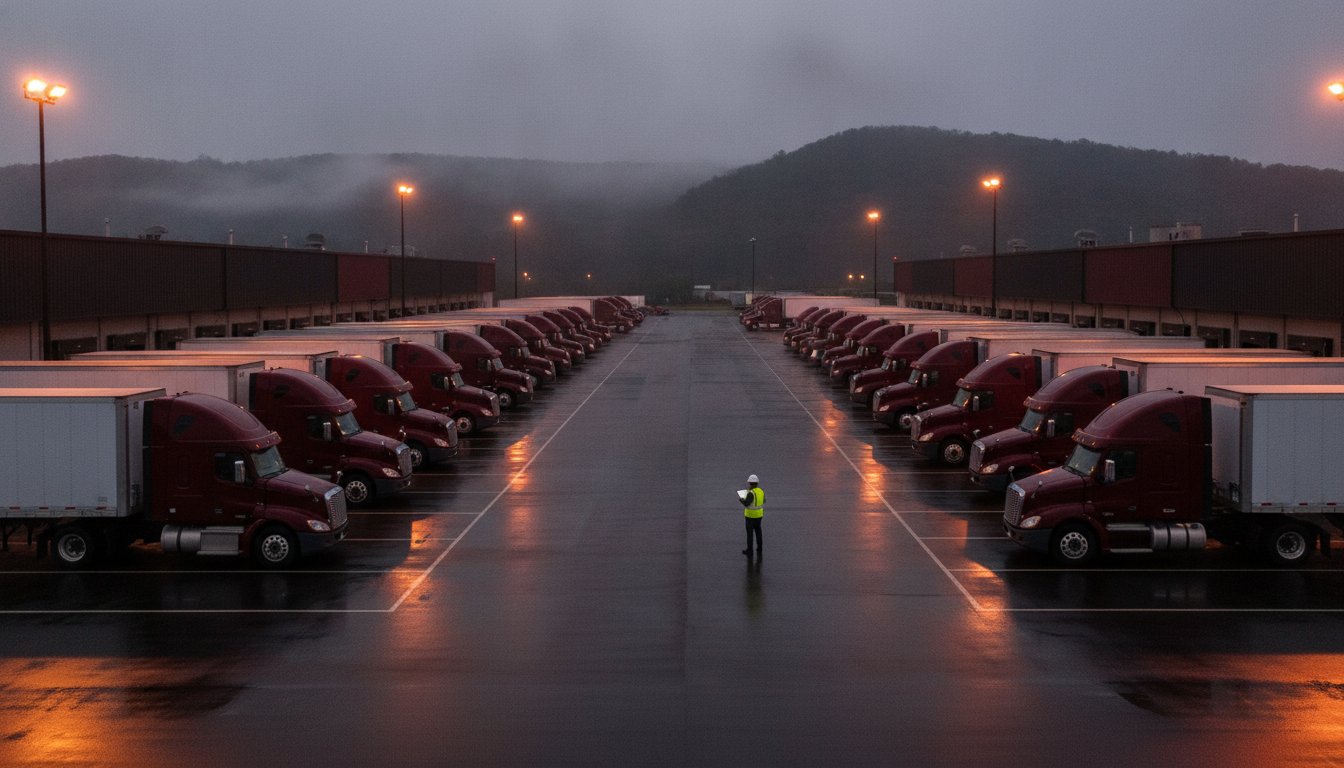
Reliability in freight isn’t a matter of luck; it’s a disciplined architecture of rigorous vetting and transparent partnership. Most shippers understand the frustration of a warehouse bottleneck caused by a late pickup or the deep anxiety that comes with rising carrier identity theft. You need to know your cargo is in safe hands, whether it’s moving via van, flatbed, or specialized hot-shot equipment. Building a reliable carrier network requires more than just a list of phone numbers; it demands a structured approach to operational security and consistent national coverage.
In this 2026 guide, you’ll learn the professional framework for vetting and maintaining a network that ensures on-time delivery and zero fraud incidents. We’ll explore how to diversify your options across all equipment types, from intermodal to specialized loads, while keeping your documentation streamlined. We’ll also examine how a dedicated shipper portal provides the steady hand you need to oversee every mile of the journey. By the end of this article, you’ll have a clear roadmap for creating a stable logistics environment that reduces stress and prioritizes the fulfillment of every promise.
Key Takeaways
- Identify the high costs of carrier failure and why consistent capacity requires a disciplined group of vetted partners.
- Master a professional vetting workflow for building a reliable carrier network that prioritizes FMCSA compliance and insurance verification.
- Learn to diversify your network across specialized equipment like van freight, flatbed, and hot-shot loads to maintain operational security.
- Use technology to shift from simple transactions to transparent partnerships that offer real-time tracking and clear communication.
- Explore the advantages of a long-term logistics partnership that manages complex carrier oversight so you can focus on your core business.
What is a Reliable Carrier Network and Why Does It Matter?
A reliable carrier network is a carefully curated group of transportation partners that provide consistent, predictable capacity for your freight. It’s the functional difference between hoping a truck shows up and knowing your load is covered by a professional team. In 2026, building a reliable carrier network has become more than a procurement task; it’s a critical security measure for the modern supply chain. The industry is seeing a decisive shift toward high-security, asset-based partnerships as a primary defense against double-brokering and identity theft. Instead of rolling the dice on the spot market for every shipment, sophisticated shippers are prioritizing a “core carrier” strategy that favors long-term stability and deep operational alignment over the lowest possible price of the day.
The True Cost of Unreliable Transportation
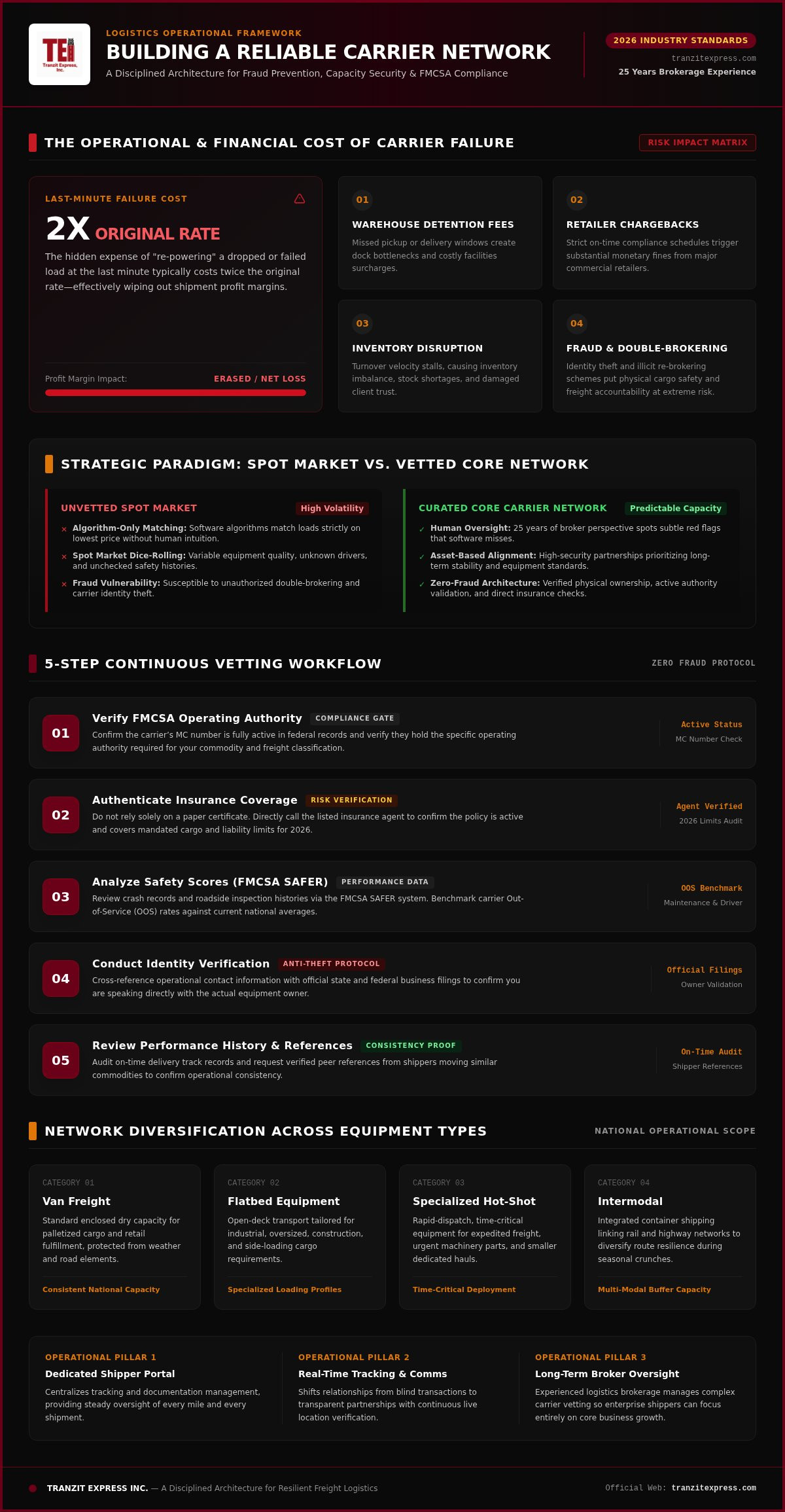
When a carrier fails to perform, the damage ripples through your entire operation in ways that aren’t always visible on a balance sheet. It isn’t just a late truck; it’s a missed delivery window that leads to expensive warehouse detention fees or heavy chargebacks from major retailers. These disruptions hurt your inventory turnover and damage your reputation with customers who expect seamless service. The hidden expenses of “re-powering” a failed load at the last minute often cost twice the original rate, effectively erasing the profit margin of the goods being moved. This is why reliability remains the primary metric within logistics management for shippers who value operational peace of mind over short-term savings.
Building for Resilience in a Volatile Market
A deep, diversified network acts as a vital buffer against seasonal capacity crunches or sudden market shifts. However, there’s a significant difference between a massive aggregator that treats every load like a transaction and a curated network built on mutual respect and performance. While many modern startups rely solely on algorithms to match loads, they often lack the human intuition needed to spot subtle red flags in a carrier’s history. A professional freight broker with 25 years of industry experience provides a perspective that software alone cannot match. This institutional knowledge allows for the identification of high-quality carriers that possess the specialized equipment and professional standards required for national logistics. By focusing on a “steady hand” approach to building a reliable carrier network, you ensure your supply chain remains resilient and orderly even when the broader market feels unpredictable.
How to Build a Reliable Carrier Network: A 5-Step Vetting Workflow
Establishing a resilient logistics strategy requires a disciplined approach to screening every potential partner. Building a reliable carrier network isn’t a one-time setup; it’s a continuous process of verification and accountability that ensures your high-value freight remains secure. By following a methodical workflow, you can filter out high-risk actors and focus on long-term partnerships with professionals who value your cargo as much as you do.
- Step 1: Verify FMCSA Operating Authority. Confirm the carrier’s MC number is active and they possess the specific authority required for your freight type.
- Step 2: Authenticate Insurance Coverage. Don’t just accept a certificate of insurance; call the listed agent to verify that the policy is active and covers the necessary cargo and liability limits for 2026.
- Step 3: Analyze Safety Scores. Review the carrier’s performance data to identify any recurring issues with equipment maintenance or driver safety.
- Step 4: Conduct Identity Verification. Cross-reference contact information with official business filings to ensure you’re speaking with the actual owner of the equipment.
- Step 5: Review Performance History. Check for consistent on-time delivery records and ask for references from shippers who move similar commodities.
Vetting for Safety and Compliance
A thorough safety review begins with the FMCSA SAFER system. This platform provides essential visibility into a carrier’s crash history and roadside inspection records. It’s vital to compare a carrier’s Out-of-Service (OOS) rates against the current national averages; a significantly higher rate suggests a lack of preventative maintenance that could lead to delays or accidents. Carrier compliance is the non-negotiable baseline for cargo security. By prioritizing carriers with clean records and low OOS rates, you reduce the likelihood of warehouse bottlenecks and operational disruptions.
Preventing Fraud and Double Brokering
The rise in sophisticated cargo theft makes identity verification more important than ever. Red flags often include newly issued MC numbers, generic email addresses from free providers, or a lack of a physical business location. Understanding what does a freight broker do helps clarify their role as your first line of defense; they use institutional knowledge to vet carriers far more deeply than a standard load board allows. Verifying that the individual on the phone actually owns the truck—and isn’t merely a dispatcher for an unauthorized third party—is the most effective way to prevent double-brokering. If you want to ensure your shipments are handled with this level of professional care, consider how a steady hand at the wheel can simplify your entire vetting process.
Diversifying Your Network Across Specialized Equipment Types
Relying on a single carrier type creates rigid bottlenecks that break during seasonal market shifts. Building a reliable carrier network requires a multi-modal strategy that aligns specific equipment types with your unique cargo requirements. According to the Bureau of Transportation Statistics Freight Analysis Framework, national tonnage and flow data suggest that shippers who diversify their equipment options are significantly better positioned to navigate regional capacity crunches. For your standard palletized cargo, maintaining a deep pool of van freight services provides the dependable baseline for daily operations. However, industrial or oversized shipments require the specific expertise and rigorous safety protocols found in flatbed freight services USA. When a shipment is smaller but time-sensitive, integrating hot shot trucking ensures you don’t pay for unused space on a full-sized trailer while still meeting tight delivery windows. This layered approach prevents your supply chain from becoming overly dependent on a single mode of transport.
The Role of Intermodal in a Sustainable Network
Strategic shippers pivot to intermodal transportation solutions when moving long-haul, non-expedited freight across the country. Rail offers substantial cost advantages and a significantly lower carbon footprint compared to standard over-the-road trucking. While the complexity of managing drayage at both ends and coordinating rail terminal transfers can be daunting, a steady logistics partner handles these transitions with professional precision. This multi-modal approach allows you to secure consistent capacity on major rail corridors while reserving your dedicated truckload partners for shorter, more complex lanes. It’s a method that prioritizes long-term sustainability without sacrificing the order and predictability of your deliveries.
Hot-Shot and Expedited: The Network’s ‘Safety Valve’
Every resilient network needs a dedicated sub-group of hot-shot carriers to act as a safety valve for urgent or irregular needs. These carriers often utilize smaller equipment, such as heavy-duty pickup trucks with gooseneck trailers, which allows for greater flexibility in tight delivery spots or remote job sites. Vetting these partners requires a specialized lens, particularly when verifying insurance for non-CDL drivers or specialized smaller rigs. Reliability in this niche depends on 24/7 communication and real-time visibility into the vehicle’s location. When you have these specialized partners ready, a sudden production delay or a last-minute order doesn’t have to result in a failed customer delivery. Building a reliable carrier network that includes these expedited options provides the security you need to handle any logistical challenge.
Strengthening Carrier Partnerships Through Technology and Transparency
The foundation of a resilient logistics strategy lies in the transition from viewing loads as simple transactions to seeing them as long-term partnerships. Building a reliable carrier network requires more than just initial vetting; it demands ongoing engagement and mutual respect. When you provide carriers with consistent volume and clear expectations, you foster a sense of loyalty that translates into better service and priority capacity during tight markets. Technology acts as the bridge that makes this level of collaboration possible, replacing manual follow-ups with automated, transparent data flows.
A centralized Shipper Portal serves as the primary hub for this interaction, significantly reducing the administrative back and forth that often slows down operations. Instead of chasing down status updates via email or phone, you can access real-time tracking data and historical performance metrics in a single location. This transparency builds trust across the entire supply chain. It’s also vital to remember that being a “shipper of choice” often comes down to the basics: providing fair, timely payment and treating drivers with professional courtesy. Carriers are more likely to prioritize shippers who respect their time and financial stability.
Leveraging Portals for Real-Time Visibility
Digital portals streamline the complex task of document management by providing instant access to Bills of Lading (BOLs) and Proof of Delivery (PODs). This centralized approach allows you to identify performance trends over time, helping you refine your network based on actual data rather than anecdotal evidence. Integrated tracking technology eliminates the stress and wasted time of manual “where is my truck” calls by providing constant, automated updates. By using these tools, you move from a reactive state to a proactive one, where decisions are guided by clear, organized information. Explore how our Shipper Portal Access can simplify your daily logistics management.
The Importance of Professional Communication
Clear communication is the heartbeat of a functional carrier relationship and a cornerstone of building a reliable carrier network. Setting precise expectations for pickup and delivery windows ensures that every party is aligned before the wheels even turn. When delays occur, proactive updates preserve the integrity of the shipper broker carrier relationship by allowing everyone to adjust their plans accordingly. Developing a standard code of conduct for your network partners sets a high bar for professionalism and accountability. This methodical approach to communication ensures that even when challenges arise, the process remains orderly and the primary goal of on-time delivery is met.
Why Partnering with an Experienced Freight Broker is the Logical Conclusion
Building a reliable carrier network from the ground up is an immense operational challenge that often requires thousands of man-hours to execute correctly. It demands a dedicated team to manage thousands of relationships, verify insurance daily, and monitor safety scores across a fragmented market. For most shippers, the administrative overhead of maintaining a 1,000+ carrier network in-house is simply not sustainable. Partnering with a seasoned expert allows you to bypass the steep learning curve and access a pre-vetted pool of professionals who are already proven to perform. This transition shifts the burden of compliance and capacity sourcing away from your internal team, letting you focus on your core production and sales goals.
The Tranzit Express Difference: 25 Years of Stability
We leverage a quarter-century of industry experience to provide national logistics solutions that emphasize security and order. While modern startups often rely solely on algorithms to scale, Tranzit Express Inc. combines digital efficiency with the deep institutional knowledge that only comes from 25 years of carrier relationships. Our network provides day-one access to vetted capacity across all equipment types, from standard van freight to specialized hot-shot loads. We handle the rigorous vetting, insurance authentication, and real-time tracking so you don’t have to. You get the advantage of national coverage and a “steady hand at the wheel” without the significant overhead of managing an in-house fleet or a massive carrier database.
Taking the Next Step Toward a Secure Supply Chain
Achieving a streamlined and secure supply chain shouldn’t be a source of constant stress. By shifting to a managed partnership, you gain the peace of mind that comes from professional logistics oversight and transparent communication. Our dedicated Shipper Portal provides the visibility you need to track shipments and manage documentation with ease. It’s a methodical approach to transportation that prioritizes the fulfillment of promises over marketing hype. We invite you to experience a more dependable way to move your freight across the United States. Partner with Tranzit Express for a reliable national carrier network today. To get started, simply request a quote through our portal and let our team provide the stability your logistics operation deserves.
Securing Stability in Your 2026 Logistics Strategy
Building a reliable carrier network is a continuous commitment to excellence and operational security. By implementing a multi-layered vetting process and diversifying your equipment across van, flatbed, and intermodal modes, you create a resilient supply chain that can withstand sudden market shifts. Transparency remains the final piece of the puzzle. Digital portals and professional communication ensure every stakeholder is aligned from pickup to delivery. This structured approach moves your logistics from a state of reactive stress to one of proactive order.
With over 25 years of dependable logistics experience, Tranzit Express Inc. acts as the steady hand you need to manage these complexities. We maintain rigorous carrier vetting and compliance standards to protect your cargo while providing full national coverage for all freight types. You don’t have to manage the burden of network maintenance alone. Request a quote from the experts at Tranzit Express Inc. to start a partnership built on trust and proven results. We’re ready to help you achieve the consistent, on-time performance your business deserves.
Frequently Asked Questions
How do I verify a carrier’s insurance is actually valid?
You should verify a carrier’s insurance by contacting the insurance agent listed on the certificate of insurance directly. While digital copies are convenient, they don’t always reflect recent cancellations or policy changes. A professional broker performs this check daily to ensure coverage for 2026 standards remains active. You can also use the FMCSA SAFER system to cross-reference the carrier’s policy number and expiration date against federal records for added security.
What are the most common red flags when vetting a new trucking company?
Common red flags include a recently issued MC number, the use of generic email addresses like Gmail or Yahoo, and a lack of a verifiable physical business address. You should also be cautious of carriers with high Out-of-Service rates or safety scores that significantly exceed national averages. These indicators often point to a lack of operational stability or a higher risk of double-brokering, which can jeopardize your cargo’s safety and delivery timeline.
Is it better to work with one large carrier or a network of smaller ones?
Relying on a single large carrier can create a single point of failure during peak seasons or regional capacity shortages. Building a reliable carrier network that includes a mix of vetted partners offers greater flexibility and resilience. This strategy allows you to access specialized equipment like hot-shot or flatbed trailers while ensuring you aren’t left without options if one carrier’s fleet is fully committed elsewhere. A balanced network provides more consistent national coverage.
How often should I re-audit the carriers in my network for compliance?
You should re-audit your carriers continuously, though a formal deep-dive review every quarter is a professional standard. Safety scores, insurance status, and operating authority can change overnight. Many shippers find that manual auditing is too labor-intensive, which is why they partner with a broker who monitors these metrics in real-time. This ongoing oversight ensures that every carrier moving your freight remains fully compliant with 2026 federal regulations and your specific safety requirements.
What is the difference between an asset-based carrier and a freight broker?
An asset-based carrier owns the physical trucks and trailers used to move freight. A freight broker acts as a professional intermediary that connects shippers with a vast network of qualified motor carriers. While asset-based companies are limited by their own fleet size, a broker provides access to thousands of vetted options. This allows for more scalable solutions and the ability to find specialized equipment on short notice across the entire United States.
Can a freight broker help with specialized loads like hot-shot or intermodal?
Yes, an experienced broker is often the most efficient way to source specialized equipment. Whether you need hot-shot loads for time-critical shipments or intermodal transportation for long-haul cost savings, a broker leverages established relationships to find the right fit. They manage the specific vetting requirements and documentation needed for these modes, providing a steady hand to coordinate complex drayage or rail transfers that might be difficult to manage in-house.
How does a shipper portal improve my day-to-day logistics management?
A shipper portal improves your daily operations by centralizing all tracking data and documentation in one accessible location. Instead of spending hours on the phone for status updates, you can view real-time vehicle locations and download Proof of Delivery documents instantly. This transparency reduces administrative stress and allows your team to make informed decisions based on accurate data. It’s a vital tool for building a reliable carrier network through clear, automated communication.
What should I do if a carrier in my network fails to show up for a pickup?
If a carrier fails to show up, your first step is to communicate with the dispatcher to determine the cause and estimated delay. If the load is time-sensitive, you’ll need to re-power the shipment by finding a replacement carrier immediately. This is where a broker’s deep network becomes invaluable, as they can often source a backup truck within hours. Always document the failure in your internal records to inform future vetting decisions and maintain network quality.