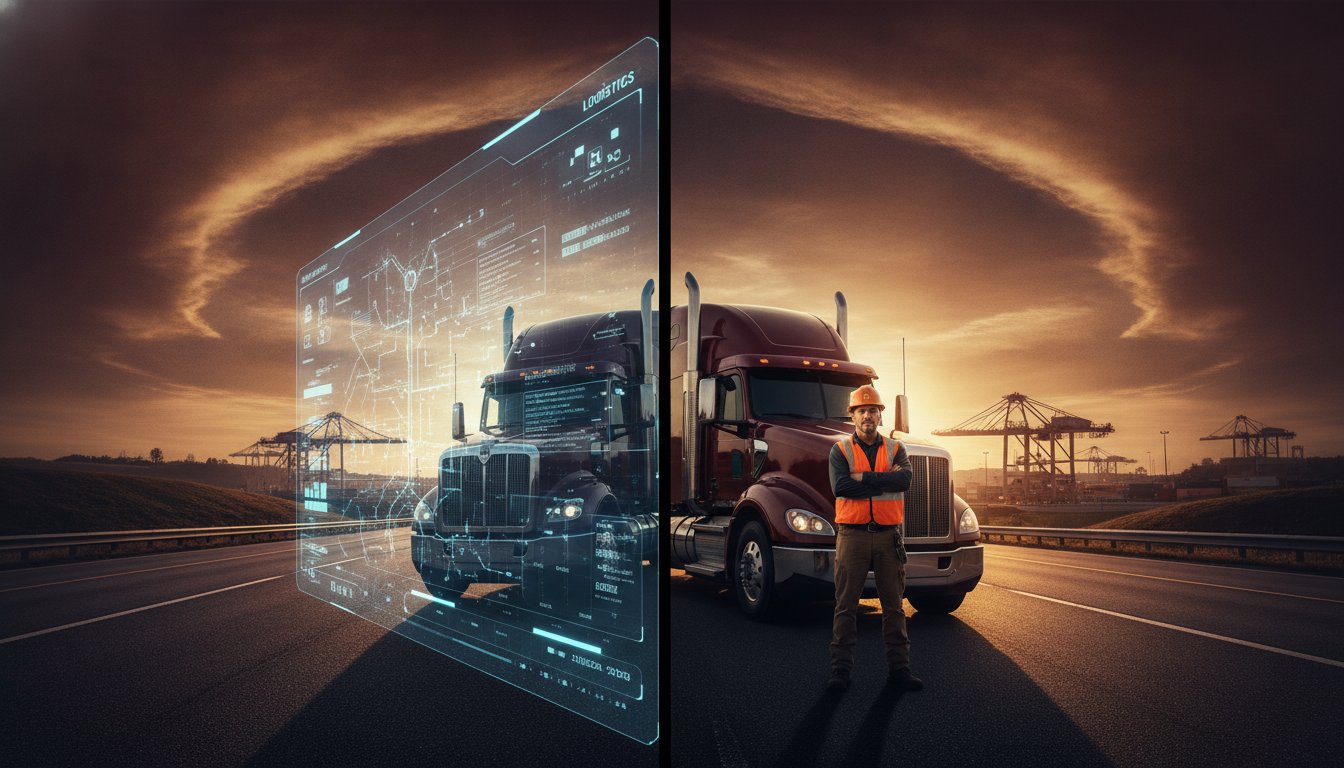
Can a line of code truly account for the nuances of a complex hot-shot delivery or the specific requirements of a flatbed load? Many shippers today find themselves caught between the promise of instant app-based quotes and the proven reliability of a seasoned logistics partner. You’ve likely felt the sting of a “budget” digital rate that eventually led to hidden fees or a total lack of communication during a critical transit delay. It’s frustrating to realize that an algorithm doesn’t care about your delivery deadline as much as a dedicated professional does.
When comparing a digital freight brokerage vs traditional broker, the choice isn’t just about software; it’s about accountability. This article explores the fundamental differences between these two models to help you decide which partnership will best protect your supply chain in 2026. You’ll discover how to achieve predictable shipping costs and maintain high carrier compliance standards through a more balanced approach. We will examine why the most successful logistics strategies today combine modern digital portals with the steady hand of an industry veteran to ensure on-time delivery for even your most demanding loads.
Key Takeaways
- Learn the core differences between a digital freight brokerage vs traditional broker to see how each model impacts your long-term supply chain security.
- Understand why algorithmic spot rates often lead to hidden costs and how contract-focused pricing provides much-needed budget predictability.
- Discover why complex shipments like flatbed and hot-shot loads require human oversight to manage requirements that software often overlooks.
- Access a practical framework to evaluate your specific freight needs and risk tolerance before committing to a new logistics partnership.
- Explore how a tech-enabled veteran offers the efficiency of modern portals without sacrificing the accountability of a seasoned professional.
Understanding the Logistics Evolution: Digital vs. Traditional Brokerage
The logistics industry has reached a crossroads where technology and human expertise often pull in different directions. By 2026, the distinction between a digital freight brokerage vs traditional broker has become more than just a matter of using an app or a telephone. It’s about the underlying philosophy of service. One model treats freight as a data point to be processed, while the other treats it as a promise to be kept.
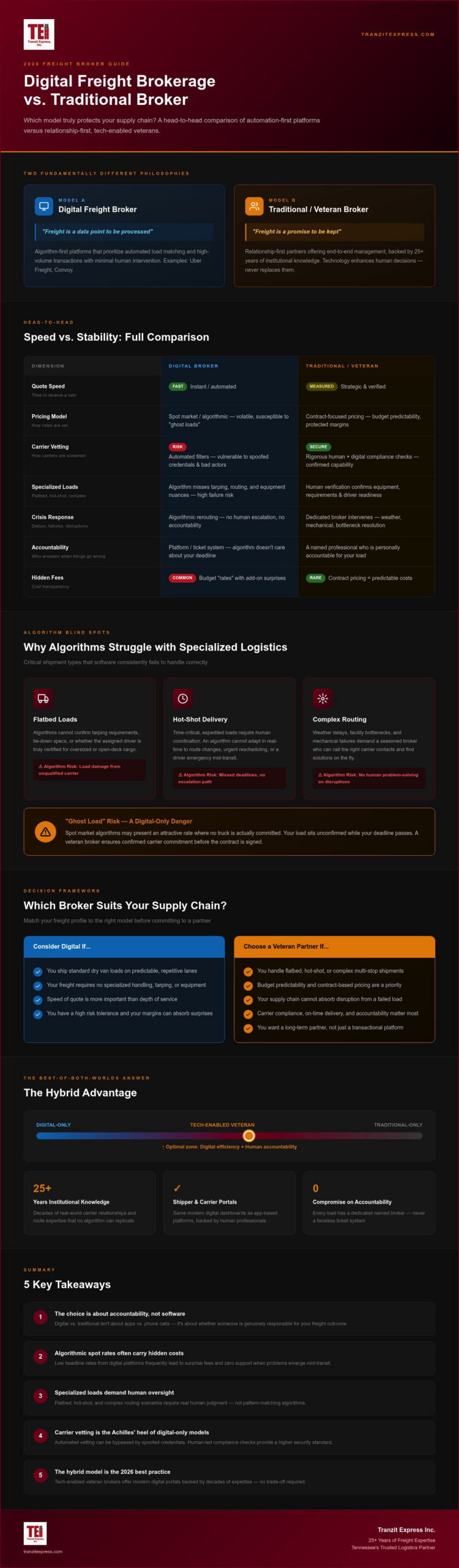
A digital freight broker operates as an algorithm-first platform. These systems prioritize automated load matching, aiming for the highest possible volume with minimal human intervention. They excel at processing standardized data but often lack the flexibility to handle the unexpected. Conversely, a relationship-first partner focuses on end-to-end management. While the term “traditional” often implies outdated methods, modern veteran firms have integrated advanced digital ecosystems. They use technology to enhance human decision-making rather than replace it.
The Rise of the App-Based Freight Model
Platforms like Uber Freight and Convoy shifted shipper expectations toward immediate results. The appeal of an instant quote and one-click booking is undeniable for simple dry van loads. Driven by venture capital investment, these models prioritize speed and high-volume transactions. They provide a streamlined experience for shippers with highly predictable, repetitive lanes that don’t require specialized handling or complex routing.
The Enduring Value of Human-Led Brokerage
Despite the rise of automation, 25 years of institutional knowledge cannot be reduced to a string of code. Real-world logistics is unpredictable. Weather delays, mechanical failures, and facility bottlenecks require a steady hand at the wheel. Shippers often wonder what does a freight broker do when an algorithm fails. The answer lies in accountability. A veteran broker provides a level of vetting and compliance that a basic matching app simply can’t replicate.
Many shippers now realize that the best results come from tech-enabled veterans. These firms offer the same Shipper and Carrier portals found in digital-only models but back them with decades of experience. This hybrid approach ensures you don’t have to choose between modern efficiency and the security of a long-term partnership. When comparing a digital freight brokerage vs traditional broker, the goal should be to find a partner that provides order in a complex industry rather than just a lower price on a screen.
Speed vs. Stability: A Side-by-Side Comparison
In the debate of digital freight brokerage vs traditional broker, the primary conflict often centers on speed versus stability. Digital platforms promise instant load matching through automated algorithms, which works well for standardized freight. However, speed doesn’t always equate to service. A strategic carrier selection process, while taking slightly longer, ensures that the carrier assigned to your load has the right equipment and a history of reliability. An algorithm might match a load in seconds, but it cannot verify if a driver is truly prepared for the specific tarping requirements of a flatbed load. Strategic selection involves a conversation that confirms the carrier’s capability before the contract is signed.
Transparency and the Spot Market
Digital brokers rely on massive datasets to predict market fluctuations, offering attractive spot rates. But these environments are susceptible to “ghost loads” where a rate is offered but no truck is actually committed. This creates significant risk for your timeline. Choosing a partner that prioritizes logistics management for shippers provides a buffer against market volatility. Traditional brokers focus on stable, contract-focused pricing that doesn’t disappear when the market tightens. This approach provides the budget predictability that high-volume shippers need to maintain their margins.
Carrier Compliance and Vetting Standards
Automated vetting is often the Achilles’ heel of purely digital models. Sophisticated “bad actors” can sometimes bypass digital filters by spoofing credentials or using stolen identities. When evaluating a digital freight brokerage vs traditional broker, remember that stability often outweighs raw speed for complex shipments. A veteran broker uses multi-layered compliance checks, combining software with human verification. They manually verify that a carrier’s insurance isn’t just active, but also covers the specific value and nature of your freight. This human-led vetting process is the primary defense against the cargo theft and liability issues that can plague automated platforms.
- Digital: Automated push notifications that may miss the context of a transit delay.
- Traditional: Proactive, professional updates from a person who understands your cargo’s urgency.
- Digital: High scalability for thousands of simple dry van loads.
- Traditional: Precision handling for specialized flatbed or hot-shot shipments that require a steady hand.
If you value a partnership built on order and consistency, consider exploring the carrier and shipper portals offered by a tech-enabled veteran. This hybrid model ensures your logistics stay streamlined without sacrificing the security of a long-term relationship.
Why Algorithms Struggle with Specialized Logistics
Logistics isn’t always as simple as moving a pallet from point A to point B. When your cargo requires flatbed freight services USA, the variables multiply instantly. An algorithm can match a zip code, but it doesn’t understand the physical labor of tarping and strapping or the specific routing required for an over-dimensional load. This is where the gap between a digital freight brokerage vs traditional broker becomes a matter of operational safety. Software can’t inspect a trailer’s deck quality or verify if a driver has the specific chains needed for a heavy machinery haul.
Specialized freight demands a level of detail that standard dry van loads do not. For example, hot shot trucking often serves as a “rescue” mission for high-priority parts. These shipments require constant human coordination to ensure the driver is vetted for time-sensitive delivery and possesses the right equipment for a rapid response. Similarly, intermodal transportation involves a complex hand-off between rail and road. Without a professional overseeing the drayage transition, visibility often vanishes the moment the container leaves the track, leading to missed connections and unexpected storage fees.
The Human Element in Specialized Routing
Oversized flatbed loads often require state-specific permits and pilot cars. Calculating these requirements isn’t a job for a generic load-matching app. It takes a seasoned professional to coordinate with local authorities and ensure the route is cleared for height and weight restrictions. Likewise, high-value hot-shot cargo needs a driver with proven experience, not just someone who was the first to click “accept” on a digital portal. Managing the hand-off in intermodal solutions requires a steady hand to synchronize rail schedules with local trucking availability, preventing costly delays at the terminal.
When Automation Becomes a Liability
The biggest risk in a purely digital model is the “No-Response” trap. If a truck breaks down on a Friday evening or arrives at a closed loading dock, an app’s support ticket system offers little comfort. A professional broker provides a sense of order during these chaotic moments, offering proactive updates that reduce stress for both the shipper and the receiver. Specialized freight requires a human broker to manage site-specific requirements because algorithms cannot account for the physical constraints of a loading facility or the nuances of specialized equipment handling.
Choosing a digital freight brokerage vs traditional broker involves weighing the cost of a missed detail against the convenience of an app. While technology streamlines the process through dedicated Shipper and Carrier portals, the human element remains the primary safeguard for complex logistics. By combining modern tools with decades of institutional knowledge, you ensure that every specialized load is handled with the precision it deserves.
Decision Framework: Which Broker Suits Your Supply Chain?
Selecting a logistics partner in 2026 requires a clear understanding of your own operational priorities. The choice between a digital freight brokerage vs traditional broker shouldn’t be based on which model has the flashier marketing; it should be based on the complexity of your cargo and your tolerance for risk. Every shipper has different needs, and a “one size fits all” approach often leads to the very communication gaps and hidden fees that disrupt a healthy supply chain. You must decide if you’re looking for a simple transaction or a collaborative relationship that prioritizes order and predictability.
Start by assessing your freight type. If you’re moving standardized dry van loads on lanes with high carrier density, the automated matching of a digital platform might suffice. However, as the complexity of the shipment increases, so does the need for human oversight. Evaluate your risk tolerance by asking a simple question: Is the “lowest price” on a screen worth the potential cost of a missed pickup or a carrier who doesn’t understand your facility’s specific requirements? For many, the reassurance of a steady hand at the wheel is worth more than a few dollars saved on a spot rate.
When to Choose a Digital Platform
Digital platforms are often ideal for one-off, non-critical shipments where the cargo is low-value and the timeline is flexible. If you’re managing high-volume, low-complexity lanes where price is the primary variable, the self-service nature of a digital broker can be efficient. These platforms suit shippers who prefer a 100% digital interface and don’t require proactive updates or specialized equipment coordination. In these scenarios, the algorithm’s speed is a benefit because the stakes of a minor delay are relatively low.
When a Professional Broker is Essential
A professional broker becomes essential when your cargo is high-value, time-sensitive, or requires specialized equipment like flatbeds or hot-shot trailers. These situations demand more than just a truck; they require a partner who understands the complete guide to van freight services and can coordinate intermodal hand-offs without losing visibility. When your supply chain relies on consistency and high carrier compliance standards, the 25 years of institutional knowledge provided by a veteran firm is irreplaceable.
Ultimately, your choice in the digital freight brokerage vs traditional broker debate depends on whether you need a vendor or a long-term logistics partner. If you value stability and a team that solves problems before they reach your desk, it’s time to partner with a tech-enabled veteran that provides both modern portals and dependable human expertise.
The Hybrid Advantage: Why Tranzit Express Inc. Represents the Best of Both Worlds
Many industry discussions present a false choice in the digital freight brokerage vs traditional broker debate, suggesting that you must sacrifice veteran experience to gain modern efficiency. Tranzit Express Inc. has spent 25 years proving that these two concepts are not mutually exclusive. We operate with the composure and order of a seasoned professional while utilizing the integrated digital ecosystems that modern shippers expect. This hybrid approach ensures that your supply chain remains secure without sacrificing the speed of 2026 logistics.
A “steady hand at the wheel” is more than just a phrase; it’s a commitment to reducing stress in a chaotic industry. While digital startups focus on market disruption, we focus on market stability. Our national logistics expertise spans across Van, Flatbed, Hot-Shot, and Intermodal services, providing a comprehensive range of solutions that an algorithm alone cannot manage. We prioritize your peace of mind over simple transactions, building collaborative, long-term relationships that provide order in even the most complex shipping environments.
Tech-Enabled Reliability
Our dedicated Shipper and Carrier portals provide the digital speed and transparency that high-volume operations require. You gain the benefit of real-time tracking and accessible documentation, yet you aren’t left at the mercy of an unfeeling algorithm when reality deviates from the plan. When an exception occurs, our veteran team provides the traditional accountability you need to resolve the issue quickly. The result is on-time delivery supported by proactive, professional communication that keeps you informed without the need for constant follow-up.
Request a Quote with Confidence
Starting a partnership with Tranzit Express Inc. moves your business away from transactional uncertainty and toward dependable results. Our load management process includes rigorous multi-layered compliance checks, ensuring that every carrier meets high standards for insurance and safety. We don’t just match a truck to a load; we manage the entire lifecycle of the shipment to ensure excellence and consistency. This methodical approach is why we remain a trusted partner for businesses that value high standards and proven results.
You can request a reliable freight quote today to experience how a tech-enabled veteran provides the best of both worlds. By understanding the nuances of the digital freight brokerage vs traditional broker landscape, you can secure a logistics partner that offers both modern tools and the institutional knowledge required to protect your bottom line.
Securing Your Supply Chain for the Future
Choosing between a digital freight brokerage vs traditional broker isn’t about rejecting modern tools; it’s about ensuring those tools are guided by professional accountability. Automated platforms excel at simple tasks but often falter when faced with the specialized requirements of flatbed or hot-shot loads. Efficiency matters, but accountability secures the load. By 2026, the most resilient supply chains will be those that prioritize order and clear communication over the lowest possible spot rate on a screen.
Tranzit Express Inc. offers a proven path forward by combining over 25 years of logistics experience with full access to modern Shipper and Carrier portals. This approach provides the transparency you want and the dependability you need for Van, Flatbed, and Hot-Shot shipments across the nation. You don’t have to manage the chaos of the shipping market alone when you have a steady hand at the wheel.
Take the next step toward a more predictable and stress-free logistics experience. Request a Reliable Freight Quote from Tranzit Express Inc. today. We look forward to building a long-term partnership that supports your business goals with excellence and consistency.
Frequently Asked Questions
What is the main difference between a digital freight broker and a traditional broker?
The primary difference between a digital freight brokerage vs traditional broker lies in the philosophy of service and accountability. Digital brokers use automated algorithms to match loads with any available driver, focusing on speed and high-volume transactions. In contrast, a traditional broker emphasizes strategic carrier selection and end-to-end management. While digital models treat freight as a data point, a veteran partner focuses on the long-term security of your supply chain and human oversight.
Are digital freight brokers cheaper than traditional ones?
Digital brokers often present lower initial spot rates on their apps, but these quotes can be misleading. They frequently lack the budget predictability of contract-focused pricing and may include hidden fees when service failures occur. A professional logistics partner provides more stable pricing that reflects the true cost of high carrier compliance. Saving a few dollars on the front end isn’t worth the risk of an expensive missed pickup or a cargo liability issue.
Do traditional freight brokers use modern tracking technology?
Yes, modern veteran brokers have integrated advanced digital ecosystems to enhance their service. Tech-enabled veterans provide dedicated Shipper and Carrier portals that offer real-time tracking and automated documentation similar to digital-only platforms. The difference is that this technology supports human experts who can interpret the data and intervene when problems arise. You don’t have to choose between modern visibility and the dependable oversight of a professional who has 25 years of industry experience.
Can a digital broker handle specialized loads like flatbed or hot-shot?
While some digital platforms attempt to list specialized loads, they often struggle with the physical nuances of flatbed shipping or the urgency of hot-shot trucking. Algorithms cannot verify if a driver has the correct tarps, chains, or experience for high-value machinery. Specialized logistics requires a human broker to coordinate site-specific requirements and permits. A professional partner ensures that your complex freight is matched with a vetted carrier who truly understands the equipment needs of your cargo.
What happens if a carrier cancels a load with a digital broker?
If a carrier cancels on a purely digital platform, you are often left at the mercy of an automated support ticket system. This “no-response” trap can lead to significant transit delays, especially during after-hours or weekend breakdowns. A veteran broker provides a steady hand during these chaotic moments, proactively finding a replacement carrier and communicating the update to you immediately. This level of accountability ensures your supply chain stays in motion even when the unexpected happens.
Is a traditional broker better for long-term shipping partnerships?
A traditional broker is generally better for long-term partnerships because they prioritize order and consistency over one-off transactions. They take the time to learn your facility’s specific loading requirements and your preferred delivery schedules. This institutional knowledge allows them to provide a higher standard of service that an algorithm cannot replicate. By building a collaborative relationship, you secure a partner who is personally invested in the success and reliability of your national logistics operations.
How do I know if my freight requires a human broker instead of an algorithm?
You should opt for a human broker if your freight involves specialized equipment, high-value goods, or time-sensitive “rescue” missions. Standardized dry van loads on common lanes might work for an algorithm, but anything requiring permits, tarping, or intermodal coordination needs a professional eye. If the cost of a delivery failure is high for your business, the human oversight of a veteran broker is the best way to reduce risk and ensure carrier compliance.
What are the risks of using a low-cost digital freight app?
The primary risks include inconsistent carrier quality and a total lack of communication during delays. Automated vetting processes sometimes allow “bad actors” with insufficient insurance to slip through digital filters, increasing your liability. Additionally, purely digital environments often suffer from “ghost loads” where a rate is promised but no truck is actually committed. These failures can lead to missed customer deadlines and significant financial losses that far outweigh any initial savings on the freight rate.