
In a freight market where truckload rates have surged by approximately 50 percent compared to last year, managing logistics internally often feels like a constant uphill battle. You shouldn’t have to spend your day vetting carriers for ELD compliance or worrying about whether your cargo will arrive on time. Learning how to ship freight with a broker isn’t just about outsourcing a task; it’s about establishing a steady hand at the wheel of your supply chain.
We understand the frustration of limited visibility and the fear of cargo damage during transit. It’s difficult to maintain order when capacity is tightening and regulations are shifting. This guide will show you exactly how to partner with a professional broker to streamline your shipping, ensure carrier compliance, and achieve consistent, on-time delivery every time.
You’ll learn our proven step-by-step process for moving loads with confidence. We’ll cover everything from initial carrier vetting to using advanced shipper portals for real-time tracking, helping you transform a complex logistical burden into a reliable, stress-free operation.
Key Takeaways
- Define your freight requirements precisely to ensure rate integrity and select the right equipment, whether you need van, flatbed, or hot-shot services.
- Discover the streamlined process of how to ship freight with a broker by using dedicated shipper portals to request quotes and manage bookings with confidence.
- Understand the rigorous vetting standards brokers use to verify carrier authority and safety ratings, protecting your cargo from potential risks.
- Gain full visibility into your supply chain through real-time tracking and proactive communication from pickup to final delivery.
- Learn why shifting from transactional shipping to a long-term logistics partnership reduces operational stress and improves consistency.
Preparing Your Load Information for a Seamless Shipping Experience
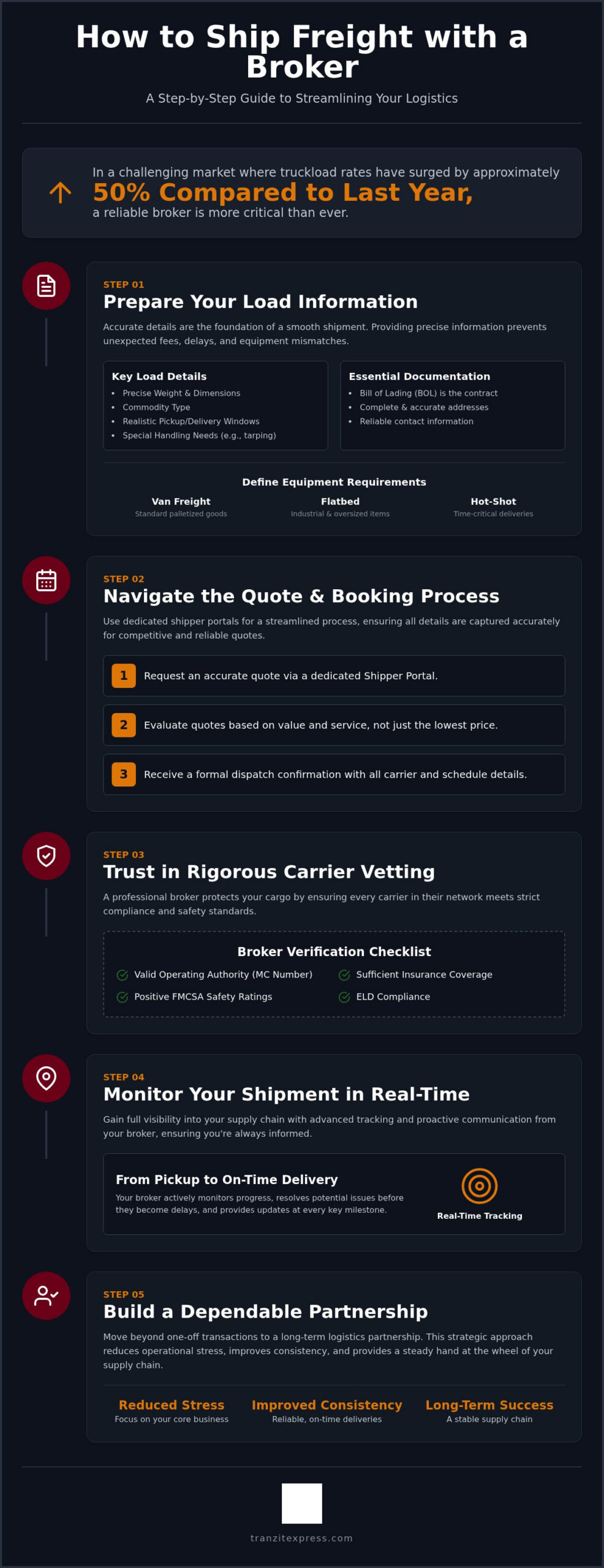
Success in logistics begins long before the truck arrives at your dock. When you’re learning how to ship freight with a broker, the first and most critical step is the preparation of your load data. Accurate descriptions are the foundation of rate integrity. Without them, you risk unexpected fees or, worse, a carrier arriving with the wrong equipment. Providing precise weight, dimensions, and commodity details allows your broker to secure the right space at a fair price. This clarity eliminates the friction that often leads to delays and ensures that every party in the supply chain is aligned from the start.
Establishing realistic pickup and delivery windows is another pillar of reliability. Tight schedules leave no room for the variables of the road, such as traffic or weather. By providing a flexible yet firm window, you give your broker the leverage needed to find a carrier that can truly commit to your timeline. This proactive approach reduces the stress of last-minute adjustments and keeps your operations moving forward without unnecessary interruptions.
Defining Your Equipment Requirements
Selecting the right trailer type is a decision that impacts both safety and cost. For standard palletized goods that require protection from the elements, most shippers rely on van freight services. These enclosed trailers are the workhorses of the industry, offering security and ease of loading for a wide variety of commodities. However, industrial equipment or materials that require side-loading or crane access often necessitate flatbed options. For those instances where time is the most critical factor, identifying your load as a candidate for hot-shot trucking solutions can save hours or even days. Understanding What is a Freight Broker? helps clarify how these experts match your specific equipment needs with the right carrier capacity available in the market.
Essential Documentation for Shippers
The Bill of Lading (BOL) serves as the official contract between the shipper and the carrier. It’s not just a receipt; it’s a legal document that outlines exactly what is being moved, who owns it, and where it’s going. You must provide complete addresses and reliable contact information for both the pickup and delivery locations to prevent communication breakdowns during transit. If your freight requires special handling, such as tarping for moisture protection or specific loading sequences, these details must be documented clearly on the BOL. This level of thoroughness is what separates a chaotic shipment from a professional, streamlined experience. When you provide comprehensive documentation, you empower your broker to act as a steady hand at the wheel, managing the details so you don’t have to.
The Quote and Booking Process: Navigating Rates with Confidence
Once your load information is prepared, the next phase in learning how to ship freight with a broker is the transition into quoting and booking. This stage is where logistics data becomes a tangible plan. Modern shipping demands more than just a phone call; it requires a structured environment where you can submit details and receive clear, professional responses. Utilizing a dedicated Shipper Portal Access allows you to bypass the back-and-forth of traditional email chains, creating a centralized hub for all your active requests and historical data. This organized approach ensures that no detail is overlooked as you move toward securing capacity.
The current market requires a nuanced perspective on pricing. With all-in truckload rates approximately 50 percent higher than the previous year as of early August 2026, evaluating quotes based on value rather than just the lowest price is essential for long-term stability. A broker acts as your advocate during the negotiation phase, leveraging deep carrier relationships and market data to secure competitive rates that don’t sacrifice service quality. When the booking is finalized, you should receive a formal dispatch confirmation that outlines the carrier details and pickup schedule, providing the peace of mind that your cargo is in professional hands.
How to Request an Accurate Freight Quote
Accuracy in your initial request is what prevents “rate creep” later in the process. Online portals streamline this exchange by requiring standardized data points that help brokers assess the complexity of your shipment. National freight rates are influenced by seasonal surges, fuel fluctuations, and regional demand. Fluctuations in market capacity directly dictate the availability of equipment, meaning your final shipping quote is a real-time reflection of current supply and demand dynamics. Providing a complete picture through the portal ensures the rate you’re quoted is the rate you’ll actually pay.
Selecting the Right Broker for the Job
Not all brokers offer the same level of security or institutional knowledge. Partnering with an experienced freight broker with over 25 years in the field offers a level of stability that newer startups simply cannot match. This experience translates into a “steady hand at the wheel” during volatile market shifts. You should look for a partner that maintains a national reach and prioritizes proactive communication. If a broker is responsive and transparent during the quoting phase, it’s a strong indicator that they’ll maintain those same high standards once your freight is in transit across the country.
How Brokers Vet Carriers to Protect Your Cargo
Protecting your cargo requires more than just finding an available truck. When you understand how to ship freight with a broker, you realize that their most valuable service is the rigorous vetting process they perform on your behalf. This isn’t a surface-level check. It’s a deep dive into a carrier’s operational history to ensure they meet the high standards your business deserves. By acting as a shield against unreliable or “fly-by-night” operators, a broker provides a layer of security that is difficult to replicate through manual internal processes. This veteran-led approach ensures that only the most dependable professionals handle your goods.
The regulatory landscape has become increasingly complex. As of January 16, 2026, stricter financial responsibility rules require brokers to maintain a minimum of $75,000 in a surety bond or trust fund. This regulation provides you with additional peace of mind, knowing your partner has the financial stability to support your logistics needs. A seasoned broker handles the heavy lifting of verifying motor carrier authority and safety ratings, ensuring that every carrier in their network is fully compliant with modern standards. This methodical verification process is what keeps your supply chain moving without the threat of legal or operational disruptions.
Safety and Compliance Standards
Safety is never a “one and done” check. We monitor FMCSA records continuously to track carrier safety performance and SMS scores. This includes verifying that carriers are in full compliance with the latest Electronic Logging Device (ELD) mandates. As of February 7, 2026, carriers using revoked ELDs face immediate out-of-service orders, a risk that a professional broker identifies long before a truck arrives at your dock. We also perform insurance validation to confirm active cargo and liability coverage, ensuring your load is protected against unforeseen events. This constant monitoring creates a culture of excellence and accountability within the carrier network.
Matching the Right Carrier to the Load
Every shipment has unique requirements that demand specific expertise. Specialized loads, such as industrial machinery or oversized equipment, require vetted flatbed freight services where drivers understand the nuances of securement and open-deck transport. For time-sensitive deliveries, brokers leverage their networks to find hot-shot trucking solutions that prioritize speed without compromising safety. If your freight requires a mix of rail and road, a deep carrier network is essential for managing complex intermodal solutions. By matching the right equipment and experience to your specific commodity, a broker ensures a seamless transition from pickup to final delivery.
Monitoring Your Shipment: From Pickup to On-Time Delivery
After the carrier is dispatched, the focus shifts from planning to execution. Knowing how to ship freight with a broker means understanding that you aren’t just hiring a middleman; you’re gaining a logistics partner who monitors the load until it safely reaches its destination. Proactive monitoring prevents small delays from becoming major disruptions. A professional broker manages the carrier relationship so you won’t spend your day chasing down drivers for status updates. This steady oversight ensures that the standards established during the booking phase are maintained throughout the journey.
Visibility is the antidote to shipping anxiety. When a broker handles your freight, they act as a central hub for information, filtering out the noise and providing you with the specific data you need to manage your business. This communication rhythm is methodical and purposeful, moving the shipment through the logistics process with a sense of organized professionalism. By the time the cargo reaches the receiver, every detail has been accounted for, from the initial pickup check-call to the final delivery confirmation.
Utilizing Technology for Visibility
Modern logistics relies on transparency. You can access your shipment data at any time via a secure shipper portal, which provides a comprehensive view of your active loads and historical data. These systems offer automated tracking updates that pull data directly from the carrier’s ELD or GPS systems. Digital portals centralize tracking data and documentation into a single interface, significantly reducing the administrative burden for shippers. This real-time visibility allows you to provide accurate updates to your own customers, building trust throughout your supply chain.
Professional Communication During Transit
Technology is a powerful tool, but it doesn’t replace the value of human expertise. A broker serves as your single point of contact, conducting proactive check-calls to verify that the carrier is on schedule for both pickup and delivery. During the pickup phase, they ensure the driver has the correct BOL and that the equipment matches the load requirements established earlier. If a weather event or mechanical issue arises, the broker manages the exception immediately. They coordinate with the carrier to find solutions, often solving problems before you’re even aware they exist. This “steady hand at the wheel” approach keeps your logistics moving forward without unnecessary stress. To see this level of visibility in action, you can log in to our shipper portal and track your current shipments with ease.
Building a Dependable Partnership for Long-Term Logistics Success
Shipping shouldn’t be a series of isolated crises or a daily struggle to find available equipment. When you master how to ship freight with a broker, you move beyond simple one-off transactions and into the realm of true logistics management. This transition allows you to focus on your core business operations while a dedicated partner handles the complexities of national freight movements. A long-term relationship creates a shared history where your broker understands your specific dock requirements, seasonal surges, and preferred delivery windows without being told twice. This deep familiarity reduces the margin for error and builds a foundation of trust that is essential in a high-stakes industry.
Institutional knowledge is a powerful asset in national logistics. With over 25 years of experience, a veteran broker has seen every type of market shift, from the capacity crunches of previous years to the regulatory changes of 2026. They use this expertise to anticipate challenges before they impact your bottom line. By maintaining a steady hand at the wheel, a professional broker provides a sense of order and security, ensuring that your supply chain remains resilient even when market conditions are volatile. This partnership approach shifts the focus from “finding a truck” to “optimizing a network,” which is the key to sustainable growth.
The Strategic Advantage of a Broker Partnership
Consolidating your shipping needs with a single dependable provider eliminates the administrative chaos of managing dozens of individual carrier relationships. You gain immediate access to a comprehensive suite of solutions, including van freight services, flatbed shipping, and intermodal transportation for maximum cost-efficiency. Leveraging 25 years of industry experience allows us to navigate market fluctuations with quiet confidence, providing you with stable rates and reliable capacity. This strategic alignment means you aren’t just reacting to the market; you’re staying ahead of it with a partner who prioritizes your long-term success over short-term gains.
Getting Started with Your Next Load
Transitioning your current freight to a professional broker is a methodical process designed to minimize downtime and maximize clarity. The first step in establishing this new standard for your logistics is creating your account and gaining Shipper Portal Access. This platform becomes your primary command center for submitting load details and reviewing quotes with total transparency. If you’re ready to experience a more professional, reassuring approach to your supply chain, we invite you to contact us for a consultation. Let’s discuss how to ship freight with a broker who values clear communication and proven results, helping you scale your business with confidence and ease.
Transforming Your Shipping Strategy into a Competitive Advantage
Mastering how to ship freight with a broker is a journey from operational chaos to streamlined efficiency. You now understand that a seamless experience relies on precise load documentation, rigorous carrier vetting, and the consistent visibility provided by modern tracking technology. These steps don’t just move goods; they build a foundation for a resilient supply chain that can withstand market volatility. When you prioritize a collaborative partnership over a simple transaction, you gain a strategic ally dedicated to your long-term success.
Tranzit Express Inc. offers the quiet confidence of 25 years of dependable logistics experience to guide your shipping strategy. With a national carrier network covering all equipment types and real-time tracking via our secure Shipper Portal, we provide the stability your business needs to grow. We invite you to Request a Reliable Freight Quote from Tranzit Express Inc. Today. It’s time to put a steady hand at the wheel of your freight operations and move forward with total peace of mind.
Frequently Asked Questions
Is it more expensive to use a freight broker than going direct to a carrier?
Working with a broker is often more cost-effective than managing carrier relationships independently. Brokers leverage high-volume partnerships to secure competitive rates that individual shippers rarely access on their own. While a broker’s margin is included in the quote, the savings you gain through reduced administrative overhead and the prevention of costly logistical errors typically outweigh the service fee. It’s a strategic investment in supply chain stability.
How do I know my cargo is insured when shipping through a broker?
Professional brokers verify every carrier’s insurance as a mandatory step in their vetting process. They ensure the motor carrier maintains active cargo and liability coverage that aligns with the specific value of your freight. You can request a Certificate of Insurance (COI) directly from your broker before any equipment arrives at your dock. This verification provides a layer of financial security that protects your business from unforeseen transit risks.
Can a freight broker handle specialized loads like hot-shot or flatbed?
Yes, experienced brokers maintain a diverse national network to accommodate specialized equipment needs. Whether your project requires flatbed shipping for oversized industrial machinery or hot-shot loads for time-critical parts, a broker matches the commodity to the correct trailer type. They understand the nuances of securement and tarping requirements, ensuring that even the most complex shipments are handled with the necessary expertise and equipment for a safe arrival.
What happens if there is a delay or an issue during the shipment?
Your broker serves as your primary advocate and problem solver if a disruption occurs. If a carrier faces a mechanical issue or weather delay, the broker immediately coordinates a solution, such as a driver relay or a revised delivery schedule. They manage the difficult conversations and logistical adjustments on your behalf. This “steady hand at the wheel” approach ensures you receive clear updates without having to manage the crisis yourself.
How does a freight broker vet the trucking companies they use?
Brokers perform a rigorous compliance check that goes far beyond a simple phone call. They verify FMCSA operating authority, safety ratings, and historical performance data to ensure the carrier meets high industry standards. This process is a fundamental part of learning how to ship freight with a broker securely. Continuous monitoring of these records ensures that only compliant, safe, and dependable carriers are allowed to handle your valuable cargo.
What information do I need to have ready before calling a broker?
You should have the pickup and delivery addresses, total weight, precise dimensions, and a detailed commodity description ready. It’s also helpful to specify any unique requirements, such as the need for a liftgate or specific appointment windows. Providing this data upfront allows the broker to generate an accurate quote and secure the right equipment quickly. Clear information at the start prevents rate adjustments or equipment mismatches later in the process.
Can a freight broker help with intermodal shipping across the United States?
Yes, brokers frequently coordinate intermodal transportation to provide a cost-effective solution for long-haul movements. They manage the complex handoffs between rail providers and local drayage trucks at both ends of the journey. This door-to-door service combines the fuel efficiency of rail with the flexibility of trucking. It’s an excellent option for shippers looking to optimize their logistics spend across long distances without sacrificing reliability or communication.
How do I track my shipment once it has been picked up?
Modern brokers provide real-time visibility through a secure shipper portal. This technology allows you to monitor your load’s progress 24/7 without needing to make manual check-calls. Accessing these digital tools is a key benefit of how to ship freight with a broker in the modern era. You’ll see status updates and location data directly in the portal, giving you the transparency needed to keep your own customers informed and your operations on schedule.