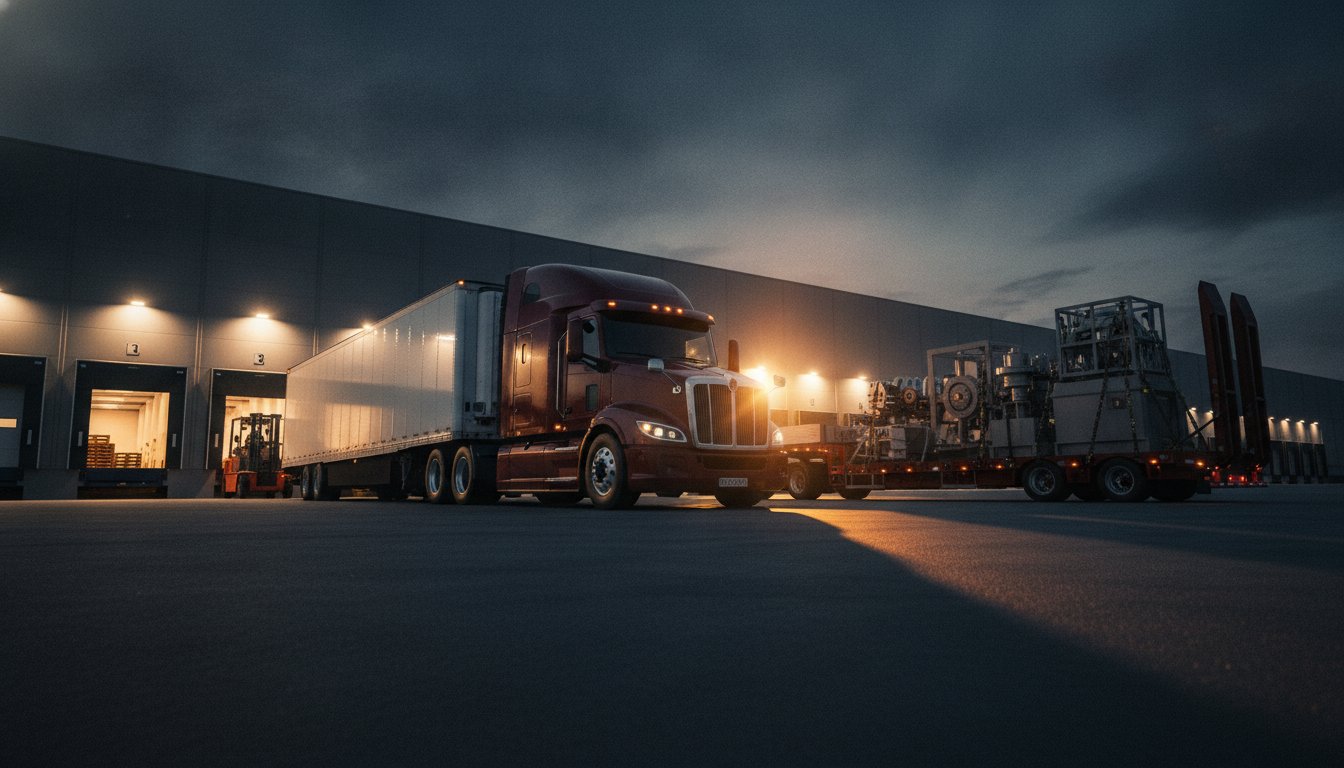
With flatbed tender rejection rates hitting 41.93% in early 2026, picking the wrong equipment isn’t just a minor error. It’s a fast way to stall your supply chain. You’ve likely felt the stress of a driver arriving at a dock only to find your cargo requires an open deck. You might also be weary of seeing how a misunderstanding of flatbed vs dry van shipping leads to unexpected tarping fees on your final invoice.
Understanding these nuances is critical to maintaining order in a market that’s currently undergoing a significant correction. We’re here to provide a steady hand and the institutional knowledge we’ve gained over 25 years in the industry. Our 2026 guide offers a clear framework for choosing the right trailer by analyzing current market availability and loading requirements. You’ll gain the confidence to select the most cost-effective method for your cargo, ensuring your freight moves without the headache of costly re-bookings or damaged goods.
Key Takeaways
- Determine the optimal trailer type by evaluating your cargo’s physical dimensions and its sensitivity to weather or road debris.
- Master the nuances of flatbed vs dry van shipping to prevent expensive re-bookings and ensure your equipment matches your loading dock infrastructure.
- Protect high-value retail goods and electronics by utilizing the enclosed security and weatherproofing of dry van freight services.
- Solve the challenge of transporting oversized industrial machinery and building materials through specialized flatbed solutions and professional securement.
- Partner with an experienced freight broker to access a vetted national network, ensuring carrier compliance and reliable equipment availability in any lane.
Understanding the Fundamentals: Flatbed vs. Dry Van Shipping
Selecting the right equipment is the first step toward a seamless shipping experience. For many logistics managers, the choice between flatbed vs dry van shipping represents the balance between ultimate cargo protection and the flexibility required for industrial loads. While both serve as the backbone of North American commerce, they operate on entirely different principles of securement and accessibility. In 2026, as the market shifts toward a carrier-favored environment, understanding these basics helps you avoid the equipment mismatch that leads to costly delays and operational friction.
The core trade-off centers on the physical environment of the trailer. A dry van offers a “seal and forget” level of security, protecting goods from rain, wind, and theft behind locked doors. Conversely, a flatbed prioritizes accessibility. It trades the protective shell for an open deck that accommodates cargo that simply won’t fit through a standard rear door. This fundamental difference dictates everything from your labor costs at the loading dock to the insurance premiums you’ll pay for the haul.
The Anatomy of a Dry Van
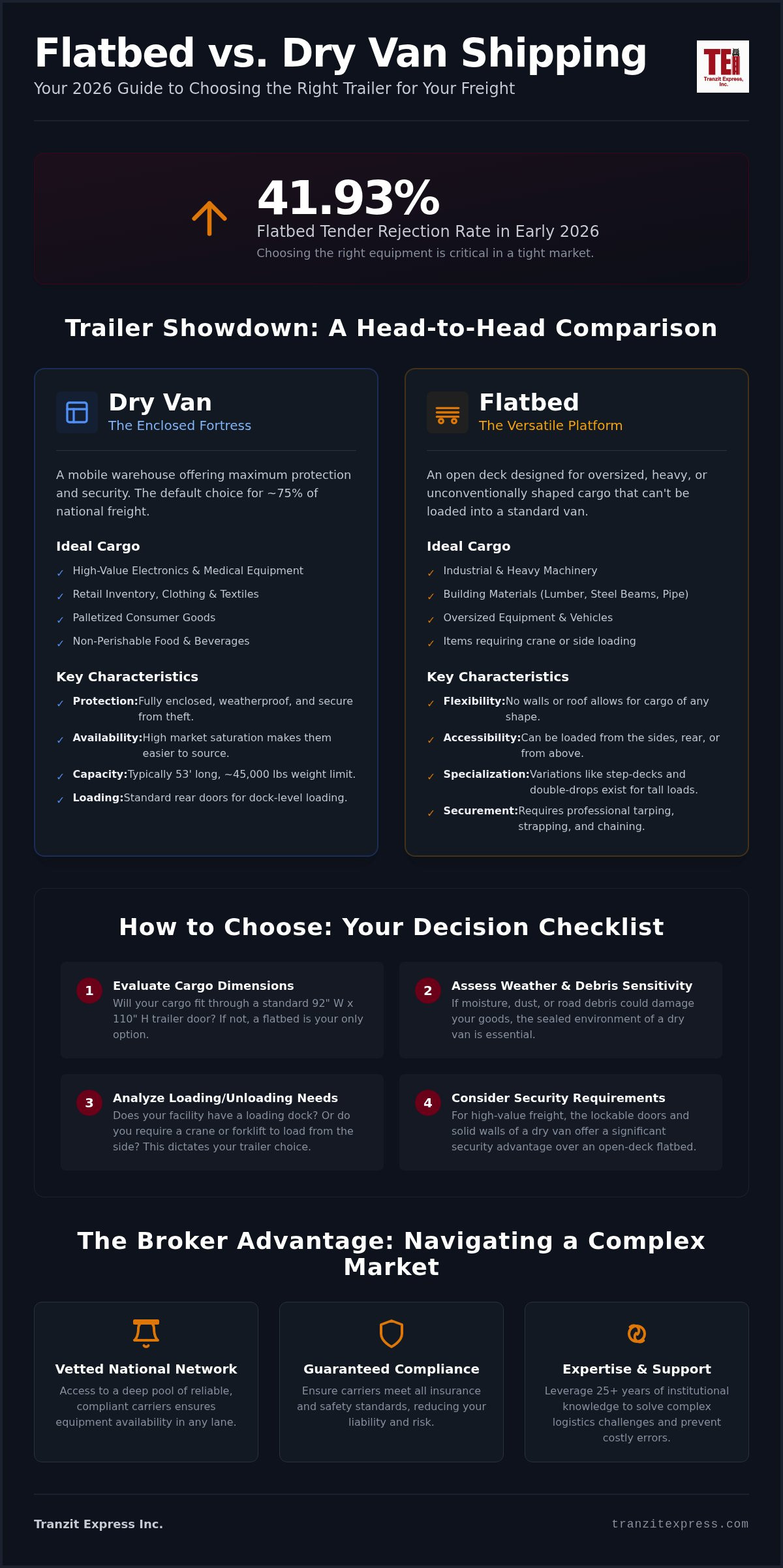
The dry van is the industry’s most common sight. It’s essentially a mobile warehouse. These enclosed trailers are typically 53 feet long and provide a weatherproof environment for palletized goods. Because they’re completely sealed, they offer a high level of security against road debris and unauthorized access. Most standard dry vans feature hardwood floors and aluminum walls, supporting a weight capacity of approximately 45,000 pounds. This predictable design makes them the default choice for roughly 75% of national freight, particularly for retail goods, electronics, and non-perishable food items that require a clean, dry space.
The Versatility of the Flatbed Deck
A flatbed trailer is an open platform with no sides or roof. This design allows for loading from the side, the rear, or even from above via crane. When cargo is too wide, tall, or heavy for a standard box, flatbeds provide the necessary clearance. Within the broader category of types of semi-trailers, flatbeds are prized for their ability to transport “un-boxable” items like steel beams, lumber, and heavy machinery.
While they offer less inherent protection than a van, the use of specialized tarps and straps ensures that even the most awkward loads stay secure. Shippers can choose from several variations, including standard flatbeds, step-decks for taller loads, and double-drops for extremely oversized equipment. This flexibility is essential for the construction and energy sectors, where cargo dimensions rarely follow a standard pallet size. In the current 2026 market, where flatbed capacity is tightening, knowing exactly which variation you need is vital for securing a truck at a fair rate.
The Strategic Advantages of Dry Van Freight Services
For shippers who prioritize predictability and protection, the dry van trailer remains the industry standard for a reason. The primary benefit of an enclosed trailer is the “envelope” of security it provides for your cargo. Unlike open-deck options, a dry van shields your freight from the unpredictable elements of the road, including rain, snow, and wind-blown debris. One of the most significant advantages of dry van shipping is the peace of mind that comes from knowing your goods are locked behind solid aluminum walls. This physical barrier is your first line of defense against both environmental damage and unauthorized access.
In the 2026 logistics market, equipment availability plays a major role in your decision between flatbed vs dry van shipping. While flatbed capacity has tightened and seen rising tender rejection rates, the dry van market remains more accessible. This saturation makes it easier to source van freight services on short notice. For businesses operating on just-in-time inventory models, this reliability is a strategic asset. It ensures that your supply chain stays in motion even when other equipment types are scarce.
Ideal Cargo for Enclosed Trailers
Dry vans are the preferred choice for any cargo that requires a pristine, controlled environment. They’re the workhorses of the retail and consumer goods sectors where appearance and packaging integrity are paramount. Common examples include:
- Sensitive Electronics: High-value servers, computers, and medical equipment that cannot tolerate moisture or dust.
- Retail Inventory: Clothing, textiles, and boxed consumer goods that must arrive ready for the showroom floor.
- Non-Perishables: Dry food products and canned goods that benefit from a shaded, stable environment.
Dock Loading and Efficiency
Standardization is a powerful tool for reducing logistics costs. Most modern distribution centers and warehouses are built to accommodate standard 48-inch dock heights. When you choose a dry van, you’re opting for a dock-to-dock process that streamlines labor. Forklift operators can move palletized loads directly into the trailer without the need for specialized cranes or rigging. This standardization significantly reduces detention time and labor expenses. It also simplifies the process of LTL (Less-Than-Truckload) consolidation, allowing you to pay only for the space you use within a secure, shared trailer. If you’re looking for a dependable partner to manage these movements, Tranzit Express offers the steady hand needed to keep your freight moving efficiently.
Navigating the Complexity of Flatbed Freight Services
While the enclosed nature of a dry van offers simplicity, the open deck of a flatbed provides the raw capability required for industrial growth. For many shippers, the choice between flatbed vs dry van shipping is decided by the cargo’s physical footprint. If your freight is “un-boxable”-meaning it exceeds the height or width of a standard trailer door-a flatbed is your only viable path. This equipment is the lifeblood of the construction and manufacturing sectors, transporting everything from massive steel beams to pre-cast concrete and heavy industrial machinery. Accessing reliable flatbed freight services USA means understanding that you aren’t just paying for space on a trailer. You’re investing in the specialized labor and equipment required to keep non-standard cargo secure on the open road.
Operating an open deck involves a layer of financial complexity known as accessory charges. Because the cargo is exposed, drivers must often apply heavy-duty tarps to protect against moisture and road salt. You should also account for securement fees, which cover the use of specialized straps, chains, and dunnage. Dunnage refers to the wood blocks used to stabilize a load and prevent it from shifting during transit. If your load exceeds legal dimensions, you’ll also need to navigate the world of over-dimensional permits. These requirements vary by state and can include pilot cars or restricted travel hours. Partnering with a seasoned broker helps ensure these details are managed before the truck ever arrives at your facility.
Specialized Loading Requirements
Flatbeds remove the constraints of a traditional loading dock. This allows for crane loading, where heavy components are lowered directly onto the deck from above. It also facilitates side-loading, which is the standard for long lumber or steel pipe shipments that a forklift couldn’t maneuver into a rear-entry trailer. Proper weight distribution is paramount here. An unbalanced load on an open deck doesn’t just risk cargo damage; it creates a significant safety hazard for the driver and other motorists. Our team prioritizes carrier compliance to ensure every load is balanced and secured to the highest industry standards.
Specialized Flatbed Solutions: Conestogas and Hot-Shots
The flatbed market offers several specialized variants to solve specific logistical hurdles. A Conestoga trailer acts as a hybrid, featuring a retractable curtain system that provides the protection of a dry van with the loading flexibility of a flatbed. For smaller, time-sensitive loads that still require an open deck, hot shot trucking offers a nimble alternative using medium-duty trucks and trailers. When your machinery is exceptionally tall or heavy, we look toward step-decks or Removable Gooseneck (RGN) trailers. These specialized decks sit lower to the ground, allowing you to haul taller equipment while remaining under the legal height limits for interstate overpasses.
Key Selection Criteria: How to Choose the Right Trailer
Selecting the correct trailer isn’t just about the cargo itself. It’s about the entire lifecycle of the shipment, from the moment it leaves your facility to the second it’s unloaded at its destination. When analyzing flatbed vs dry van shipping, you must look beyond the physical dimensions of the freight. While weight, height, and length are the starting points, your decision should also be informed by the environmental sensitivity of the goods and the specific capabilities of the loading and unloading sites. A mismatch here doesn’t just cause delays; it creates safety risks and drives up labor costs.
Environmental factors often dictate the equipment choice before any other variable is considered. If your cargo is sensitive to moisture, road salt, or wind, the enclosed protection of a dry van is almost always the safer path. However, for industrial materials that can withstand exposure, the ease of loading a flatbed often outweighs the need for a roof. Balancing these factors requires a methodical approach that considers the total cost of the move, including accessory fees and the time your team spends on the dock.
The Facility Compatibility Checklist
Before booking a truck, you must verify that both the origin and destination can physically accommodate the equipment. This is a common gap in logistics planning that leads to costly re-bookings. Use this checklist to ensure facility alignment:
- Dock Access: Standard dry vans require a loading dock, typically 48 to 52 inches high. If your facility only has ground-level access, you’ll need specialized equipment or a flatbed.
- Yard Clearance: Flatbeds require significant “swing room” for side-loading maneuvers. Ensure your yard has enough open space for a forklift to operate safely alongside the trailer.
- Equipment Availability: Confirm that you have the necessary forklift capacity or overhead cranes to handle the specific weight and shape of your cargo. Flatbed shipments often require specialized rigging that isn’t found at standard retail docks.
Cost Comparison: Beyond the Base Rate
A common mistake is choosing a trailer based solely on the quoted line-haul rate. Flatbeds often command a higher base premium because the equipment is more specialized and the driver must perform more physical labor. However, dry vans can incur “hidden” costs like detention fees if your dock is backed up. Conversely, flatbed quotes must account for tarping and securement fees which can add up quickly. Effective logistics management for shippers involves calculating these variables upfront to find the true bottom-line cost. If you’re ready to optimize your equipment selection and reduce overhead, contact our team today to discuss a tailored shipping strategy.
Why a Reliable Freight Broker is Essential for Your Strategy
Deciding between flatbed vs dry van shipping is only half the battle. Once you’ve identified the right trailer for your cargo, the next challenge is securing reliable capacity in a market where equipment availability can shift overnight. In 2026, as flatbed tender rejection rates remain high, simply having a preference for a trailer type isn’t enough. You need a partner who can navigate these shortages and find the specific equipment required for your lane. A professional broker acts as this essential bridge, leveraging a national network to ensure your freight doesn’t sit idle on a dock.
Securing a truck is a transaction; building a logistics strategy is a partnership. Understanding what does a freight broker do reveals that their value lies in risk mitigation and communication. At Tranzit Express Inc., we’ve spent over 25 years refining this process. We provide the “steady hand” required to manage the nuanced differences in flatbed vs dry van shipping, from sourcing specialized step-deck trailers to coordinating standard 53-foot dry vans for retail distribution. Our experience allows us to anticipate market shifts before they disrupt your supply chain.
Managing Carrier Compliance and Safety
Safety and insurance are where the differences between trailer types become most apparent. Open-deck loads often require higher insurance limits and more rigorous driver certifications than standard enclosed hauls. We take the burden of vetting off your shoulders by monitoring carrier safety ratings and verifying that every truck in our network meets our high standards. This proactive approach ensures that your cargo is in the hands of a qualified professional who understands the specific securement needs of your freight. If a complication arises en route, we handle the resolution, providing you with a single, dependable point of contact.
Streamlining the Shipping Process via Portals
Modern logistics requires transparency and speed. Our Shipper Portal Access is designed to remove the friction from your daily operations. Whether you’re requesting a quote for a complex flatbed move or tracking a routine dry van shipment, our technology provides real-time visibility and centralized documentation. This digital infrastructure simplifies the quoting process and allows you to compare variables across different trailer types instantly. By combining 25 years of institutional knowledge with streamlined digital tools, we help you build a long-term logistics partnership that prioritizes consistency and clear communication above all else.
Optimizing Your 2026 Freight Strategy
Mastering the nuances of flatbed vs dry van shipping is about more than just selecting a trailer. It’s about aligning your cargo requirements with facility capabilities and current market availability. Whether you’re moving sensitive retail inventory in an enclosed van or oversized machinery on an open deck, the right choice ensures your supply chain remains resilient. By prioritizing detailed planning and clear communication, you can avoid the costly re-bookings and accessory fees that often disrupt logistics budgets.
With 25+ years of industry-leading expertise, we provide the stability your business needs in a complex market. Our comprehensive national carrier network and dedicated shipper portals offer the visibility and reliability essential for modern freight management. We’re ready to serve as your dependable logistics partner, helping you navigate every lane with confidence. Request a Dependable Shipping Quote from Tranzit Express Inc. and experience the peace of mind that comes with a steady hand at the wheel.
Frequently Asked Questions
What is the main difference between flatbed and dry van shipping?
The fundamental difference lies in the trailer’s physical enclosure. A dry van is a sealed box that protects cargo from weather and theft, while a flatbed is an open platform designed for oversized or oddly shaped loads. This structural distinction dictates how your cargo is loaded, secured, and protected during transit.
When should I choose a flatbed over a dry van?
You should opt for a flatbed when your freight exceeds the interior dimensions of a standard trailer or requires specialized loading. Items like large machinery, raw lumber, and steel beams often necessitate open-deck access for cranes or side-loading forklifts. If your cargo cannot fit through a standard rear door, a flatbed is the necessary choice.
Are flatbed shipping rates usually higher than dry van rates?
Flatbed rates typically command a premium compared to dry van rates. This price difference reflects the specialized nature of the equipment and the additional physical labor required from the driver, such as tarping and strapping. Market capacity also plays a role, as flatbed equipment is often in higher demand for specialized industrial and construction projects.
Do I need a loading dock for flatbed shipping?
No, flatbed trailers are designed to be loaded and unloaded without a traditional dock. They are typically serviced in open yards where forklifts can approach from the side or cranes can lower cargo from above. This flexibility makes them ideal for construction sites or industrial facilities that lack standard warehouse infrastructure.
What is tarping, and is it always required for flatbed loads?
Tarping involves covering cargo with heavy-duty vinyl sheets to protect it from moisture, road debris, and wind. While it’s not always required, it’s essential for items like finished lumber or machinery that could be damaged by environmental exposure. Shippers should specify tarping requirements during the quoting process to ensure the driver arrives with the correct equipment.
Can a dry van handle heavy industrial machinery?
A dry van can handle machinery only if the equipment fits within the 110-inch interior height and 102-inch width limits. However, the primary hurdle is usually the loading process. Most heavy machinery requires crane or side-loading, which is impossible with an enclosed van. This makes the flatbed the more practical choice for most industrial moves.
How does a freight broker help in choosing between these trailer types?
A freight broker provides the institutional knowledge needed to evaluate your cargo and facility constraints. By analyzing your specific requirements, a broker can recommend the most cost-effective method for flatbed vs dry van shipping. They also vet carriers for compliance and insurance, ensuring your cargo is handled by a qualified professional with the right equipment.
What are the weight limits for standard dry van and flatbed trailers?
Standard weight limits for both trailer types generally hover between 45,000 and 48,000 pounds. While the trailers themselves can often support more, the legal gross vehicle weight limit of 80,000 pounds restricts the actual cargo weight. When comparing flatbed vs dry van shipping, always confirm your specific load weight to ensure legal compliance across all states.