
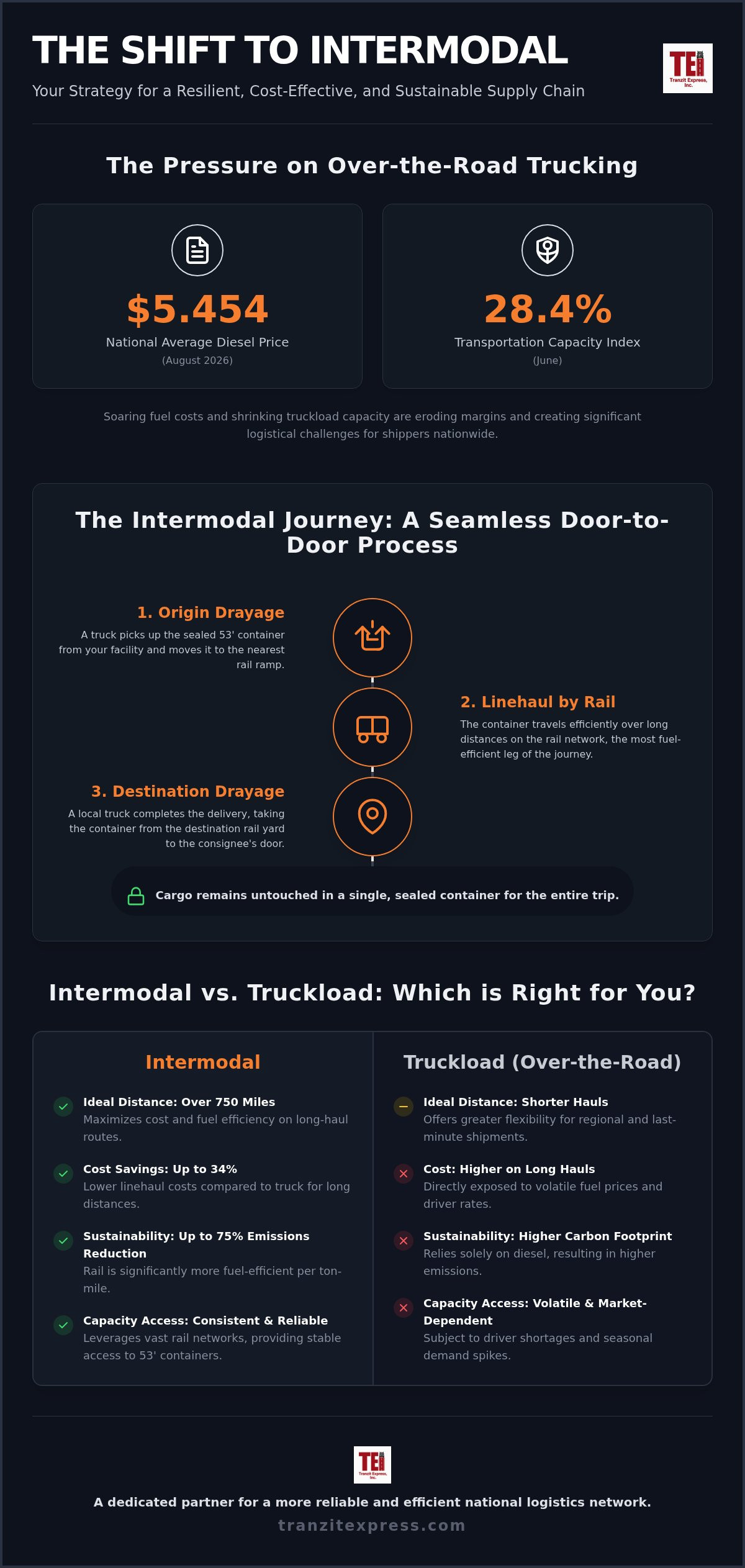
With the national average price for on-highway diesel reaching $5.454 per gallon in August 2026, the traditional reliance on long-haul trucking is becoming an expensive habit. You’ve likely noticed that finding reliable truckload capacity is harder than ever as the market index for transportation capacity dropped to 28.4% this June. It’s frustrating to watch fuel surcharges erode your margins while your team struggles to secure 53-foot trailers during peak seasons. Many shippers are realizing that intermodal transportation services are no longer just a backup option; they’re a primary strategy for maintaining a stable national logistics network.
We understand the pressure to keep your supply chain moving in a volatile market. This guide reveals how combining rail and road can help you lower freight costs on hauls over 750 miles by as much as 34% while increasing your available capacity. You’ll learn how to streamline your operations with a single point of contact for complex multi-modal routes and meet corporate sustainability goals through more efficient transport. We’ll examine the specific steps to integrate these solutions into your network to ensure consistent, dependable delivery across the United States without the stress of constant market fluctuations.
Key Takeaways
- Learn how intermodal transportation services combine the flexibility of trucking with the efficiency of rail to create a more resilient national supply chain.
- Identify the specific distance thresholds where switching from over-the-road trucking to rail leads to significant cost reductions and improved margins.
- Understand the technical requirements for intermodal freight, including weight limitations and cargo stabilization, to ensure your goods arrive in perfect condition.
- Discover how a dedicated freight partner manages the coordination between railroads and drayage carriers to reduce your operational stress.
- Gain consistent access to 53-foot container capacity even during peak seasons by leveraging established rail networks across the United States.
Defining Intermodal Transportation Services for Modern Shippers
At its simplest, intermodal transportation involves moving goods in a single, sealed container using at least two different modes of transport, typically a combination of rail and truck. This method ensures that the cargo itself is never handled when changing modes, which significantly reduces the risk of damage or loss. For a deeper look into the history and technical specifications, you can explore what is intermodal freight transport to see how these systems evolved. In 2026, intermodal transportation services have become the preferred choice for long-haul national logistics because they offer a level of stability that traditional over-the-road trucking often lacks.
The 53-foot domestic container is the primary tool that makes this possible. It’s designed to mirror the capacity of a standard dry van trailer, allowing shippers to transition from road to rail without redesigning their loading processes. While some use the terms intermodal and multimodal interchangeably, there’s a vital distinction. Multimodal is a broad term for any shipment using multiple modes, but intermodal specifically refers to the use of specialized containers that move seamlessly between trucks and trains without the goods being transferred between different pieces of equipment.
The Core Components of an Intermodal Move
A successful move relies on three distinct phases that work in harmony. First, the origin drayage involves a truck picking up the container from your facility and transporting it to the nearest rail ramp. Next, the linehaul phase begins. This is where the rail system provides its greatest value, moving the container across the country with high efficiency. Finally, the destination drayage completes the journey. A truck picks up the container at the destination rail yard and delivers it directly to the consignee’s door. Tranzit Express Inc. manages these handoffs to ensure the process feels as simple as a standard truckload shipment.
Why Intermodal is Gaining Momentum in 2026
Several factors have pushed rail to the forefront of logistics strategy this year. The persistent shortage of long-haul drivers has made over-the-road capacity scarce, with the transportation capacity index hitting a low of 28.4% in June. By utilizing rail for the longest portion of the trip, you reduce the need for long-distance drivers, focusing their efforts on shorter drayage routes instead. Fuel price volatility also plays a major role. With diesel reaching $5.454 per gallon in August 2026, the cost of traditional trucking has climbed significantly. Additionally, many organizations use intermodal transportation services to meet strict carbon reduction targets, as shipping by rail can reduce greenhouse gas emissions by up to 75% compared to trucking alone.
How Intermodal Freight Moves: The Synergy of Rail and Trucking
The true strength of intermodal transportation services lies in the seamless transition between modes. It’s a door-to-door process where your cargo remains untouched inside a 53-foot container from the moment it leaves your dock until it reaches the consignee. This “closed-loop” approach eliminates the risks associated with cross-docking or manual handling at transfer points. By relying on a national intermodal transportation system, shippers gain the high-volume efficiency of rail without sacrificing the localized flexibility of truck delivery. This synergy creates a “steel wheel” advantage, using the rail’s backbone to move heavy loads over long distances while trucks handle the precision of the first and last mile.
Modern logistics shouldn’t be a black box. Tranzit Express Inc. provides transparency through dedicated shipper and carrier portals. You can monitor your shipment’s status 24/7, whether it’s currently on a chassis at a terminal or moving across the country on a railcar. Standardized equipment is the glue that holds this system together. The universal 53-foot domestic container ensures that every piece of freight fits perfectly into the existing rail infrastructure, preventing the mechanical delays or equipment mismatches that can occur with non-standard trailers.
The Critical Role of Drayage Management
Drayage is the short-haul trucking movement that connects your facility to the rail ramp. While it’s the shortest leg of the trip, it’s often the most complex. Congestion at terminal gates and long wait times at ramps can disrupt schedules if not managed carefully. We vet our drayage partners rigorously, looking for carriers who understand the specific nuances of rail yard operations. Reliable drayage is the key to maintaining on-time performance in a multi-modal environment. If you’re looking for a partner to manage these localized complexities, our intermodal transportation solutions provide the steady hand you need.
Navigating the National Rail Network
The United States is currently served by seven Class I railroads that form the primary corridors for national freight. These carriers operate massive terminals that act as the hubs of the intermodal system, where containers are sorted and loaded onto double-stack trains for maximum efficiency. When planning your route, it’s important to understand the difference between ramp-to-ramp and door-to-door service levels. While ramp-to-ramp requires you to coordinate trucking on both ends, door-to-door service provides a single point of contact for the entire journey. This integrated approach reduces the administrative burden on your team and ensures accountability across every mile of the route.
Comparing Intermodal vs. Truckload Shipping: Efficiency and ROI
Deciding between intermodal transportation services and standard over-the-road (OTR) trucking requires a clear understanding of your supply chain’s priorities. While OTR offers speed, intermodal provides a level of cost stability that’s difficult to match in a volatile market. As of August 2026, intermodal rates are 34% lower than truckload rates on average. This price gap is largely driven by the high cost of diesel, which reached $5.454 per gallon this month. Because rail is significantly more fuel-efficient, these services shield you from the aggressive fuel surcharges that often plague traditional trucking during price spikes.
Capacity stability is another critical factor. When the transportation capacity index dropped to 28.4% in June 2026, many shippers found themselves unable to secure 53-foot trailers. Intermodal provides a consistent alternative by utilizing the vast national rail network, which is less susceptible to the driver shortages affecting the trucking sector. Regarding safety, containerized shipping maintains low damage rates because the cargo isn’t touched during transit. Once we seal the container at your dock, it remains secure through every mode change until it reaches its final destination.
The 750-Mile Rule of Thumb
Distance is the most influential factor when evaluating ROI. Generally, intermodal begins to outperform OTR on hauls exceeding 750 miles. At this distance, the cost savings of the rail linehaul outweigh the expenses of the origin and destination drayage. There are exceptions, however. High-volume lanes between major rail hubs can sometimes see savings at shorter distances, especially when van line-haul rates are 40% to 45% higher than the previous year. We help our partners evaluate their specific lanes to find the “sweet spot” where rail provides the most dependable value.
Environmental Impact: The Green Logistics Advantage
Sustainability has moved from a corporate talking point to a core business requirement. Many organizations now use rail to meet ambitious ESG (Environmental, Social, and Governance) goals. The math is simple but impactful. One train can carry the load of 280 trucks, reducing fuel consumption by up to 75%. By shifting your long-haul freight to the tracks, you’re not just saving money; you’re significantly reducing your carbon footprint. This transition allows you to report measurable progress toward sustainability targets while maintaining the high service standards your customers expect.
Key Factors for Implementing Intermodal Solutions in Your Supply Chain
Integrating intermodal transportation services into your logistics network requires a thoughtful approach to cargo preparation and scheduling. Unlike standard trucking, rail transport involves specific physical forces, such as harmonic vibrations and longitudinal slack action. You must ensure your freight is properly palletized and secured. Blocking and bracing are not merely suggestions; they are essential requirements to prevent cargo from shifting during the rail portion of the journey. This attention to detail ensures your goods arrive in the same condition they left your facility.
Weight considerations are equally important. While a standard dry van can often handle 45,000 pounds of cargo, intermodal containers are heavier. This typically limits your payload to approximately 42,500 pounds to remain compliant with highway weight laws during the drayage legs. Overloading a container can lead to significant delays and additional costs at the rail ramp, so precise weight management is a prerequisite for success.
Lead time planning is the final piece of the implementation puzzle. Transit windows for rail are generally one to two days longer than over-the-road routes. Successful shippers adjust their inventory cycles to account for this predictable difference. It’s a strategic trade-off, where you exchange a small amount of speed for substantial cost savings and guaranteed capacity.
Commodity Suitability and Restrictions
Certain products are naturally suited for the rail environment. Consumer packaged goods, retail merchandise, and electronics thrive in intermodal containers. High-value shipments also benefit from the enhanced security protocols found at intermodal terminals, which feature restricted access and constant surveillance. However, hazardous materials require extra diligence. Navigating hazmat regulations on the rail is a complex process, as railroads often maintain stricter requirements than standard highway regulations. We provide the institutional knowledge needed to move these sensitive loads safely.
Designing a Hybrid Logistics Strategy
A resilient supply chain doesn’t rely on a single mode of transport. We recommend a hybrid strategy that balances over-the-road trucking for urgent deliveries with intermodal for consistent, long-haul lanes. This creates a safety valve for your capacity, especially during peak seasons when truckload availability becomes scarce. For those looking to integrate these solutions, optimizing your dry van shipments alongside rail ensures every lane in your network operates at peak efficiency. If you’re ready to evaluate your current freight for rail suitability, partner with us for an intermodal lane analysis.
Why a Professional Freight Broker is Your Best Intermodal Partner
While the efficiency of rail is clear, the execution of a multi-modal strategy requires a high degree of coordination. Unlike a simple truckload move, intermodal transportation services involve multiple handoffs between drayage carriers and Class I railroads. A professional broker serves as the single point of contact, managing these transitions so your team doesn’t have to. We provide access to diverse carrier networks that go far beyond any single asset fleet, giving you the flexibility to move freight even when specific lanes are congested or capacity is tight.
In 2026, the flow of information is just as important as the movement of the physical container. We use our experience to filter out the noise and provide you with the critical updates you need. While our shipper and carrier portals offer 24/7 transparency, our team provides the human context. We act as a steady extension of your logistics department, applying over 25 years of institutional knowledge to ensure your routing is optimized for both cost and reliability. This veteran-led oversight turns a complex process into a predictable part of your business operations.
The Value of Experienced Logistics Management
Managing the documentation and compliance for rail-bound freight is a specialized task. From ensuring hazmat paperwork meets railroad standards to coordinating ramp appointments, the details determine the success of the move. Proactive problem solving is where a veteran partner proves their worth. If a train is delayed or a terminal experiences congestion, we don’t just report the issue; we implement a recovery plan to minimize the impact on your supply chain. You can learn more about what a freight broker do to protect your cargo and maintain your schedule during these complex moves.
Steady Leadership in a Complex Industry
We believe that “partnership” is a better word for our role than “transactional shipping.” Our primary goal is to reduce your stress by providing a sense of order in a complex industry. Tranzit Express Inc. acts as a steady hand at the wheel, prioritizing the fulfillment of promises over marketing hype. We value clear, dependable communication above all else, ensuring that you always have a reliable perspective on your national supply chain. If you’re ready to experience a more dependable way to move your freight, request a reliable intermodal quote from our expert team today.
Strengthening Your National Logistics Network
Adopting intermodal transportation services is a decisive move toward a more resilient and cost-effective supply chain. By leveraging the vast national rail network for long-haul routes, you protect your margins from fuel price volatility and secure consistent capacity during tight market cycles. We’ve explored how proper cargo preparation and a clear understanding of the distance thresholds allow you to maximize the ROI of every shipment. Success in this complex field depends on meticulous coordination between road and rail, ensuring that every handoff is handled with professional precision.
Tranzit Express Inc. brings over 25 years of industry experience to your logistics strategy, providing full national coverage across the United States. Our dedicated shipper and carrier portals offer the transparency you need to manage your inventory with confidence. We act as a steady hand at the wheel, handling the administrative and operational complexities so you can focus on your core business goals. When you’re ready to build a more dependable future for your freight, Partner with Tranzit Express for Reliable Intermodal Solutions. We look forward to building a long-term partnership that brings order and excellence to your national supply chain.
Frequently Asked Questions
What is the difference between intermodal and multimodal transportation?
Intermodal specifically involves the use of specialized containers that move between modes without the cargo being handled. Multimodal is a general term for any shipment that utilizes at least two modes of transport, such as truck and air or rail and water. The key distinction is the unitized nature of intermodal, which keeps your goods sealed in one 53-foot container throughout the entire national journey to ensure maximum security and order.
How much can I save by switching from truckload to intermodal transportation?
Shippers often see significant cost reductions on long-distance routes. As of August 2026, intermodal rates are approximately 34% lower than standard truckload rates. These savings are most pronounced on hauls exceeding 750 miles, where the fuel efficiency of the rail linehaul outweighs the costs of drayage. By utilizing intermodal transportation services, you gain a predictable pricing structure that’s less susceptible to the volatility of diesel prices and seasonal trucking surcharges.
Is intermodal transportation slower than standard trucking?
Rail transit generally requires an additional one to two days compared to direct over-the-road trucking. This difference accounts for the time spent at rail terminals for loading, unloading, and train assembly. While it’s slightly slower, the schedule is highly consistent. Most veteran shippers view this as a strategic trade-off. They adjust their lead times and inventory planning to accommodate the rail schedule in exchange for lower costs and increased capacity.
What are the weight limits for intermodal containers in the US?
The maximum cargo weight for a standard intermodal container is typically 42,500 pounds. This is slightly less than the 45,000 pounds usually permitted in a dry van trailer. The difference exists because the steel-reinforced intermodal container and its accompanying chassis are heavier than a standard highway trailer. Staying within these limits is essential to remain compliant with gross vehicle weight laws during the truck-based drayage portions of the trip.
Can I ship temperature-sensitive freight using intermodal services?
Temperature-controlled intermodal solutions are widely available for perishable or sensitive goods. Specialized refrigerated containers, known as reefers, are used to maintain specific temperature setpoints throughout the journey. These containers feature self-contained cooling units that run while the container is on the railcar and during drayage. This allows you to combine the cost benefits of rail with the environmental precision required for food, pharmaceuticals, or other climate-sensitive commodities.
How do I secure my cargo for rail transport to prevent damage?
Proper cargo protection involves rigorous blocking and bracing to prevent freight from shifting. Rail transport subjects cargo to longitudinal forces and harmonic vibrations that are different from highway travel. You should use high-quality dunnage, air bags, or specialized bracing systems to fill any voids in the container. Ensuring a tight load is the most effective way to protect your goods and maintain the integrity of your shipment across the national rail network.
What is drayage and why is it important in intermodal shipping?
Drayage refers to the short-distance trucking legs that connect your facility to the nearest rail ramp. It’s the first and last mile of the journey and is vital for maintaining the schedule of the entire move. Because drayage involves navigating busy terminal gates and rail yard operations, it requires specialized carriers. Managing these local truck movements with precision is what ensures your container makes its scheduled train and arrives on time at the consignee.
How does intermodal transportation help reduce carbon emissions?
Shipping by rail is one of the most effective ways to lower your supply chain’s carbon footprint. Trains are roughly four times more fuel-efficient than trucks, with one train capable of carrying the load of 280 trucks. By integrating intermodal transportation services into your logistics strategy, you can reduce greenhouse gas emissions by as much as 75%. This makes it a primary tool for companies working to meet corporate sustainability and ESG goals.