
What if the most reliable way to eliminate shipping delays wasn’t found in a faster engine, but in a more disciplined conversation? You’ve likely felt the frustration of manual check calls that lead nowhere or the stress of discovering a delay only after a deadline has passed. In an industry where 41% of brokers are now integrating AI to manage data, establishing freight broker communication best practices remains the most critical link in your supply chain.
It’s exhausting to manage inconsistent updates and conflicting instructions between brokers and carriers. You deserve a partnership built on stability and veteran expertise rather than constant manual oversight. This guide will show you how to implement professional communication frameworks that replace frantic phone calls with proactive exception management and real-time visibility. We’ll explore how to leverage twenty-five years of industry experience and modern shipper portals to ensure your instructions are never lost, creating a more resilient national supply chain for your business.
Key Takeaways
- Define professional communication as a proactive, high-fidelity data exchange that serves as the foundation for a resilient national supply chain.
- Learn how to tailor your data requirements for different modes, ensuring specific instructions for Van, Flatbed, or Hot-Shot loads are never misunderstood.
- Implement freight broker communication best practices to transition from time-consuming manual check calls to proactive exception management.
- Discover how to balance modern technology, such as dedicated Shipper Portals, with the “steady hand” of a 25-year industry veteran.
- Establish a clear communication protocol by defining essential shipment milestones and choosing the most efficient channels for urgent updates.
What is Professional Freight Broker Communication?
Professional communication in the logistics industry is far more than a series of friendly phone calls. It’s the proactive, accurate, and timely exchange of high-fidelity data between a shipper and their provider. For many businesses, understanding What is a Freight Broker? is the first step in recognizing that a broker acts as the central intelligence hub for every load. In 2026, this exchange has evolved from simple tracking to a comprehensive digital dialogue that ensures every stakeholder remains aligned throughout the journey.
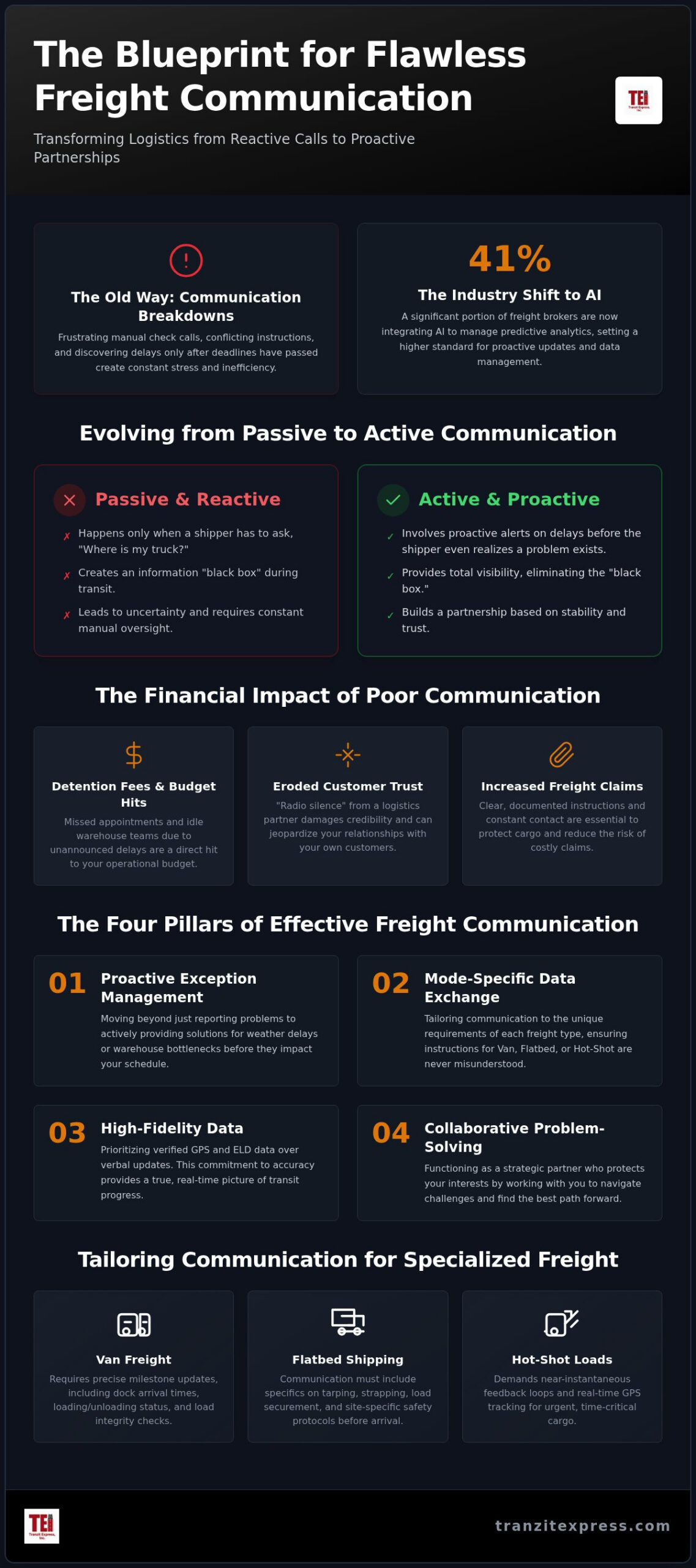
There is a stark difference between passive and active updates. Passive communication is reactive; it happens when a shipper has to reach out to ask where a truck is. Active communication, which is a hallmark of freight broker communication best practices, involves proactive alerts. If a driver is delayed by weather or a warehouse bottleneck, a professional broker provides that information before the shipper even realizes a problem exists. With 41% of freight brokers now deploying AI tools to manage predictive analytics, the standard for “active” updates has never been higher. This shift toward integrated digital transparency allows for a “steady hand” approach to national shipping management, providing order in a complex market.
The Pillars of B2B Logistics Transparency
Transparency isn’t a vague concept. It’s built on the twin pillars of accuracy and consistency. Accuracy means that load weights, equipment types for Van or Flatbed Shipping, and special requirements are verified and communicated correctly the first time. Consistency refers to a predictable rhythm of updates that eliminates the need for manual check calls. We define logistics transparency as the total elimination of the “black box” during transit, ensuring every mile of the journey is accounted for and visible.
The Cost of Communication Breakdowns
When communication fails, the financial impact is immediate. Missed appointments often result in steep detention fees and can disrupt an entire day’s worth of warehouse labor planning. If a warehouse team stands idle because a truck arrived four hours late without warning, it’s a direct hit to your operational budget. Beyond these immediate costs, “radio silence” erodes customer satisfaction and increases the risk of freight claims. Clear, documented instructions and constant contact provide the security needed to protect your cargo, whether you’re moving Intermodal containers or Hot-Shot loads. By adhering to freight broker communication best practices, shippers can reduce these risks and build a more dependable, long-term partnership with their logistics providers.
The Four Pillars of Effective Freight Communication
Effective logistics management relies on a structured framework rather than a series of disconnected updates. Implementing freight broker communication best practices requires a focus on four specific pillars: proactive exception management, mode-specific data exchange, data fidelity, and collaborative problem-solving. When these elements align, the result is a steady, predictable supply chain that minimizes the stress of daily operations. Professional logistics is a science of details. By moving beyond basic tracking, you begin to see how a structured dialogue prevents the small errors that eventually lead to expensive claims.
Data fidelity is particularly vital as we move through 2026. Verbal updates are no longer sufficient for high-stakes B2B partnerships. Reliable brokers now prioritize verified GPS and ELD data to provide a clear picture of transit progress. This commitment to accuracy mirrors the standards found in official Freight Forwarder Best Practices, where due diligence and clear documentation are paramount. By integrating this high-fidelity data, a broker shifts from being a simple vendor to a strategic partner who protects your interests at every mile.
Tailoring Communication for Specialized Freight
Every equipment type requires a unique set of instructions. For Flatbed Shipping, communication must include specific details regarding tarping, strapping, and site-specific safety protocols before the truck even arrives. Hot-Shot Loads demand near-instantaneous feedback loops because the cargo is often time-critical. An experienced freight broker understands these nuances better than a generalist. They know that a Van Freight load has different milestone requirements than a complex Intermodal move, and they adjust their communication rhythm accordingly to ensure no detail is overlooked.
The Role of Real-Time Visibility
Real-time visibility tools have transformed how we maintain a “steady hand at the wheel.” By integrating tracking data directly into the communication flow, we significantly reduce the volume of manual phone traffic. Automated geofencing alerts provide silent, efficient updates to receiving docks, allowing teams to prepare for arrivals without constant back-and-forth emails. This shift from manual check calls to digital milestone verification creates a more professional, orderly environment. Shippers who prioritize these freight broker communication best practices often find that they can manage higher volumes with less manual effort. If you are looking for this level of transparency, exploring Shipper Portal Access can provide the real-time insights your team needs to stay ahead of the curve.
Balancing Technology and the Human Touch in Logistics
Logistics in 2026 is increasingly driven by data, but data without interpretation is often just noise. At Tranzit Express Inc., we believe in the “Steady Hand” philosophy. Technology serves as a powerful tool for gathering information, yet it requires a veteran interpreter to make sense of the countless variables on the road. While 41% of brokers are now deploying AI to manage logistics, these systems often lack the institutional knowledge required to handle high-stakes exceptions. A professional broker balances automated efficiency with the nuanced judgment that only comes from decades of experience. This balance is at the heart of freight broker communication best practices, ensuring that technology enhances the partnership rather than replacing it.
Modern supply chains move fast, and shippers need a provider who can provide order in a complex environment. We’ve seen how the industry has shifted toward digital transparency, but the human element remains the primary driver of trust. A veteran broker doesn’t just pass along a status update; they provide context that helps you make informed decisions for your business. This approach reduces the stress of uncertainty and replaces it with the quiet confidence of a seasoned industry professional.
Leveraging Shipper Portals for Efficiency
Our Shipper Portal Access is the cornerstone of modern logistics efficiency. By centralizing essential documentation like Bills of Lading (BOLs) and Proof of Delivery (PODs), these portals drastically reduce email clutter and administrative overhead. Shippers can use intuitive dashboards to view their national shipment status at a single glance, providing a level of transparency that manual spreadsheets simply cannot match. This digital integration supports better logistics management for shippers by providing a single source of truth for every load. The portal isn’t a replacement for our team; it’s a tool that streamlines routine tasks so our conversations can focus on higher-level strategy and long-term goals.
When the Human Element Matters Most
There are critical moments when the human element is irreplaceable. Automated systems might flag a delay, but they cannot always navigate the complexities of severe weather disruptions or sudden routing changes that impact Van Freight or Flatbed Shipping. Having a dedicated point of contact who knows your business provides a sense of security that a chatbot cannot replicate. Veteran brokers use historical data and industry intuition to predict potential delays before they even occur, allowing for proactive adjustments. Even in a digital world, a professional broker must be reachable by phone. Sometimes, a short conversation with an expert is more effective than an hour of troubleshooting through an automated interface. This hybrid approach ensures that your cargo is always under the care of a professional who values the human connection as much as the data.
A Step-by-Step Guide to Establishing a Communication Protocol
Establishing a protocol is about creating a predictable rhythm for your logistics operations. It moves your partnership from a series of reactive events to a disciplined process. Implementing these freight broker communication best practices ensures that every stakeholder remains informed without the need for constant, manual oversight. Professional logistics is not a guessing game; it requires a structured approach to data sharing that protects your cargo and your reputation. If you don’t have a clear protocol in place, you risk expensive delays and operational friction.
- Step 1: Define your “must-have” milestones for every shipment. This typically includes verified loading, mid-transit position updates, and arrival at the destination.
- Step 2: Establish a preferred channel for urgent versus routine updates. Use your Shipper Portal for routine documentation while reserving phone calls for immediate operational changes.
- Step 3: Provide comprehensive load details from the start. Include site-specific contacts and specialized equipment requirements for Van Freight or Flatbed Shipping to avoid arrival delays.
- Step 4: Set clear boundaries for exception alerts. For example, request a proactive notification if a driver is more than 30 minutes late for a scheduled window.
- Step 5: Conduct quarterly reviews of communication performance. Evaluating these interactions helps identify recurring bottlenecks and refines your protocol for long-term efficiency.
Setting Up Your Milestone Alerts
Customizing notifications ensures your team only receives the data they need to function. High-value or time-sensitive Hot-Shot Loads might require more frequent updates than a standard Intermodal move. By granting your receiving team access to the same tracking data through a centralized portal, you eliminate internal communication gaps. Digital Proof of Delivery (POD) is also essential. It allows for faster reconciliation and reduces the time spent on administrative follow-ups, keeping your back-office operations as streamlined as your freight.
The Feedback Loop: Improving Long-Term Partnerships
Consistent communication does more than just track a load; it builds your reputation as a “shipper of choice.” Carriers prefer working with shippers who provide clear instructions and timely feedback. If a load presents challenges, constructive dialogue with your broker helps prevent the same issues from recurring. This ongoing feedback loop is essential for long-term freight broker communication success. Implementing these freight broker communication best practices ensures your partnership evolves alongside your business needs. To see how a professional protocol can transform your operations, request a consultation to discuss a custom logistics strategy for your business.
Experience the Tranzit Express Standard of Communication
Choosing a logistics partner is an exercise in trust. At Tranzit Express, we’ve spent more than 25 years refining a communication style that prioritizes clarity and composure over marketing hype. We understand that our role is to act as a steady hand at the wheel, providing order in an industry that is often chaotic. By adhering to freight broker communication best practices, we ensure that every load is managed with the quiet confidence of a seasoned veteran. This long-term perspective allows us to anticipate challenges before they disrupt your business, offering a level of security that newer, tech-only brokerages often fail to provide.
Our commitment to excellence isn’t just about moving cargo; it’s about building a resilient national supply chain through disciplined data exchange. We’ve seen the industry evolve, but the core need for dependable, professional interaction remains the same. When you work with us, you aren’t just getting a tracking number. You’re gaining a partner who values your time and understands the high stakes of B2B logistics. This philosophy is reflected in every interaction, from the initial quote to the final proof of delivery.
Dependable Results Over Marketing Hype
Our approach is built on the belief that stability is the foundation of a successful B2B partnership. We don’t focus on flashy disruptor language. Instead, we focus on methodical, logical information delivery that reduces shipper stress. Whether you’re moving Van Freight, coordinating Flatbed Shipping, or managing time-sensitive Hot-Shot Loads, our team provides a consistent rhythm of updates. This professional register ensures that your instructions are followed precisely and that your data is always accurate. When you partner with a veteran-led national provider, you’re gaining a collaborator dedicated to maintaining order in a complex market. We’ve replaced the frustration of manual check calls with a streamlined process that keeps your team informed and your warehouse operations on schedule.
Ready to Streamline Your Shipping?
The Tranzit Express Shipper Portal is the primary tool we use to provide maximum transparency for our clients. It was designed to simplify your daily workflow by centralizing tracking, documentation, and reporting in one accessible location. This digital interface allows you to experience the benefits of freight broker communication best practices without the burden of manual administrative follow-ups. You can get started today by requesting a customized tracking and communication plan that fits your specific operational needs. Our promise is simple: we provide consistent, excellent service on every load, from the first mile to the last. We invite you to contact our team to request a quote and experience the difference that 25 years of institutional knowledge can make for your national logistics strategy.
Building a More Predictable Supply Chain for 2026
Mastering freight broker communication best practices is about more than just reducing phone calls; it’s about establishing a disciplined framework where high-fidelity data and veteran intuition work together to protect your cargo. By defining clear milestones and leveraging specialized shipper portals, you transition from reactive troubleshooting to proactive supply chain management. This structured approach provides the order and transparency necessary to navigate the complexities of national logistics with confidence.
At Tranzit Express, we bring over 25 years of veteran logistics experience to every load, offering a steady hand at the wheel for your national shipping needs. Our integrated shipper portals provide 24/7 transparency, while our seasoned team offers the professional guidance that automated systems alone cannot replicate. We’re committed to building long-term partnerships rooted in trust and excellence. When you’re ready to eliminate shipping delays and experience a higher standard of service, we’re here to help you lead the way. Request a Freight Quote and Experience Professional Communication today and see how a dedicated logistics partner can strengthen your business.
Frequently Asked Questions
What is the most important piece of information to communicate to a broker?
The most important information is a complete set of accurate load details, including precise weights, dimensions, and any specialized equipment requirements for Van or Flatbed Shipping. You should also provide site-specific contact information for both pickup and delivery locations. Providing clear data at the start prevents equipment mismatches and ensures the carrier arrives prepared for your specific shipment type, reducing the risk of delays.
How often should a freight broker provide updates on a national shipment?
A professional broker should provide updates at every major milestone, including when the load is picked up, mid-transit daily checks, and upon final arrival. For longer national hauls, a daily position update is the industry standard for maintaining visibility. Adhering to these freight broker communication best practices ensures you are never left wondering about the status of your cargo or its current location.
Can I track my freight in real-time through a portal?
Yes, you can track your shipments in real-time using our dedicated Shipper Portal Access. This tool integrates GPS and ELD data to provide a clear view of your freight’s progress across the country. It allows you to monitor multiple loads simultaneously without the need for manual check calls or constant email follow-ups, providing a single source of truth for your entire logistics operation.
What should I do if my freight broker stops responding during a transit exception?
If a broker stops responding during an exception, you should immediately escalate the issue to their management team or use the digital portal to check for automated status updates. Consistent communication is the foundation of a professional partnership, especially during delays. If “radio silence” becomes a recurring pattern, it may be time to transition to a more dependable veteran provider who prioritizes transparency and stability.
How does communication differ for hot-shot vs. standard van loads?
Hot-Shot Loads require much more frequent and near-instantaneous feedback loops due to their time-sensitive nature. While standard Van Freight Services may only need daily updates, hot-shot shipments often require milestone alerts every few hours. This specialized communication ensures that any potential delay is addressed immediately to meet strict delivery windows, reflecting the high stakes involved with urgent, smaller-scale cargo.
What is exception management in freight brokerage?
Exception management is the proactive process of identifying potential delays or issues and resolving them before they impact the delivery schedule. Instead of waiting for a problem to occur, a veteran broker uses data to predict disruptions like weather or traffic bottlenecks. This approach is a core component of freight broker communication best practices because it keeps the shipper informed and allows for collaborative, calm problem-solving.
Should I communicate directly with the truck driver?
You should generally avoid communicating directly with the driver and instead work through your freight broker to maintain a clear, documented record of all instructions. The broker acts as the central hub for coordination, ensuring that all instructions are legally compliant and properly logged. This professional distance prevents confusion between the broker and carrier, ensuring that all parties remain accountable for the shipment’s success.
How can I reduce the number of check calls I have to make?
You can reduce check calls by utilizing automated Shipper Portals and setting up customized milestone alerts for your shipments. When a broker provides proactive data through a digital dashboard, the need for manual phone traffic is significantly diminished. This shift toward digital transparency allows your team to focus on high-level operations rather than chasing status updates, creating a more efficient and less stressful environment.