
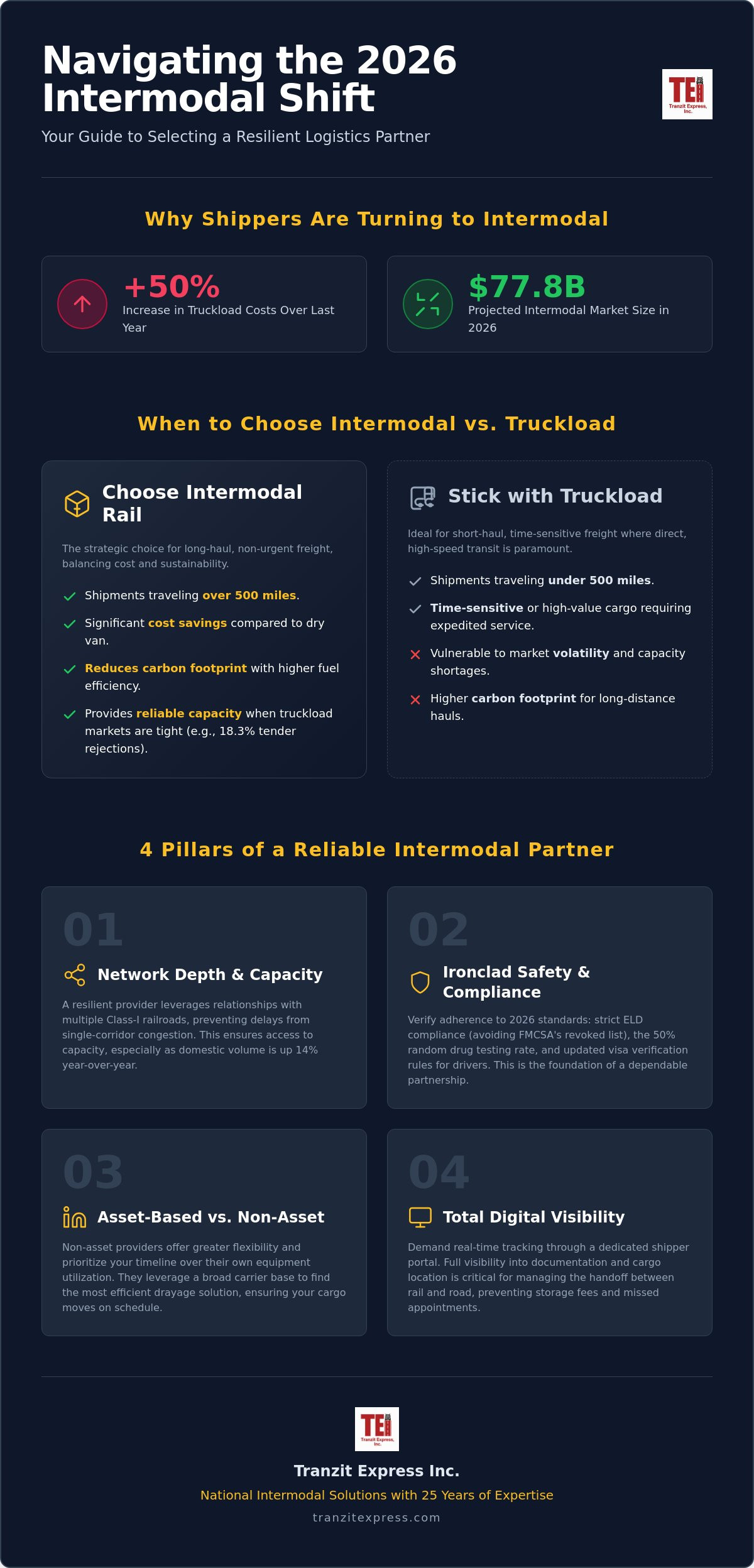
With the intermodal freight market projected to reach $77.84 billion in 2026, more shippers are moving non-time-sensitive freight to rail to escape truckload costs that have climbed 50 percent higher than last year. You’ve likely experienced the stress of a shipment stalling during the handoff between rail and road, or been blindsided by storage fees that weren’t in the initial quote. It’s difficult to maintain a steady supply chain when communication breaks down at the terminal. Finding a dependable intermodal logistics provider is no longer just about the lowest rate. It’s about securing a partnership that offers reliable national capacity and transparent drayage management.
This guide provides a professional framework for evaluating providers to ensure your cargo moves seamlessly across the country. We’ll show you how to manage the complexities of current surcharges, such as the 50.0 percent monthly intermodal fuel rate seen this July, while avoiding the hidden costs of drayage. You’ll learn how to vet for network resilience and digital visibility so you can reduce shipping costs without sacrificing reliability. We’re here to help you establish a sense of order in a complex industry and find a steady hand for your 2026 logistics strategy.
Key Takeaways
- Understand why modern supply chains are prioritizing intermodal solutions to balance cost-efficiency with long-term sustainability goals.
- Identify the four essential criteria for selecting a reliable intermodal logistics provider, focusing on multi-modal transitions and national network reach.
- Evaluate the strategic differences between asset-based and non-asset providers to ensure your chosen partner prioritizes your timeline over their own equipment.
- Utilize a practical buying checklist to vet potential partners for financial stability and the digital visibility offered through shipper portal access.
- Discover how a seasoned approach to national capacity can reduce logistical stress and provide a sense of order in a complex shipping environment.
The Role of Intermodal Trucking Companies in Modern Supply Chains
Intermodal freight transport serves as the backbone for long-distance shipping, acting as the essential bridge between rail, sea, and road. By utilizing standardized containers, this method allows goods to transition between different modes of transport without any direct handling of the freight itself. This process reduces the risk of damage and increases security. In 2026, the reliance on a professional intermodal logistics provider has become a strategic necessity for businesses looking to maintain a steady flow of goods across the country.
Shippers are shifting toward intermodal options this year to combat the volatility of the traditional truckload market. With all-in truckload costs rising more than 50 percent over the previous year, rail logistics provide a predictable alternative. The “drayage” component, which is the short-haul trucking movement between a rail ramp or port and the final destination, is the most critical link in this chain. Without precise drayage management, the cost-savings of rail can quickly disappear due to storage fees or missed schedules. A dependable partner ensures these transitions are handled with the quiet efficiency your business requires.
Intermodal vs. Traditional Truckload
The “sweet spot” for switching to intermodal typically begins at shipments traveling over 500 miles. For these long-haul routes, rail logistics provide significant cost benefits compared to long-haul dry van services. Beyond the financial advantage, the carbon footprint reduction is substantial. Shipping by rail is significantly more fuel-efficient than over-the-road trucking, helping companies meet environmental goals without sacrificing their bottom line. When van tender rejections climb to 18.3 percent, intermodal provides the reliable capacity needed to keep promises to your customers.
The Intermodal Ecosystem: Rail, Port, and Road
Managing the intermodal ecosystem requires a deep understanding of Class-I railroads and their complex schedules. Intermodal trucking companies manage the “first and last mile,” which are the most variable parts of the journey. Success depends on seamless documentation and real-time tracking between modes to prevent cargo from sitting idle. An experienced intermodal logistics provider coordinates these moving parts, ensuring that your freight moves from the rail ramp to your warehouse door with professional consistency. This structured approach reduces the stress of high-stakes logistics and provides a sense of order in a demanding market.
4 Key Criteria for Evaluating Intermodal Logistics Providers
Selecting an intermodal logistics provider requires a methodical look at their operational stability. It’s not enough to check a price list. You need to ensure they can handle the friction points where rail meets the road. A partner who understands the Intermodal Association of North America policy landscape will be better prepared to navigate the regulatory shifts that occur in 2026. This includes staying ahead of stricter FMCSA enforcement regarding driver qualifications and electronic logging device (ELD) compliance.
Safety and compliance are the foundation of a dependable partnership. As of February 7, 2026, enforcement officers have the authority to place vehicles out of service immediately if a carrier uses an ELD from the FMCSA’s revoked list. You should verify that your provider maintains a rigorous vetting process for their drayage fleet. This includes confirming they adhere to the 2026 random drug testing rate of 50 percent and the stricter visa verification rules for commercial driver’s licenses that took effect in March 2026.
Network Depth and Capacity Access
A resilient network is built on relationships with multiple Class-I railroads rather than relying on a single corridor. This diversity allows your provider to pivot when one route faces congestion or maintenance delays. With domestic intermodal volume up 14 percent year-over-year in June 2026, finding a partner with a broad carrier base for drayage is essential for securing capacity. This flexibility ensures your cargo doesn’t sit at the terminal during peak seasonal surges, avoiding the hidden storage fees that often plague less organized operations.
Communication and Professional Standards
Reliable logistics management is defined by proactive communication. You shouldn’t have to chase down a status update when a shipment transitions from a rail ramp to a truck. A steady intermodal logistics provider offers a sense of order through consistent, automated alerts and a responsive support team. This quiet confidence allows you to focus on your core business while your partner manages the day-to-day complexities. If you are looking for a partner who prioritizes these high standards, you can explore how to secure reliable intermodal transportation for your national freight needs. Professionalism in this industry is measured by the fulfillment of promises, not by marketing hype.
Asset-Based vs. Non-Asset Intermodal Providers: Which is Best?
Choosing between an asset-based company and a non-asset provider is a pivotal decision for your supply chain stability. Asset-based companies often lead their sales pitch with the size of their fleet, but this can create a conflict of interest. When capacity becomes tight, these providers may prioritize their own equipment utilization over your specific delivery timeline. If their trucks are out of position, your freight might wait. In contrast, a non-asset intermodal logistics provider operates with a neutral perspective. They aren’t restricted to a single fleet of trucks or specific containers. Instead, they focus on finding the best-fit routing solution for your unique needs.
According to the Intermodal Association of North America, the industry relies on a complex web of rail and road connections. A non-asset partner navigates this web by leveraging a vast network of vetted carriers. This model is particularly effective during the current market volatility of 2026. While asset-heavy firms are bound by their own operational limits, a broker-led approach allows for greater agility. You gain access to a national pool of capacity that isn’t tethered to a single company’s geographic footprint. This ensures that your logistics strategy remains flexible and responsive to market shifts. For a comprehensive overview of how intermodal transportation solutions can address rising diesel costs and tightening capacity in 2026, a structured long-term strategy is essential.
The Flexibility of a Broker-Led Network
A broker-led network provides specialized solutions that asset-based fleets often lack. If your load requires flatbed shipping or specialized drayage equipment, a non-asset partner can source it immediately from a pool of thousands of carriers. This scalability is vital during peak seasonal surges when domestic intermodal volume fluctuates. With 25 years of industry relationships, we understand that reliability comes from having options. You can scale your capacity up or down without the overhead or limitations of a fixed fleet, ensuring you always have the right tool for the job.
Mitigating Risks in Intermodal Routing
Risk management is where a non-asset intermodal logistics provider truly shines. They manage carrier compliance across every segment of the journey, ensuring that every truck in the chain meets the latest FMCSA standards. If a rail delay occurs, which is a common reality in high-stakes logistics, a broker has the established relationships to pivot your freight to an alternative carrier or route. They don’t just report the problem; they provide a solution. Intermodal brokerage acts as a strategic layer of protection for the shipper by diversifying capacity across multiple carriers and rail lines. This structured approach reduces the stress of unexpected disruptions and maintains the steady momentum your business requires.
Vetting Your Intermodal Partner: A Practical Buying Checklist
Evaluating a potential intermodal logistics provider requires looking beyond a simple rate sheet. You need to ensure the company possesses the financial stability to weather market shifts and the institutional knowledge to handle complex transitions. Start by reviewing their history and their standing with the FMCSA. It is also vital to confirm they are compliant with the updated financial responsibility requirements for freight brokers that went into effect on January 16, 2026. This ensures your cargo is protected by a partner who follows the latest legal standards and maintains a secure operational framework.
A transparent quote is another hallmark of a professional operation. Your quote should clearly itemize fuel surcharges, such as the 50.0 percent monthly rate established by Union Pacific for July 2026, and any potential drayage fees. If a provider cannot provide a clear breakdown of these costs, it often leads to unexpected invoices later. High-level B2B partnerships are built on this kind of clarity and mutual respect. You deserve a partner who provides a steady hand at the wheel and prioritizes the fulfillment of promises over marketing hype.
Critical Questions to Ask Potential Providers
When interviewing a potential partner, focus on the handoff points. Ask how they maintain communication when a container moves from the rail terminal to a truck. You should also inquire about their process for vetting drayage carriers. With the FMCSA now placing vehicles out of service for revoked ELDs as of February 2026, your provider must have a rigorous system for checking equipment compliance. Finally, request references from shippers with similar freight types to verify their track record in maintaining national capacity.
Red Flags to Avoid in Intermodal Logistics
Beware of rates that seem significantly lower than the market average. These often omit essential accessorial charges like drayage, storage, or chassis fees that appear only after the shipment is in transit. Another major red flag is a lack of digital transparency from your intermodal logistics provider. If a company doesn’t offer a dedicated shipper portal for real-time tracking, you’ll likely spend too much time chasing updates during rail-to-truck transitions. Identifying these 5 Red Flags That Could Cost You Your Cargo early in the vetting process can save your supply chain from costly disruptions.
Choosing the right partner is about more than just moving containers. It’s about finding a reliable professional who values clear communication and order. If you’re ready to work with a team that prioritizes excellence in every mile, you can get started with our intermodal solutions today. We provide the stability you need to navigate a complex industry with confidence.
Tranzit Express Inc.: National Intermodal Solutions with 25 Years of Expertise
For over two decades, Tranzit Express Inc. has served as a cornerstone of stability in the American freight market. We provide reliable intermodal transportation solutions that span the entire United States, ensuring your cargo moves with professional precision from coast to coast. As a veteran intermodal logistics provider, we understand that your supply chain requires more than just equipment. It requires a partner who values consistency and clear communication above all else. Our approach to logistics management for shippers is built on the quiet confidence that comes from 25 years of navigating the complexities of rail and road transitions.
Our promise to you is simple: dependable communication and on-time delivery. We don’t rely on marketing hype or flashy promises. Instead, we focus on the methodical execution of every shipment. By integrating streamlined shipper portals into our workflow, we provide you with the documentation and real-time tracking necessary to maintain a sense of order in your daily operations. This structured transparency allows you to focus on growing your business while Tranzit Express Inc. manages the intricate details of your national freight capacity.
Experience You Can Depend On
Our 25-year history informs every routing strategy we develop. We’ve seen the industry evolve and have successfully managed complex freight requirements, including van freight, flatbed shipping, and specialized hot-shot loads. This deep institutional knowledge allows us to anticipate challenges before they disrupt your timeline. We maintain high standards for every carrier in our network, ensuring that your partnership with Tranzit Express Inc. is grounded in excellence and proven results. When you choose us as your intermodal logistics provider, you’re choosing a steady hand that has weathered every market shift since the turn of the century.
Seamless Integration for Your Supply Chain
Modern logistics demands digital clarity without unnecessary complexity. Our shipper and carrier portals offer a transparent view of your logistics process, allowing for efficient tracking and documentation management. This “steady hand” approach reduces the stress of intermodal freight by providing a single, reliable point of contact for your entire journey. We invite you to experience a partnership where the primary goal is to provide security and professional consistency. You can start this collaborative relationship today by requesting a reliable intermodal quote and letting the team at Tranzit Express Inc. bring order to your national shipping needs.
Securing Your Supply Chain for 2026 and Beyond
Building a resilient logistics strategy requires moving beyond transactional shipping and toward a long-term partnership. You’ve seen how the right intermodal logistics provider can stabilize your costs and provide the capacity needed to navigate peak seasons. By prioritizing network flexibility and vetting for strict FMCSA compliance, you protect your cargo from the common friction points of rail-to-truck transitions. Digital transparency through dedicated portals ensures that you remain in control of your documentation and tracking without the stress of manual follow-ups.
Tranzit Express Inc. brings 25+ years of industry experience and a vast national network of qualified carriers to your supply chain. We provide the steady hand at the wheel that your business needs to maintain order in a complex market. Our comprehensive shipper and carrier portals offer the visibility you require to make informed decisions with confidence. When you’re ready to experience the security of a veteran approach, we’re here to support your growth. Request a Reliable Intermodal Freight Quote from Tranzit Express Inc. and let us help you move forward with excellence.
Frequently Asked Questions
What is the difference between an intermodal trucking company and a freight broker?
An intermodal trucking company typically operates the drayage vehicles that move containers between rail ramps and final destinations. In contrast, an intermodal logistics provider acts as a comprehensive architect for the entire journey. They coordinate the transitions between Class-I railroads and various drayage fleets, offering a single point of professional accountability and a more flexible network than a provider limited to their own local assets.
How much can I save by switching from truckload to intermodal transportation?
Shippers often find significant cost reductions by leveraging rail for the long-haul portion of their journey, especially on lanes exceeding 500 miles. In 2026, with truckload market conditions remaining volatile and tender rejections fluctuating, intermodal serves as a strategic lever to manage expenses. By converting long-haul highway miles to rail miles, you can often mitigate the impact of rising highway surcharges while maintaining a consistent and predictable logistics budget. For a deeper look at how to structure this transition, our essential guide to rail logistics for national supply chains provides a comprehensive framework for 2026.
Is intermodal trucking reliable for time-sensitive shipments?
Intermodal is a dependable choice for shipments with planned lead times where consistency is the primary goal. The focus in 2026 has shifted toward “ETA Confidence,” where predictive analytics allow your provider to manage exceptions across rail and road segments proactively. This ensures that even if a specific corridor faces a temporary delay, the overall delivery window remains predictable, allowing your team to maintain a sense of order in warehouse operations.
What are the most common Class-I railroads used for intermodal freight in the USA?
The national intermodal network is supported by Class-I railroads including Union Pacific, BNSF Railway, CSX Transportation, and Norfolk Southern. These entities provide the rail infrastructure that connects major coastal ports to inland hubs. An experienced intermodal logistics provider maintains deep institutional knowledge of these networks to help you choose the most resilient corridors and avoid congestion points at busy metropolitan terminals.
Does Tranzit Express Inc. provide national coverage for intermodal services?
Yes, Tranzit Express Inc. provides comprehensive intermodal transportation solutions across the United States. We utilize a national network of vetted carriers and established relationships with all major rail hubs to ensure your freight moves reliably between any two points in the country. Our team manages the entire process from a central point of contact, providing the stability and national reach required for high-stakes B2B partnerships.
How does intermodal shipping help reduce a company’s carbon footprint?
Intermodal shipping significantly lowers carbon emissions by utilizing rail for the longest portion of the transit, which is far more fuel-efficient than standard over-the-road trucking. Moving freight by rail reduces highway congestion and lowers the overall environmental impact per ton-mile. This modal shift is an effective way for companies to meet 2026 sustainability requirements while simultaneously improving the cost-efficiency of their national distribution networks.
What happens if there is a delay at the rail ramp during an intermodal move?
When a delay occurs at a rail ramp, a professional partner focuses on exception management to protect your bottom line. This involves coordinating with drayage carriers to prevent “dry runs” and monitoring terminal free time to avoid costly storage fees. By using real-time tracking and proactive communication, we ensure that rail delays are handled with a steady hand, keeping your cargo moving toward its destination as soon as the terminal clears.
What documents are required for a standard intermodal shipment?
A standard intermodal move requires a Bill of Lading (BOL), a detailed packing list, and an interchange agreement for the drayage segments. For shipments involving international containers, additional customs documentation or terminal interchange receipts may be necessary. Tranzit Express Inc. streamlines this process through our shipper portals, ensuring that all necessary documentation is organized and accessible to provide a seamless transition between rail and road carriers.