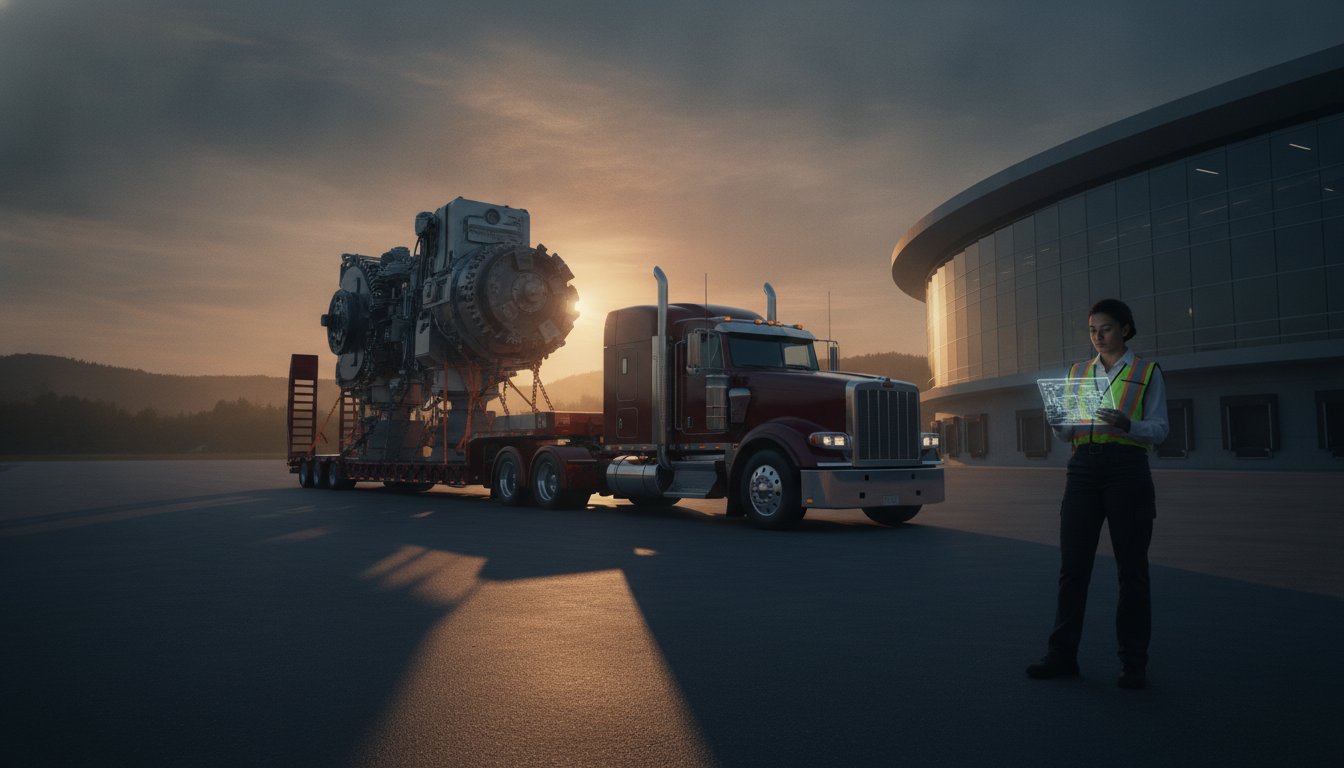
Would you trust a million-dollar piece of specialized machinery to a carrier whose compliance status hasn’t been verified against the latest 2026 safety standards? In the high-stakes world of open-deck logistics, a single oversight in securement or equipment selection can lead to catastrophic delays or cargo damage. Finding a dependable flatbed shipping broker is no longer just about getting a quick quote. It’s about securing a partnership with an expert who understands the technical nuances of RGNs, step-decks, and the specific requirements of your oversized freight.
We understand that managing complex transit can feel like an endless series of risks, especially with the national driver shortage projected at 82,000 this year. You deserve the peace of mind that comes from knowing your cargo is in capable hands and that every carrier is fully compliant with current ELD and financial responsibility rules. This guide provides a clear framework for evaluating brokers based on their equipment expertise, communication transparency, and regulatory diligence. You’ll learn exactly how to filter out the noise and select a steady hand to manage your shipments with professional precision and order.
Key Takeaways
- Understand why open-deck logistics requires a higher level of oversight and technical precision than standard dry van freight.
- Identify the specific vetting criteria you must use to evaluate a flatbed shipping broker, from specialized trailer access to complex permit coordination.
- Learn how to match your cargo with the right specialized equipment, including step-decks for taller loads and hot-shot trailers for urgent shipments.
- Discover how to verify broker authority and carrier safety ratings to maintain full compliance with the latest 2026 federal regulations.
- Establish a framework for building a dependable logistics partnership that prioritizes clear communication and consistent on-time delivery for oversized freight.
Understanding the Complexity of Open-Deck Logistics
Open-deck logistics is a specialized discipline that requires significantly more technical oversight than standard dry van freight. While a van shipment is protected by four walls and a roof, flatbed cargo is exposed to the elements and requires precise securement to remain stable during transit. This exposure creates a complex environment where the expertise of your flatbed shipping broker becomes the primary safeguard for your investment. It isn’t just about moving a trailer from one point to another. It’s about the meticulous planning that goes into securing a 40,000-pound piece of infrastructure for a 1,000-mile journey across varying terrains and weather patterns.
Managing these shipments involves more than finding a driver; it requires a deep understanding of weight distribution and equipment limitations. For example, if a load is even slightly off-center, it can compromise the safety of the driver and the public. A professional broker acts as a vital intermediary, ensuring that every carrier possesses the necessary equipment and experience to handle specific industrial components. For a broader perspective on these professional requirements, Understanding the Role of a Freight Broker provides insight into how these intermediaries manage regulatory compliance and carrier vetting through the FMCSA.
Flatbed vs. Van: Key Differences for Shippers
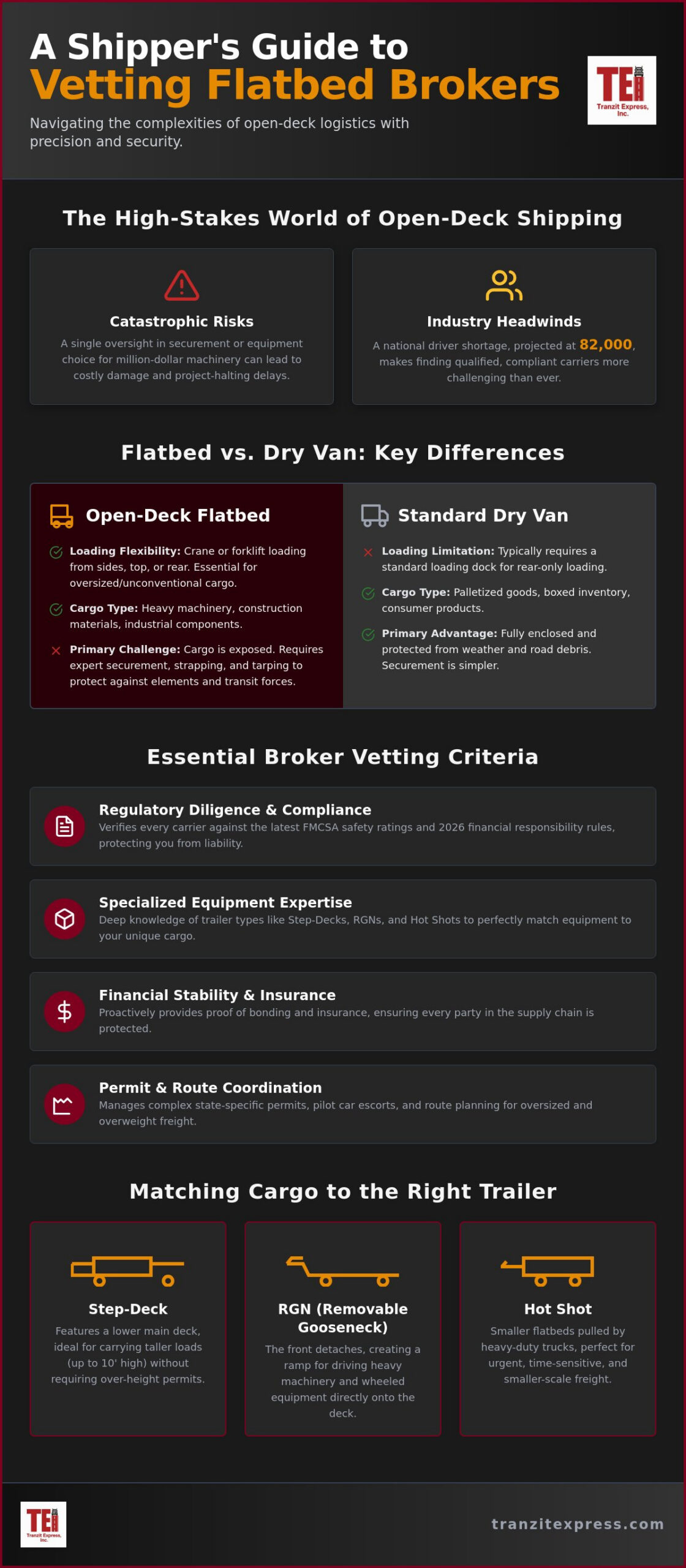
The most immediate difference for shippers is loading flexibility. Unlike vans that require a loading dock, flatbeds allow for side-loading via forklift or overhead crane-loading. This is essential for heavy machinery or long construction materials that cannot fit through standard rear doors. However, this flexibility comes with the responsibility of tarping and strapping. Industrial cargo often requires heavy-duty tarps to prevent moisture damage or road debris from impacting the finish of the freight. Shippers must also account for legal dimensions. A standard flatbed trailer is typically 48 to 53 feet long and can carry up to 48,000 pounds, but anything exceeding these limits requires specialized permits and specific routing to avoid low bridges or weight-restricted roads.
The Value of a Steady Hand in Logistics
An experienced flatbed shipping broker serves as a steady hand at the wheel, reducing the inherent stress of moving oversized or high-value freight. When a shipment involves non-standard loading sites or strict delivery windows, proactive communication is the only way to prevent costly delays at the job site. Tranzit Express brings 25 years of institutional knowledge to every partnership, providing a level of stability that newer firms cannot match. This history allows us to anticipate challenges before they arise, from equipment shortages to weather-related routing changes. To better understand how these services integrate into your supply chain, you can read our guide on what does a freight broker do to see the full scope of our operational support and commitment to professional precision.
Essential Criteria for Evaluating a Flatbed Shipping Broker
Selecting a flatbed shipping broker requires a methodical approach that prioritizes long-term stability over short-term cost savings. In a complex market, a dependable partner must demonstrate a profound understanding of specialized equipment and the regulatory hurdles associated with oversized freight. This includes a proven ability to manage the logistics of state-specific permits and pilot car coordination, which are often required when loads exceed standard legal dimensions. A broker’s value is found in their ability to provide order and predictability when moving heavy industrial components across state lines.
Verification of a broker’s financial standing and regulatory adherence is equally critical for risk mitigation. As of January 16, 2026, the industry operates under stricter financial responsibility requirements designed to protect shippers and carriers alike. It’s essential to ensure your partner adheres to the latest FMCSA Carrier Compliance Rules. This verification protects your business from potential liabilities and ensures that every carrier assigned to your freight is fully bonded, insured, and maintains high safety ratings. A professional broker will proactively provide this documentation, acting as a transparent shield for your supply chain. Understanding the full scope of what a logistics provider is responsible for in 2026 can help you set the right expectations and ask the right questions when evaluating potential partners.
Consistency is the foundation of a successful logistics partnership. Your broker should offer the flexibility to handle both Full Truckload (FTL) and Less-Than-Truckload (LTL) flatbed solutions on a national scale. This comprehensive reach ensures that whether you are moving a single piece of machinery or an entire fleet of equipment, the level of professional precision remains the same. Maintaining this standard across all shipments reduces the administrative burden on your team and fosters a sense of security in every transaction.
Carrier Network and Equipment Diversity
Access to a diverse fleet is a hallmark of a high-level logistics provider. A broker must offer more than just standard 48-foot trailers; they must provide access to specialized equipment like double drops, extendables, and removable goosenecks (RGNs) to meet specific industrial needs. This equipment diversity allows for seamless scaling during peak seasons when regional capacity often shifts. A broad network ensures that surge capacity is always available, preventing project delays when local equipment is scarce.
Communication Standards and Technology
While modern technology is a powerful tool, it should never replace the human element of professional service. A dedicated Shipper Portal Access point provides the real-time visibility you need for tracking and documentation, but the true value lies in how that data is interpreted. A steady and composed communication style ensures that you remain informed throughout the shipping lifecycle. This balance of digital efficiency and personal accountability streamlines the quote-to-delivery process while maintaining the “steady hand” necessary for high-stakes deliveries.
Navigating Specialized Equipment: From Step-Decks to Hot-Shots
Selecting the correct trailer is a technical decision that directly impacts the safety and cost-efficiency of your shipment. A seasoned flatbed shipping broker doesn’t just provide a trailer; they analyze the specific geometry and weight of your cargo to match it with the most appropriate transportation solution. For many industrial projects, the standard 48-foot or 53-foot flatbed is the reliable workhorse. It’s ideal for construction materials, steel pipe, and machinery that can be loaded from the side or top. However, when cargo dimensions exceed standard limits, specialized equipment becomes a necessity to maintain order and safety on the road.
When height becomes a factor, the step-deck, or single-drop trailer, is the primary solution. By featuring a lower deck height, it allows for the transport of taller loads that would otherwise exceed the legal 13’6″ height limit on a standard flatbed. For even heavier or self-propelled machinery, such as excavators or industrial turbines, a Removable Gooseneck (RGN) trailer is often required. The RGN allows the front of the trailer to detach, creating a ramp for equipment to be driven directly onto the deck. This specialized approach ensures that even the most complex oversized freight is handled with professional precision. For a deeper dive into how equipment selection and safety compliance intersect in today’s market, our flatbed load broker FAQ for open-deck logistics in 2026 addresses the most critical questions shippers face when managing complex hauls.
Matching Equipment to Your Cargo Specs
Determining the right trailer involves more than just measuring length and weight. A professional broker advises on how to avoid unnecessary permit costs by selecting a trailer that keeps the load within legal height and width limits. For instance, shifting a tall piece of equipment from a standard flatbed to a step-deck can often eliminate the need for over-height permits and pilot cars. Safety is another critical consideration, particularly for loads with a high center of gravity. Ensuring the cargo is seated on the lowest possible deck height reduces the risk of tipping and ensures a smoother, more secure transit for high-value industrial assets.
The Strategic Use of Hot-Shot Trucking
There are instances where a full-sized tractor-trailer is not the most efficient choice for your project. This is where a hot shot trucking solution provides a strategic advantage. Utilizing Class 3, 4, or 5 trucks equipped with flatbed trailers, hot-shot services are designed for smaller, time-sensitive industrial parts or equipment. This method is often more cost-effective for LTL shipments that require expedited delivery to a job site. For last-minute project needs or urgent replacement parts, these smaller units offer a reassuring level of flexibility and speed that full truckload carriers cannot always provide. Your flatbed shipping broker should be able to identify when these nimble units are the best fit for your specific timeline and budget.
The Vetting Process: Ensuring Safety and Carrier Compliance
Vetting is more than a formality; it’s the process of ensuring that every carrier under contract meets the highest safety and regulatory standards before they ever touch your freight. A dependable flatbed shipping broker acts as a rigorous filter, verifying that carriers possess active FMCSA authority and the necessary surety bonds. This oversight is vital in 2026, as stricter financial responsibility requirements have made it harder for undercapitalized or non-compliant operators to stay in the market. By confirming these credentials, your broker provides a layer of protection that shields your business from legal and financial liability.
Safety is not a static metric. It requires constant monitoring of the Safety Measurement System (SMS) data to analyze carrier performance in real-time. A professional broker reviews these scores to identify patterns of equipment violations or unsafe driving. Beyond the data, they also confirm that the carrier carries sufficient cargo insurance for your specific load value. They don’t just ask if a carrier has insurance; they verify the policy is active and covers the unique risks associated with open-deck transport, such as weather damage or securement failure. This methodical approach ensures that your oversized or high-value freight is handled with the professional precision it requires.
Compliance as a Reassuring Standard
A broker’s 25 years of industry experience provides a deeper understanding of carrier reliability that software alone cannot replicate. While digital tools track locations, institutional knowledge helps identify which carriers truly excel at complex securement and tarping. This expertise ensures that the “steady hand at the wheel” is more than a metaphor. It’s a commitment to order and safety that reduces the stress of logistics. To see how this commitment translates into results for your business, you can visit tranzitexpress.com to learn more about our partnership-driven approach.
Requesting and Analyzing a Quote
When requesting a flatbed freight quote, detail is your best friend. To receive an accurate assessment, you should provide the exact dimensions, weight, and any specialized equipment requirements, such as tarps or edge protectors. A major red flag in the quoting process is a price that is significantly lower than the market average. In 2026, with national flatbed spot rates averaging between $2.80 and $3.72 per mile, an unusually low quote often indicates a lack of oversight or the use of carriers with poor safety ratings. A reliable flatbed shipping broker provides an all-in quote that includes permits, tarping, and accessories, ensuring there are no hidden costs or surprises during transit.
Tranzit Express: Your Dependable Partner for National Flatbed Solutions
Tranzit Express has spent 25 years refining the art of open-deck logistics. As a seasoned flatbed shipping broker, we understand that our role extends far beyond simply matching a load to a trailer. We act as a dedicated extension of your supply chain, providing the stability and oversight necessary to move high-value industrial assets with total confidence. Our national reach ensures that whether you are shipping from a manufacturing hub in the Southeast or a remote construction site in the Pacific Northwest, you receive the same level of professional precision and clear communication that has defined our legacy.
Our commitment to excellence is reflected in our comprehensive suite of solutions. We manage everything from standard flatbeds and step-decks to specialized RGNs and time-sensitive hot-shot loads. This versatility allows us to provide order in an industry that is often defined by its complexity. By integrating advanced technology through our secure Shipper Portal Access and Carrier Portal Access, we provide the transparency you need without sacrificing the personalized service that only an industry veteran can offer. We don’t just move freight; we build long-term partnerships based on proven results and mutual trust.
Why Shippers Trust Our Experience
Shippers trust our experience because we provide a “steady hand at the wheel” for high-stakes cargo. Moving heavy machinery or oversized infrastructure requires more than just a truck; it requires a deep institutional knowledge of securement standards and routing requirements. Our professional B2B partnership model focuses on reducing complexity, allowing your team to focus on your core operations while we handle the intricate details of permits, pilot cars, and carrier vetting. This balanced approach combines the resources of a national provider with the accountability of a local-rooted professional who values your cargo as much as you do.
Getting Started with Your Flatbed Shipment
Starting your partnership with Tranzit Express is a straightforward process designed to respect your time and project deadlines. You can request a quote through our streamlined online portal or by speaking directly with one of our logistics experts who can guide you through the specific requirements of your load. During your first shipment, you can expect a methodical onboarding process where we verify your cargo specifications and establish a clear communication rhythm. We provide regular updates from the initial quote until the final delivery confirmation, ensuring you are never left in the dark during transit. For a more comprehensive look at our operational reach, you can explore our flatbed freight services USA to see how we manage the full spectrum of open-deck logistics with professional precision.
Securing Your Supply Chain for 2026 and Beyond
Selecting a flatbed shipping broker is a strategic decision that directly impacts your project’s safety and your company’s bottom line. Throughout this guide, we’ve explored how navigating open-deck logistics requires a partner who understands the technical nuances of specialized equipment while maintaining strict adherence to FMCSA and DOT standards. It’s about finding a steady hand to manage the complexities of oversized freight and carrier vetting with professional precision.
Tranzit Express brings over 25 years of logistics experience to your supply chain, offering a comprehensive national carrier network for all open-deck equipment types. We focus on providing order and security, ensuring your high-value cargo arrives on time and stays fully compliant with current regulations. Our team is ready to help you reduce the stress of complex transit through clear communication and a partnership-driven approach.
Ready to experience a higher standard of dependable logistics? Request a Reliable Flatbed Shipping Quote from Tranzit Express today. We look forward to providing the stability and excellence your industrial freight deserves.
Frequently Asked Questions
What is the difference between a flatbed broker and a carrier?
A carrier is a company that owns the physical trucks and equipment used for transport; whereas a flatbed shipping broker acts as an expert intermediary. The broker’s role is to vet carriers, verify insurance, and coordinate logistics across a massive national network. This partnership provides you with a single point of contact and access to diverse equipment types without the limitation of a single fleet’s availability.
How do I know if my load requires a step-deck or a standard flatbed?
You should choose a step-deck trailer if your cargo height exceeds 8 feet 6 inches to ensure you remain under the legal 13 foot 6 inch total height limit. Standard flatbeds are the reliable choice for shorter loads like steel beams or lumber. If your equipment is taller than average, the lower deck of a step-deck provides the necessary clearance to avoid bridge strikes and permit requirements.
What are the standard weight and height limits for flatbed shipping in the US?
The standard legal height limit for most states is 13 feet 6 inches from the ground to the top of the load. Regarding weight, a standard flatbed can typically carry up to 48,000 pounds of cargo without requiring specialized overweight permits. If your freight exceeds these dimensions or weight, your broker will need to arrange for specific routing and state-level authorizations to ensure a legal transit.
Does a flatbed shipping broker handle oversized permits and pilot cars?
Yes, a professional flatbed shipping broker manages the entire permit procurement process and coordinates pilot car services for oversized loads. This includes identifying which states require escort vehicles based on the width or length of your cargo. By handling these complex regulatory details, the broker ensures that your shipment remains compliant with Department of Transportation standards and moves without administrative delays.
Why is tarping so expensive in flatbed shipping quotes?
Tarping fees reflect the significant physical labor and time required for a driver to securely wrap and strap industrial cargo. These heavy-duty tarps protect your investment from road salt, moisture, and debris during transit. The cost accounts for the specialized equipment used and the risk involved in climbing onto the load to ensure every corner is protected against high-wind conditions at highway speeds.
How can I track my flatbed shipment in real-time?
You can track your shipment through a secure shipper portal that provides real-time GPS updates and documentation access. This technology aggregates data from the carrier’s ELD system to give you a clear view of the load’s progress and estimated arrival time. This transparency allows your team to prepare for unloading and prevents unnecessary downtime at the delivery site, maintaining order in your operations.
Is hot-shot trucking cheaper than a standard flatbed for small loads?
Hot-shot trucking is often more cost-effective for smaller, lighter loads that don’t require the capacity of a full 48-foot trailer. Because these carriers use smaller Class 3 to 5 trucks, they have lower operating costs and can often provide faster service for expedited industrial parts. It’s an excellent strategic option for LTL freight that needs to reach a job site quickly without the expense of a full truckload.
What insurance coverage should a flatbed broker provide?
A broker must verify that every carrier maintains a minimum of $100,000 in cargo insurance, though high-value machinery often requires significantly higher limits. They should also carry contingent cargo insurance as an extra layer of protection for the shipper. This ensures that in the event of a primary insurance failure, your investment is still protected by a steady and dependable financial safeguard.