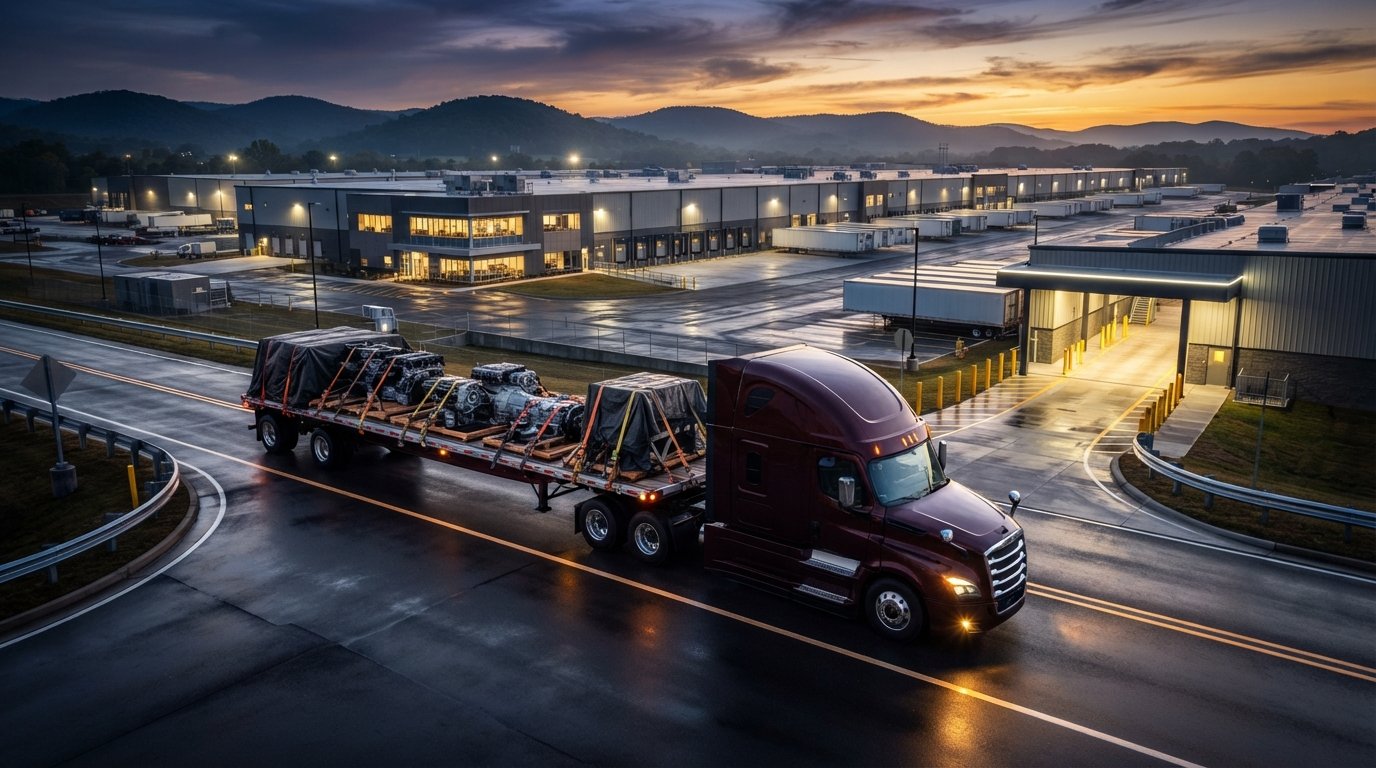
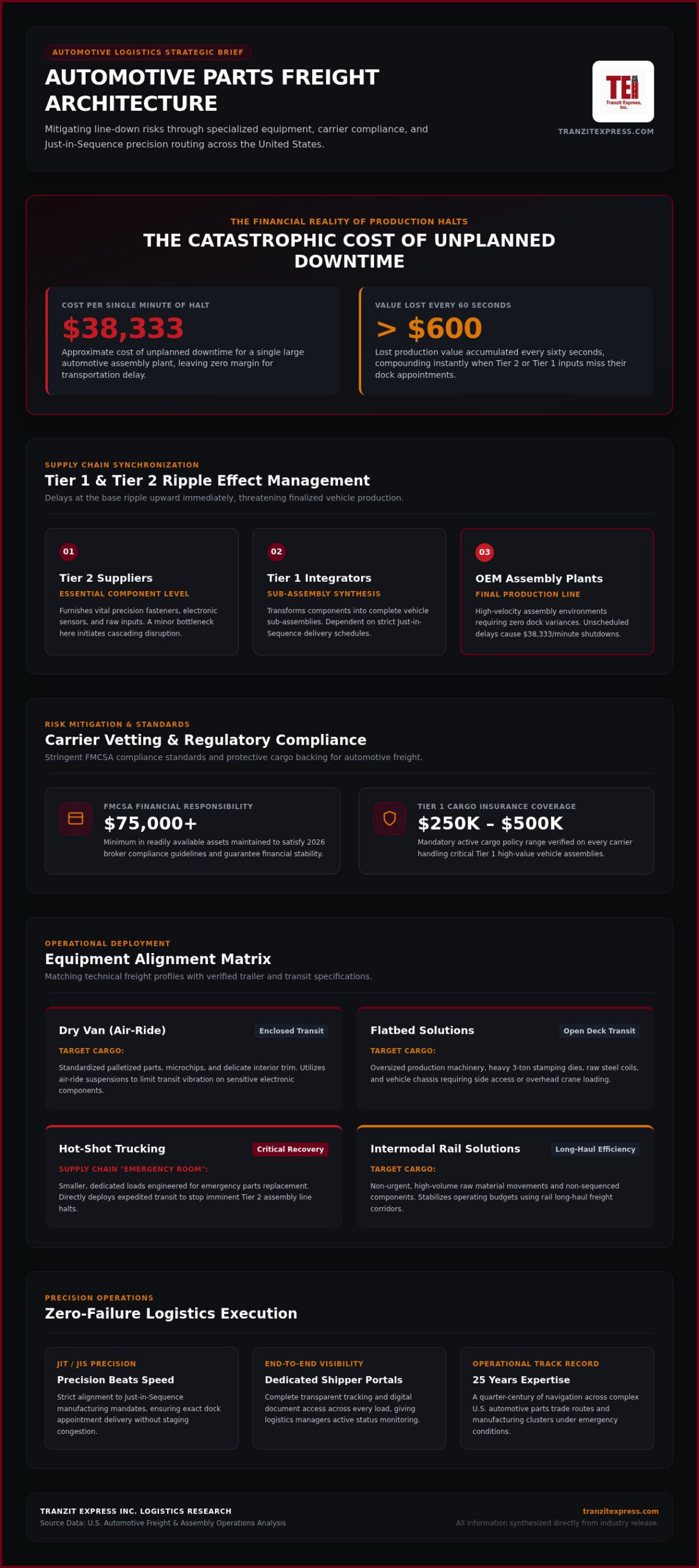
Did you know that unplanned downtime for a large automotive assembly plant now costs approximately $38,333 per minute? In an industry where every sixty seconds represents over $600 in lost value, there’s no room for logistics providers who treat your cargo like general freight. You already know that the complexity of modern supply chains demands more than just a truck. It requires a steady hand to manage the incredibly tight windows of Just-in-Sequence manufacturing without fail.
Partnering with a specialized automotive parts freight broker is the most effective way to protect your production schedule from the catastrophic costs of a halted line. This article explains how a veteran logistics partner ensures your components move with total precision, regulatory compliance, and national reach across the United States. We’ll examine how advanced carrier vetting, hot-shot recovery options, and full shipment visibility through dedicated portals create a zero-failure environment for your most sensitive high-stakes freight. By the end of this guide, you’ll understand how to turn your logistics from a point of stress into a dependable competitive advantage.
Key Takeaways
- Learn why precision is the ultimate priority in Just-in-Time logistics, where even a minute of downtime can cost thousands in lost production.
- Understand how to match your specific cargo to the right equipment, from standard van freight to specialized flatbed solutions.
- Discover the essential vetting steps to find a dependable automotive parts freight broker that prioritizes financial stability and carrier compliance.
- Gain full visibility into your supply chain using dedicated shipper portals that provide real-time tracking and documentation for every load.
- See how 25 years of industry expertise helps a logistics partner navigate complex national routing while maintaining a steady hand during emergencies.
The Critical Role of an Automotive Parts Freight Broker in 2026
An automotive parts freight broker acts as a strategic intermediary, ensuring the right components reach the right assembly line exactly when they’re needed. In 2026, the industry has evolved beyond simple transportation. Supply chains are now more integrated and fragile than ever. A single missing fastener or a delayed sensor can halt an entire production line, leading to losses that can devastate a supplier’s quarterly margins. Automotive freight brokerage is the specialized coordination of high-value components with zero-margin for error.
Navigating the Complexity of Tier 1 and Tier 2 Supply Chains
The automotive industry relies on a strict pyramid structure. Tier 2 suppliers provide essential components to Tier 1 systems integrators, who then deliver finished sub-assemblies to the OEM assembly plants. A broker manages the flow between these layers, synchronizing multiple shipments to prevent bottlenecks. Because many parts move based on Just-In-Time (JIT) manufacturing principles, a delay at the Tier 2 level ripples upward almost instantly. A dependable broker uses a national network to maintain consistency, ensuring that parts arrive within their scheduled dock appointment window regardless of where they originate in the national supply chain.
Mitigating Risk in High-Value Parts Transportation
Transportation involves more than moving a trailer from point A to point B. It requires protecting sensitive electronics, microchips, and precision-engineered stamping dies that are difficult to replace. A professional automotive parts freight broker ensures that every carrier is vetted for more than just an active operating authority. They verify that the equipment is appropriate, such as air-ride vans to reduce vibration for delicate sensors. This level of oversight is essential for maintaining the integrity of the high-value components that drive modern vehicle production.
Brokers also handle the heavy administrative lifting of compliance. By 2026, regulatory standards like the FMCSA’s financial responsibility rules have become more stringent, requiring brokers to maintain at least $75,000 in readily available assets. A professional partner manages these verification steps automatically, ensuring every carrier has the necessary cargo insurance, often ranging from $250,000 to $500,000 for Tier 1 loads. This partnership reduces your internal workload and provides a layer of security that standard general freight providers can’t match.
Specialized Equipment and Solutions for Automotive Logistics
Every component in a modern vehicle requires a specific transportation strategy. A professional automotive parts freight broker understands that a crate of sensitive microchips needs different handling than a three-ton stamping die. This expertise is vital given the massive scale of U.S. automotive parts trade and manufacturing clusters, where billions of dollars in inventory move across the national supply chain annually. Choosing the wrong equipment doesn’t just risk damage. It can cause significant delays at the loading dock that ripple through the entire production schedule.
Van, Flatbed, and Hot-Shot: A Balanced Approach
Dry van services are the primary choice for climate-protected, secure transport of standardized palletized parts. These trailers offer the security needed for high-value electronics and interior trim components. Conversely, flatbed shipping is necessary for oversized machinery, raw steel coils, or vehicle chassis that require crane loading or side access. Because the automotive sector is prone to sudden shifts in demand, hot shot trucking serves as the “emergency room” of the supply chain. These smaller, dedicated loads provide the speed required for emergency replacements, ensuring a missing Tier 2 component doesn’t lead to an expensive line stoppage.
Intermodal Solutions for Long-Haul Efficiency
While speed is often the focus, long-term supply chain health requires a focus on cost-effectiveness and sustainability. For non-urgent, high-volume shipments, intermodal transportation solutions help stabilize logistics budgets by leveraging the efficiency of rail for the long-haul portion of the journey. This approach is particularly effective for moving heavy raw materials or non-sequenced components between major manufacturing hubs. In 2026, balancing these different modes is essential for maintaining a resilient and flexible supply chain that can withstand market fluctuations.
Managing this variety of equipment requires a partner with deep institutional knowledge and a steady hand at the wheel. If you’re looking to optimize your current equipment mix, you can explore our full range of national freight services to see how we coordinate these complex movements. By matching the specific needs of your cargo to the right trailer type, an automotive parts freight broker reduces the risk of transit damage and ensures your logistics remain as precise as the components you manufacture.
Just-In-Time (JIT) Delivery: Why Precision Beats Speed
In the automotive world, speed is a secondary metric. The primary goal is precision. Just-In-Time (JIT) manufacturing allows plants to operate with minimal inventory, keeping capital fluid and warehouse space clear. However, this efficiency removes the safety net. If a shipment arrives early, there may be no dock space or staff to receive it. If it arrives late, the entire assembly process can grind to a halt. A specialized automotive parts freight broker understands that logistics isn’t about moving as fast as possible; it’s about hitting a specific 15 to 30 minute window with absolute certainty.
There is a common misconception that the lowest quote represents the best value. In high-stakes logistics, the cheapest rate often comes from carriers with lower safety scores or less reliable equipment. For a JIT supply chain, saving a few hundred dollars on a lane is a poor trade if it increases the risk of a multi million dollar production stoppage. A professional broker prioritizes carrier reliability and historical performance over raw price, acting as a steady hand that protects your bottom line from the hidden costs of failure.
The Real Cost of Line-Down Situations
When an assembly line stops, the financial impact is immediate and severe. Major automotive assembly plants can lose an estimated $2.3 million per hour during unplanned downtime. A veteran automotive parts freight broker serves as a vital buffer against these losses. With 25 years of industry experience, a broker knows how to troubleshoot transit delays before they become crises. If a carrier experiences a mechanical failure, a seasoned partner has the network to recover the load immediately, often deploying a hot-shot vehicle to ensure the parts still reach the plant within an acceptable timeframe.
Real-Time Visibility and Proactive Communication
Peace of mind comes from data, not just promises. Modern logistics has shifted from reactive “where is my truck?” inquiries to proactive status updates. By utilizing advanced tracking technology, brokers provide plant managers with real-time visibility into every shipment. This transparency is a core component of a modern logistics management for shippers strategy. Before a load even picks up, a broker should verify the carrier’s standing via the FMCSA SAFER company snapshot to ensure they meet the rigorous safety standards required for high-value automotive freight. This level of vetting, combined with constant digital pings, ensures that every stakeholder in the supply chain remains informed and prepared.
How to Vet a Freight Broker for Automotive Distribution
Selecting an automotive parts freight broker requires more than a cursory check of a Motor Carrier (MC) number. In 2026, the complexity of automotive routing demands a partner with proven longevity and financial stability. Longevity is a primary indicator of reliability. A broker who has operated for decades demonstrates the resilience needed to handle the industry’s seasonal shifts and production cycles. Under current FMCSA regulations, brokers must maintain a minimum of $75,000 in readily available assets. Verifying this financial health ensures your partner can fulfill their obligations to carriers, which directly impacts the stability of your supply chain.
Verifying Carrier Compliance and Insurance Standards
Understanding what does a freight broker do reveals that their most critical task is rigorous compliance oversight. For automotive shippers, standard $100,000 cargo policies are often insufficient for high-value sub-assemblies. Tier 1 loads frequently require $250,000 to $500,000 in dedicated motor truck cargo coverage. Your broker must verify these limits in real-time before a single part is loaded. They should also monitor safety ratings and ELD compliance to ensure carriers aren’t at risk of suspension. This provides you with a pre-qualified pool of drivers who understand the high-stakes nature of your cargo.
Evaluating Communication and Relationship Management
High-pressure logistics scenarios don’t leave room for automated chatbots or generic support tickets. When a shipment is delayed, you need a human logistics expert who can provide immediate solutions. A single-point-of-contact model is the gold standard for automotive distribution. This structure ensures that the person who booked your load is the same person tracking its progress and communicating with the plant manager. It creates a level of accountability that automated systems simply cannot replicate. A steady hand at the wheel means having a partner who anticipates problems before they reach the assembly line.
Modern vetting also relies heavily on technology. A dependable broker uses digital portals to provide 24/7 visibility and documentation access. This reduces the administrative burden on your team while ensuring that every shipment is backed by a clear digital trail. If you’re ready to work with a partner who prioritizes these rigorous standards, you can get started with our specialized logistics team today. This transparency allows you to focus on production while your broker handles the complexities of carrier management and compliance.
Tranzit Express: A Dependable Partner for Automotive Logistics
Tranzit Express Inc. serves as a steady hand for manufacturers and suppliers across the country. With over 25 years of industry experience, we understand that an automotive parts freight broker is more than just a service provider. We’re a strategic partner in your supply chain. Our deep institutional knowledge allows us to anticipate challenges before they impact your assembly line. We’ve managed logistics through every major industry cycle since the early 2000s, providing a level of stability that newer startups can’t match.
Our national network includes van freight services, flatbed shipping, and intermodal transportation. This variety ensures we can handle everything from standardized palletized components to heavy manufacturing machinery. By integrating these modes, we provide a total solution that balances speed with efficiency. We also offer hot-shot loads for those critical moments when a single missing part threatens to stop production. Our goal is to reduce your stress by providing order in a complex industry.
A Legacy of Stability and Trust
Our veteran-led team prioritizes long-term partnerships over simple transactions. We don’t just move loads. We build relationships based on consistent performance and clear communication. With national coverage across the entire United States, we ensure your parts reach their destination on time, every time. This commitment to reliability has made us a trusted name in automotive logistics for over two decades. You can depend on our team to maintain high standards of excellence across every mile.
We also simplify your daily operations through technology. Our dedicated Shipper Portal provides 24/7 digital tracking and documentation access. This gives you full visibility into your shipment status without needing to make a phone call. Simultaneously, our Carrier Portal ensures that our vetted drivers have the information they need to execute deliveries with precision. These tools work together to create a seamless experience that prioritizes the ease of the customer.
Ready to Streamline Your Automotive Supply Chain?
Transitioning your logistics to a more dependable partner is a straightforward process. When you contact our specialists, we start with a consultation to understand your specific distribution needs and part types. Whether you’re moving Tier 1 sub-assemblies or raw materials, we tailor our approach to fit your requirements. We don’t believe in one-size-fits-all solutions for high-stakes automotive freight.
The onboarding process is efficient and professional. Once we understand your lanes and volume, we provide a tailored freight quote that reflects our commitment to fair, consistent service. You’ll work with a dedicated point of contact who manages your shipments from booking to delivery. If you’re looking for an automotive parts freight broker who values fulfillment over marketing hype, our team is ready to help. Reach out today to discuss how we can bring precision and order to your 2026 supply chain strategy.
Securing Your Automotive Supply Chain for 2026 and Beyond
Maintaining a fluid supply chain requires more than just moving parts. It requires a partner who understands the high-stakes reality of Just-In-Time manufacturing and the severe costs of unplanned downtime. By selecting a specialized automotive parts freight broker, you’re investing in a system of precision that prioritizes dock appointment accuracy and carrier compliance. This strategic approach ensures your high-value components arrive securely, whether they require standard van transport or emergency hot-shot recovery.
Tranzit Express Inc. brings the quiet confidence of 25+ years of proven logistics experience to every load. Our nationwide network of vetted carriers and real-time tracking through secure Shipper Portals provide the order and visibility your operations demand. It’s time to replace logistical uncertainty with the steady hand of a seasoned industry veteran. Request a Reliable Automotive Freight Quote from Tranzit Express Inc. today to discover how a dependable partnership can streamline your national distribution and provide the stability your business deserves.
Frequently Asked Questions
What is the difference between an automotive parts freight broker and a general broker?
An automotive parts freight broker focuses on the precision and sequencing required for high-stakes manufacturing rather than general commodities. Unlike general brokers who might prioritize the lowest price, specialized brokers prioritize dock appointment accuracy to prevent production shutdowns. This expertise is critical because a single missing component can halt an assembly line, costing thousands per minute. Specialized brokers also understand the specific handling requirements for sensitive electronics and precision-engineered stamping dies.
How does a freight broker ensure my automotive parts arrive on time for JIT manufacturing?
Brokers ensure on-time delivery by utilizing a pre-qualified network of carriers who understand strict 15-minute dock windows. By managing a national network of dependable drivers, a broker acts as a buffer against mechanical failures or transit delays. If a primary carrier faces an issue, the broker can immediately deploy recovery options to maintain the production schedule. This proactive approach relies on constant communication and established contingency plans developed over 25 years of industry experience.
What types of equipment are typically used for shipping automotive parts?
Shipping automotive components requires a variety of specialized equipment to match the specific cargo needs. Dry van freight is the standard for secure, climate-protected transport of palletized parts and electronics. Flatbed shipping is used for oversized items like chassis, engines, or heavy stamping machinery. Additionally, hot-shot loads provide a rapid solution for emergency replacements, while intermodal transportation offers a cost-effective method for moving bulk, non-urgent raw materials across the United States.
Can a freight broker handle expedited or emergency automotive shipments?
Yes, a specialized broker can handle expedited shipments by deploying dedicated hot-shot loads for time-critical parts. These smaller vehicles bypass the delays associated with larger hubs, moving directly from the supplier to the assembly plant. This service is the “emergency room” of the supply chain, providing a vital safety net when a Tier 2 failure threatens production. Reliable brokers maintain a fleet of vetted drivers ready to respond to these high-pressure scenarios at a moment’s notice.
What should I look for when vetting an automotive freight broker in 2026?
When vetting an automotive parts freight broker in 2026, you should look for financial stability and a minimum of $75,000 in readily available assets as required by the FMCSA. Longevity is also key; a partner with 25 years of experience has the institutional knowledge to navigate complex supply chain cycles. You must also verify their ability to provide real-time tracking and their process for validating carrier insurance limits, which often need to exceed $250,000 for high-value automotive components.
How does intermodal shipping work for automotive parts distribution?
Intermodal shipping works by combining the long-haul efficiency of rail with the flexible delivery of trucks. For automotive distribution, this mode is ideal for moving non-sequenced parts or bulk raw materials that don’t require JIT precision. It helps stabilize logistics budgets by reducing fuel costs and providing a more sustainable alternative to long-haul trucking. Brokers coordinate the transfer between rail and road, ensuring that the final mile to the plant is handled by a professional carrier.
Are freight brokers responsible for carrier insurance and compliance?
A professional broker is responsible for the rigorous administrative oversight of carrier compliance and insurance records. They verify that every carrier has the necessary liability and cargo coverage, ensuring it meets the specific requirements of the automotive industry. This vetting process includes monitoring DOT safety scores and ELD compliance in real-time. By handling these complex regulatory tasks, the broker reduces the administrative burden on the shipper and provides a layer of security for high-value freight.
How do I track my automotive parts shipment through a broker?
You can track your shipment through a dedicated Shipper Portal that provides 24/7 visibility into the status of your freight. This technology offers real-time digital pings and documentation access, allowing you to monitor the location of your components without making manual inquiries. Dependable brokers use these portals to foster transparent communication between the supplier and the plant manager. This level of visibility is essential for managing the tight schedules and high expectations of modern automotive manufacturing.