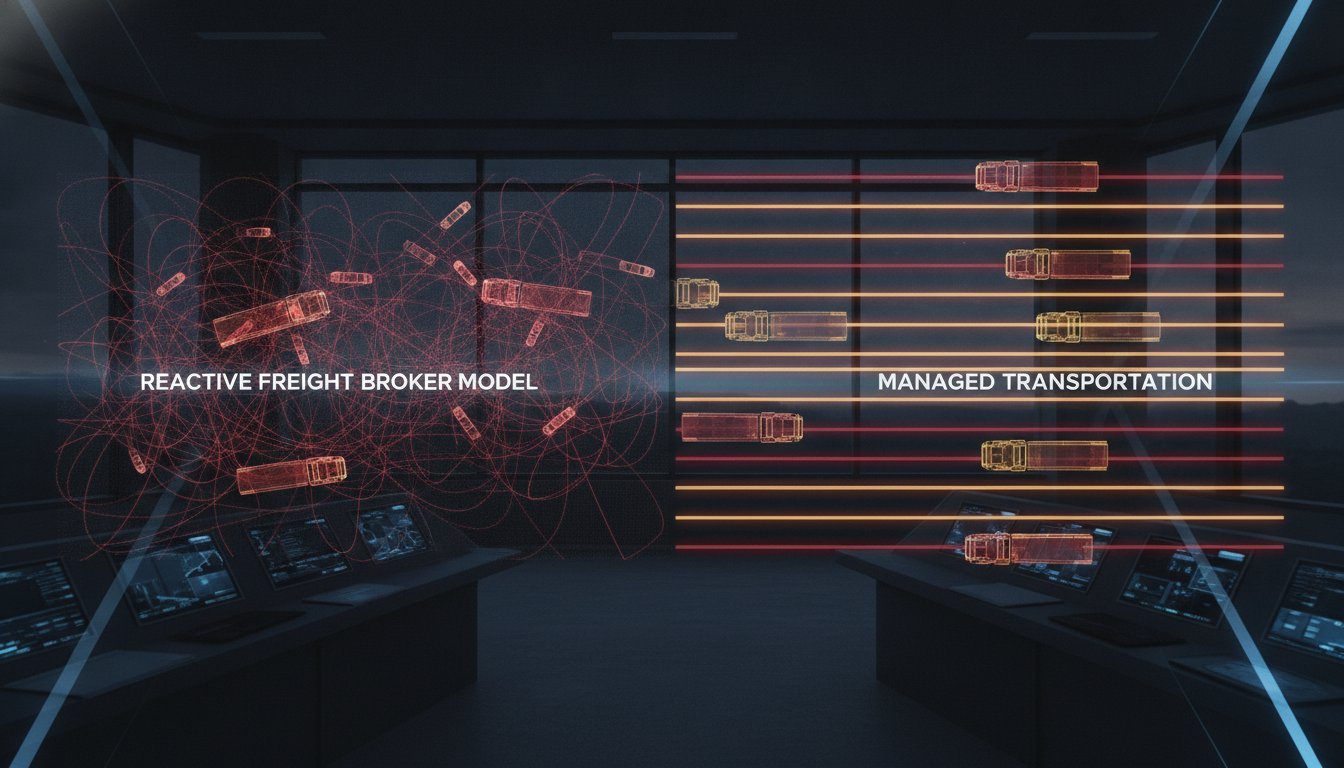
The lowest rate on a load board today might actually be the most expensive decision you make for your 2026 budget. When evaluating managed transportation vs freight broker models, it’s clear that national van spot rates averaging $2.91 per mile and flatbeds reaching $3.65 have left many shippers trapped in a cycle of reactive booking. You likely feel the weight of unpredictable freight spend and the exhaustion of managing endless manual communications with different carriers. It’s a complex environment where lane visibility often feels like a luxury your team can’t afford.
In this guide, we’ll explore these two distinct paths to help you secure a more predictable, cost-effective supply chain. We believe in providing a steady hand at the wheel during periods of market volatility. You’ll discover how shifting from transactional brokerage to strategic managed transportation can lower your total cost of ownership and provide the data-driven reporting your board requires for high-level meetings. We’ll examine how each model handles the current 9.61 van load-to-truck ratio and which approach offers the long-term stability your business deserves.
Key Takeaways
- Learn how to move from reactive load booking to the strategic oversight required for a dependable 2026 supply chain.
- Evaluate the managed transportation vs freight broker choice by comparing per-load margins against predictable, fee-based management structures.
- Discover the specific volume thresholds and operational complexities that signal when it’s time to move beyond transactional shipping.
- Find out how to leverage data-driven reporting to improve lane performance and provide clarity during board-level meetings.
- See how a seasoned industry veteran can reduce administrative stress by providing a sense of order through reliable communication and portal access.
Understanding the Fundamental Roles in Modern Logistics
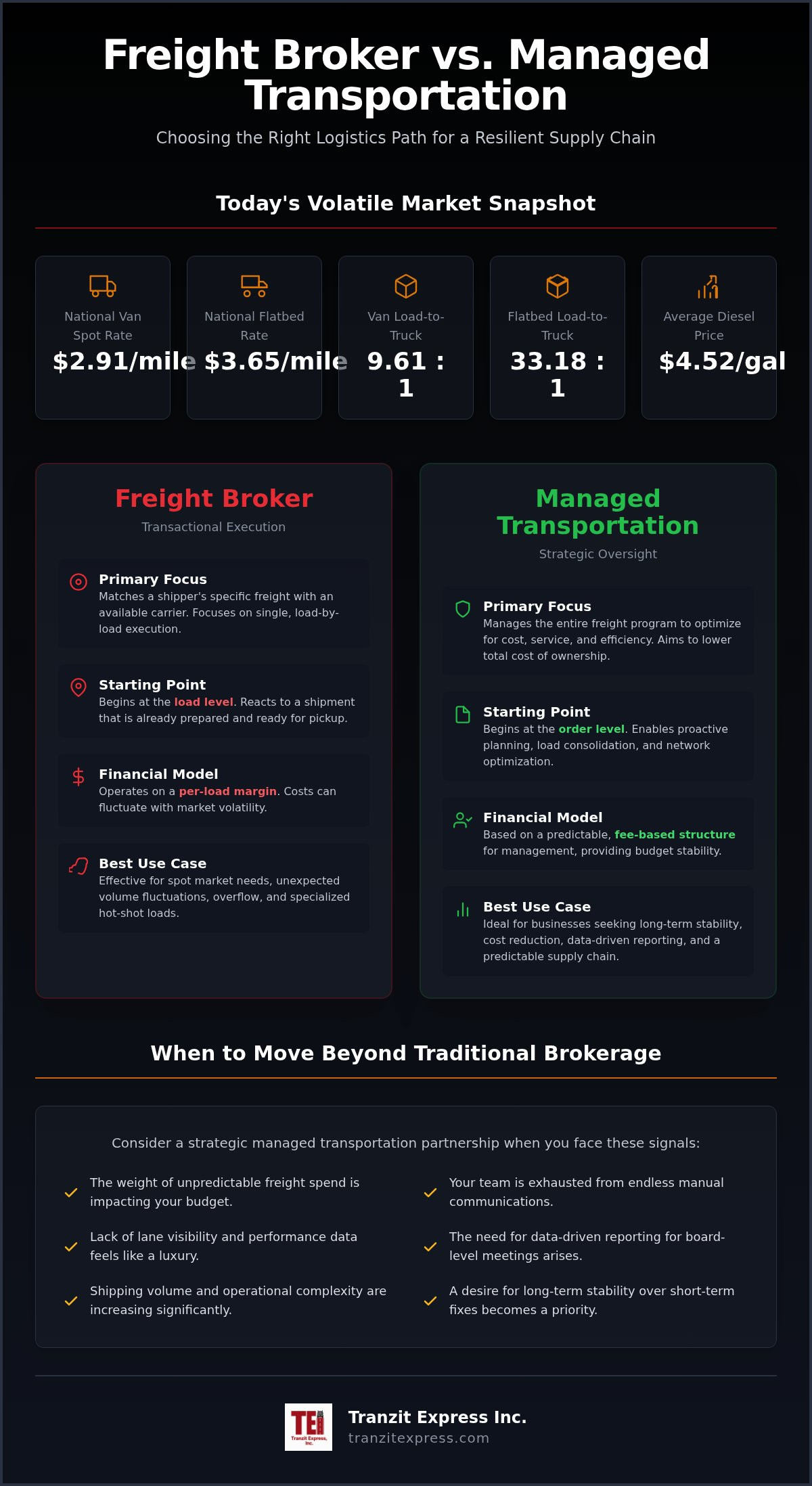
The logistics industry is currently facing a period of high volatility, with national van spot rates reaching $2.91 per mile. In this environment, choosing between managed transportation vs freight broker models isn’t just a matter of terminology; it’s a fundamental decision about how your business handles risk and growth. Understanding these roles is the first step toward creating a sense of order in a complex market.
A freight broker acts as a licensed intermediary that matches a shipper’s specific freight with an available motor carrier. They focus on the transactional execution of moving goods from point A to point B. Managed transportation, by contrast, involves a strategic partner taking over the oversight of an entire freight program. This shift moves the focus from individual loads to the health of the entire supply chain.
The Role of a Freight Broker
A freight broker is a tactical partner for immediate capacity who matches specific shipping needs with available motor carrier equipment. Their expertise is centered on load-by-load execution and securing lane-specific capacity in real time. This model is particularly effective for spot market needs or when your shipping volumes fluctuate unexpectedly.
In a 2026 market where the flatbed load-to-truck ratio has reached 33.18, a broker’s role is to provide a steady hand at the wheel. They use their network to find reliable carriers when capacity is tight. For many businesses, the broker is the primary solution for handling overflow or specialized hot-shot loads that don’t fit into a standard schedule. They offer a flexible, results-oriented service that prioritizes getting the job done quickly and professionally.
The Role of a Managed Transportation Provider
Managed transportation functions as a dependable extension of your internal logistics department. Rather than just reacting to a single shipment, this provider manages your total freight program through long-term optimization and rigorous RFP management. They take responsibility for the overall performance of your lanes, aiming to reduce the total cost of ownership over time.
This model utilizes advanced Transportation Management Systems (TMS) to provide total visibility into your shipping data. It’s a collaborative partnership that seeks to eliminate manual communication hurdles. By focusing on load consolidation and carrier compliance, a managed provider helps you build a predictable shipping schedule. This level of oversight is essential for businesses that need to present clear, data-driven reporting during board-level meetings.
The core distinction between these models lies in the starting point of the process. A broker starts at the load level, while a managed transportation provider starts at the order level. For 2026 supply chain resilience, this difference is vital. With diesel prices averaging $4.52 per gallon nationally, a strategic approach allows you to plan around costs instead of simply absorbing them. Choosing the right path ensures your logistics remains a source of stability rather than stress.
Key Differences: Transactional Execution vs. Strategic Oversight
The core distinction in the managed transportation vs freight broker debate lies in where the logistics process begins. A freight broker typically starts their work once a load is ready for pickup, focusing on securing a truck at a competitive rate. Managed transportation providers begin much earlier at the order entry phase. This shift from load-centric to order-centric planning allows for a higher level of strategic oversight in logistics, ensuring that every shipment aligns with broader business goals rather than just immediate capacity needs.
Procurement strategies also differ significantly between these models. Brokers excel in the spot market, using real-time bidding to find trucks during periods of volatility. Managed providers focus on strategic contract management and long-term carrier compliance. This is especially critical for specialized freight, such as flatbed freight services USA, where open-deck logistics require rigorous safety standards and specific routing expertise. By moving away from simple margin-chasing, shippers can build a more resilient network of preferred carriers.
Execution and Communication Flow
Brokers manage communication on a load-by-load basis, which is effective for solving immediate problems but often results in high administrative noise for the shipper. Managed services act as a steady hand at the wheel, consolidating these touchpoints into a single, streamlined channel. This professional approach reduces the burden on your internal team, allowing them to focus on core operations while your partner handles the complex coordination of van, flatbed, or intermodal movements across the country.
Data Visibility and Reporting
Technology depth marks a major divide in how these partners operate. While a broker provides load-level tracking and basic delivery confirmation, a managed transportation partner integrates directly with your ERP system to offer business intelligence. This allows you to track order-level profitability and accessorial costs that might otherwise go unnoticed. Through dedicated shipper portal access, you gain a transparent view of your entire freight spend, turning raw data into the professional reports needed for high-stakes board meetings. This visibility ensures that lane performance is measured by consistency and total cost, not just the price of a single shipment.
Comparing the Financial Impact: Margins vs. Management Fees
Choosing between the managed transportation vs freight broker models requires a clear understanding of how each partner generates revenue and how those costs affect your bottom line. While a broker’s revenue is tied to the margin of each load, a managed provider typically charges a transparent management fee that aligns their goals with your bottom line. This distinction is vital for 2026 budgeting, especially with diesel prices averaging $4.52 per gallon and market volatility remaining a constant factor.
The Brokerage Cost Structure
The traditional brokerage model offers high flexibility with no upfront costs or long-term commitments. You only pay when you ship, which is ideal for seasonal spikes or specialized hot shot trucking needs. In this setup, the broker’s profit comes from the “spread” between what the shipper pays and what the carrier receives. Adhering to FMCSA financial responsibility rules, including the $75,000 minimum bond requirement, is a baseline for any reputable partner. At Tranzit Express, we leverage over 25 years of industry relationships to secure fair rates even when capacity is tight, providing a steady hand during market shifts.
The Managed Transportation Fee Model
Managed transportation operates on a fee-based structure, often as a flat monthly rate or a per-shipment fee. This model creates a collaborative environment where the provider isn’t motivated by individual load margins but by the overall efficiency of your freight program. While there are initial costs for technology implementation and ERP integration, the potential for long-term savings through load consolidation and lane optimization is significant. It’s a strategic investment that shifts the focus from daily price hunting to total program health.
Internal labor requirements often represent a hidden cost that shippers overlook. A brokerage model requires your team to manage the “noise” of multiple carrier communications and manual tracking. Transitioning to a managed model can reduce this administrative burden, though the ROI timeline for such a shift typically spans several months. Evaluating these models isn’t just about the rate per mile; it’s about determining which structure provides the most order and predictability for your specific supply chain needs.
Assessing Your Readiness: When to Move Beyond Traditional Brokerage
Determining the right moment to shift your logistics strategy requires an honest look at your current operational friction. While a transactional approach serves many businesses well, there comes a point where the administrative cost of managing multiple carriers outweighs the margins saved. The decision between managed transportation vs freight broker models often hinges on your annual freight spend and the complexity of your lanes. If your team is moving a high volume of intermodal, van, and specialized loads simultaneously, the manual coordination becomes a bottleneck that hinders growth.
The “Administrative Burden” test is a practical way to measure this friction. If your staff is spending 20 or more hours each week on freight calls, tracking emails, and manual data entry, you’re likely overpaying for management through lost productivity. At this stage, the need for board-ready logistics reporting and KPI tracking becomes essential. You need a system that doesn’t just move freight but provides the data necessary to justify spend and improve lane performance across your national network.
5 Signs You Have Outgrown Your Current Broker Model
Identifying readiness often starts with recognizing recurring pain points in your daily workflow. Here are five clear indicators that your business needs more than a transactional relationship:
- Frequent service failures on complex lanes that require specialized equipment or precise timing.
- An inability to track the total landed cost per unit, leaving your finance team with incomplete data.
- A fragmented carrier base with zero compliance oversight, increasing your exposure to risk.
- Manual communication loops that prevent your logistics team from focusing on higher-value tasks.
- Lack of centralized visibility into shipping history, making it impossible to negotiate better rates during RFP cycles.
Evaluating the Hybrid Opportunity
Moving to a fully managed model doesn’t have to happen overnight. Many shippers find success by choosing a “Lead Broker” to act as a 3PL Lite. This hybrid approach allows you to maintain the flexibility of a brokerage relationship while gaining the strategic oversight of a managed service. It’s a way to introduce order and professional reporting without a total overhaul of your existing processes. You can learn more about this evolution in our guide on logistics management for shippers.
This transition is about finding a steady hand at the wheel to guide you through market complexities. Whether you’re managing flatbed, van, or hot-shot freight, the goal is to reduce stress and create a predictable, scalable process. If you’re ready to see how a more structured approach can lower your total cost of ownership, we invite you to contact our team for a logistics assessment.
Tranzit Express: Delivering 3PL Reliability through Expert Brokerage
The decision regarding managed transportation vs freight broker models often comes down to a balance between flexibility and oversight. At Tranzit Express Inc., we believe shippers shouldn’t have to sacrifice one for the other. With over 25 years of industry experience, we’ve developed a model that bridges the gap between transactional execution and strategic management. We provide the agility needed to handle fluctuating spot market volumes while maintaining the rigorous standards of a high-level logistics partnership.
Our approach is grounded in the quiet confidence of a seasoned industry veteran. We understand that in a complex market, your primary goal is to reduce stress and create a sense of order. By offering national coverage across the United States, we act as a steady hand at the wheel for your supply chain. We don’t rely on the high-energy marketing hype found in modern startups; instead, we focus on the fulfillment of promises through consistent, proven results in van, flatbed, and intermodal transportation.
A Partnership Built on Stability
Stability in logistics is achieved through clear communication and meticulous attention to detail. We provide both shipper and carrier portal access to ensure total transparency throughout the shipping process. This technology provides 3PL-level visibility, allowing you to track lane performance and access the data-driven reporting required for professional board meetings. It’s a structured way to manage your freight without the overwhelming manual communication typically associated with multiple carrier relationships.
Our commitment to dependable van freight services and specialized routing is backed by a strict carrier compliance program. We prioritize long-term relationships and high standards to protect your cargo and your professional reputation. This focus on excellence ensures that every load, whether it’s a standard van shipment or a complex hot-shot delivery, is handled with the same level of expertise and care. We aim to move your goods seamlessly, allowing your team to focus on core business operations.
Next Steps for Your Logistics Strategy
Preparing your 2026 strategy requires a partner who understands the nuances of both the spot market and long-term program goals. We invite you to request a quote to benchmark your current performance and identify areas where we can lower your total cost of ownership. Our team is available to consult on complex routing needs, from intermodal logistics to specialized flatbed requirements. We provide the practical, results-oriented guidance needed to navigate the evolving logistics landscape with confidence. Partner with an experienced freight broker who understands your program goals.
Securing Your Supply Chain’s Future
Deciding on the right model within the managed transportation vs freight broker landscape is a significant step toward operational maturity. It’s not just about booking loads; it’s about establishing a sense of order that allows your team to focus on core business goals. Moving toward a more strategic oversight model can help you eliminate the exhaustion of manual carrier communication and provide the data-driven reporting your board expects. By choosing a partner that prioritizes consistency over simple margin-chasing, you ensure your logistics remains a source of stability.
Tranzit Express brings 25+ years of industry experience to every shipment. We offer national expertise in van, flatbed, and hot-shot routing, supported by advanced shipper and carrier portals that deliver total transparency. We serve as a reliable partner who values clear communication and proven results above all else. Our team is ready to help you navigate the complexities of the 2026 market with confidence and ease.
Request a Dependable Freight Quote Today
Frequently Asked Questions
What is the main difference between a freight broker and managed transportation?
The primary difference lies in the scope of accountability and the starting point of the process. A freight broker manages individual shipments on a transactional basis, focusing on finding capacity for specific loads when they’re ready to move. Managed transportation is a strategic partnership where the provider oversees your entire freight program. This model shifts the focus from daily execution to long-term optimization, carrier compliance, and total cost reduction across your national network.
Is managed transportation more expensive than using a broker?
While managed transportation often involves a flat management fee or per-load charge, it’s designed to reduce your total cost of ownership over time. Traditional brokerage costs are embedded in the margin of each load, which can fluctuate significantly with market volatility. Managed models often pay for themselves through load consolidation, reduced administrative labor, and improved lane performance. It’s an investment in predictability and order rather than just a per-mile expense.
Can a freight broker also provide managed transportation services?
Yes, many seasoned brokers offer a hybrid approach often referred to as “Lead Broker” or 3PL Lite services. This allows you to maintain the flexibility of a brokerage relationship while gaining the strategic oversight of managed logistics. At Tranzit Express, we bridge this gap by providing advanced portal access and professional reporting. This gives you the transparency of a managed model while utilizing the managed transportation vs freight broker agility of a veteran partner.
How does managed transportation improve supply chain visibility?
Managed transportation improves visibility by centralizing all shipping data into a single, accessible platform. Instead of tracking individual loads through separate emails or phone calls, you gain a high-level view of your entire network. This includes real-time tracking, accessorial cost monitoring, and lane-specific performance metrics. These insights allow you to provide the clear, data-driven reporting required for high-stakes board meetings and long-term strategic planning without the usual administrative stress.
What size company benefits most from managed transportation?
Companies with complex shipping needs or annual freight spends that require dedicated oversight see the most benefit. While there isn’t a single spending threshold, businesses managing multiple modes like van, flatbed, and intermodal simultaneously often find the most value. If your team is spending 20 or more hours a week on manual logistics coordination, the transition to a managed model can significantly improve operational efficiency and provide a much-needed sense of order.
Does managed transportation mean I lose my favorite carriers?
No, a professional managed transportation provider works to strengthen your existing carrier relationships. The goal is to build a resilient network based on long-term compliance and consistent performance. Your provider will often integrate your preferred carriers into the new system, ensuring they meet safety and service standards. This provides you with a steady hand at the wheel to manage daily interactions more effectively while protecting the partnerships you’ve already built.
How long does it take to implement a managed transportation solution?
Implementation timelines vary based on the complexity of your supply chain and the depth of technology integration required. A standard transition typically takes between 30 and 90 days to complete properly. This period involves auditing your current lanes, setting up shipper and carrier portals, and integrating with your existing ERP system. A methodical approach ensures that the transition is seamless and doesn’t disrupt your daily shipping operations or your customer commitments.
What is the typical ROI for switching to a managed logistics model?
ROI is usually realized through a combination of direct freight savings and increased labor efficiency. Many shippers report a reduction in total freight spend within the first year through better lane optimization and load consolidation. Additionally, the decrease in administrative noise allows your internal team to focus on higher-value tasks. While results depend on your specific volume, the move toward a managed transportation vs freight broker model prioritizes long-term financial stability and growth.