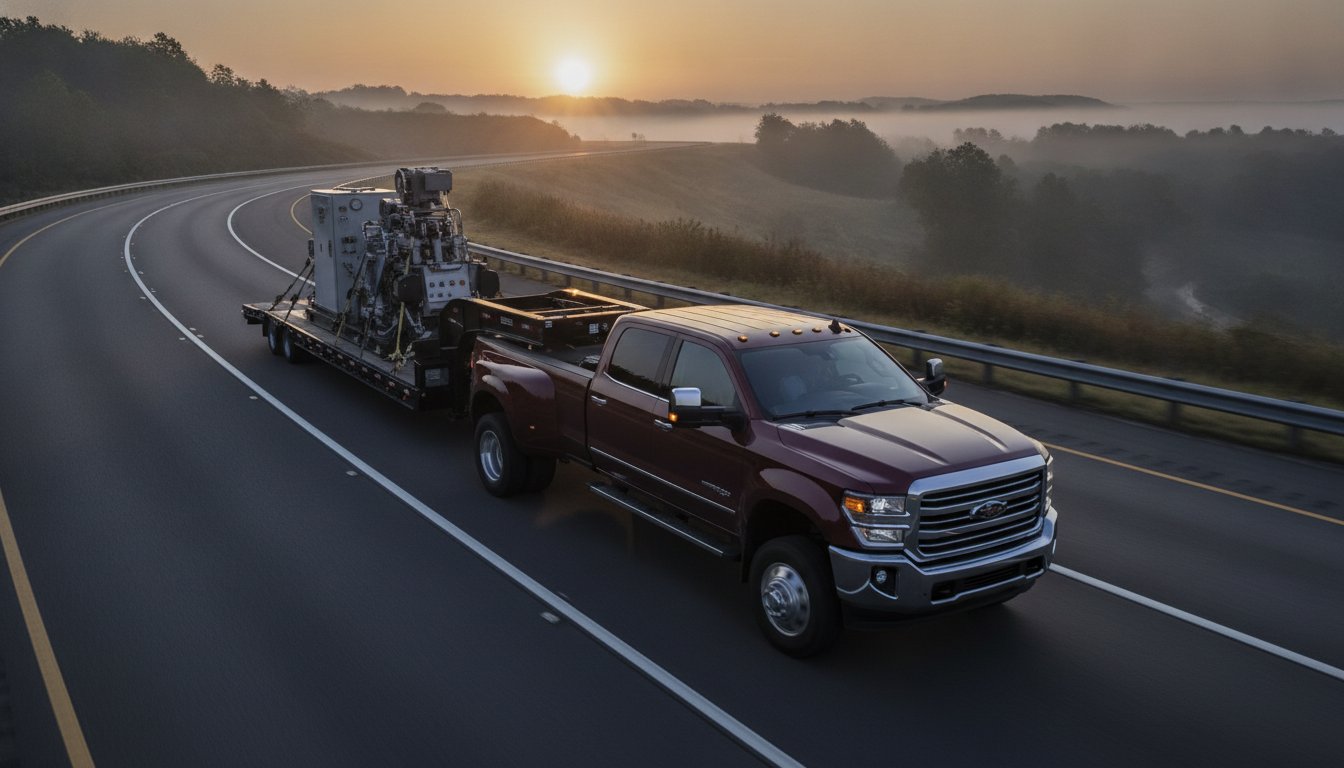
What if the traditional logistics model of waiting for a full trailer is the primary obstacle to your project’s success? You likely recognize the tension of managing high-stakes projects where a single delayed part can halt an entire operation. In the current 2026 market, hot shot trucking provides a steady, reliable alternative for those who need to move specialized freight without the typical wait times or complexities of less-than-truckload shipping. It’s a solution designed for precision, focusing on the specific needs of your cargo rather than just filling space in a van.
We understand that in professional logistics, a “steady hand at the wheel” is more valuable than flashy promises. This guide will show you how hot shot trucking provides a cost-effective and agile way to manage time-sensitive deliveries across the United States. You’ll learn how to navigate the latest 2026 regulations, understand equipment requirements, and see how a dedicated partnership can reduce the stress of specialized shipping. We’ll also examine how professional brokerage oversight ensures your freight moves with the order and consistency your business requires to maintain its momentum.
Key Takeaways
- Understand how hot shot trucking serves as a precision logistics tool for moving time-sensitive, specialized cargo without the delays of traditional hub-and-spoke systems.
- Identify the specific medium-duty trucks and gooseneck trailer configurations that provide the necessary stability for your heavy or oversized partial loads.
- Learn to leverage direct routing to eliminate the “empty space” premium often associated with booking full 53-foot dry vans for smaller shipments.
- Gain clarity on the critical USDOT compliance and specialized insurance standards required to protect your high-stakes freight in the 2026 market.
- Discover the administrative advantages of a professional brokerage partnership for managing carrier vetting and real-time tracking through dedicated shipper portals.
The Fundamentals of Hot Shot Trucking
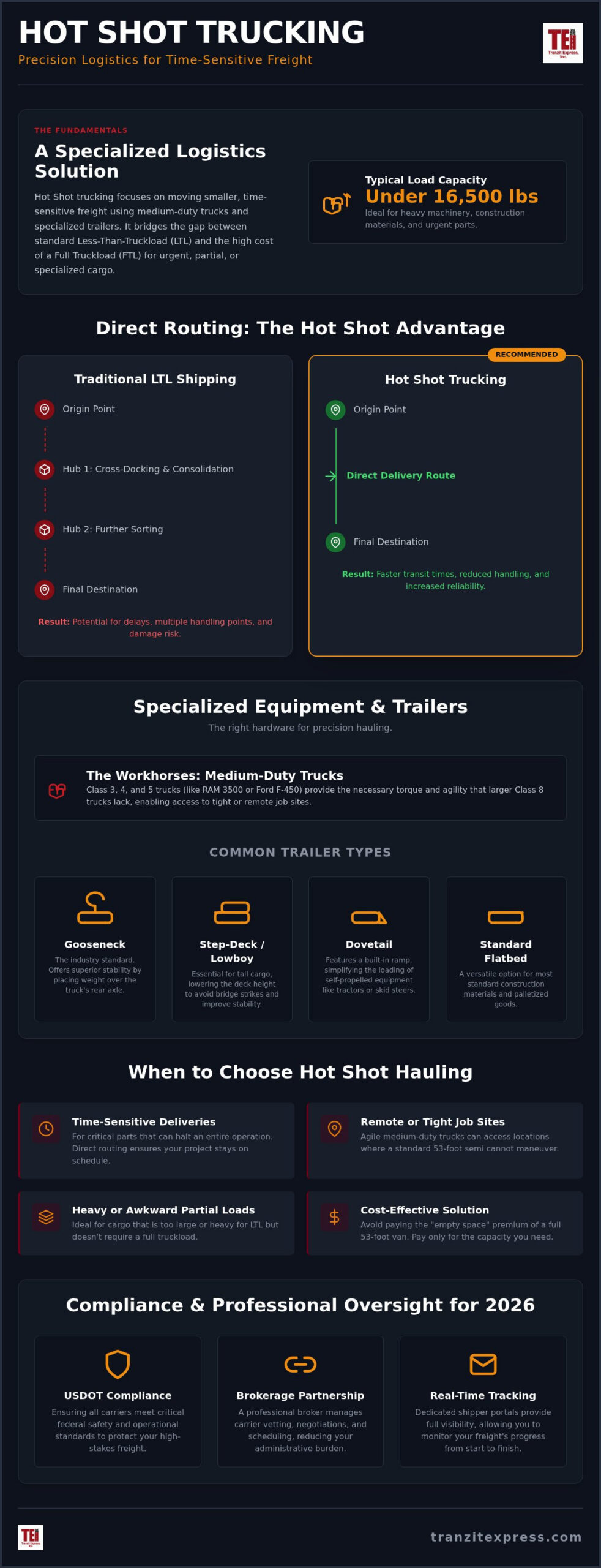
Hot shot trucking focuses on moving smaller, time-sensitive freight using medium-duty trucks and specialized trailers. This niche began in the Texas oil fields, where drivers waited at parts houses to deliver critical equipment to drilling rigs the moment it was needed. Understanding The Fundamentals of Hot Shot Trucking helps shippers see how this service transitioned from a regional necessity to a national logistics standard. It effectively bridges the gap between standard Less-Than-Truckload (LTL) and the high expense of a Full Truckload (FTL) for small but heavy cargo. These loads move with a sense of urgency that traditional freight models often struggle to match. By focusing on direct delivery, it provides a dependable alternative for project managers who cannot afford the delays of typical hub-and-spoke systems.
Defining the Hot Shot Niche
Hot shot trucking is a specialized logistics category for loads typically under 16,500 lbs. While standard expedite services often use cargo vans or straight trucks for light pallets, hot shot operators utilize Class 3 through 5 pickups paired with flatbed trailers. This configuration allows for significantly higher weight capacities and the ability to haul industrial machinery or construction materials. We see this most often in the construction, agriculture, and energy sectors where equipment failure can cost thousands of dollars per hour. In this ecosystem, the owner-operator is the primary driver. These dedicated professionals provide the flexibility required for rapid deployment. They often reach remote job sites or urban alleys where a standard 53-foot semi simply cannot maneuver. This accessibility is a key differentiator that keeps complex projects on schedule.
Why Shippers Choose Hot Shot in 2026
Modern supply chains rely on “just-in-time” delivery to keep overhead low and operations lean. In 2026, the demand for precision and transparency is higher than ever. Shippers choose this method because it offers a direct route from point A to point B without the delays of cross-docking hubs. It’s an ideal choice for hauling partial loads that are heavy, tall, or awkwardly shaped. Instead of paying for the empty space in a massive dry van, you pay for the specific footprint your cargo requires. This approach provides a sense of order and cost-efficiency for high-stakes projects. It ensures that critical parts arrive exactly when the crew is ready to install them. This reliability reduces idle time and keeps your projects moving forward with the quiet confidence of a seasoned industry veteran at the wheel.
Specialized Equipment and Trailer Types
The efficiency of hot shot trucking depends entirely on the hardware utilized. While a standard semi-truck relies on sheer size, the hot shot model uses precision-engineered equipment to navigate tighter constraints. Class 3, 4, and 5 trucks serve as the workhorses of this sector. You’ll commonly see RAM 3500 or Ford F-450 pickups because they offer the torque necessary to pull heavy loads while maintaining a smaller footprint. These vehicles provide the power behind the haul, allowing for a level of agility that larger Class 8 trucks cannot achieve. This specialized setup ensures that your freight moves with both speed and stability, even when heading to remote or restricted job sites.
Gooseneck trailers are the industry standard for a reason. They provide superior stability by placing the trailer weight directly over the truck’s rear axle rather than the bumper. For specialized needs, lowboy and tilt deck trailers are essential tools. These allow for the transport of heavy industrial machinery that requires a lower center of gravity to remain secure during transit. Dovetail trailers further simplify the process by providing a built-in ramp for self-propelled equipment like skid steers or tractors. This variety of equipment ensures that every load, regardless of its shape or weight, has a dedicated configuration designed for its safe arrival.
Matching the Right Trailer to Your Load
Selecting the correct trailer is about balancing cargo dimensions with transport stability. Standard flatbed hot shot trailers are versatile and handle most construction materials with ease. However, when your cargo exceeds standard height limits, a step-deck trailer becomes the necessary choice. This design lowers the deck height to accommodate taller equipment without risking bridge strikes. While bumper pull trailers exist, we prioritize gooseneck configurations for their enhanced weight distribution and safety on the highway. Choosing the right tool for the job is a hallmark of a professional logistics partnership.
Weight Limits and Capacity Considerations
Operating within the Gross Vehicle Weight Rating (GVWR) is a non-negotiable safety standard. Most hot shot setups aim for a payload capacity between 10,000 and 15,000 pounds. Exceeding these limits compromises braking distance and structural integrity. Understanding DOT regulations for hot shot drivers is vital for ensuring your carrier remains compliant and your cargo stays secure. Regular equipment maintenance is another critical factor we monitor to prevent mechanical failures during transit. If your shipment exceeds these capacity limits, you may want to explore our Flatbed Freight Services USA for larger open-deck logistics. For those managing complex schedules, using our Shipper Portal allows you to match your specific load requirements with the ideal equipment in our vetted network.
Strategic Advantages: When to Choose Hot Shot Hauling
Choosing the right logistics model is a balance of speed, cost, and cargo security. For many shippers, hot shot trucking represents a tactical advantage when standard freight schedules don’t align with project deadlines. One of the most significant benefits is direct routing. Traditional freight often stops at multiple cross-docking hubs, which increases transit time and the chance of handling errors. Hot shot loads bypass these congested centers, moving directly from your facility to the final destination. This streamlined approach provides a sense of order and predictability that’s essential for high-stakes B2B partnerships.
Cost-efficiency is another primary driver for this choice. Booking a full 53-foot dry van for a small but heavy piece of machinery often results in paying a premium for empty space. Hot shot hauling allows you to pay for the specific capacity you use, providing a more economical solution for partial loads. Additionally, the smaller equipment used in this niche offers unparalleled accessibility. Whether you’re delivering to a remote utility site or a congested urban construction zone, these trucks maneuver easily where standard semis might struggle. This flexibility ensures your cargo reaches the exact point of need without requiring additional transloading.
Hot Shot vs. Expedited LTL
When comparing transit times, the difference between direct delivery and a hub-and-spoke network is stark. Expedited LTL still relies on a system of consolidated shipments, which can lead to unpredictable delays if one pallet in the chain is held up. In contrast, hot shot trucking offers a dedicated vehicle for your freight. While the per-mile rate might be higher than standard LTL, it often becomes the more economical choice when you factor in the total cost of potential delays. From a risk assessment perspective, direct shipping significantly reduces the risk of damage because your freight isn’t being moved on and off trailers at various terminals. It stays secure on one platform from start to finish.
The ‘Just-in-Time’ Factor
Project downtime can cost industrial operations thousands of dollars every hour. Having a “steady hand” at the wheel during a logistics crisis provides more than just a delivery; it offers peace of mind. Emergency part delivery via hot shot trucking reduces the ‘cost of waiting’ for industrial projects by ensuring that critical components arrive before a production line or construction crew grinds to a halt. This reliability transforms a simple transaction into a long-term partnership built on proven results. We focus on fulfilling these promises so you can concentrate on managing your core business operations without the stress of logistical uncertainty.
Navigating Compliance and Reliability in Hot Shot Logistics
Compliance isn’t just a collection of paperwork; it’s the framework that protects your business from liability. Every professional carrier must maintain valid USDOT and MC Authority to operate legally. The process of obtaining this authority takes a minimum of five to seven weeks, which serves as an initial filter to ensure only committed professionals enter the market. When you choose hot shot trucking, you’re looking for a partner who treats these regulations with the seriousness your freight deserves. This commitment to legal standards is the first indicator of a carrier who will handle your cargo with a steady, dependable hand.
Insurance standards in this niche are significantly higher than standard commercial auto policies. In 2026, a compliant operator typically invests between $8,000 and $12,000 annually in specialized insurance. This coverage is essential for high-stakes logistics where the cargo value often exceeds the truck’s value. We also focus on clearing up common myths regarding commercial driver’s licenses. While some operators claim a CDL isn’t necessary, federal law requires a Class A CDL if the combined Gross Vehicle Weight Rating (GVWR) of the truck and loaded trailer is 26,001 pounds or more. Additionally, every driver must possess a valid DOT medical card to remain on the road.
Electronic Logging Devices (ELDs) play a critical role in modern transparency. Most interstate operators with a vehicle GVWR over 10,001 pounds must use an ELD to track their hours of service. This technology ensures that drivers aren’t operating under fatigue, which directly reduces the risk of accidents. For a shipper, the presence of an ELD provides a verifiable record of the driver’s journey and adherence to safety standards. It’s a tool that brings a sense of order to the complex world of fast-paced freight delivery.
Vetting Your Hot Shot Carrier
Vetting is where a professional brokerage proves its value. We look beyond the surface to verify a carrier’s safety rating and the specifics of their cargo insurance. It’s vital to ensure the policy covers the specific type of machinery or equipment you’re moving. Professional communication and the ability to provide real-time updates are non-negotiable traits we look for in our vetted network. This level of scrutiny ensures that your shipment is in the hands of a seasoned veteran who values clear communication above all else.
The Risks of ‘Cheap’ Hot Shot Services
The lowest bid often carries the highest risk. “Fly-by-night” operators may skip the five-week authority process or carry inadequate insurance to cut costs. If an unauthorized carrier is involved in an incident, you could face impounded cargo or denied claims, leading to significant project delays. Understanding what a freight broker does helps you see the layers of protection a professional partnership provides. We act as your advocate, ensuring every carrier meets the highest standards of excellence. If you’re ready to secure a fully vetted carrier for your next load, you can find reliable options through our Shipper Portal.
The Value of a Professional Hot Shot Freight Broker
Managing hot shot trucking requires more than just finding a driver with a truck; it demands a comprehensive oversight strategy. A professional freight broker acts as your single point of contact, offering access to a pre-vetted national network with one phone call. This advantage is particularly critical in the fast-paced 2026 market, where carrier availability shifts rapidly. Tranzit Express Inc. leverages 25 years of industry experience to filter out unreliable operators, ensuring that only qualified motor carriers handle your high-stakes loads. By delegating the search to a seasoned veteran, you gain a level of security that internal logistics departments often struggle to maintain.
The administrative burden of specialized freight is significant. From verifying cargo insurance to checking USDOT safety ratings, the documentation process can overwhelm a project manager’s schedule. A broker handles these complexities on your behalf, providing a sense of order in a complex industry. This support extends to scalability, allowing your business to manage seasonal spikes or multi-load projects without increasing your internal headcount. Whether you need a single emergency part delivered or a coordinated fleet for a construction site, a professional partnership provides the flexibility to scale your logistics operations seamlessly. It’s about having a steady hand at the wheel even before the truck arrives at the dock.
Streamlining Your Supply Chain with Technology
Efficiency in modern logistics depends on accessible data. Utilizing our Shipper Portal allows you to receive instant quotes and track your loads in real-time. This technology provides the transparency needed for precise project management. Centralized billing and documentation further reduce friction, allowing your accounting team to manage freight expenses without chasing multiple carriers for invoices. We act as a reliable guide in a volatile market, using these tools to keep your supply chain moving with purposeful momentum. This structured approach ensures that every detail, from weight limits to delivery windows, is managed with professional excellence.
Building a Long-Term Logistics Partnership
The most successful logistics strategies move beyond simple transactions toward collaborative management. By choosing a partner with deep institutional knowledge, you benefit from insights that prevent common pitfalls in specialized freight. We prioritize the fulfillment of promises over marketing hype, focusing on the long-term success of your business. Our goal is to reduce your stress and provide a sense of stability in an industry that never stops moving. If you’re ready to experience the quiet confidence that comes from professional brokerage oversight, it’s time to take the next step. Request a Reliable Hot Shot Quote from Tranzit Express today to secure your specialized freight needs for 2026 and beyond.
Securing Your Supply Chain for 2026
Precision logistics requires a balance of speed and absolute compliance. Hot shot trucking provides the agility needed to bypass congested hubs while maintaining the stability required for heavy, awkwardly shaped loads. Utilizing specialized equipment like gooseneck trailers and medium-duty trucks ensures your cargo reaches its destination without the unnecessary delays or handling risks found in traditional freight models. The key to success lies in moving beyond simple transactions and establishing a partnership built on institutional knowledge and verified safety standards.
With 25 years of dependable logistics experience, Tranzit Express Inc. offers the steady hand you need to navigate this complex market. Our national vetted carrier network and on-time delivery guarantee provide a sense of security for your most critical projects. We invite you to Partner with Tranzit Express for Reliable Hot Shot Solutions and experience a higher standard of logistical excellence. Let’s work together to bring order to your shipping process and keep your operations moving forward with confidence.
Frequently Asked Questions
What is the weight limit for a hot shot truck?
A typical hot shot truck has a payload capacity between 10,000 and 15,000 pounds. This limit depends on the Gross Vehicle Weight Rating (GVWR) of the specific truck and trailer combination used for the haul. Shippers should verify the equipment’s capacity to ensure it can safely support the weight of their cargo without exceeding legal road limits or compromising vehicle stability.
How much does hot shot trucking cost per mile in 2026?
The cost per mile for hot shot trucking in 2026 varies based on several factors, including total distance, cargo weight, and current market demand. Specialized loads or those requiring expedited handling typically command different rates than standard regional runs. We recommend requesting a specific quote through a shipper portal to get accurate figures based on your unique freight requirements and current market conditions.
Do hot shot drivers need a CDL?
A Commercial Driver’s License (CDL) is required if the combined Gross Vehicle Weight Rating (GVWR) of the truck and loaded trailer is 26,001 pounds or more. While some smaller setups operate without a CDL, many professional carriers maintain one to handle heavier industrial loads. Every driver must also possess a valid DOT medical card regardless of their CDL status to remain compliant with federal regulations.
What is the difference between hot shot and expedited shipping?
Hot shot trucking specifically refers to the use of medium-duty trucks and trailers to move freight, whereas expedited shipping is a broad service level focused on speed. Expedited loads might move in any vehicle type, but hot shots are defined by their ability to haul heavy, oversized, or specialized equipment on open-deck trailers. This distinction is critical for choosing the right equipment for industrial cargo that won’t fit in a standard van.
Can hot shot trucks haul heavy machinery?
Yes, hot shot trucks are designed specifically to haul heavy machinery such as skid steers, tractors, and industrial components. Using specialized trailers like lowboys or tilt decks allows these vehicles to transport equipment that would be difficult to load into a standard dry van. This capability makes them a preferred choice for the construction and energy sectors where equipment must move quickly between job sites.
How do I find a reliable hot shot freight broker?
Finding a reliable broker involves looking for a partner with deep institutional knowledge and a proven track record. You should prioritize brokers who provide access to a national network of vetted carriers and offer transparent tracking through a dedicated shipper portal. A broker with decades of industry experience acts as a steady hand, managing carrier compliance and insurance verification so you can focus on your core business operations.
What kind of insurance is required for hot shot loads?
Carriers must maintain specialized commercial insurance that includes both liability and cargo coverage. Standard auto insurance is insufficient for commercial hauling, and cargo policies must be high enough to cover the full value of the machinery being transported. Professional brokers verify these policies before every load to ensure your investment is protected against unforeseen incidents during transit.
Is hot shot trucking faster than standard LTL?
Hot shot trucking is almost always faster than standard LTL because it utilizes direct routing. Instead of moving through multiple consolidation hubs and cross-docking terminals, your freight stays on one trailer from pickup to delivery. This dedicated approach eliminates the wait time typically associated with hub-and-spoke networks, making it the ideal choice for time-sensitive projects that require immediate attention.