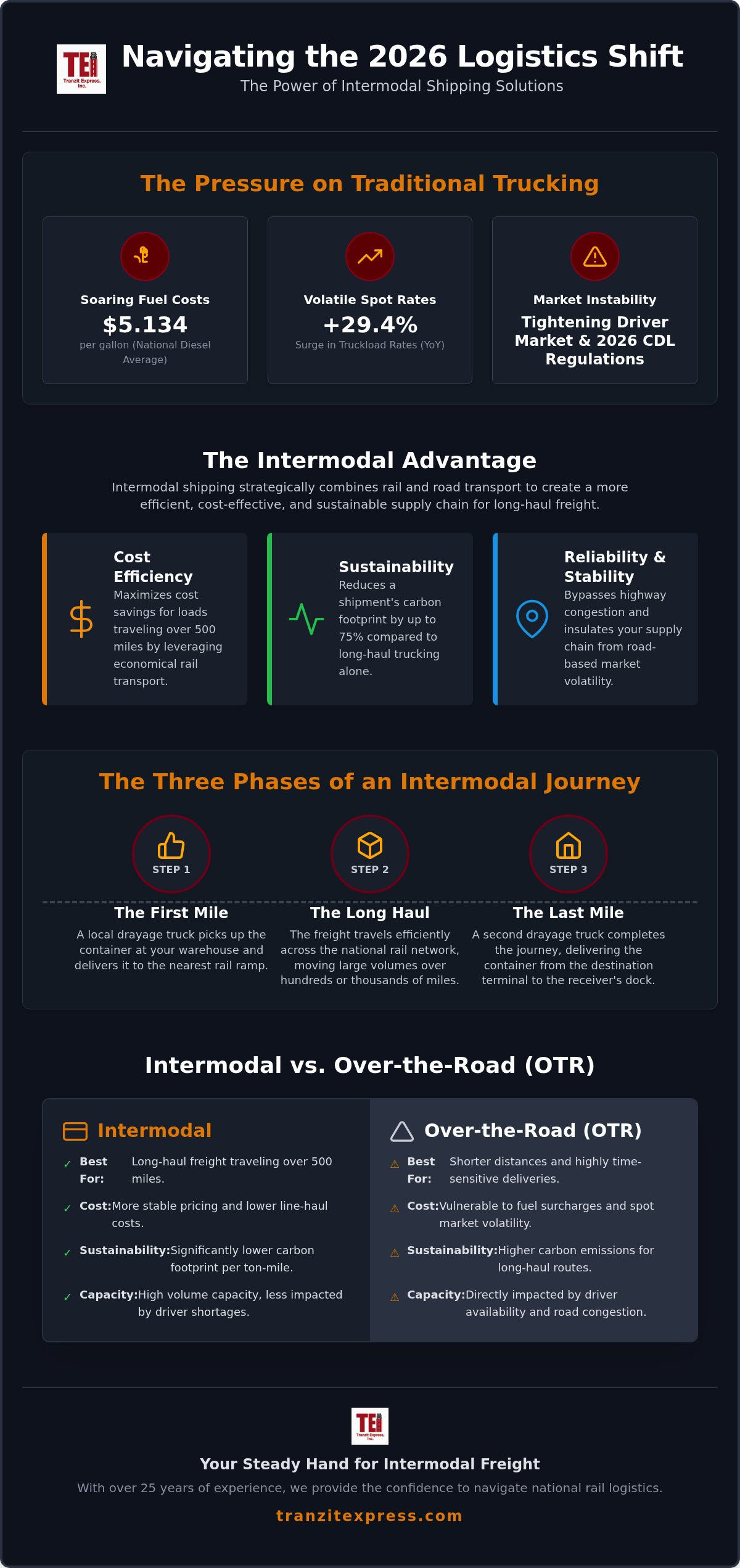
With national diesel prices reaching $5.134 per gallon and truckload spot rates surging 29.4% over the last year, the traditional over-the-road model is becoming an unsustainable burden for many logistics budgets. You aren’t alone if you feel the weight of these rising fuel surcharges and the tightening driver market caused by the 2026 CDL regulations. It’s difficult to maintain a competitive edge when shipping costs climb while your visibility into rail transit remains clouded. Finding reliable intermodal shipping solutions USA requires more than just a booking. It requires a partnership that understands the nuances of the 2026 National Freight Strategic Plan.
At Tranzit Express Inc., we recognize that you need a steady hand at the wheel to manage these complexities. With over 25 years of industry experience, we’ve seen how a balanced approach to rail and road logistics can transform a volatile supply chain into a source of stability. This guide will show you how to lower shipping costs for loads traveling over 500 miles and secure reliable door-to-door transit times. We’ll explore the specific strategies needed to reduce your carbon footprint while maintaining the professional, seamless service your customers demand.
Key Takeaways
- Identify the specific triggers for the 2026 logistics shift and how integrating rail can stabilize your supply chain.
- Learn why the 500-mile rule is the critical benchmark for choosing intermodal shipping solutions USA to maximize your cost efficiency.
- Understand the mechanics of drayage and the broker’s role in managing the essential handshake between road and rail carriers.
- Gain practical insights into load securement techniques, including blocking and bracing, to ensure your freight remains stable during transit.
- Discover how a partnership with a seasoned logistics veteran provides the steady hand needed to navigate national rail logistics with confidence.
The Landscape of Intermodal Shipping Solutions in the USA
To understand What is Intermodal Shipping, one must look at it as a coordinated effort between different modes of transport. It is the strategic integration of rail and road to move freight over long distances. This method uses specialized containers that transfer between trucks and trains without the need to handle the cargo itself. For businesses seeking reliable intermodal shipping solutions USA, this coordination is the key to maintaining a steady supply chain in an increasingly unpredictable market. It provides a structured way to handle heavy volumes while minimizing the risks associated with driver shortages and road congestion.
The logistics environment in 2026 has shifted significantly. Shippers are moving away from 100% road-based freight because the financial pressure is too great to ignore. While truckload spot rates have climbed 29.4% over the last year, intermodal provides a stable alternative for long-haul routes. The U.S. Department of Transportation’s 2026 National Freight Strategic Plan, released in May, highlights the need for efficiency and resilience across the national network. Intermodal transport provides that resilience by connecting major manufacturing hubs from the Midwest to the West Coast with a consistency that single-mode trucking often lacks.
Why Shippers are Prioritizing Intermodal in 2026
Sustainability is no longer a “nice to have” feature for corporate reports. Modern distributors are now facing strict Scope 3 emission targets that require concrete action. Rail is a powerful tool in this effort because it can reduce a shipment’s carbon footprint by up to 75% compared to long-haul trucking. Diversifying your supply chain with intermodal transportation solutions helps insulate your operations from the volatility of the spot market. Implementing these intermodal shipping solutions USA allows national distributors to meet their carbon goals without sacrificing the reliability of their deliveries. When fuel surcharges fluctuate, the stable energy efficiency of rail offers a predictable path forward.
The Core Components of an Intermodal Move
A successful move relies on three distinct phases that must work in harmony. The “First Mile” involves local drayage. A truck picks up the container at your warehouse and delivers it to a rail ramp. Next is the “Long Haul.” The freight travels across the national rail network, which helps bypass highway congestion and reduces the wear on your equipment. Finally, the “Last Mile” completes the journey with another drayage truck delivering the container from the rail terminal to the receiver. Each step requires precise timing to ensure the handshake between carriers is seamless. This methodical approach is what creates the sense of order and security that seasoned logistics professionals value.
How the Intermodal Handshake Works: From Road to Rail
Success in intermodal freight depends on the “handshake,” which is the precise moment cargo moves from a truck to a train. This transition happens at intermodal hubs, which are massive terminals designed to lift 53-foot containers onto railcars. A reliable provider of intermodal shipping solutions USA ensures this process is invisible to the shipper. Instead of managing three separate carriers, you work with a single point of contact who oversees the entire journey. Our role as a broker involves vetting every carrier using their USDOT numbers, which became the primary identifier in early 2026, to ensure your cargo is in safe hands.
Drayage is the short-haul trucking that bridges the gap between your dock and the rail ramp. It’s the most time-sensitive part of the trip. If a driver misses a gate cut-off time at the terminal, the freight might sit for another 24 hours. Professional oversight keeps this from happening. By aligning with National Rail Logistics standards, we ensure that local drayage drivers and Class I railroads operate in sync. This methodical coordination reduces the stress often associated with multi-modal transport.
Managing Complex Routing and Handoffs
Effective logistics management for shippers involves more than just booking a load. It requires proactive communication to reduce “dwell time,” which is the hours freight spends sitting idle at a ramp. We use proprietary portals to maintain visibility throughout the journey. This technology allows you to see exactly where your container is, even when it’s on a train in the middle of the country. If a delay occurs on the tracks, we adjust the final drayage pickup immediately. This level of coordination is what we mean by having a steady hand at the wheel.
The 53-Foot Domestic Container Standard
The 53-foot container is the workhorse of the industry. It’s designed to match the capacity of a standard dry van, making it compatible with your existing loading docks. However, weight considerations are different for rail. Because the steel containers and chassis are heavier than a standard aluminum trailer, the “payload” or cargo weight limit is often slightly lower. Calculating these differences accurately prevents overweight violations and ensures a smooth transit. Optimizing these intermodal shipping solutions USA starts with understanding the hardware. If you’re unsure about your specific load requirements, our team can help you review your shipment details through our secure portal.
Intermodal vs. Over-the-Road (OTR): Choosing the Right Mode
Deciding between a pure trucking strategy and a combined rail-road approach requires a clear understanding of your specific delivery goals. While over-the-road (OTR) trucking remains the standard for speed, the current market volatility makes a diversified strategy essential. As of July 2026, truckload spot rates have surged 29.4% compared to last year. In contrast, intermodal spot rates have remained remarkably stable, rising only 1.1%. For shippers managing tight margins, these intermodal shipping solutions USA offer a predictable alternative to the rising costs of traditional trucking.
The primary benchmark for this decision is the 500-mile rule. When a shipment travels fewer than 500 miles, the costs of local drayage and terminal handling often negate the savings found on the tracks. However, once you cross that 500-mile threshold, the efficiency of rail begins to outweigh the speed of the road. You should expect a 1-2 day difference in national transit times when moving from OTR to intermodal. This slight increase in lead time is often a fair trade-off for the significant reduction in fuel surcharges, especially with diesel prices holding at $5.134 per gallon.
Capacity is another critical factor. The “Non-Domiciled CDL” rule, which took effect in early 2026, is expected to reduce the available driver pool by 40,000 annually. This tightening of the labor market makes rail a vital safety valve for your supply chain. By aligning with the Intermodal Handshake best practices, you can secure space on Class I railroads even when truck capacity is at its tightest. This isn’t just about saving money; it’s about ensuring your freight moves when the road becomes congested or overpriced.
When to Stick with Over-the-Road Trucking
There are specific scenarios where traditional trucking is still the superior choice. If you’re managing time-sensitive hot-shot loads that require immediate, non-stop delivery, the rail schedule will likely be too restrictive. Fragile freight that requires minimal handling also benefits from OTR transit because it stays on one trailer from origin to destination. Additionally, for short-haul moves where the distance between your warehouse and the rail ramp is significant, the drayage fees can quickly erode any potential rail savings.
When Intermodal Shipping Wins the Bid
Intermodal is the clear winner for long-haul lanes, such as those moving from the Midwest manufacturing hubs to the West Coast ports. It is particularly effective for high-density freight that can maximize the weight limits of a rail car. Shippers looking to hedge against fluctuating diesel prices find that rail offers a more stable cost structure over time. By integrating these intermodal shipping solutions USA into your long-term planning, you create a resilient logistics model that can withstand the sudden price spikes and capacity crunches that define the modern freight market.
Preparing Your Freight for National Rail Logistics
Preparing a container for the tracks requires a different approach than loading a standard trailer for the highway. While a truck handles lateral forces during turns, rail freight experiences longitudinal G-forces known as “slack action.” This is the pushing and pulling that occurs between railcars as the train accelerates and brakes. Without proper securement, your cargo can shift significantly during a cross-country trip. Providing effective intermodal shipping solutions USA starts with educating shippers on these unique physics to ensure goods arrive in the same condition they left the warehouse.
Insurance and liability also function differently on the rail. Standard over-the-road trucking often carries a default liability of $100,000 per load. In contrast, railroads often limit their liability to much lower amounts, sometimes as low as $25,000 per container, depending on the specific railroad’s circular. This gap makes it vital to work with a partner who understands how to bridge these coverage differences. We focus on clear communication protocols, ensuring we have the exact weight and commodity details before the container reaches the rail ramp to avoid any administrative or safety delays.
Best Practices for Damage Prevention
To prevent cargo from shifting, we recommend using high-quality dunnage bags and heavy-duty strapping designed for rail transit. Weight distribution is equally critical. You should center the heaviest items over the container’s floor and avoid leaving large gaps between pallets. Blocking and bracing refers to the method of using lumber and nails to secure cargo to the container floor, ensuring it meets the Association of American Railroads (AAR) safety standards for rail transit. When these methods are applied correctly, the risk of transit damage drops significantly, even on long-haul routes from the East Coast to the Pacific Northwest.
Vetting Your Intermodal Partner
Choosing the right partner is about more than just finding the lowest rate. You need a broker who maintains a steady hand when coordinating multiple carriers and rail schedules. In 2026, regulatory compliance is more important than ever. The new $75,000 liquid bond rule for brokers ensures that you’re working with a financially stable partner who can fulfill their promises. We vet every drayage carrier for rail certification and compliance with FMCSA standards to maintain a seamless flow of information. If you’re ready to secure your supply chain with a veteran team, you can partner with a dependable logistics expert who prioritizes your cargo’s safety. Professional communication remains the most effective tool we have for preventing delays and ensuring your intermodal shipping solutions USA perform exactly as expected.
Why Tranzit Express is Your Steady Hand for Intermodal Freight
Choosing intermodal shipping solutions USA shouldn’t feel like a gamble. In a market where diesel prices fluctuate and driver availability remains tight due to the 2026 CDL restrictions, you need more than just a vendor. You need a partner with a 25-year track record of stability. Tranzit Express Inc. provides that steady hand at the wheel. We’ve weathered decades of industry cycles, giving us the institutional knowledge to manage your freight with quiet confidence. While mega-carriers often prioritize volume over individual service, we focus on high-level B2B partnerships that prioritize your specific needs.
Our approach combines this veteran experience with modern transparency. Through our proprietary shipper portal, you gain real-time visibility into your national rail movements. This technology removes the guesswork from your supply chain, allowing you to see exactly where your container sits at any given moment. We don’t just move loads; we aim to reduce the complexity and stress that often comes with national logistics. This sense of order is what allows our clients to focus on their core business while we handle the heavy lifting. It’s about providing a reliable foundation in a volatile industry.
The Veteran Advantage in Intermodal Coordination
Understanding what does a freight broker do is essential for protecting your bottom line. We act as your advocate, coordinating between drayage drivers and railroads to ensure your cargo moves without delay. Our team anticipates rail disruptions before they impact your schedule, using our deep institutional knowledge to find alternative routes when necessary. We maintain reliable communication across all 50 states, ensuring you’re never left in the dark regarding a shipment’s status. This proactive management is the hallmark of a veteran logistics partner who values fulfillment over hype.
Seamless Integration with Your Supply Chain
We provide a total solution by integrating intermodal shipping solutions USA with our van freight and flatbed services. This versatility means we can handle your standard long-haul rail moves alongside your specialized flatbed requirements or urgent van loads. Requesting a quote is a streamlined process designed for busy shipping managers who value efficiency and clear communication. If you’re ready to transition to a more resilient logistics model, partnering with Tranzit Express is the next logical step for your supply chain. We invite you to experience the difference that 25 years of professional logistics management can make for your next long-haul move.
Securing Your Supply Chain for the Long Haul
The logistics market will continue to evolve, but your strategy doesn’t have to remain in a state of flux. By applying the 500-mile rule and prioritizing proper load securement, you can turn rail transport into a genuine competitive advantage. These intermodal shipping solutions USA provide the stability needed to navigate rising fuel costs and tightening capacity while meeting your corporate sustainability goals. It’s about finding the balance between the speed of the road and the efficiency of the rail.
Tranzit Express Inc. brings 25+ years of logistics excellence to every shipment. We offer national USA coverage and provide professional shipper portal access so you always have eyes on your freight. Our team acts as the steady hand you need to coordinate complex moves and protect your bottom line. We’re ready to help you streamline your operations and reduce the daily stress of transportation management. It’s time to replace uncertainty with a proven partnership.
Request an Intermodal Shipping Quote from Tranzit Express and take the first step toward a more dependable logistics partnership. We look forward to moving your business forward.
Frequently Asked Questions
What is intermodal shipping?
Intermodal shipping is the process of moving freight using multiple modes of transportation, typically a combination of rail and truck, within a single standardized container. This method allows the cargo to stay inside the same unit for the entire journey, which eliminates the need for direct handling during mode transfers. It’s a foundational part of intermodal shipping solutions USA that helps shippers balance cost and efficiency on long-distance hauls across the country.
Is intermodal shipping slower than standard truckload?
Yes, intermodal transit usually takes one to two days longer than standard over-the-road trucking. This extra time is necessary for terminal handling, container loading at the rail ramp, and train assembly. While it’s slightly slower, the reliability of rail schedules provides a predictable delivery window for freight that isn’t time-sensitive. It’s a practical choice for businesses that value consistent results and lower costs over immediate delivery speed.
What is the cost difference between intermodal and OTR shipping?
Intermodal shipping generally offers substantial savings on long-haul routes compared to over-the-road trucking. These savings are driven by the fuel efficiency of trains and reduced labor costs per ton-mile. While market rates vary, shippers often experience lower total costs on lanes that exceed 500 miles. This price stability is especially helpful when diesel prices are high, as rail fuel surcharges are typically lower than those found in the trucking industry.
Can any type of freight be shipped via intermodal rail?
Most dry goods that fit into a standard 53-foot container are suitable for intermodal rail. This includes consumer products, electronics, and industrial supplies. However, certain hazardous materials, highly fragile items, or over-dimensional loads might require specialized handling or remain better suited for flatbed trucking. We recommend consulting with a logistics professional to ensure your cargo meets the specific securement and safety standards required for the vibrations of rail travel.
What is the difference between multimodal and intermodal transportation?
The main difference lies in the container and the contract. Intermodal uses a single container for the entire trip, even as it moves between trucks and trains, which reduces the risk of damage. Multimodal transportation involves different modes but may require the cargo to be transferred between different trailers or containers. Intermodal is often preferred for domestic logistics because it streamlines the “handshake” between carriers and simplifies the tracking process for the shipper.
Does intermodal shipping reduce carbon emissions?
Yes, intermodal shipping is one of the most effective ways to lower the environmental impact of your logistics operations. Trains are much more fuel-efficient than trucks, often moving a ton of freight nearly 500 miles on a single gallon of fuel. By incorporating intermodal shipping solutions USA into your supply chain, you can reduce your carbon footprint by up to 75%. This shift is vital for companies working to meet strict Scope 3 sustainability targets.
How do I track my intermodal shipment during rail transit?
Tracking is handled through professional shipper portals that provide real-time updates by integrating data from both railroads and drayage carriers. These systems allow you to see exactly where your container is located, whether it’s on the highway or the tracks. Modern technology has replaced the old lack of visibility with clear, actionable milestones. This transparency ensures you can coordinate warehouse staff and final delivery with the confidence of a seasoned logistics veteran.
What is the 500-mile rule in intermodal logistics?
The 500-mile rule is a standard benchmark used to decide when rail becomes a more economical choice than trucking. For loads traveling less than 500 miles, the costs of local drayage and terminal fees often negate the savings of the rail line-haul. Once a shipment exceeds this 500-mile threshold, the efficiency of the train begins to provide a clear cost advantage. It’s a reliable rule of thumb for any manager looking to optimize their national freight spend.