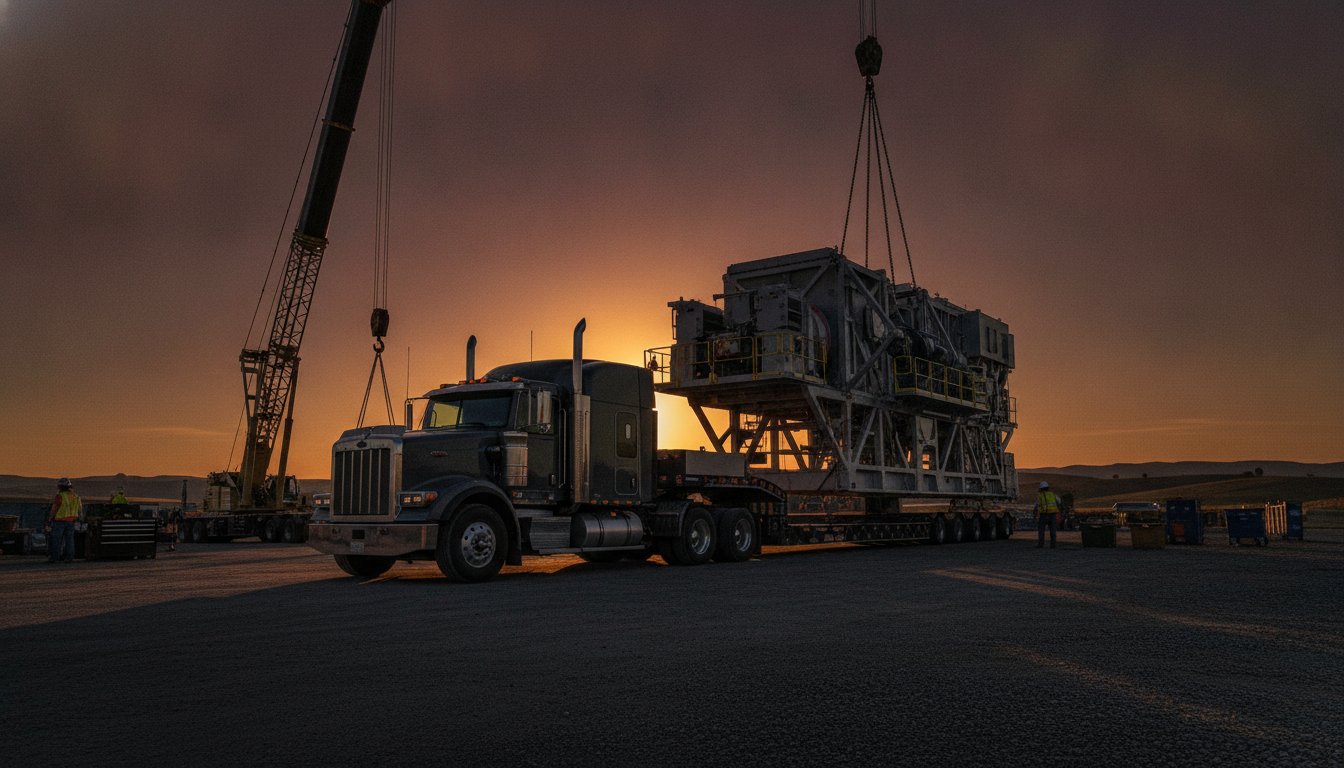
Flatbed brokerage is not a simple transaction; it is a specialized risk-management service where equipment precision and safety compliance are the only metrics that matter. If you have ever dealt with a carrier showing up without the right securement gear or been hit by a surprise permit delay, you know that open-deck shipping demands more than just a truck. It requires a partner who understands the technical nuances of heavy haul. Working with an experienced flatbed load broker is often the difference between a successful project and a costly logistical failure.
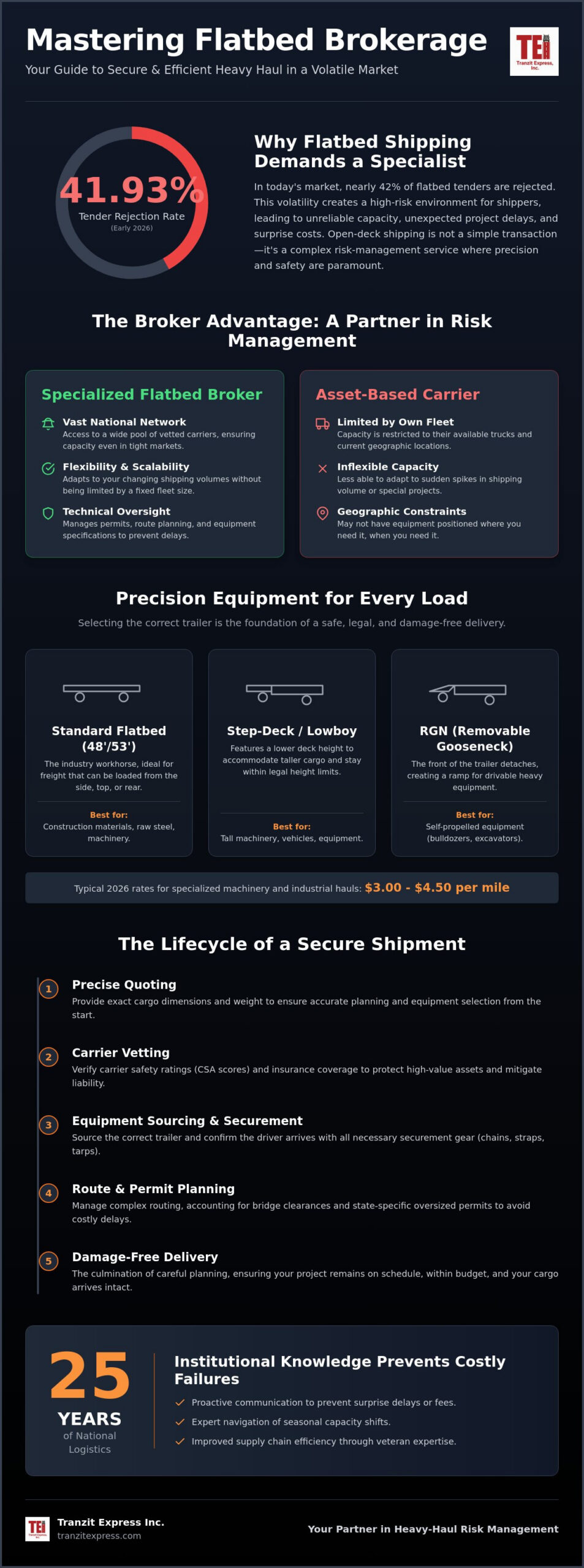
We understand that you need predictability in an environment where flatbed tender rejections reached nearly 42 percent in early 2026. You want to avoid the stress of unreliable equipment or unforeseen costs on complex routes. This guide provides expert answers to the most critical questions about equipment selection, safety standards, and the current regulatory landscape to ensure your freight moves without a hitch. We will walk through the technical compliance of RGNs and step-decks, the impact of new CSA scoring weights, and how to maintain a damage-free delivery schedule in a tightening market.
Key Takeaways
- Learn how to match specific cargo needs with the right trailer types, such as RGNs and step-decks, to ensure safe and efficient loading.
- Understand why a specialized flatbed load broker is essential for managing the technical risks and equipment securement requirements of open-deck shipping.
- Discover the vetting protocols used to verify carrier safety ratings and insurance, protecting your high-value assets from unforeseen liability.
- Master the lifecycle of a shipment, from providing precise dimensions during quoting to final delivery on complex, national routes.
- See how 25 years of veteran expertise and proprietary portal access can reduce the stress of managing specialized freight logistics.
Understanding the Role of a Flatbed Load Broker in 2026
A specialized intermediary who connects shippers with open-deck motor carriers provides more than just a truck; they provide a layer of security in a high-stakes environment. In the flatbed sector, a freight broker manages the complex variables that define heavy-haul transport. Unlike dry van shipping, which often involves simply backing a trailer into a dock, flatbed logistics requires a deep understanding of equipment specifications, securement gear, and loading requirements. The broker is responsible for ensuring the driver arrives with the specific chains, straps, or tarps needed to protect your cargo.
Market volatility in 2026 has made this role even more critical. With flatbed tender rejections reaching 41.93 percent in early March, shippers often struggle to find reliable capacity on their own. A professional flatbed load broker acts as a stabilizer, using their industry relationships to secure predictable pricing even when the market tightens. They manage the intricate details of route planning, accounting for bridge clearances and state-specific oversized permits that could otherwise lead to costly delays. This technical oversight ensures that your project remains on schedule and within budget.
Broker vs. Carrier: Why the Distinction Matters for Your Cargo
Choosing between a broker and an asset-based carrier is a decision about scale and adaptability. An asset-based carrier is naturally limited by the size of its own fleet and its current geographic location. If their trucks are tied up in another region, your freight may sit at the yard. A broker offers access to a vast national network of vetted carriers, providing you with the flexibility to scale as your shipping volume changes. This model offers a single point of contact for complex, multi-leg shipments, reducing the administrative burden on your internal team while ensuring you always have the right equipment for the job.
The Value of 25 Years in National Logistics
Institutional knowledge is a quiet asset that prevents loud and expensive failures. After 25 years in national logistics, a seasoned professional understands how to navigate seasonal capacity shifts and the nuances of various industrial sectors. This experience allows for proactive communication, ensuring you aren’t surprised by permit requirements or equipment shortages. Building a long-term partnership with a veteran provider shifts the focus from a simple transaction to a collaborative effort to improve your supply chain efficiency. A flatbed load broker is a risk-management partner for heavy-haul industries.
Navigating Specialized Flatbed Equipment and Trailer Options
Selecting the correct trailer is a technical requirement that dictates the safety and legality of your shipment. While standard flatbeds are suitable for many loads, they aren’t a universal solution. Precision in equipment selection is the foundation of a damage-free delivery. For instance, moving industrial machinery often requires a specialized trailer to stay within legal height limits. In 2026, rates for machinery and industrial equipment typically range between $3.00 and $4.50 per mile, reflecting the specialized nature of these hauls. A professional flatbed shipping broker understands these cost variables and equipment requirements before the truck ever reaches your dock.
A broker’s primary value lies in their ability to source the exact equipment needed for oversized or awkward dimensions. They ensure the carrier arrives with all necessary accessorials, such as specific chains or heavy-duty straps. This foresight prevents the common pain point of a driver arriving at a job site without the gear required to secure the load. If you’re unsure which trailer fits your cargo, our team can help you evaluate your flatbed shipping options to find the most cost-effective and secure match.
From Standard Flatbeds to Specialized RGNs
Standard 48 foot and 53 foot flatbeds are the workhorses of the industry, ideal for construction materials and raw steel. However, height restrictions often demand a different approach. Step-decks and lowboys solve this by providing a lower deck height, allowing taller machinery to pass under bridges without incident. For self-propelled heavy equipment, Removable Goosenecks (RGN) are the standard. They allow the front of the trailer to be detached so equipment can be driven directly onto the deck. Understanding the nuances of is essential for any shipper dealing with heavy or oversized freight.
Protecting Your Freight: Conestogas and Tarping Solutions
Environmental protection is another critical layer of the logistics process. Conestoga trailers use a sliding tarp system that provides the protection of a dry van with the loading flexibility of a flatbed. This is a preferred choice for high-value machinery that must remain pristine. When a Conestoga isn’t available, professional tarping becomes the line of defense against weather and road debris. A flatbed load broker verifies that carriers have the correct tarp sizes, whether it is a standard lumber tarp or a specialized smoke tarp, to prevent moisture damage during transit. This level of detail ensures your cargo arrives in the same condition it left the facility.
Safety, Compliance, and Risk Mitigation in Open-Deck Freight
Safety in open-deck shipping isn’t just about avoiding accidents; it’s about protecting the shipper from significant financial and legal liability. Unlike van freight where cargo is enclosed, flatbed loads are exposed and subject to immense physical forces during transit. A professional flatbed load broker acts as a critical gatekeeper, ensuring that every carrier assigned to a shipment meets rigorous safety standards. This oversight is vital in 2026, as vehicle maintenance violations now carry 25 percent higher severity weights in the Compliance, Safety, Accountability (CSA) scoring system. We monitor these scores meticulously to ensure your freight is never handled by a carrier with a history of equipment neglect.
Vetting goes beyond a simple check of insurance certificates. It involves a deep dive into the carrier’s safety history and their strict adherence to FMCSA cargo securement rules. These regulations specify exactly how many tie-downs are required for different types of loads, such as steel beams or industrial machinery. By partnering with a broker who understands these technical requirements, you reduce the risk of cargo shift, which remains the primary cause of damage and delays in open-deck shipping.
The Broker’s Vetting Process: Beyond the Basics
Our vetting process is designed to provide peace of mind through every mile of the journey. We verify active operating authority and confirm that carriers maintain high-level liability and cargo insurance that exceeds industry minimums. This protects your brand reputation and ensures that, in the rare event of an incident, the financial recovery process is straightforward. We look for specific indicators of excellence, such as:
- Consistent equipment maintenance records that reflect the 2026 CSA scoring updates.
- Proven experience in handling specific commodities like oversized machinery or data center components.
- Verification of driver proficiency in English, as FMCSA enforcement of language standards has increased in 2026.
Navigating Permits and Legal Requirements for Oversized Loads
Moving oversized freight introduces a layer of legal complexity that can overwhelm an internal logistics department. A load is generally considered oversized if it exceeds 8.5 feet in width or 13.5 feet in height, though these limits vary significantly by state. A seasoned logistics provider coordinates the necessary permits, pilot cars, and police escorts required for a legal transit. This pre-planning avoids the surprise costs often associated with heavy-haul freight, as oversized rates in 2026 typically range from $3.50 to over $10.00 per mile depending on the route’s complexity. We handle the technical compliance so you can focus on your core business operations.
The Lifecycle of a Flatbed Shipment: From Quote to Delivery
The journey of an open-deck shipment begins long before the wheels turn. It starts with a comprehensive assessment of your cargo’s physical profile. A professional flatbed load broker follows a methodical lifecycle to ensure every variable is accounted for before the truck arrives at your facility. This process is designed to eliminate the uncertainty that often accompanies heavy-haul logistics. We follow four primary stages to move your freight safely:
- Step 1: Technical Quoting. Providing exact dimensions—length, width, height, and weight—is the first step toward a predictable outcome. Accuracy here prevents the logistical delays and cost overruns that occur when a carrier arrives with a trailer that cannot legally accommodate the load.
- Step 2: Specialized Sourcing. The broker leverages a national network to select a carrier with the specific expertise and equipment required for your industry. This includes verifying that the driver has the proper securement gear for high-paying commodities like steel or data center materials.
- Step 3: Active Transit Management. This stage involves real-time tracking and professional communication. The broker acts as a single point of contact, managing the flow of information between the shipper and the driver.
- Step 4: Delivery and Documentation. The process concludes with a synchronized drop-off and the management of final paperwork. In 2026, documentation requirements have become more rigorous; for instance, ELD providers must now store driver logs for eight years to ensure long-term accountability.
Transparency Through Technology: Shipper and Carrier Portals
Digital tools have replaced the uncertainty of traditional phone tag. Our proprietary Shipper Portal Access provides 24/7 visibility into your high-value industrial shipments. These portals streamline the exchange of critical documents, such as Bills of Lading and Proof of Delivery, reducing administrative friction. By centralizing communication, a flatbed load broker ensures that all stakeholders have access to real-time updates. This transparency is essential for maintaining order in a complex supply chain, allowing you to manage your inventory with confidence.
On-Time Delivery: The Result of Meticulous Planning
The final mile of a flatbed delivery often involves the most coordination. Unlike standard dock deliveries, open-deck freight often requires specialized unloading equipment like cranes or heavy-duty forklifts. We synchronize the truck’s arrival with your site’s capabilities to prevent costly detention fees. If a delay occurs due to weather or traffic, our team provides proactive solutions rather than just reporting the problem. This “steady hand” approach ensures that your project remains on track despite the variables of the road. If you’re ready to experience a more organized approach to your logistics, request a quote from Tranzit Express Inc. today.
Partnering with a Seasoned National Flatbed Broker
National reach is the backbone of consistent logistics. In a market where flatbed tender rejections spiked to 41.93 percent in early 2026, relying on local or asset-limited carriers often results in service gaps. A flatbed load broker with a national footprint provides the infrastructure needed to maintain flow across all lanes, regardless of regional capacity crunches. This stability is essential for shippers moving critical industrial components or construction materials that cannot afford to sit on a dock. We offer a level of scalability that single-fleet carriers simply cannot match, ensuring your freight moves even when the market undergoes significant corrections.
Our goal is to move beyond the simple transaction of booking a truck. We view every shipment as an opportunity to strengthen your supply chain through a collaborative partnership. By integrating our national carrier network with your specific shipping requirements, we create a seamless logistical process that prioritizes the safety of your cargo and the reliability of your schedule. In an era of increased regulatory oversight and tightening capacity, having a dependable intermediary is no longer a luxury; it’s a strategic necessity for heavy-haul operations.
The Tranzit Express Inc. Advantage: Stability in a Complex Market
Tranzit Express Inc. brings 25 years of industry experience to every shipment. This veteran expertise allows us to anticipate the technical needs of your cargo before they become obstacles. Our focus remains on creating order in a complex industry, providing you with a single point of contact who understands the nuances of RGNs, step-decks, and oversized permitting. By prioritizing clarity and consistent communication, we act as a steady hand at the wheel for your most challenging hauls. We don’t just book trucks; we build national solutions tailored to your specific industry requirements, ensuring every load adheres to the latest 2026 safety and ELD enforcement standards.
Your Next Steps for Reliable Open-Deck Shipping
Starting a partnership with a flatbed load broker should be a straightforward and professional process. To get the most accurate quote, you should prepare your shipment details with specific dimensions and weight. Precision at this stage prevents the unforeseen costs that often arise from incorrect equipment matching or permit delays. Once you connect with our team of veteran logistics professionals, we’ll guide you through our proprietary shipper portal. This tool is specifically designed to reduce administrative stress by providing 24/7 visibility and a centralized location for all your documentation. It’s time to move beyond transactional shipping and secure a partner who values your results as much as you do.
Securing Your Supply Chain for the Long Haul
Managing open-deck logistics requires a level of technical precision that goes beyond standard freight. You’ve seen how matching the right equipment, such as an RGN or a step-deck, is essential for maintaining safety and avoiding costly height violations. By understanding the rigorous vetting processes and the current 2026 regulatory landscape, you can protect your cargo from the risks of securement failure and cargo shift. A professional flatbed load broker acts as your steady hand at the wheel, ensuring that every detail is managed with deep institutional knowledge.
Tranzit Express Inc. brings over 25 years of logistics experience to every partnership. Our national carrier network across the USA provides the consistent capacity you need, even when market tender rejections rise. With dedicated portals for shippers and carriers, we provide the transparency required to reduce stress and maintain order in your operations. It’s time to transition from a simple transaction to a dependable logistics relationship. We look forward to helping you move your heavy freight without a hitch.
Request a Dependable Flatbed Shipping Quote from Tranzit Express Inc.
Frequently Asked Questions
What exactly does a flatbed load broker do?
A flatbed load broker acts as a professional intermediary that matches your specific cargo requirements with the right open-deck motor carrier. They handle the technical vetting of carriers, verify specialized equipment availability, and manage complex route planning for heavy or oversized hauls. By acting as a single point of contact, they streamline communication and reduce the administrative burden on your internal team while ensuring your freight moves safely.
How do I know if my load requires a flatbed or a specialized trailer?
Your choice depends on the dimensions, weight, and loading requirements of your cargo. Standard flatbeds work for most side-loaded materials; however, if your freight exceeds 8.5 feet in height, a step-deck or lowboy is necessary to stay under legal bridge clearances. For self-propelled machinery, a Removable Gooseneck (RGN) is the preferred choice. Our team evaluates these technical specifications to ensure the trailer matches your load’s profile perfectly.
What are the common challenges when shipping flatbed loads nationally?
The primary challenges include navigating state-specific permit regulations and securing reliable capacity during seasonal peaks. Flatbed freight is more sensitive to industry shifts than dry van shipping, often requiring specialized gear like specific chains or tarps. A seasoned partner manages these variables by coordinating with a national network of drivers who are proficient in securement standards, preventing delays caused by improper equipment or permit errors.
How do brokers ensure that flatbed carriers are safe and compliant?
Brokers maintain safety by rigorously monitoring carrier safety ratings and verifying active operating authority through the FMCSA. We check for high-level liability and cargo insurance that meets or exceeds industry standards. In 2026, we pay close attention to vehicle maintenance scores and driver log compliance to protect our shippers from liability. This vetting process ensures that only carriers with proven safety records handle your high-value industrial equipment.
What information do I need to provide for an accurate flatbed shipping quote?
To receive an accurate quote, you must provide the precise length, width, height, and weight of your cargo. It’s also important to specify the commodity type and any special handling requirements, such as tarping or the need for specific tie-downs. Providing clear pickup and delivery locations allows us to account for route-specific permits and bridge restrictions, ensuring the pricing remains predictable and your shipment moves without unexpected costs.
Can a flatbed broker handle oversized or overweight loads?
Yes, a specialized flatbed load broker is equipped to handle the complex requirements of oversized and overweight freight. This involves more than just finding a large trailer; it requires coordinating state permits, pilot cars, and police escorts where necessary. We manage the technical compliance and route surveys required for heavy-haul projects, ensuring your large-scale equipment reaches its destination legally and safely across various state lines.
How does tarping work, and do I always need it for flatbed shipments?
Tarping involves covering your freight with heavy-duty vinyl to protect it from weather and road debris. You don’t always need it, but it’s essential for sensitive cargo like finished machinery or certain building materials. We help you determine if your load requires standard lumber tarps, smoke tarps, or a Conestoga trailer. Ensuring the carrier arrives with the correct tarp size is a standard part of our equipment matching process.
Why should I use a broker instead of going directly to a flatbed carrier?
Using a broker gives you access to a national network rather than being limited by a single carrier’s fleet. This flexibility is vital when you need specialized equipment like an RGN on short notice. We provide a steady hand at the wheel, managing the vetting, tracking, and documentation so you can focus on your core business. Our 25 years of institutional knowledge helps prevent the common logistical failures that occur with unvetted carriers.