Relying on hotshot freight shouldn’t feel like a high-stakes gamble with an unvetted hauler. For many shippers, the need for expedited transport often leads to a cycle of high costs and fragmented communication that disrupts the flow of operations. It’s a common frustration to feel like you’re paying a premium for a service that lacks the professional oversight and consistency your cargo deserves.
We understand that moving urgent, specialized loads requires more than just a truck; it requires a steady hand and a reliable process. This guide is designed to help you master the complexities of hotshot logistics by providing a clear roadmap for equipment selection, routing, and expert load management. You’ll gain a thorough understanding of different trailer types and learn how to implement a dependable booking system that eliminates the “cowboy” culture often found in the spot market. We’ll walk you through the technical requirements and strategic steps needed to transform your expedited shipping from a source of stress into a professional, repeatable advantage for 2026.
Key Takeaways
- Recognize how hotshot freight has transitioned from an emergency solution to a strategic tool for managing lean, time-sensitive supply chains.
- Identify the specific weight and dimension limits of medium-duty equipment to ensure your cargo perfectly matches the trailer’s capacity.
- Evaluate the trade-offs between speed and cost to determine when to choose direct hotshot transport over traditional hub-and-spoke LTL networks.
- Implement a methodical booking process that prioritizes clear communication to eliminate dry runs and unexpected accessorial fees.
- Understand the essential role of a professional broker in vetting carrier authority and insurance to safeguard your high-stakes shipments.
Understanding the Strategic Role of Hotshot Freight in 2026
In 2026, the logistics industry has moved beyond simple delivery speed to prioritize precision and reliability. Understanding the Hotshot Trucking Definition is the first step in recognizing why these medium-duty trucks, typically Class 3, 4, or 5, are so vital for specialized cargo. Shippers are no longer viewing these services as a last-resort option for emergencies. Instead, they’ve become a tactical component of modern supply chain management that balances cost with extreme flexibility.
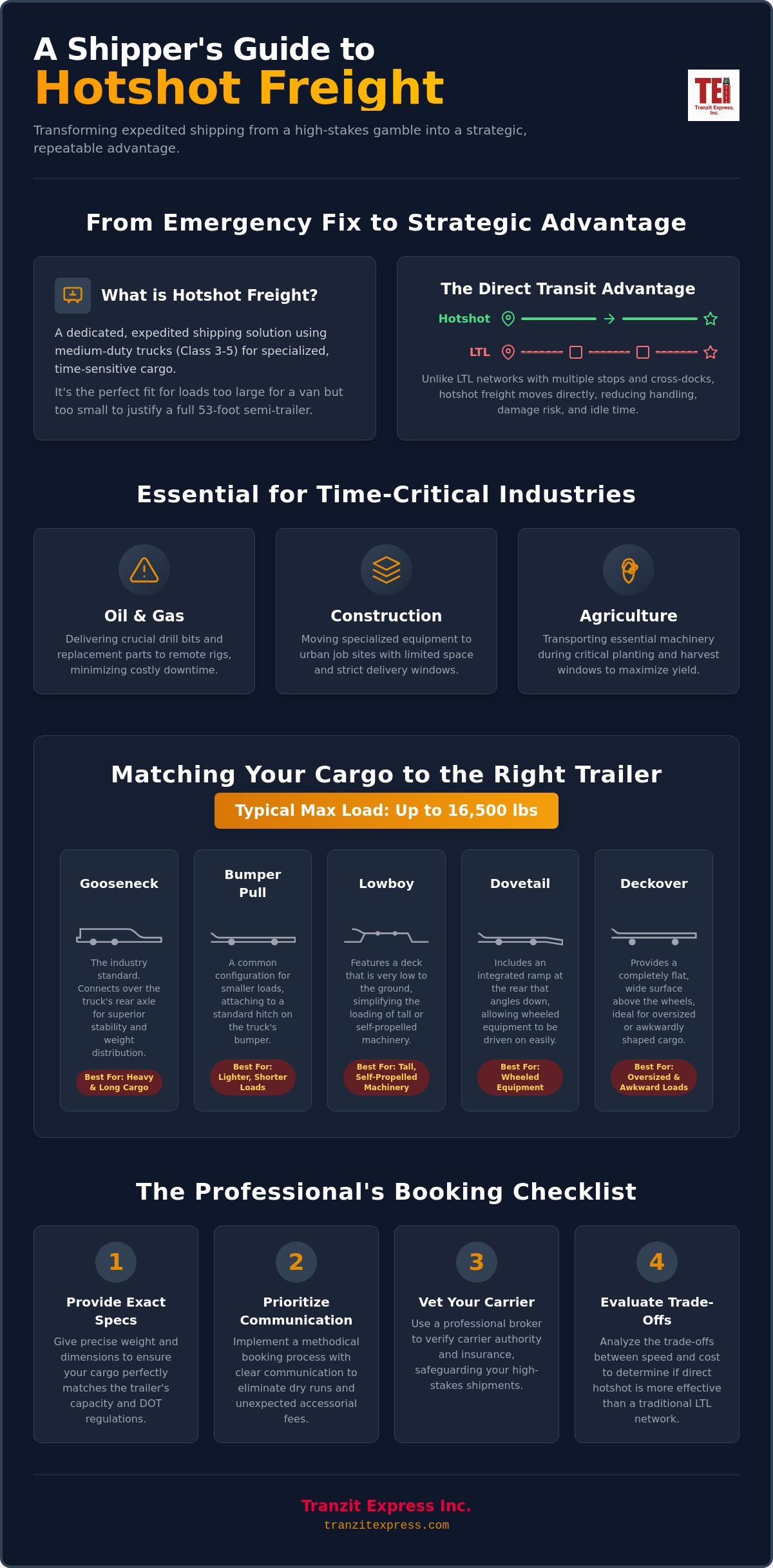
The primary advantage of this model is the direct, door-to-door transit. Unlike traditional freight methods that involve multiple touches and cross-docking at various hubs, hotshot freight moves straight from the pickup point to the destination. This reduces the risk of damage and eliminates the idle time often found in hub-and-spoke networks. Industries that prioritize precision often turn to these specialized loads, including:
- Oil and Gas: Delivering drill bits or replacement parts to remote rigs.
- Construction: Moving equipment to urban job sites with limited space.
- Agriculture: Transporting machinery during critical harvest windows.
Hotshot vs. Traditional Truckload
Many shippers face the dilemma of a load that is too large for a standard cargo van but doesn’t justify the expense of a 53-foot trailer. In these cases, paying for a dedicated medium-duty truck is significantly more cost-effective than paying for unused space on a heavy-duty rig. Beyond cost, these smaller configurations offer superior access. They can easily navigate tight construction zones or rural agricultural roads where a full-size semi-truck simply cannot maneuver safely. This flexibility allows for a more streamlined delivery process, especially when reaching job sites with limited infrastructure or strict delivery windows. Growing companies that need to maintain a lean operation will find that hot shot freight for small business offers the precision and flexibility required to handle specialized loads without paying for capacity they don’t need.
The 2026 Logistics Landscape
The continued rise of just-in-time manufacturing has placed a premium on freight solutions that can respond to tight production schedules without delay. Modern hotshot brokerage now integrates real-time tracking, allowing shippers to monitor their cargo’s progress through dedicated portals. This level of transparency is essential for maintaining order in a complex B2B environment. Hotshot freight is a dedicated, medium-duty solution for specialized cargo. By utilizing vetted carriers and sophisticated routing, businesses can ensure their most critical shipments arrive exactly when needed, maintaining the steady flow of their operations and honoring their promises to their own clients.
Evaluating Equipment: Matching Your Cargo to the Right Hotshot Trailer
Selecting the right equipment is the foundation of a successful logistics strategy. While hotshot freight typically utilizes medium-duty trucks, the diversity of trailer types available allows for a high degree of specialization. Most hotshot configurations are designed to handle loads up to 16,500 pounds. However, the weight is only one part of the equation. Shippers must also consider the physical footprint of their cargo. Providing precise dimensions ensures that the carrier can safely accommodate the load without exceeding the trailer’s structural limits or violating DOT regulations.
Versatility is the primary reason this shipping method is so effective. Whether you’re moving a single piece of industrial machinery or a palletized load of construction materials, there’s a specific trailer designed for the task. For those looking for a comprehensive guide to hotshot trucking equipment, understanding these nuances is essential for cost control and safety. Equipment choice isn’t just about what fits; it’s about what protects the integrity of the freight during transit. This level of detail is what separates a standard delivery from a professional logistics partnership.
Common Trailer Configurations
The choice between a bumper pull and a gooseneck trailer significantly impacts stability and weight distribution. Gooseneck trailers are the industry standard for heavier loads because they transfer weight to the truck’s rear axle, offering a smoother and safer ride. Lowboy and dovetail trailers are indispensable for hauling self-propelled machinery, as their lower deck height and integrated ramps simplify the loading process. When dealing with oversized or awkwardly shaped cargo, deckover trailers provide a flat surface above the wheels, maximizing the available width for the shipment. Each configuration serves a specific purpose in maintaining a steady and secure transport environment.
Specialized Load Requirements
Safety on the road begins with proper securement. It’s vital to ensure your broker requires carriers to use high-quality strapping and tarping to protect your cargo from the elements and road debris. Open-deck transport exposes freight to various risks, so meticulous attention to detail is mandatory. If your equipment is self-propelled, verify that the trailer is equipped with appropriate ramps and that the carrier has experience loading similar machinery. Additionally, some wider loads may require over-dimensional permits depending on the state regulations along the route. Managing these details can be complex, but working with an experienced partner makes the process seamless. If you’re unsure which trailer fits your next shipment, you can explore options through our shipper portal access to find the right match for your specific requirements.
The Shipper’s Decision Framework: Hotshot vs. LTL and Expedited Van
Choosing the right transportation mode requires a careful balance of urgency, cargo sensitivity, and budget. While Less-Than-Truckload (LTL) shipping is a common choice for smaller volumes, it carries inherent risks for specialized B2B freight. The hub-and-spoke model used by LTL carriers involves multiple touchpoints, increasing the likelihood of damage and transit delays. For high-value or time-critical shipments, hotshot freight provides a dedicated alternative that bypasses these traditional bottlenecks. This direct approach offers a level of security that consolidated networks simply cannot match.
Shippers must also distinguish between an expedited van and a hotshot setup. A Sprinter or cargo van is excellent for small, boxed items, but it lacks the weight capacity and open-deck flexibility of a hotshot trailer. If your load requires a flatbed footprint or weighs more than 4,000 pounds, moving to a hotshot configuration is usually the safer and more efficient choice. Selecting the wrong mode leads to hidden costs, such as secondary shipping fees or the catastrophic expense of a production line stoppage. These errors often stem from a lack of clear communication during the booking phase, emphasizing the need for a professional partner who understands equipment limitations.
Speed and Reliability Comparison
Reliability in 2026 is measured by the ability to meet strict delivery windows. Hotshot drivers operate on a direct route, meaning your cargo doesn’t sit in a warehouse waiting for a connecting trailer. This dedicated approach significantly lowers “missed window” rates compared to consolidated freight options. Consider a scenario where a construction site needs a replacement hydraulic component to resume work. Using a dedicated hotshot ensures the part arrives in hours, not days, preventing thousands of dollars in idle labor costs. This consistency provides a sense of order in an industry where delays are often treated as inevitable.
Cost-Benefit Analysis for 2026
Calculating the true return on investment for your logistics spend involves looking past the initial rate. While hotshot rates may be higher than LTL, the elimination of handling reduces the total cost of risk. You can use hot shot trucking quotes to benchmark your budget and see how dedicated service compares to the potential cost of downtime. When cargo is critical to your operation, the security of a steady, professional carrier outweighs the nominal savings of a slower, multi-stop service. This strategic approach allows you to maintain high standards for your clients while keeping operational risks to a minimum.
How to Book and Execute a Hotshot Load: A Step-by-Step Checklist
Executing a successful shipment requires a transition from strategic planning to precise operational detail. The efficiency of hotshot freight depends heavily on the accuracy of the information provided during the initial booking phase. When a shipper provides vague dimensions or approximate weights, it creates a ripple effect of delays and potential accessorial charges. A professional approach starts with a “steady hand” at the dispatch level, ensuring that every detail is captured before the wheels start turning. This methodical preparation eliminates the common “cowboy” culture of independent hauling and replaces it with a structured, dependable process.
Clear communication is the primary tool for preventing dry runs, which occur when a carrier arrives at a site only to find the cargo doesn’t match the trailer or the site is inaccessible. By utilizing modern technology, shippers can move away from fragmented email chains and toward a centralized system of record. This shift provides a sense of order and security, allowing you to focus on your core business while the logistics experts handle the movement of your critical assets.
The Booking Process
- Step 1: Define Load Specifications: Beyond just weight, confirm the exact length, width, and height of your cargo. Specify if the load requires specialized equipment like a gooseneck or lowboy trailer, as discussed in previous sections.
- Step 2: Broker Vetting: Your broker acts as the essential filter. They verify the carrier’s active USDOT authority, insurance coverage, and CDL requirements to ensure full compliance before dispatching the load.
- Step 3: Site Access Confirmation: Verify that both the pickup and delivery locations can accommodate a medium-duty truck and trailer. Confirm gate codes, loading dock availability, or the need for a forklift on-site.
Post-Load Management
Once the cargo is in transit, the focus shifts to visibility and documentation. Utilizing a dedicated shipper portal allows you to monitor progress in real-time, providing peace of mind for time-sensitive deliveries. Digital management of Bills of Lading (BOL) and Proof of Delivery (POD) documents speeds up the accounting cycle and reduces the administrative burden on your team. After the delivery is complete, take a moment to review the carrier’s performance with your broker. This feedback loop is vital for building a long-term partnership and ensuring that only the most reliable carriers remain in your vetted network. If you’re ready to experience a more organized approach to your logistics, you can begin by exploring our shipper portal access to manage your next urgent load.
Why a Seasoned Broker is Your Best Asset for Hotshot Logistics
Navigating the spot market for hotshot freight often feels like entering the “Wild West” of transportation. While independent operators provide necessary capacity, hiring them directly poses significant risks to B2B shippers who require consistency and accountability. Without a professional intermediary, you’re responsible for verifying every detail of a carrier’s operation, from their safety ratings to the validity of their insurance. It’s a heavy burden that can lead to costly liability if a single detail is overlooked. A professional broker acts as a steady hand at the wheel, providing the oversight needed to maintain order in a volatile market.
A high-level partnership shifts the focus from a simple transaction to a collaborative, long-term relationship. By serving as a dedicated compliance filter, a professional broker ensures that every truck dispatched meets the high standards your business demands. This proactive approach reduces the administrative stress on your internal team, allowing you to focus on your core operations while experts manage the complexities of the road. Tranzit Express Inc. brings 25 years of institutional knowledge to this process, acting as a reliable buffer that prioritizes your peace of mind.
Carrier Compliance and Risk Mitigation
Risk mitigation begins with a thorough vetting process that goes far beyond a simple check of USDOT authority. We verify that every carrier in our network maintains cargo insurance that exceeds basic federal requirements, providing an extra layer of security for your specialized shipments. Monitoring carrier safety ratings and performance history is a continuous task, not a one-time event. This disciplined vetting process protects your cargo from the “cowboy” culture and ensures that only vetted, professional drivers handle your freight. You can learn more about choosing a hot shot freight broker to see how these standards protect your bottom line.
Beyond insurance, we ensure that every driver understands the specific CDL requirements and weight limits associated with their equipment. This attention to detail prevents roadside delays and legal complications that often plague unvetted shipments. It’s about creating a sense of security through proven results and meticulous documentation.
The Tranzit Express Advantage
The Tranzit Express advantage is built on a 25-year legacy of stability and trust. We don’t position ourselves as a flashy disruptor; instead, we offer the quiet confidence of a seasoned industry veteran. Our commitment to reliable communication and on-time delivery is the cornerstone of every partnership we form. With access to a nationwide network of vetted carriers, we provide the scale you need without sacrificing the personal touch of a dedicated logistics guide. For companies still building their logistics infrastructure, leveraging hot shot freight for small business through a seasoned broker ensures that even the most time-sensitive payloads arrive exactly when promised without the overhead of managing carrier relationships independently.
Our approach treats your urgent hotshot freight as our top priority. We utilize dedicated shipper portals to provide transparent tracking, ensuring you’re never left wondering about the status of a critical load. This methodical and logical rhythm of communication mirrors a streamlined logistical process, moving your cargo from point A to point B with professional precision. When you choose to partner with us, you’re choosing a steady, dependable path forward in a complex industry.
Building a More Resilient Supply Chain for 2026
Success in specialized logistics depends on moving beyond reactive shipping habits toward a structured, professional process. By matching your cargo to the precise trailer type and prioritizing rigorous carrier vetting, you can transform urgent transport from a source of stress into a repeatable business advantage. A professional broker serves as the vital link in this process, providing the oversight necessary to ensure that safety and reliability remain constant even when timelines are tight.
Tranzit Express Inc. offers over 25 years of dependable logistics experience to help you manage these complexities with confidence. Our national network of vetted carriers and streamlined shipper portal provide the real-time transparency required to monitor your hotshot freight from pickup to delivery. This methodical approach brings a sense of order to your operations and honors the promises you make to your own clients.
When you’re ready to secure your cargo with a steady hand at the wheel, our team is prepared to assist. Request a Reliable Hotshot Freight Quote from Tranzit Express today. We look forward to helping you build a more predictable and professional logistics future.
Frequently Asked Questions
What is the maximum weight for a hotshot freight load?
The maximum cargo weight for most hotshot configurations is approximately 16,500 pounds. This limit ensures the vehicle remains within safe operating parameters while providing enough capacity for significant industrial components or machinery. Providing precise weight measurements during the booking process is essential to ensure the carrier utilizes a trailer with the appropriate axle ratings for your specific load.
Do hotshot drivers need a CDL to haul my cargo?
A CDL is only required if the combined Gross Vehicle Weight Rating (GVWR) of the truck and trailer is 26,001 pounds or more. Many operators stay below this threshold to simplify regulatory requirements, but heavier specialized loads will always require a CDL-certified driver. A professional broker verifies these credentials during the vetting process to ensure your shipment remains in full legal compliance throughout its journey.
How does hotshot trucking differ from expedited shipping?
Hotshot freight utilizes medium-duty trucks with open-deck trailers, while expedited shipping typically refers to urgent van or box truck deliveries for palletized goods. Hotshot is specifically designed for cargo that requires flatbed loading or has an awkward physical footprint. It offers the same speed as traditional expedited services but with the added capability of hauling heavy machinery and industrial equipment.
What industries benefit most from hotshot freight services?
The oil and gas, construction, and agricultural sectors benefit most from these specialized services. These industries often need to move critical equipment to remote job sites with limited access where a standard 53-foot semi-truck would struggle to navigate. The smaller footprint of a medium-duty truck allows for direct delivery to the exact point of need, reducing secondary handling and site delays.
How quickly can a hotshot load be dispatched?
Loads can often be dispatched within a few hours of the initial booking request. The speed of dispatch depends on having accurate dimensions and weight ready, which allows a broker to quickly match the load with a vetted carrier in the immediate area. This rapid response is a hallmark of the industry, providing a reliable way to handle time-sensitive B2B logistics without the wait times of traditional networks.
Is hotshot freight more expensive than standard flatbed shipping?
While rates vary based on urgency, hotshot freight is often more economical than paying for a full 53-foot flatbed when your cargo only occupies a fraction of the deck. You gain the benefit of a dedicated vehicle and direct transit without paying for unused trailer space. This makes it a cost-effective choice for medium-sized loads that require the speed and security of a dedicated carrier.
What kind of trailers are used for hotshot hauling?
Drivers typically use gooseneck, deckover, lowboy, or dovetail trailers depending on the cargo’s requirements. For example, a dovetail trailer is essential for loading self-propelled machinery, while a gooseneck offers superior stability for heavier B2B freight. Matching the trailer type to the cargo’s footprint is a critical step in ensuring the safety and integrity of the shipment during transit.
How can I track my hotshot shipment in real-time?
You can track your shipment through a dedicated shipper portal that provides real-time GPS updates and transparent status reports. This system offers a clear view of the transit process, ensuring you stay informed without the need for constant manual check-calls. Having access to digital documentation and real-time location data provides the sense of order and security necessary for managing high-stakes logistics.