
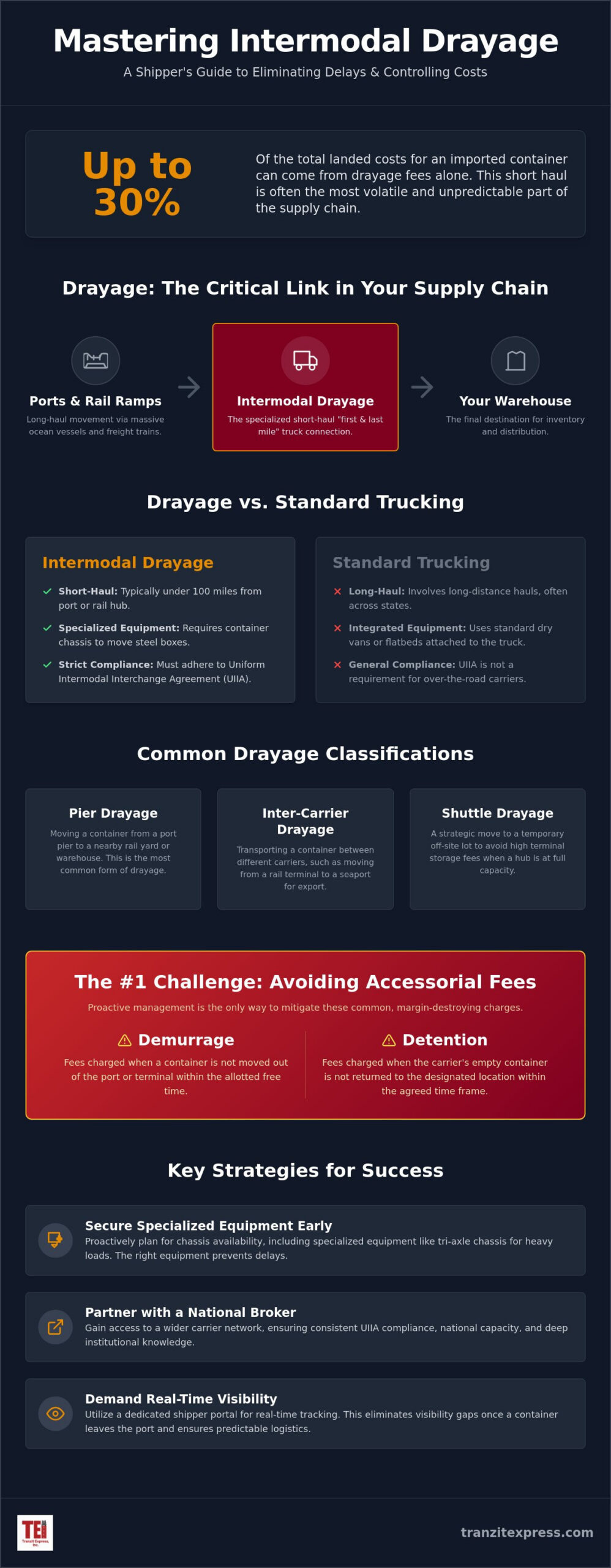
Did you know that drayage fees often account for as much as 30 percent of the total landed costs for an imported container? For many shippers, this short haul between the port and the warehouse is the most volatile and unpredictable segment of the entire supply chain. You’ve likely experienced the frustration of watching margins disappear into a stack of unexpected demurrage and detention charges while your cargo sits idle. Successfully managing intermodal drayage services requires more than just a truck; it requires a steady hand and deep institutional knowledge to navigate shifting terminal requirements.
We agree that the current landscape of port congestion and equipment shortages can make container movement feel like a constant hurdle. This guide is designed to help you master these complexities so you can eliminate delays and secure dependable national capacity. We’ll explore how to avoid common accessorial fees, the necessity of specialized equipment like tri-axle chassis, and how real-time visibility through a dedicated shipper portal provides the predictable logistics costs and professional communication your business deserves.
Key Takeaways
- Understand how intermodal drayage services act as the critical link in global trade by connecting ports and rail ramps to your warehouse.
- Learn why chassis availability and specialized equipment are the primary drivers of drayage lead times and how to plan for these constraints.
- Identify the most common accessorial fees, including demurrage and detention, and discover proactive strategies to mitigate their financial impact.
- Evaluate the benefits of partnering with a national broker to gain access to a wider carrier network and ensure consistent UIIA compliance.
- Discover how real-time tracking and dedicated shipper portals can eliminate visibility gaps once a container leaves the port environment.
What are Intermodal Drayage Services and Why Are They Critical?
Intermodal drayage services represent the essential connective tissue of the global supply chain. While massive ocean vessels and freight trains handle the long-haul movement of goods across continents, drayage provides the specialized trucking necessary to bridge the final gap between these hubs and your warehouse. To understand what is drayage in a modern context, it’s best to view it as the high-stakes “first and last mile” that determines the success of your entire delivery schedule. Without efficient drayage, even the most sophisticated intermodal transportation solutions can falter, leading to costly bottlenecks and missed deadlines at the local level.
Operating within this niche requires a distinct set of credentials and insurance coverages that standard over-the-road carriers often lack. Drayage drivers must navigate complex terminal environments, manage specialized equipment, and maintain strict compliance with port authorities. This isn’t a job for a generalist. It’s a specialized field where precision and reliability are the only metrics that matter for a professional shipper. When drayage is handled correctly, it creates a seamless transition that keeps your inventory moving and your costs predictable.
The Distinction Between Drayage and Standard Trucking
Standard trucking often involves long-distance hauls where integrated trailers stay with the driver for several days. In contrast, intermodal drayage services are primarily short-haul operations, typically occurring within a 100-mile radius of a port or rail hub. The equipment is also different. Instead of pulling a standard dry van, drayage drivers use container chassis to transport the steel boxes coming off ships or trains. Perhaps most importantly, drayage carriers must be compliant with the Uniform Intermodal Interchange Agreement (UIIA). This agreement creates a standard framework for the interchange of equipment between different modes of transport, ensuring that insurance and liability are clearly defined for every party involved in the move.
Common Drayage Classifications
Understanding the specific types of drayage helps shippers plan for their unique logistical needs. We categorize these moves based on their purpose within the terminal environment:
- Pier drayage: This involves moving a container from a port’s pier to a nearby rail yard or warehouse facility. It’s the most common form of the service.
- Inter-carrier drayage: This occurs when goods move between different carriers, such as transporting a container from a rail terminal to a sea port.
- Shuttle drayage: This is a strategic move used when a hub is at full capacity. The container is moved to a temporary off-site lot to prevent congestion and avoid high terminal storage fees.
Each classification requires the steady hand of an experienced broker who understands the local landscape and can manage timing with absolute certainty.
What Specialized Equipment is Required for Intermodal Drayage?
The success of any container movement rests entirely on the equipment that carries it. While the shipping container itself is a standard steel box, it cannot move across the road without a chassis. This specialized steel frame is the foundation of intermodal drayage services. It acts as the bridge between the ocean vessel or rail car and the truck’s fifth wheel. For shippers, the availability of this equipment often dictates lead times. If a carrier doesn’t have the correct chassis ready when your container is discharged, your cargo remains grounded, and port storage fees begin to accumulate immediately.
Properly matching equipment to your cargo is a technical requirement that prevents significant legal and financial risks. This is especially true when integrating drayage with rail logistics, where weight limits are strictly enforced. According to the Intermodal Association of North America, the efficiency of the entire network depends on the fluid movement of these assets. When you partner with a broker who maintains a “steady hand at the wheel,” you gain the assurance that the right equipment is secured before your container even hits the ground.
Standard vs. Specialized Chassis
Most shipments utilize standard 20-foot, 40-foot, or 45-foot chassis designed for typical ocean containers. However, heavy-duty cargo requires more than a standard frame. If your container exceeds 45,000 lbs, a tri-axle chassis becomes necessary to distribute the weight legally across the road. Without this specialized equipment, you risk overweight container fees that research shows can range from $100 to $300 per occurrence. Additionally, slider chassis allow drivers to adjust the axle position, ensuring compliance with various state bridge laws and weight distribution regulations during the haul.
Managing Chassis Pools and Ownership
The landscape of equipment ownership is complex and often leads to the dreaded “chassis split.” This occurs when a driver must pick up a chassis from one location and then travel to a separate terminal to retrieve the container. These extra steps add time and cost to the move. Shippers must navigate a mix of steamship line-owned chassis and private pools, each with different daily rental rates, which typically range between $20 and $40. We take the stress out of this process by coordinating these details in advance, ensuring that equipment is ready and waiting. If you’re looking for a more predictable way to manage your container moves, you can explore our intermodal solutions to see how we streamline these transitions.
How Can Shippers Avoid Costly Drayage Fees and Port Congestion?
Managing intermodal drayage services effectively requires a proactive approach to the “fee stack” that often accompanies container movement. Port congestion isn’t just a logistical delay; it’s a direct financial liability. Industry data indicates that drayage fees can account for 15 to 30 percent of total landed costs for an imported container. When cargo sits idle, these costs escalate rapidly. Shippers operating through major hubs like Los Angeles or Long Beach must also account for mandatory charges such as the Clean Truck Fund Rate, which is $10 per TEU as of July 2026, and the Traffic Mitigation Fee of $38.78 per TEU. These fixed costs make it even more vital to eliminate avoidable accessorial charges through meticulous planning.
The most effective way to maintain predictable logistics costs is through professional communication and the monitoring of “Last Free Days.” A steady hand at the wheel means anticipating terminal bottlenecks before they result in an invoice. We prioritize clear, consistent updates so you’re never surprised by a container’s status. By maintaining a disciplined schedule, shippers can ensure that equipment and drivers are aligned with terminal appointments, effectively neutralizing the risk of port storage charges.
Demurrage vs. Detention: Understanding the Clock
The distinction between demurrage and detention is critical for cost control. Demurrage refers to fees charged for containers that stay inside the terminal beyond the allotted free time. These rates are often tiered, with daily charges potentially rising from $150 to $500 as the delay persists. Detention, or per diem, applies when you keep the container and chassis outside the port for too long. To mitigate these risks, we often employ “pre-pull” strategies. This involves moving the container to a secure off-site yard before the last free day, effectively stopping the demurrage clock and allowing for a more flexible delivery window to your facility.
Technology as a Cost-Saving Tool
Visibility is your best defense against the unpredictability of the port environment. Utilizing shipper portal logistics provides real-time tracking that eliminates the guesswork from your supply chain. Our portal offers automated alerts for container discharge and gate-out events, giving you the data needed to make informed decisions. This digital trail is also essential for resolving fee disputes with terminals or steamship lines. When every document is organized and every milestone is timestamped, you gain a level of control that manual spreadsheets simply can’t provide. It’s about creating order in a complex industry through reliable, transparent data.
How Do You Evaluate National Intermodal Drayage Brokers?
Selecting the right partner for your intermodal drayage services is a decision that directly impacts your supply chain’s resilience. While many shippers are tempted to work exclusively with asset-only carriers, these companies are often limited by their own fleet capacity. If their trucks are fully committed during a peak season surge, they lack the flexibility to pivot. A specialized broker, however, functions as a high-level partner with access to a vast, vetted network. This model ensures that your cargo keeps moving even when local equipment shortages or port disruptions occur. It’s about having a steady hand at the wheel that can source capacity across multiple regions simultaneously.
Vetting a broker requires looking beyond their rate sheet. You need to ensure they maintain strict compliance with the Uniform Intermodal Interchange Agreement (UIIA) and carry insurance standards that protect your high-value cargo. At Tranzit Express, we bring 25 years of institutional knowledge to every move, providing the quiet confidence that comes from having navigated every major industry shift since 1999. When you compare different intermodal trucking companies, focus on those who prioritize long-term partnership over simple transactions.
Key Performance Indicators (KPIs) for Drayage Partners
A dependable drayage partner should be measured by concrete data that reflects their operational excellence. We recommend evaluating potential partners based on these specific metrics:
- Terminal Gate Efficiency: Look for high percentages in on-time pickup and delivery, which indicates a deep understanding of terminal appointment systems.
- Communication Speed: In the high-stakes world of intermodal drayage services, a delay in information is as costly as a delay in freight. Your broker should provide updates before you have to ask for them.
- Sourcing Agility: The ability to secure specialized equipment, such as tri-axle chassis for overweight loads, on short notice is a hallmark of a premier broker.
The Importance of a National Network
A national network offers a level of risk mitigation that single-port operations simply cannot match. If a specific rail ramp or port becomes bottlenecked, a national broker can often suggest alternative routing to keep your goods flowing. This scalability is essential whether you are moving 5 containers a month or 500. It allows your business to grow without outstripping your logistics provider’s capabilities. Because we maintain relationships with carriers across the country, we can provide a seamless experience from the West Coast ports to the inland rail hubs of the Midwest. If you are looking for a reliable partner to manage your container volume, you can contact our team to discuss your drayage needs.
Why Choose Tranzit Express for Your Intermodal Drayage Logistics?
Since 1999, Tranzit Express has provided a steady hand at the wheel for shippers navigating the complexities of the North American supply chain. We understand that intermodal drayage services are often the most stressful link in your logistics chain. Our approach is rooted in the belief that reliability is the only true measure of success. By leveraging over 25 years of institutional knowledge, we offer a sense of order and security that newer, high-energy startups simply can’t match. We don’t just move containers; we build high-level B2B partnerships designed to reduce your administrative burden and protect your bottom line.
Our service goes beyond the port gate. We provide a unified experience by seamlessly integrating container movements with our van freight services for your domestic needs. This holistic view of your freight allows us to act as a comprehensive resource for logistics management for shippers. To ensure you remain in control, our secure shipper portal offers 24/7 access to real-time tracking, documentation, and reporting. This level of transparency ensures that you always have the data needed to make informed decisions about your inventory and lead times.
A Partnership Built on Reliability
Working with Tranzit Express means you have direct access to experienced brokers who understand the specific nuances of every major US port and rail ramp. We prioritize clear, declarative communication. You won’t find vague updates or marketing hype here; instead, you’ll receive factual, timely information that helps you manage your operations with confidence. Our commitment to on-time delivery and meticulous coordination helps you avoid the tiered demurrage fees and detention charges discussed earlier in this guide. We take on the heavy lifting of carrier vetting and equipment sourcing so your team can focus on its core business.
Get a Competitive Intermodal Quote Today
Securing a dependable drayage solution shouldn’t be a complicated process. When you’re ready to move forward, our onboarding process is designed to be efficient and purposeful. To provide an accurate and competitive quote, we’ll need basic details including the container size, estimated weight, port of entry, and final destination. Our team will then analyze the current terminal conditions and equipment availability to provide a transparent rate that accounts for the “fee stack” common in today’s market. We invite you to Request an Intermodal Drayage Quote today and experience the peace of mind that comes from a professional, long-term logistics partnership.
Secure Your Supply Chain for the Long Term
Navigating the complexities of the port environment doesn’t have to be a source of constant stress for your team. By focusing on equipment availability and proactive communication, you can effectively neutralize the risk of terminal delays. Mastering intermodal drayage services is ultimately about transforming a volatile link in your supply chain into a predictable, streamlined process. When you understand the nuances of the fee stack and prioritize real-time visibility, you gain a significant competitive advantage in today’s market. Shippers who are also evaluating their broader freight strategy will find value in understanding the intermodal vs truckload shipping decision, which provides a clear ROI framework for determining when modal conversion makes the most financial sense.
Tranzit Express provides the stability you need to grow with confidence. With 25+ years of logistics excellence and a robust national carrier network, we offer the steady hand required for high-stakes container movement. Our advanced shipper portal visibility ensures you remain informed at every milestone, from the terminal gate to your warehouse dock. This commitment to transparency and reliability is why shippers across the country trust us to manage their most complex moves. We invite you to partner with an experienced hand for your intermodal drayage—get a quote today. We look forward to providing the professional support your business deserves.
Frequently Asked Questions
What is the average radius for an intermodal drayage service?
The average radius for intermodal drayage services is typically within 100 miles of a port or rail terminal. While most moves are local, some regional hauls can extend up to 250 miles depending on the location of the warehouse hub. These short distances allow drivers to complete multiple turns in a single day. This localized focus is what distinguishes drayage from standard long-haul trucking operations that span multiple states.
How much time do I have before demurrage fees start at the port?
Shippers generally have between four and seven days of “free time” before demurrage fees begin to accumulate at the port. This window starts the moment your container is discharged from the vessel and placed on the terminal floor. Because these timelines are strict, it’s essential to have your drayage provider scheduled well in advance. Once the free time expires, daily storage charges can escalate quickly, often reaching hundreds of dollars per day.
Can intermodal brokers handle overweight or hazardous materials?
Experienced intermodal brokers can handle overweight or hazardous materials by sourcing carriers with specialized permits and equipment. Moving overweight containers requires a tri-axle chassis to ensure the load is legally distributed across the road. For hazardous materials, the carrier must have the proper hazmat endorsements and insurance. We ensure that every driver in our network meets these specific regulatory requirements before your cargo is assigned to a truck.
What is a “chassis split” and how does it affect my shipping costs?
A chassis split occurs when a driver must retrieve a chassis from one location before traveling to a separate terminal to pick up your container. This situation often arises when the terminal is out of equipment or when specific steamship lines require certain chassis pools. Because this adds extra travel time and fuel consumption, it typically results in an additional accessorial fee. Proper planning can sometimes minimize these occurrences by utilizing private chassis pools.
Do I need a different broker for rail drayage versus ocean drayage?
You don’t need separate brokers for rail and ocean drayage if you partner with a provider that has a national network. While the terminal procedures differ between a seaport and a rail ramp, the fundamental logistics of container movement remain similar. A versatile partner can manage both modes, providing a single point of contact for your entire supply chain. This consolidation simplifies your billing and reporting processes while ensuring consistent service standards across the country.
How does the UIIA affect which carriers can handle my drayage?
The Uniform Intermodal Interchange Agreement (UIIA) is a mandatory contract that allows carriers to use equipment owned by steamship lines and railroads. If a carrier isn’t UIIA compliant, they cannot enter the terminal or interchange equipment, effectively barring them from performing intermodal drayage services. We verify the UIIA status of every carrier in our network to ensure they meet the necessary insurance and safety standards required for legal port access.
What information is required to get an accurate drayage quote?
To receive an accurate drayage quote, you must provide the container size, estimated cargo weight, the specific terminal of origin, and the final delivery address. It’s also helpful to include the “Last Free Day” to help the broker prioritize your move. Providing precise weight data is especially critical. It determines whether you’ll need specialized equipment like a tri-axle chassis to avoid overweight fines or safety violations during the haul.
How can I track my container once it leaves the rail ramp or port?
You can track your container in real time by utilizing our dedicated shipper portal. Once the container leaves the rail ramp or port gate, the system provides automated updates on its location and estimated time of arrival. This visibility eliminates the need for manual check calls and provides your warehouse team with the data they need to prepare for unloading. Access to this information 24/7 ensures you always have a clear view of your inventory.