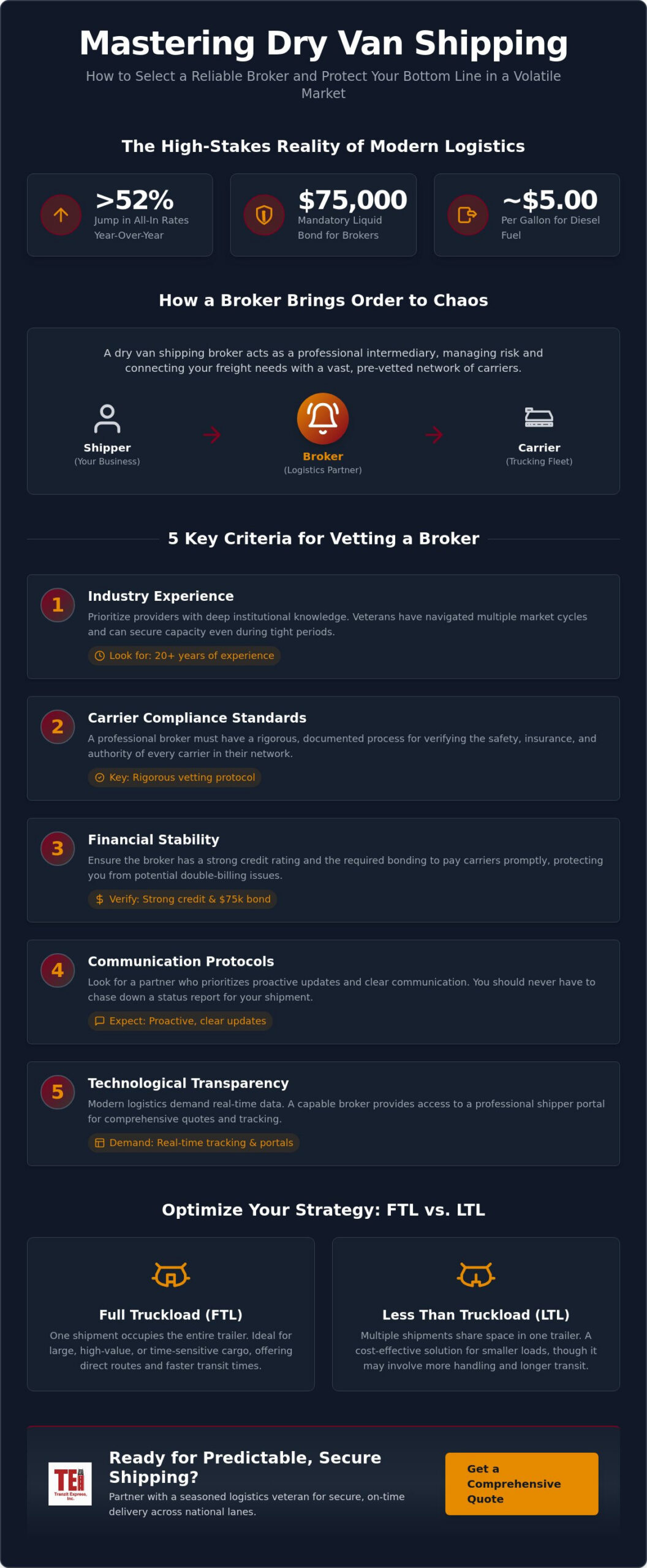
With the FMCSA now enforcing a $75,000 liquid bond requirement and recent court rulings increasing broker liability, the era of simply hoping for the best with your freight is over. For many shippers, the search for a reliable dry van shipping broker has become a high-stakes mission to protect the bottom line. It’s difficult to maintain composure when you’re facing diesel prices near $5.00 a gallon and a market where all-in rates have jumped more than 52% year-over-year.
You likely feel the weight of these rising costs and the constant anxiety of whether your cargo will actually arrive on time. We understand that hidden fees and radio silence during transit aren’t just inconveniences; they’re direct threats to your operational stability. This guide will help you master the process of selecting and vetting a partner who prioritizes order over chaos. You’ll learn how to secure predictable transit times and leverage a pre-vetted carrier network to ensure every shipment is handled with the professional precision your business deserves.
Key Takeaways
- Learn how a professional intermediary bridges the gap between your shipping needs and carrier capacity to provide a sense of order in a complex market.
- Discover the five critical vetting criteria for choosing a dry van shipping broker, focusing on institutional knowledge and rigorous safety compliance.
- Master a streamlined process for defining load requirements and requesting comprehensive quotes through professional shipper portals.
- Evaluate the strategic differences between Full Truckload and Less Than Truckload to optimize your transit times and shipping budget.
- Understand the long-term benefits of a B2B partnership with a seasoned logistics veteran to ensure secure, on-time delivery across national lanes.
What is a Dry Van Shipping Broker and How Do They Add Value?
In the logistics industry, a dry van shipping broker serves as a dedicated intermediary, connecting businesses that have freight to move with the motor carriers capable of hauling it. While the definition might seem simple, the role is complex. A broker manages the “spread” between a shipper’s logistical requirements and the fluctuating capacity of the carrier market. This involves more than just finding a truck; it’s about risk management and ensuring that every load is handled by a carrier that meets high safety and insurance standards. In a market where all-in broker-posted rates have increased by more than 52 percent over the last year, having a partner who understands these shifts is essential for maintaining your margins.
To better understand the broader industry context, it helps to look at What is a Freight Broker and how they function as the glue within the supply chain. For shippers, the primary value lies in the removal of administrative burdens. A professional broker oversees the entire lifecycle of a shipment, from initial carrier vetting and insurance verification to real-time tracking and final documentation. This oversight provides a level of security that’s difficult to achieve when managing individual carriers directly. It turns a chaotic series of phone calls into a streamlined, professional process.
The Difference Between a Broker and a Carrier
It’s vital to distinguish between these two entities to make informed shipping decisions. Carriers are the asset owners who physically operate the trucks and trailers. In contrast, brokers provide the logistical infrastructure and an expansive network of pre-vetted partners. Relying on a single carrier’s fleet can be risky. If their equipment fails or their drivers are overbooked, your freight stays on the dock. A dry van shipping broker offers a safety net. If one carrier becomes unavailable, the broker can immediately tap into their broader network to find a reliable alternative, ensuring your schedule remains intact despite market volatility.
Why Shippers Choose Dry Van Logistics
- Versatility: They can haul almost any non-perishable product, making them suitable for diverse cargo types.
- Cost-Effectiveness: Because dry van equipment is so common, it’s generally more affordable than specialized options like refrigerated units or flatbeds.
- High Availability: With a massive pool of dry van trailers across the United States, finding consistent routing is much easier than with niche equipment.
By partnering with an experienced broker, you gain access to this vast capacity without the stress of managing the fine details yourself. It’s a strategic way to bring order to your shipping process while ensuring your goods are protected from start to finish.
How to Vet a Broker: 5 Key Criteria for Reliable Partnerships
Selecting the right dry van shipping broker is a decision that impacts your entire supply chain’s stability. In a market where regulatory requirements are tightening, such as the 2026 FMCSA mandate requiring brokers to maintain a $75,000 bond in liquid assets, you can’t afford to partner with an unverified entity. A truly dependable broker acts as a risk-management partner rather than a simple middleman. To ensure you’re protected, focus on these five essential vetting criteria:
- Industry Experience: Prioritize providers with 20 or more years of institutional knowledge. Veterans of the industry have managed freight through every market cycle and understand how to maintain capacity during tight periods.
- Carrier Compliance Standards: A professional broker must have a rigorous, documented process for verifying the safety and authority of every carrier they hire.
- Financial Stability: Ensure the broker has a strong credit rating and the necessary bonding to pay carriers promptly. This protects you from potential double-billing issues.
- Communication Protocols: Look for a partner who prioritizes proactive updates. You shouldn’t have to chase down a status report when your cargo is in transit.
- Technological Transparency: Modern logistics requires real-time data. A reliable broker provides access to a dedicated shipper portal where you can track loads and manage documentation seamlessly.
Understanding the technical nuances of the industry, such as the operational differences in FTL vs. LTL shipping, is only half the battle. The other half is ensuring your partner has the administrative discipline to execute those shipments safely.
Verifying Carrier Compliance and Safety
Cargo safety begins with deep data analysis. High-level brokers monitor Safety Management System (SMS) scores to identify carriers with histories of unsafe driving or poor maintenance. Carrier compliance is the process of continuous monitoring of motor carrier safety data. A dry van shipping broker should verify active operating authority and ensure that insurance limits meet your specific cargo requirements before a single pallet is loaded. If you’re looking for a partner who handles these details with precision, exploring a professional Shipper Portal Access can provide the transparency you need.
The Role of Professional Communication
A “steady hand at the wheel” approach is what separates a high-level B2B partnership from a standard transaction. Professional communication should feel calm and methodical, even when logistical challenges arise. Red flags in early interactions often include slow quote turnarounds or vague answers regarding carrier vetting. A dependable partner provides clear, declarative information that links their capabilities directly to your business benefits, ensuring a sense of order in a complex industry.
The Step-by-Step Process: How to Book Your First Dry Van Load
Moving your first load doesn’t have to be a source of stress. When you partner with a seasoned dry van shipping broker, the process follows a logical path designed to reduce errors and ensure cargo safety. It starts with a comprehensive understanding of your cargo and ends with a secure delivery receipt. This methodical approach ensures that every detail, from insurance to transit windows, is accounted for before the truck even arrives at your dock. By following a structured workflow, you can move away from the unpredictability of the spot market and toward a more stable, professional shipping experience.
The booking process typically involves five clear stages:
- Define Requirements: Provide exact dimensions, total weight, and specific pick-up and drop-off windows.
- Request a Quote: Use a professional portal or phone consultation to receive a comprehensive rate based on current market conditions.
- Review Options: Your broker will present carrier options and estimated transit times that align with your schedule.
- Confirm and Document: Once you approve the carrier, you’ll receive your Bill of Lading (BOL), which serves as the official contract of carriage.
- Monitor Progress: Track the shipment in real-time through a centralized system until the final delivery is confirmed.
Adhering to these steps helps maintain compliance with complex freight broker regulations that govern how shipments must be documented and managed. This level of diligence protects your business from the liability risks discussed in previous sections.
Defining Your Freight Requirements
Accuracy is the foundation of a successful shipment. A single miscalculation in pallet count or weight can disrupt a carrier’s capacity plan and lead to unexpected fees. It’s also vital to identify if your load requires specialized services like liftgates or driver-assist for unloading. If you’re moving high-value cargo, your dry van shipping broker needs this information upfront to ensure the carrier’s insurance limits are sufficient. Preparing your documentation early prevents common delays at the loading dock, keeping your supply chain moving without friction.
Navigating the Shipper Portal
Modern logistics relies on technology to maintain order and transparency. A dedicated Shipper Portal Access allows you to submit requests for quotes (RFQs) instantly, removing the need for repetitive emails. These portals do more than just book loads; they act as a historical archive for your shipping data. Accessing this information helps you identify seasonal trends and plan your budget with greater precision. Centralizing your BOLs, invoices, and tracking data in one professional hub simplifies the audit process and ensures that payment cycles remain predictable for all parties involved.
Optimizing Your Strategy: FTL vs. LTL and Cost Management
Achieving a streamlined shipping process requires a strategic approach to equipment utilization. A seasoned dry van shipping broker helps you navigate the technical trade-offs between speed, security, and cost. While Full Truckload (FTL) offers the most direct route for large shipments, Less Than Truckload (LTL) provides a budget-friendly alternative for smaller loads. Understanding these nuances allows you to maintain order in your supply chain without overextending your financial resources. It’s about finding the right tool for the specific task at hand, ensuring every pallet moves with purpose.
Several variables influence the final rate on your Bill of Lading. Lane density, seasonality, and fuel surcharges play significant roles in pricing. For instance, as of June 22, 2026, diesel fuel prices reached $4.832 per gallon, which is over a dollar higher than the same period in the previous year. These fluctuations require a steady hand to manage, ensuring that your transit costs remain as predictable as possible even when the market is volatile. By analyzing these factors, a broker can help you identify the most efficient routing for your specific lanes.
Choosing Between FTL and LTL
The decision to use FTL or LTL depends on your specific cargo needs and delivery deadlines. LTL involves “cross-docking,” where freight is moved between trailers at various regional hubs. This process is highly cost-effective for smaller shipments, but it naturally increases the risk of handling damage and extends transit times. FTL is typically preferred for time-sensitive or high-value dry van cargo to minimize handling risks. If your shipment is too large for standard LTL but doesn’t fill a 53-foot trailer, Volume LTL provides a middle-ground solution that balances cost and efficiency without the traditional LTL stops. For a deeper look at how dedicated FTL services can stabilize your supply chain in today’s volatile market, our full truckload shipping broker strategic guide covers the critical decisions shippers face when carrier rejection rates are high.
Strategies to Reduce Shipping Costs
Efficiency is often the result of proactive planning and disciplined execution. Increasing your lead time allows your broker to secure better carrier rates before capacity tightens during peak windows, such as the end-of-quarter pressures often seen in late June. Consolidation is another powerful tool; by grouping smaller loads into a single shipment, you maximize trailer space and significantly reduce the cost per unit. This methodical approach to consolidation turns fragmented logistics into a cohesive, cost-saving strategy. If your freight mix includes open-deck equipment alongside enclosed trailers, applying proven flatbed shipping cost saving tips can further stabilize your overall transportation budget across multiple equipment types.
For shipments that aren’t strictly time-critical, exploring Intermodal Transportation can offer significant rail-based savings. This multimodal approach provides a dependable alternative to traditional over-the-road transit, further stabilizing your logistical budget and providing long-term consistency for your most frequent shipping lanes.
Why Experience Matters: The Tranzit Express Inc. Standard of Excellence
Logistics is an industry where years of service translate directly into reliability. With 25 years of experience as a dependable dry van shipping broker, Tranzit Express Inc. has built its reputation on being a steady hand at the wheel. We’ve navigated decades of market fluctuations, regulatory shifts, and technological evolutions, providing our partners with a sense of security that only comes from deep institutional knowledge. This longevity means we don’t just
Securing Long-Term Stability in Your Logistics Chain
Mastering your freight strategy requires more than just finding an available truck; it demands a professional partnership built on transparency and proven results. By establishing rigorous vetting criteria and selecting the most efficient equipment for every load, you shift your focus from reactive problem-solving to proactive supply chain management. A dedicated dry van shipping broker serves as your primary advocate, ensuring that every shipment is backed by a pre-vetted carrier network and real-time administrative oversight. This disciplined approach eliminates the anxiety of hidden fees and unpredictable transit times.
At Tranzit Express, we’ve spent over 25 years refining our process to offer national coverage and dependable service across the United States. Our dedicated Shipper and Carrier Portals provide the visibility you need to maintain order in a complex industry. We invite you to Request a Reliable Van Freight Quote from Tranzit Express and experience the peace of mind that comes with a seasoned professional at the wheel. We look forward to helping you streamline your operations and achieve the consistent results your business deserves.
Frequently Asked Questions
What is the difference between a freight broker and a freight forwarder?
A freight broker is a professional intermediary that connects shippers with motor carriers without taking physical possession of the cargo. A freight forwarder differs because they often store, consolidate, and physically handle the goods in their own facilities. While both manage logistics, a broker focuses on leveraging a vast carrier network to find the most efficient and cost-effective routing for your specific dry van needs.
How do dry van brokers calculate their shipping rates?
Shipping rates are calculated based on current market capacity, lane density, and operational expenses such as diesel fuel prices. A dry van shipping broker also considers the weight of the load and the required transit time to provide an accurate quote. Because market conditions fluctuate, brokers use real-time data to ensure pricing remains fair while providing the stability and predictability that high-level B2B partnerships require.
Can a dry van broker help with expedited or hot-shot loads?
Yes, brokers can arrange expedited or hot-shot services by utilizing team drivers or carriers with specialized equipment for urgent freight. These solutions are designed for time-sensitive cargo that cannot wait for standard transit schedules. By tapping into a pre-vetted network of reliable professionals, a broker ensures that even the most urgent shipments move with a sense of order and arrive at their destination without unnecessary delays.
How do I know if my cargo is too heavy for a standard dry van?
You can determine if cargo is too heavy by checking if it exceeds the standard dry van limit of approximately 45,000 pounds. Most 53-foot trailers are designed to stay within the legal gross vehicle weight limit of 80,000 pounds when fully loaded. Providing an exact weight during the booking process allows your broker to confirm that the selected carrier can legally and safely transport your freight across state lines without risking fines.
What insurance coverage should a dry van shipping broker maintain?
A professional dry van shipping broker should maintain contingent cargo insurance and errors and omissions liability coverage. These policies provide an essential secondary layer of protection if a carrier’s primary insurance fails to cover a loss. This commitment to financial security is a key component of a dependable logistics partnership, offering you peace of mind that your cargo is protected by multiple levels of verifiable insurance.
What happens if my dry van shipment is damaged during transit?
If damage is discovered upon delivery, you should note the specific details on the Bill of Lading (BOL) and contact your broker immediately. Your broker will guide you through the formal claims process, acting as a supportive advocate between your business and the carrier’s insurance provider. Prompt documentation and clear communication are vital to ensuring a professional and efficient resolution to any transit-related damage or loss.
How does a broker vet the carriers in their network?
Carriers are vetted through a methodical review of their FMCSA operating authority, insurance status, and historical safety performance data. We monitor Safety Management System (SMS) scores to ensure every carrier in our network maintains high standards for vehicle maintenance and driver safety. This rigorous vetting process filters out unreliable providers, ensuring that your freight is only handled by disciplined, professional carriers who prioritize cargo safety.
Can I track my dry van shipment in real-time?
Real-time tracking is available through a dedicated shipper portal that integrates GPS data from the carrier’s tracking systems. This technology provides continuous visibility into the location and status of your shipment from pick-up to final delivery. Having access to this transparent data allows you to coordinate your receiving team and warehouse operations with precision, reducing the stress often associated with high-stakes logistics.